How to Choose Sunscreen for Babies and Kids in 2026
Mineral or chemical, lotion or spray, $9 or $19 a bottle — here’s what actually separates the sunscreens on the shelf, and which one fits your family.

How We Researched
3 sunscreens reviewed against FDA labeling standards, Consumer Reports’ 2026 lab ratings, and EWG’s ingredient scoring. AI-assisted secondary research and writing. No manufacturer paid for placement.
* As an Amazon Associate I earn from qualifying purchases. Disclosure
What You’ll Learn
- Why mineral and chemical filters work completely differently
- What the SPF number and water-resistance rating actually promise
- Why every mineral sunscreen leaves some white cast — and which minimizes it
- Which ingredients to check for on the label, and why
- How to compare cost per ounce, not just sticker price
3 products in this guide
Choosing sunscreen for babies and kids means wading through bottles that all claim broad-spectrum SPF 50 and a tear-free formula, so the real decision comes down to filter type, texture, and what’s actually in the bottle. We compared three well-reviewed picks — a budget chemical lotion, a pediatrician-favorite mineral formula, and a lighter-textured mineral alternative — against FDA labeling rules and independent testing to explain what the differences actually mean for a squirming toddler at the pool.
Mineral vs. Chemical Filters
This is the first fork in the road, and it shapes almost every other decision. Chemical sunscreens — built around filters like avobenzone, octisalate, and homosalate — absorb UV radiation and convert it to heat. They tend to spread thin, absorb fast, and leave no visible residue. Mineral sunscreens, built from zinc oxide and titanium dioxide, sit on top of the skin and physically scatter or reflect UV rays instead of absorbing them.
The practical difference shows up in two places: texture and who it’s recommended for. The American Academy of Pediatrics and most pediatric dermatologists lean toward mineral formulas for infants and reactive skin, since there’s nothing for the ingredients to be absorbed into the bloodstream in the first place. Chemical formulas remain the mainstream recommendation for toddlers and up without specific sensitivities.
When it matters: for a baby under a pediatrician’s mineral-only guidance, or a child with eczema or reactive skin, filter type is the deciding factor before anything else on this list.
When it doesn’t: for a healthy toddler with no skin sensitivities, either filter type meets current safety and efficacy standards — the choice comes down to texture and price preference instead.
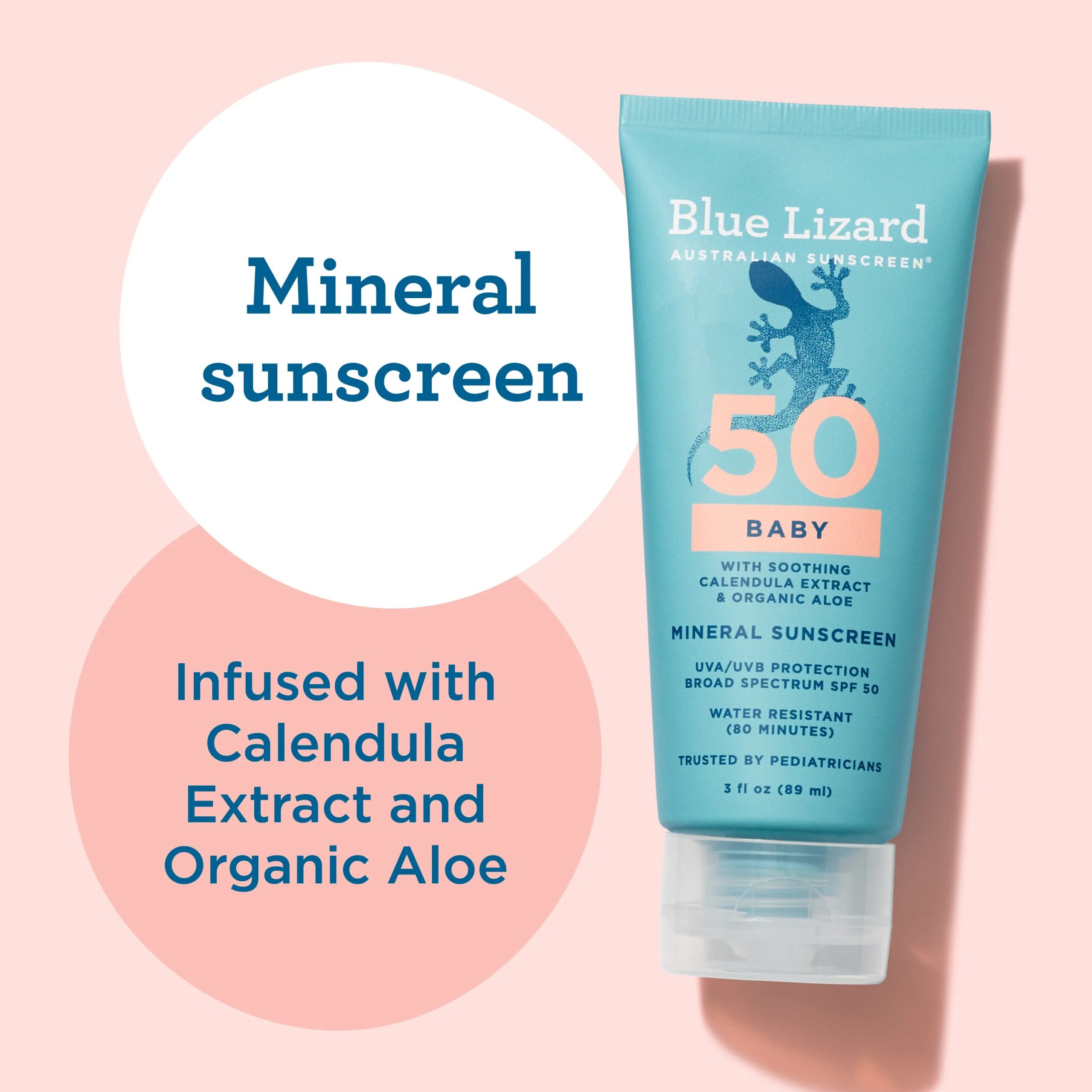
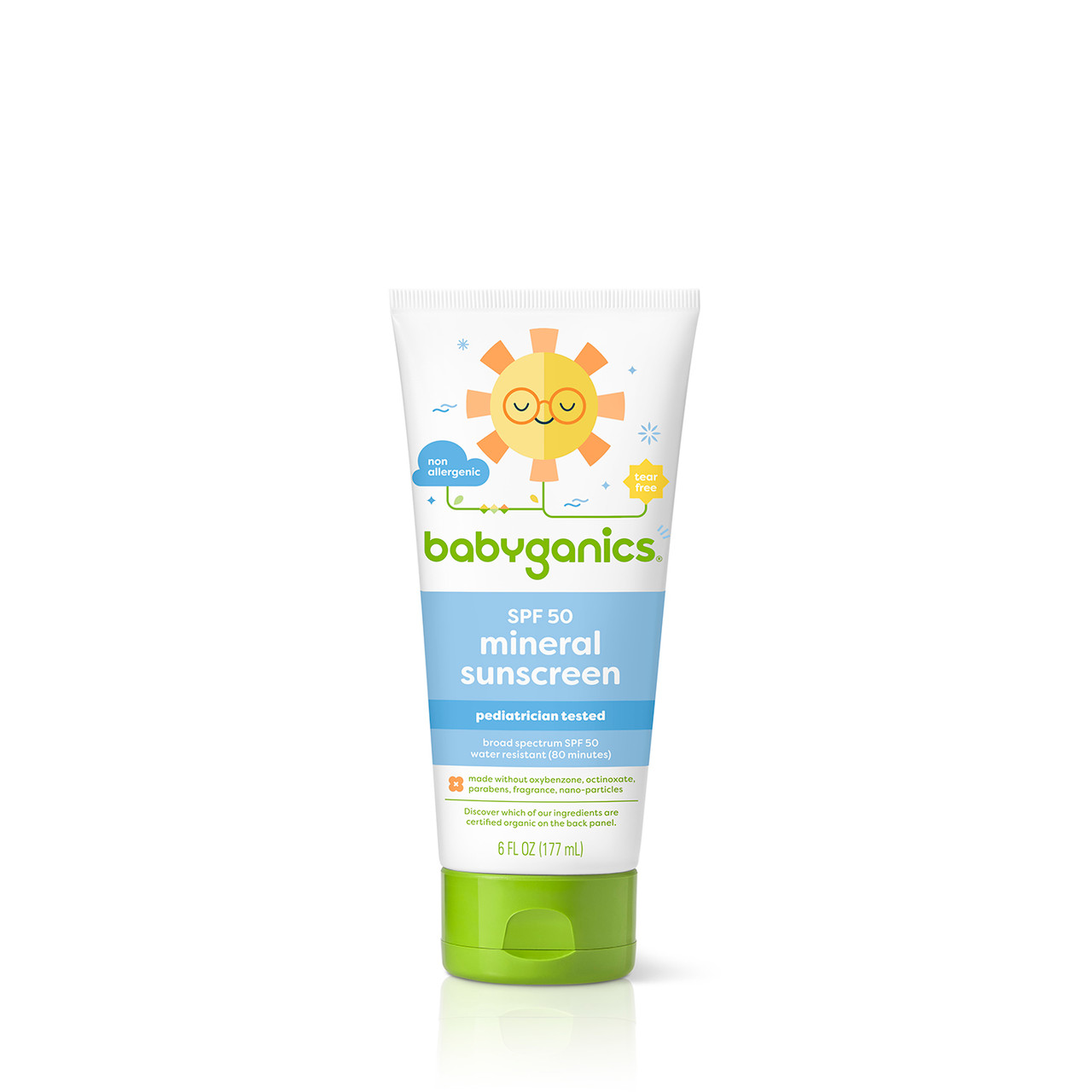
Mineral sunscreens like Blue Lizard and Babyganics are the default recommendation for infants and reactive skin; chemical formulas like Coppertone are a well-tested, budget-friendly option for everyone else.
SPF and Water Resistance — What the Numbers Actually Mean
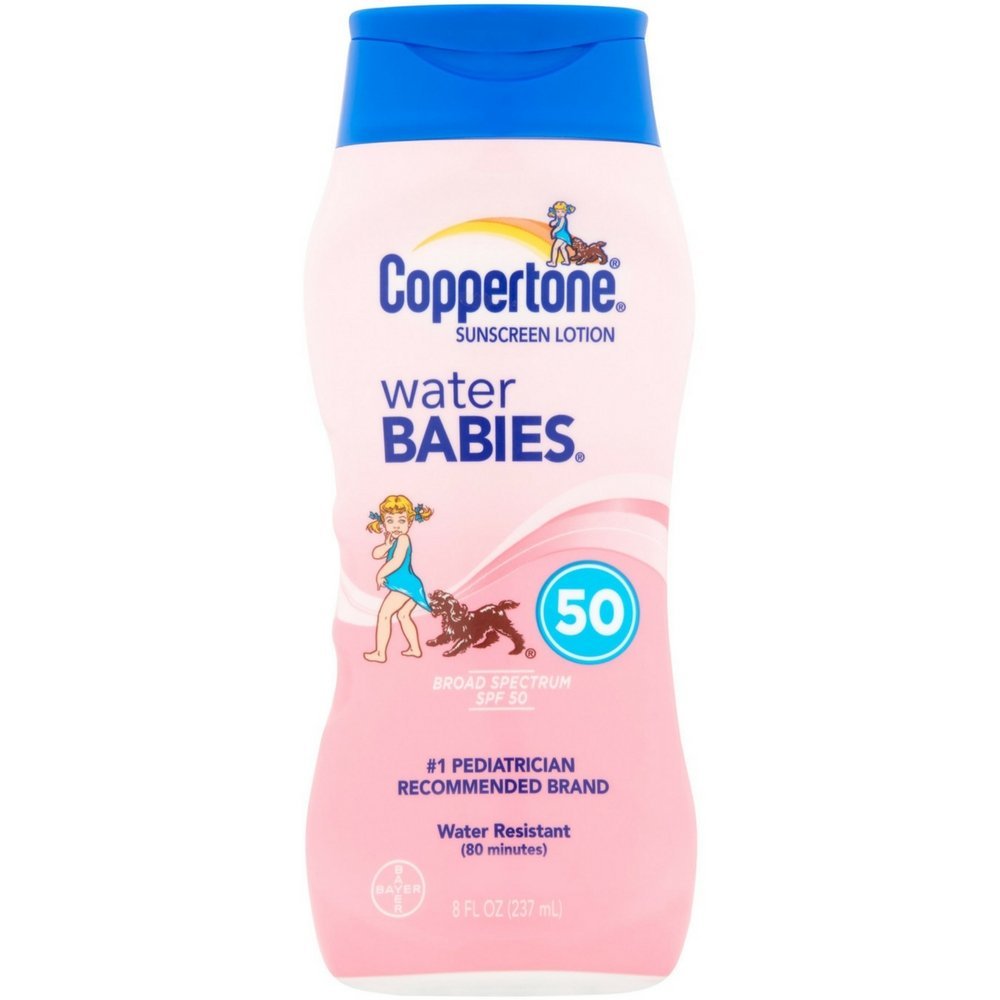
SPF 50 is the practical ceiling most pediatricians recommend — the FDA doesn’t allow claims above SPF 50+ regardless of a formula’s actual lab performance, since higher numbers show diminishing real-world protection. All three products in this guide carry SPF 50 or 50+ and broad-spectrum UVA/UVB coverage, so on paper they’re evenly matched. The real differentiator is whether a formula holds up to its labeled SPF under lab conditions — Consumer Reports’ 2026 testing found that not every sunscreen delivers the SPF printed on the bottle, and Coppertone WaterBabies was the standout, testing above SPF 40 on average and ranking first among 51 lotions tested.
Water resistance is capped at 80 minutes under current FDA rules — the maximum claim any US sunscreen can legally make. That figure is a ceiling, not a guarantee: towel-drying, hard swimming, or heavy sweating shortens it, and the label still calls for reapplication every two hours regardless.
When it matters: for pool days, splash pads, and beach trips, an 80-minute water-resistance rating (which all three of these carry) is the top tier available — don’t pay extra for a marketing claim beyond it.
When it doesn’t: for shaded backyard play or a quick walk, water resistance is largely irrelevant — reapplication timing matters more than the rating.
All three sunscreens meet the same SPF 50 and 80-minute water-resistance ceiling — Coppertone stands out for independently verified lab performance at that level.
Texture and the White-Cast Trade-Off
Every mineral sunscreen carries some version of the same trade-off: because zinc oxide and titanium dioxide sit on the skin’s surface rather than absorbing in, they go on thicker than chemical formulas and can leave a faint white cast, especially on the first application or on deeper skin tones. It’s a physics problem, not a brand-specific flaw — no mineral sunscreen fully escapes it.
That said, formulation still matters at the margins. Babyganics leans on a higher zinc oxide concentration (12%) with a lighter suspension base, and its texture is noticeably faster to rub in than the category norm. Blue Lizard’s formula runs thicker and needs a more deliberate rub-in, but that thickness is part of why it earns its dermatologist-favorite reputation for very reactive skin — a thicker barrier stays put better through active play.
When it matters: for a squirming toddler who fights every application, a lighter-textured mineral formula like Babyganics reduces the friction of getting sunscreen on in the first place.
When it doesn’t: for a baby who tolerates application without a fight, the thicker Blue Lizard formula is just as usable and offers the same protection.
A white cast is a mineral-sunscreen constant, not a defect — Babyganics minimizes it more than most, while Blue Lizard trades a thicker texture for a stronger dermatologist track record.
Reading the Ingredient List — What to Avoid and Why
Beyond mineral vs. chemical, three ingredient flags come up repeatedly in pediatric sunscreen guidance. Oxybenzone is the most scrutinized chemical UV filter, cited in several coral-reef bleaching studies and increasingly avoided by parents for that reason alone — all three products here are formulated without it. Fragrance is a common skin irritant for reactive skin, and all three are fragrance-free (Babyganics’ base formula) or fragrance-free by variant. Parabens, used as preservatives in some lotions, are absent from all three as well.
Tear-free formulation is a separate claim worth checking specifically — it means the product won’t sting on contact with a child’s eyes, which matters enormously for how willingly a kid tolerates the next application. All three products in this guide carry a tear-free claim.
When it matters: if your child has a known sensitivity to fragrance or a specific chemical filter, checking the active ingredients list before buying avoids a returned bottle and an unhappy afternoon.
When it doesn’t: for most families without a specific sensitivity, any of these three formulas clears the common ingredient concerns.
All three sunscreens in this guide are oxybenzone-free, fragrance-free, and tear-free — the differences that remain come down to filter type and texture, not ingredient safety.
Price vs. Bottle Size — Cost Per Use
A sunscreen you apply generously every day all summer is a repeat purchase, so cost per ounce matters more than the sticker price on a single bottle. Coppertone’s 8 fl oz bottle at $8.88 works out to roughly $1.11 per ounce — the cheapest of the three by a wide margin. Babyganics’ 6 fl oz bottle at $10.99 runs about $1.83 per ounce. Blue Lizard’s 5 fl oz tube at approximately $14.99 is the most expensive per ounce, at roughly $3.00.
That gap is the real trade-off in this category: mineral formulas cost more to produce than chemical ones, and it shows up directly at the register. Whether that premium is worth it comes down to how strongly filter type and texture matter for your child’s skin.
When it matters: for families applying sunscreen daily across a long summer, the per-ounce gap between Coppertone and Blue Lizard adds up fast over a season.
When it doesn’t: for occasional use — weekend trips, vacations — the total cost difference between any of these three is a few dollars, not worth optimizing around.
Coppertone costs roughly a third as much per ounce as Blue Lizard — a meaningful gap for daily summer use, negligible for occasional trips.
| Coppertone WaterBabies | Blue Lizard Baby Mineral | Babyganics Mineral | |
|---|---|---|---|
| Price (USD) | $16.02 | $13.59 | $10.99 |
| Bottle size | 8 fl oz | 5 fl oz | 6 fl oz |
| Filter type | Chemical | Mineral | Mineral |
| Water resistance | 80 min | 80 min | 80 min |
| Our Score | 4.6/5 | 4.3/5 | 4.3/5 |
| Amazon | View on AmazonView on Amazon | View on AmazonView on Amazon | View on AmazonView on Amazon |
The Final Word
If there’s no specific reason to reach for a mineral formula, Coppertone WaterBabies is difficult to argue with — it’s the cheapest option here and the only one with an independently verified #1 lab ranking. But for a baby with reactive skin or a pediatrician’s mineral-only guidance, Blue Lizard and Babyganics both deliver, and the choice between them really just comes down to whether you’d rather pay less or apply less fuss: Babyganics for an easier, lighter application, Blue Lizard for the deeper dermatologist track record.
Browse all Health & Beauty reviews →Health & Beauty reviews →
Frequently Asked Questions
Is mineral sunscreen actually better than chemical sunscreen for babies?
Why does my baby’s sunscreen leave a white residue?
Is it worth paying more for Blue Lizard over Babyganics?
Does SPF 50 protect better than SPF 30?
Can I use the same sunscreen on my baby’s face and body?
Which One Is Right for You?
Best Overall
Bottom line: the cheapest, best lab-verified option for kids without a specific mineral requirement.
Best for Sensitive Skin
Bottom line: the dermatologist-favorite pick for eczema-prone or reactive skin, at a premium price.
Best Lightweight Mineral Formula
Bottom line: the middle ground — mineral protection with less fight over application, at a lower price than Blue Lizard.