How to Choose a Vacuum for Pet Hair in 2026
Cordless stick or corded upright, self-cleaning brush roll or sealed HEPA — here’s what actually separates a vacuum that keeps up with shedding from one that gives up after three weeks.

How We Researched
Three vacuums considered across cordless stick and corded upright formats, spanning $199.99 to $979.99. AI-assisted secondary research and writing — no paid placement, badges reflect editorial judgment only.
* As an Amazon Associate I earn from qualifying purchases. Disclosure
What You’ll Learn
- Corded vs. cordless: what unlimited runtime actually costs you
- Why anti-tangle brush roll design matters more than raw wattage
- What “sealed HEPA” means for a pet-dander allergy
- Which feature actually gets hair out from under furniture
- Whether the $780 gap between budget and premium is worth it
3 products in this guide
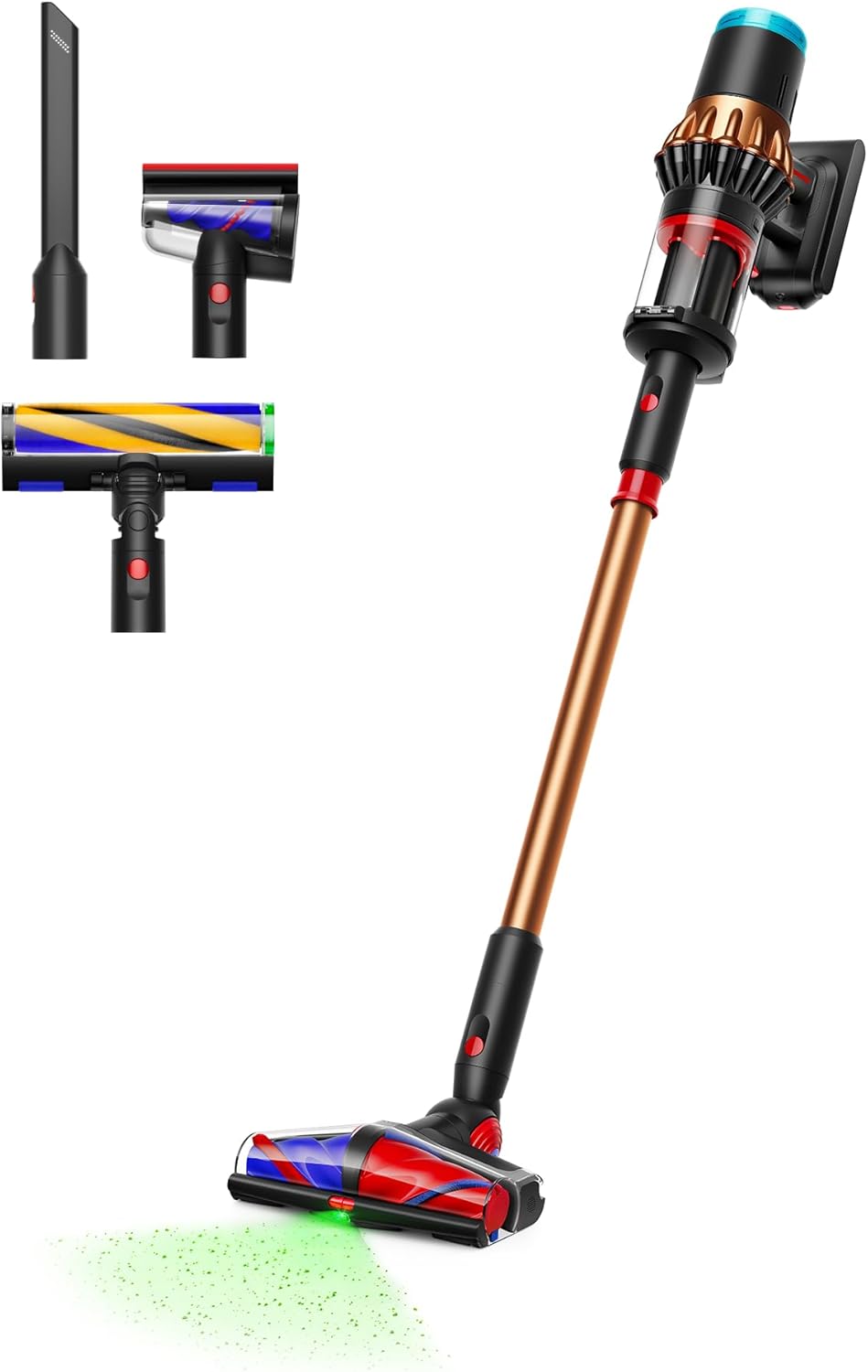
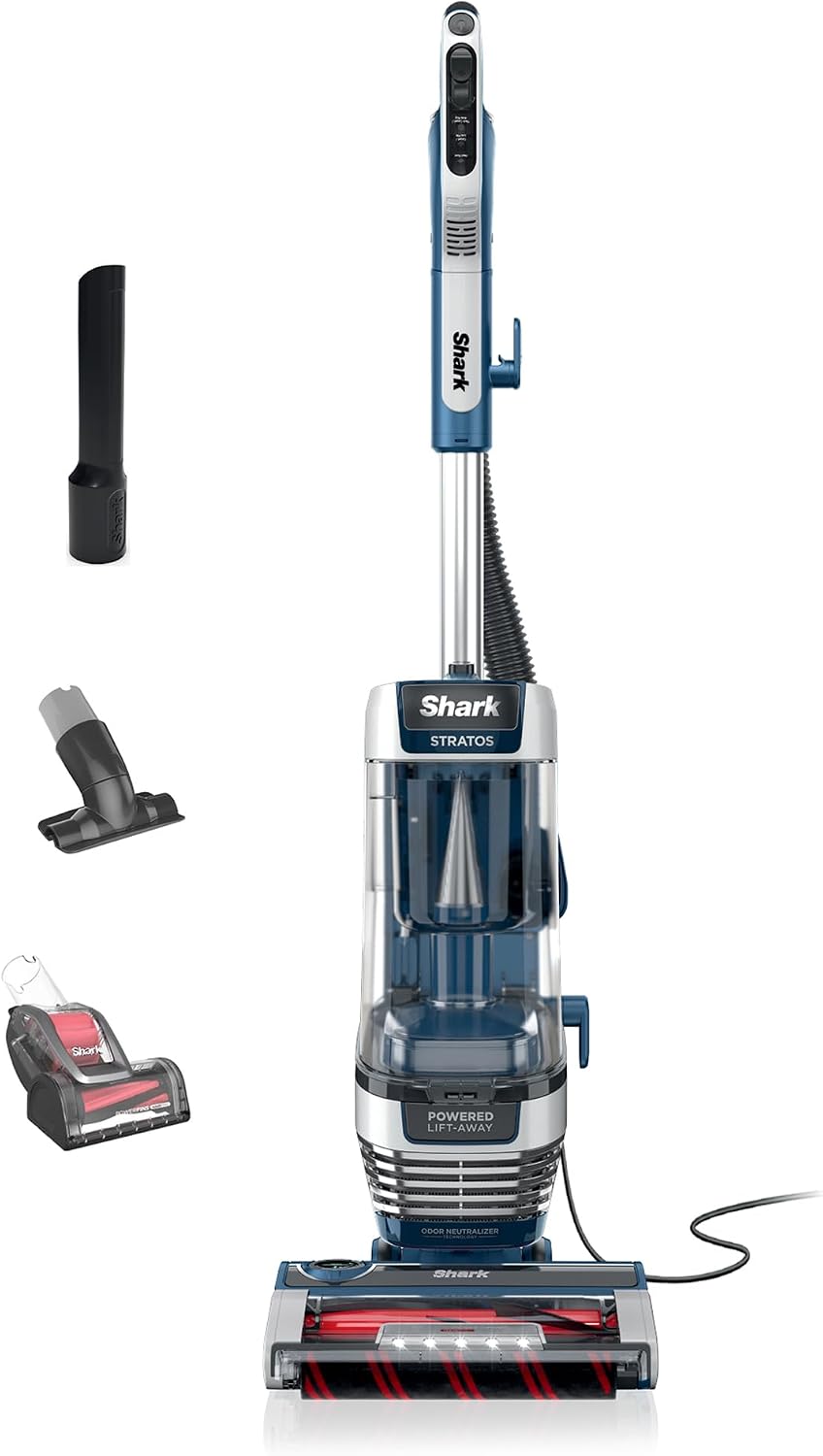
Every pet-hair vacuum ad promises the same thing, and most of them exaggerate. What actually separates a vacuum that keeps up with a shedding dog or cat from one that clogs within a month comes down to a handful of specific design choices — not the headline suction number on the box. We looked at three vacuums that take genuinely different approaches to the same problem, from a $199.99 cordless stick to a $979.99 flagship, to find out which choices are worth paying for and which ones barely matter.
Corded vs. Cordless: Power and Runtime Tradeoffs
A cordless stick vacuum trades outright power for freedom of movement — no cord to trip over, no outlet to hunt for between rooms. But every cordless motor is limited by what a battery pack can sustain, and that shows up hardest at maximum suction: Dyson’s own V16 Piston Animal rates 70 minutes on eco mode but only around 5 minutes at full 315 Air Watt boost, according to Tom’s Guide’s testing.
A corded upright like the Shark Stratos sidesteps that limit entirely — its 1300W motor runs at full power indefinitely, since it’s never drawing from a battery. The cost is a 30-foot cord to manage and re-plug between rooms, plus roughly double the weight of a cordless stick.
When it matters: a large single-level home, a heavy-shedding double-coated breed, or anyone who wants one deep weekly clean rather than frequent quick passes.
When it doesn’t: an apartment or smaller home where a quick daily pass keeps hair under control — cordless convenience wins there even at lower peak suction.
Cordless buys convenience; corded buys unlimited runtime at full power. Pick based on how you actually clean, not the suction number alone.
Brush Roll Design: Why Anti-Tangle Technology Matters
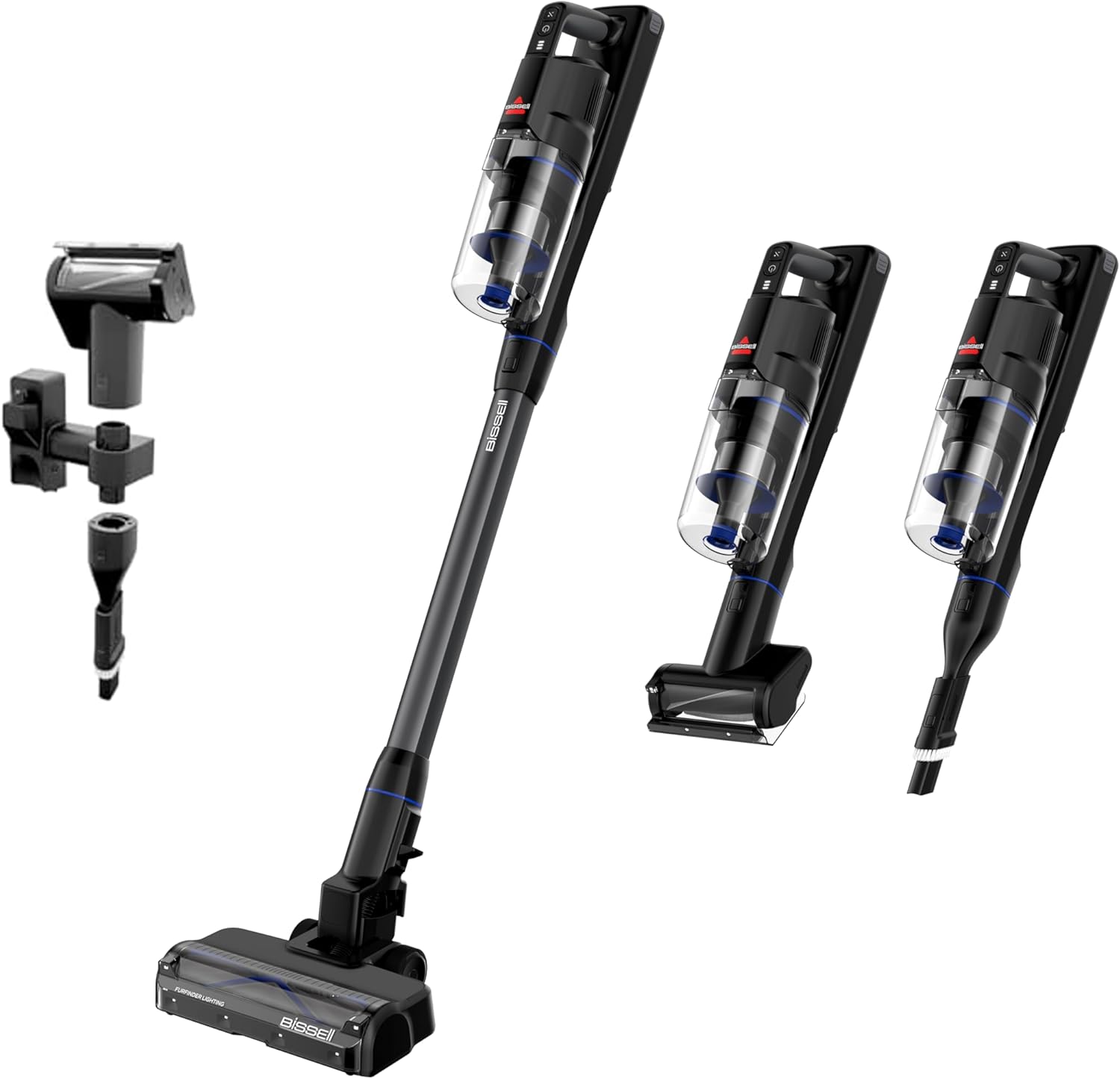
Raw suction gets all the marketing attention, but the brush roll is where most pet-hair vacuums actually fail. A standard bristled roller wraps long hair around itself until it slows to a stop, and by week three the vacuum that tested well in the store needs scissors before it can clean a single room. Every product in this guide addresses that differently: Bissell’s self-cleaning FurGuard bar, Dyson’s dual conical All Floor Cones Sense head, and Shark’s dual-roller DuoClean PowerFins system.
The mechanical approach matters more than the marketing name. A roller engineered to actively eject hair — rather than just resist wrapping — keeps its pickup rate consistent for months instead of degrading within weeks, which is the actual failure mode that makes cheap vacuums feel broken long before the motor gives out.
When it matters: long-haired cats and dogs, where hair wrap is the single biggest cause of a vacuum’s performance falling off within weeks of purchase.
When it doesn’t: short-haired pets shed less fibrous debris that’s less prone to wrapping a roller in the first place — any of the three anti-tangle systems here will comfortably keep up.
A self-cleaning or anti-tangle brush roll is the single feature most responsible for whether a pet-hair vacuum still works well after month one.
Filtration and Allergen Handling
“HEPA filter” and “sealed HEPA system” are not the same claim. A HEPA filter only helps if all the air is forced through it — on a poorly gasketed machine, fine dust and dander escape through body seams and re-enter the room regardless of what the filter itself captures. Both the Dyson V16 and the Shark Stratos publish a specific 99.99%-at-0.1-micron sealed rating; Bissell’s HEPA Sealed Allergen System makes the same sealing claim without the identical percentage figure.
Filter maintenance cost is the detail buyers skip. Shark’s Anti-Allergen Complete Seal uses washable felt-and-foam pre-motor filters plus a HEPA post-motor filter — no subscription, no cartridge to replace. That’s a real long-term savings difference against any system that relies on sealed, non-washable cartridges.
When it matters: any household where someone reacts to pet dander — the sealing matters as much as the filter media itself.
When it doesn’t: no allergy concerns in the house means any of the three filtration systems here perform adequately; the difference is marginal for pure dust pickup.
Check for “sealed” HEPA, not just “HEPA filter” — an unsealed body lets captured dander leak back out through the seams.
Furniture, Stairs, and Under-Bed Access
Most pet hair doesn’t collect in the open middle of a room — it collects under the bed frame, wedged into a sofa’s crevices, and on stair treads a standard upright can’t reach without switching to an unpowered hose attachment. Shark’s Powered Lift-Away is built specifically to solve this: the canister detaches from the base while the brush roll keeps spinning, so those exact spots get real motorized agitation instead of suction alone.
Both cordless sticks in this guide convert to a handheld mode for the same job, but neither keeps a motorized brush head running the way Shark’s detached mode does — a handheld nozzle relies on suction alone, which is measurably weaker against fur worked into fabric.
When it matters: homes with a lot of upholstered furniture, stairs, or low-clearance furniture pets favor for napping.
When it doesn’t: a mostly open-floor layout with minimal furniture — under-furniture access is a smaller factor there.
A motorized detachable head reaches furniture and stairs a standard upright or handheld-only stick physically can’t clean properly.
| Bissell PowerClean FurGuard | Dyson V16 Piston Animal | Shark Stratos Upright | |
|---|---|---|---|
| Price | $179.99 | $849.99 | $369.99 |
| Format | Cordless stick | Cordless stick | Corded upright |
| Runtime | Up to 50 min | Up to 70 min | Unlimited (corded) |
| Anti-tangle brush | Self-cleaning FurGuard | Dual conical All Floor Cones | DuoClean PowerFins HairPro |
| Sealed HEPA | Yes | Yes, 99.99% | Yes, 99.99% |
| Powered furniture access | No (handheld) | No (handheld) | Yes (Powered Lift-Away) |
| Weight | 7.3 lb | 7.5 lb | 16.71 lb |
| Our Score | 4.4/5 | 4.3/5 | 4.2/5 |
Our Verdict
For most pet owners, the Bissell PowerClean FurGuard is the smartest buy: a self-cleaning brush roll and sealed HEPA filtration for under $200 covers the two features that actually matter most, without paying for suction most homes don’t need. The Dyson V16 Piston Animal is worth the jump to $979.99 only if raw cordless suction and a lightweight machine both matter to you — buyers chasing the newest tech, not the best value.
The Shark Stratos Upright earns its spot for a specific reason none of the others solve: Powered Lift-Away actually reaches under furniture and up stairs with real motorized cleaning, which makes it the pick for a home with a lot of upholstery and low-clearance furniture pets favor.
Frequently Asked Questions
Is a cordless stick vacuum powerful enough for a heavy-shedding dog?
Do I need to replace filters on these vacuums?
Is the $780 price gap between the Bissell and the Dyson worth it?
Which of these actually reaches under the bed and sofa?
Does a heavier vacuum mean better suction?
Which One Is Right for You?
Best Value
Bottom line: The smartest buy for most pet owners — a 280W motor, tangle-proof brush roll, and sealed HEPA for under $200.
Best Premium Pick
Bottom line: Class-leading cordless suction and a genuinely tangle-proof head, for buyers who want the newest tech and can afford it.
Best Deep Clean
Bottom line: Unlimited runtime and Powered Lift-Away make it the only pick here that actually cleans under furniture and up stairs.