Dog Harness Buying Guide 2026: What Really Matters
Front D-rings, control handles, and how many adjustment points you actually need — the three things that separate a $21 dog harness from a $90 one.

How We Researched
3 dog harnesses reviewed across the budget-to-premium range, AI-assisted secondary research cross-checked against manufacturer specs and independent gear-review testing. No paid placement — badges and scores reflect editorial judgment only.
* As an Amazon Associate I earn from qualifying purchases. Disclosure
What You’ll Learn
- Whether a front D-ring for no-pull control is worth checking for
- When a reinforced control handle earns its higher price
- How many adjustment points actually matter for a secure fit
- What you give up at the budget end of the price range
3 products in this guide
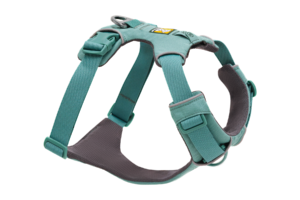
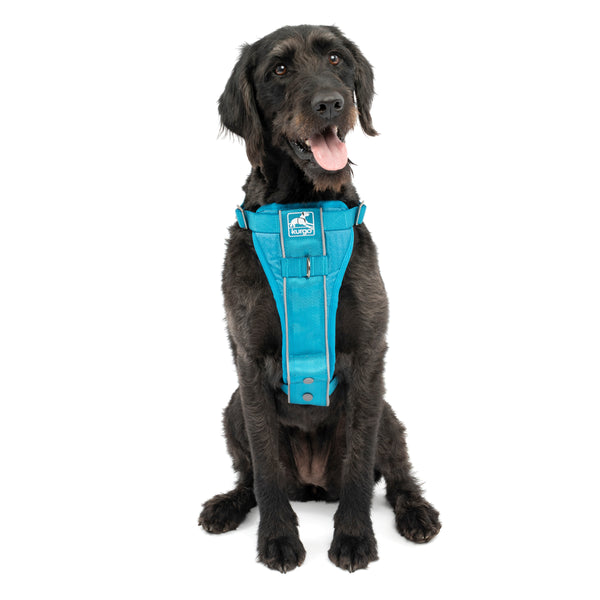
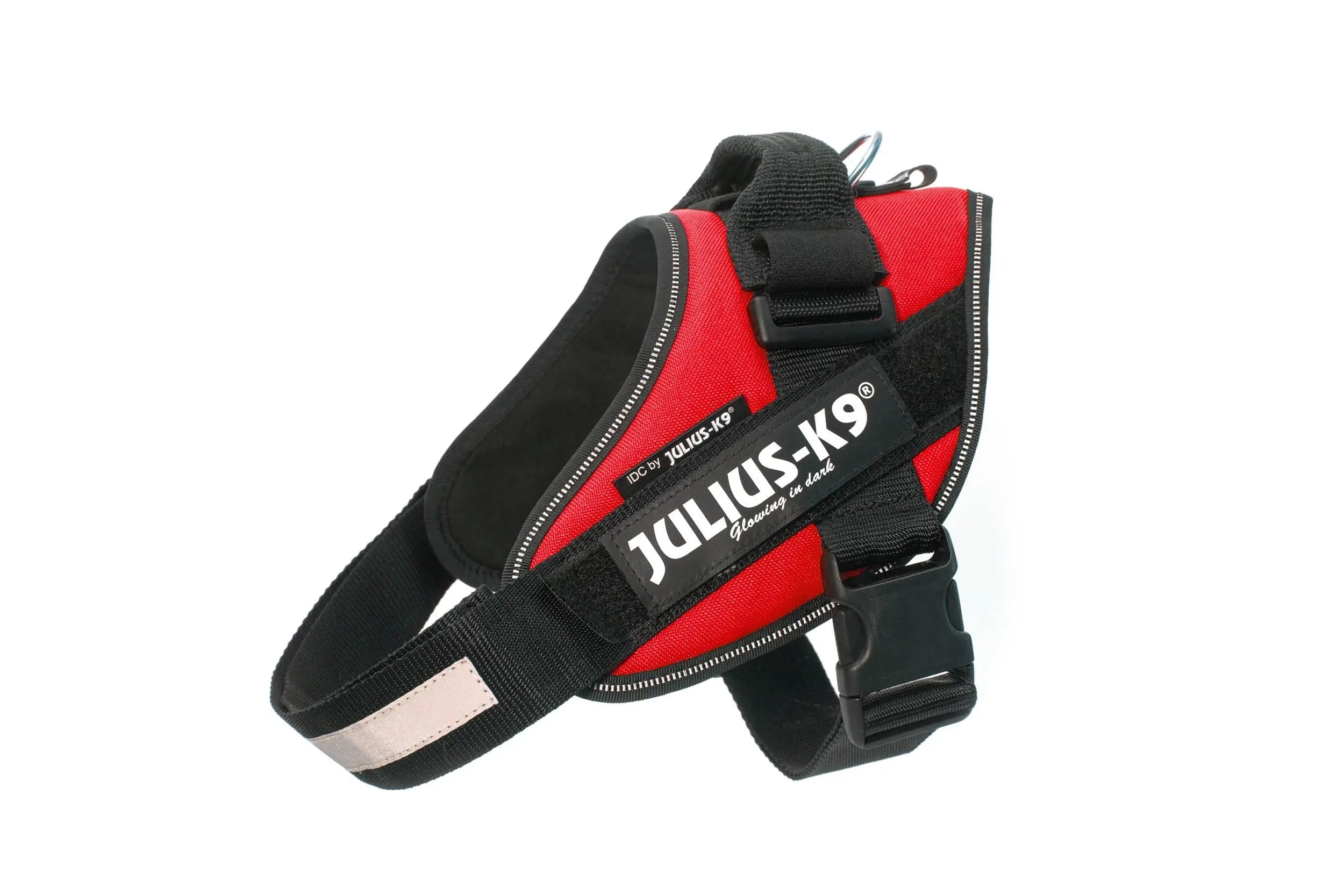
Every dog harness promises the same basic thing — a secure, comfortable way to clip a leash to your dog instead of pulling on their neck. Where they actually differ is whether a front D-ring is built in for no-pull control, whether a reinforced handle gives you real hands-on control, and how many adjustment points get you a genuinely custom fit. We researched three harnesses spanning $21 to $90 to work out which of those differences are worth paying for.
Front D-Rings and No-Pull Control
A harness with only a back attachment point lets a dog put its full body weight into a pull, since the leash tension lines up with the direction the dog is already moving. A front D-ring on the chest changes that geometry entirely — when a dog pulls, the leash tension redirects them sideways rather than letting them lean forward into it, which is the mechanism nearly every no-pull harness relies on.
Not every harness in this price range includes that front clip standard. The Julius-K9 IDC Powerharness ships with only a back D-ring; getting the same redirect-based control requires buying its separate Front Control Y-Belt attachment. The Ruffwear Front Range and Kurgo Tru-Fit both build a front clip into the base price, so there’s no extra purchase needed to get the no-pull mechanism working.
When it matters: Your dog pulls consistently on leash, or you’re actively working on loose-leash training.
When it doesn’t: Your dog already walks well on a leash, or you mainly use the harness for short, easy walks.
A front D-ring is the single feature that turns a plain harness into a no-pull tool — check whether it’s included standard before comparing prices on harnesses that otherwise look similar.
Control Handles for Hands-On Management
A reinforced top handle turns a harness into something you can physically use, not just clip a leash to. DogGearReview’s testing of the Julius-K9 IDC Powerharness highlights the same recurring use cases across owners: steadying a dog on uneven trail terrain, lifting a smaller dog over an obstacle, or getting a firm grip in a crowded or high-distraction environment. That same testing credits the handle and its stainless-steel ring with holding up under repeated real-world pulling and lifting without deforming.
Neither the Ruffwear nor the Kurgo in this guide includes a true reinforced handle — both are built around the leash-clip system rather than a hands-on grip point. For a dog that’s already easy to manage on leash, that’s not a gap worth worrying about; for a large, strong, or working dog, it’s the difference between having a real backup control option and not.
When it matters: Large or strong-pulling dogs, hiking or trail use, or working/service-dog contexts.
When it doesn’t: Small or easygoing dogs on routine sidewalk walks.
A reinforced handle earns its keep the moment you need to physically steady or lift your dog — for everyday leash walking with a well-behaved dog, it’s a nice-to-have, not a necessity.
Adjustment Points, Sizing & What Extra Money Buys
Harness sizing runs off a combination of neck, chest girth, and sometimes weight — not a single number — and the number of adjustment points determines how closely the fit can be dialed in around those measurements. The Kurgo Tru-Fit’s five adjustment points give it more fine-tuning range than the Julius-K9’s two, which matters most for dogs that fall between size charts or have a barrel chest relative to their neck size.
Price and feature count don’t move together as cleanly as you’d expect in this category. The Kurgo Tru-Fit, the cheapest harness in this guide, still uses steel (not plastic) hardware and includes a seatbelt tether for car travel at no extra cost — a bundled feature that neither the pricier Ruffwear nor Julius-K9 offers standard. What the extra money on those two buys instead is closed-cell foam padding rated for five-plus years of daily use, or a reinforced handle built for physical control.
When it matters: Your dog doesn’t fit a standard size chart neatly, or you want a bundled car-safety feature without buying separate gear.
When it doesn’t: Your dog fits a standard size easily and never rides in the car in the harness.
More adjustment points and bundled extras like a seatbelt tether add real value even at the budget end of this category — a lower price doesn’t automatically mean fewer features.
| Ruffwear Front Range | Kurgo Tru-Fit Smart Harness | Julius-K9 IDC Powerharness | |
|---|---|---|---|
| Price (USD) | $59.99 | $24.95 | $49.82 |
| Control Handle | No | No | Yes — reinforced |
| Leash Clips | Front + Back | Front + Back + Car clip | Back only |
| Adjustment Points | 4 | 5 | 2 |
| Material | Closed-cell foam | Nylon webbing w/ foam pad | ÖKOTEX nylon, steel hardware |
| Expected Durability | 5+ years | 2–3 years | 5+ years |
Our Verdict
Start with how your dog actually walks, not the badge on the box. If your dog pulls at all, make sure a front D-ring is included standard — it’s the single feature that does the most for everyday walking, and both the Ruffwear and Kurgo include it out of the box. Step up to a harness with a reinforced control handle like the Julius-K9 IDC Powerharness only if you specifically need hands-on control for a large, strong, or working dog. And don’t assume the cheapest option is missing on features — the Kurgo Tru-Fit’s five adjustment points and included seatbelt tether outperform its price tag.
Buy the Ruffwear Front Range if you want the most complete everyday harness with a front no-pull clip built in. Buy the Kurgo Tru-Fit Smart Harness if you’re budget-conscious but still want steel hardware and a bundled car-safety tether. Buy the Julius-K9 IDC Powerharness if your dog is large, strong, or works alongside you and needs real hands-on control.
Frequently Asked Questions
Do I need a harness with a front D-ring for no-pull control?
Is a control handle on a dog harness actually useful?
How many adjustment points does a dog harness need?
Does a seatbelt tether make a harness a car safety harness?
Which harness is best for a dog that pulls hard on the leash?
Which One Is Right for You?
Best Overall
Bottom line: A front no-pull clip and closed-cell foam padding built in standard, rated for years of daily use.
Best Budget Pick
Bottom line: Steel hardware, five adjustment points, and a seatbelt tether included — all for the lowest price in this guide.
Best for Control & Durability
Bottom line: A reinforced handle and weather-resistant materials built for hikers, handlers, and strong dogs.