How to Choose a Dog Probiotic Supplement (2026 Guide)
Strain count, CFU load, and format all matter differently depending on what you’re actually trying to fix — here’s how to read the label instead of the marketing.

How We Researched
3 probiotic supplements reviewed against published manufacturer specs, veterinary product positioning, and aggregated owner feedback. No paid placement — badges and scores reflect editorial judgment only.
* As an Amazon Associate I earn from qualifying purchases. Disclosure
What You’ll Learn
- Why CFU count alone doesn’t tell you which product is stronger
- When a single documented strain beats a broad blend, and when it doesn’t
- Why format (powder vs. capsule vs. chew) is often the deciding factor in practice
- How cost per serving actually compares once you correct for pack size
3 products in this guide

Every dog probiotic label leads with a number — 100 million CFU here, 6 billion there — and that number alone tells you almost nothing about which product is actually right for your dog. What matters is strain documentation, format, and what problem you’re actually solving: an acute digestive upset, ongoing gut maintenance, or a dog that won’t take a supplement in any form you’ve tried so far. This guide breaks down the three factors that should actually drive the decision.
Strain Count and CFU Load
A higher CFU count looks like a stronger product, and sometimes it is — but the number on the label describes what was added at manufacture, not what survives stomach acid to reach the intestine. A well-documented single strain in a stable delivery format can outperform an undocumented multi-strain blend with a bigger number, and vice versa. The strains matter more than the count.
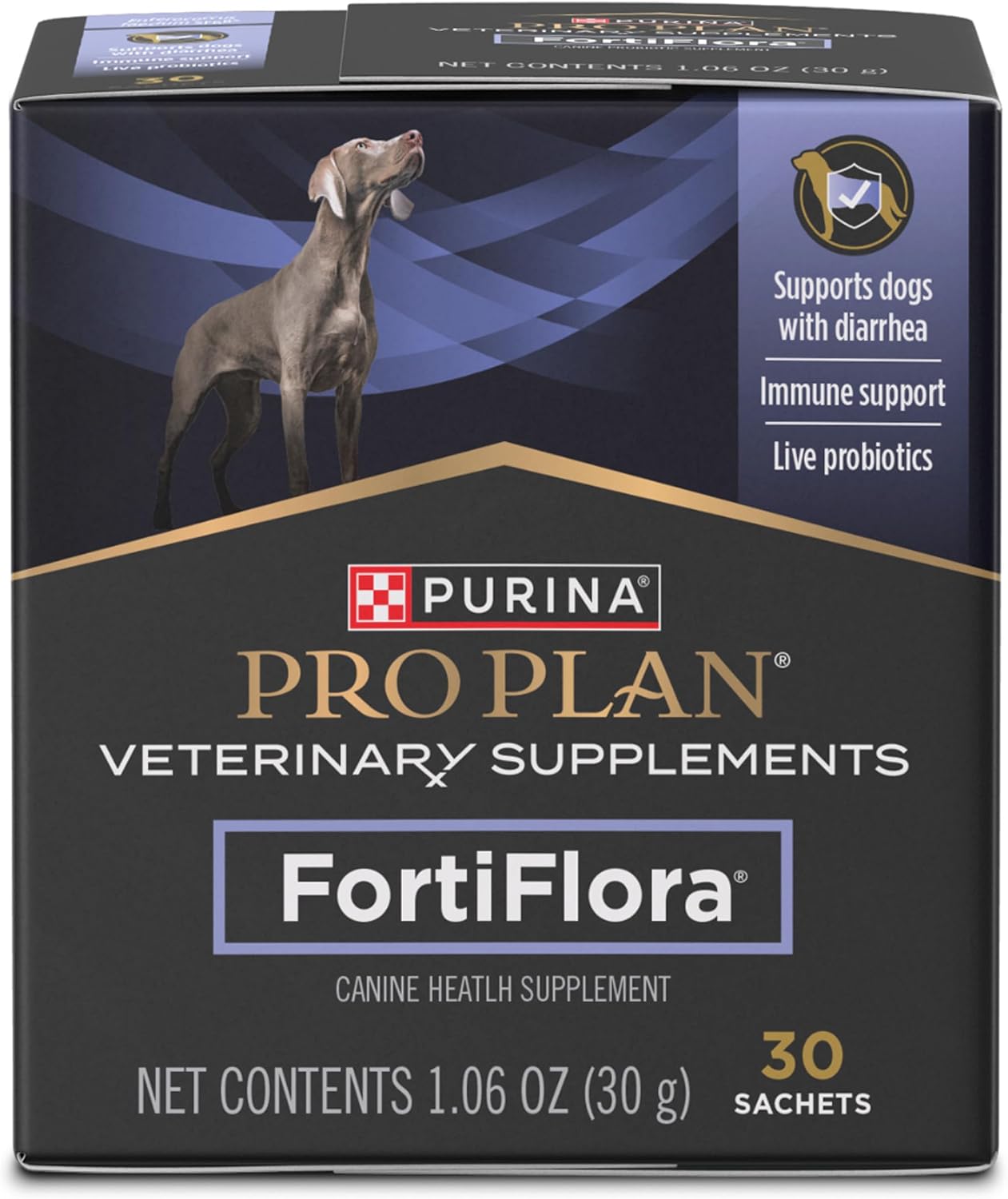
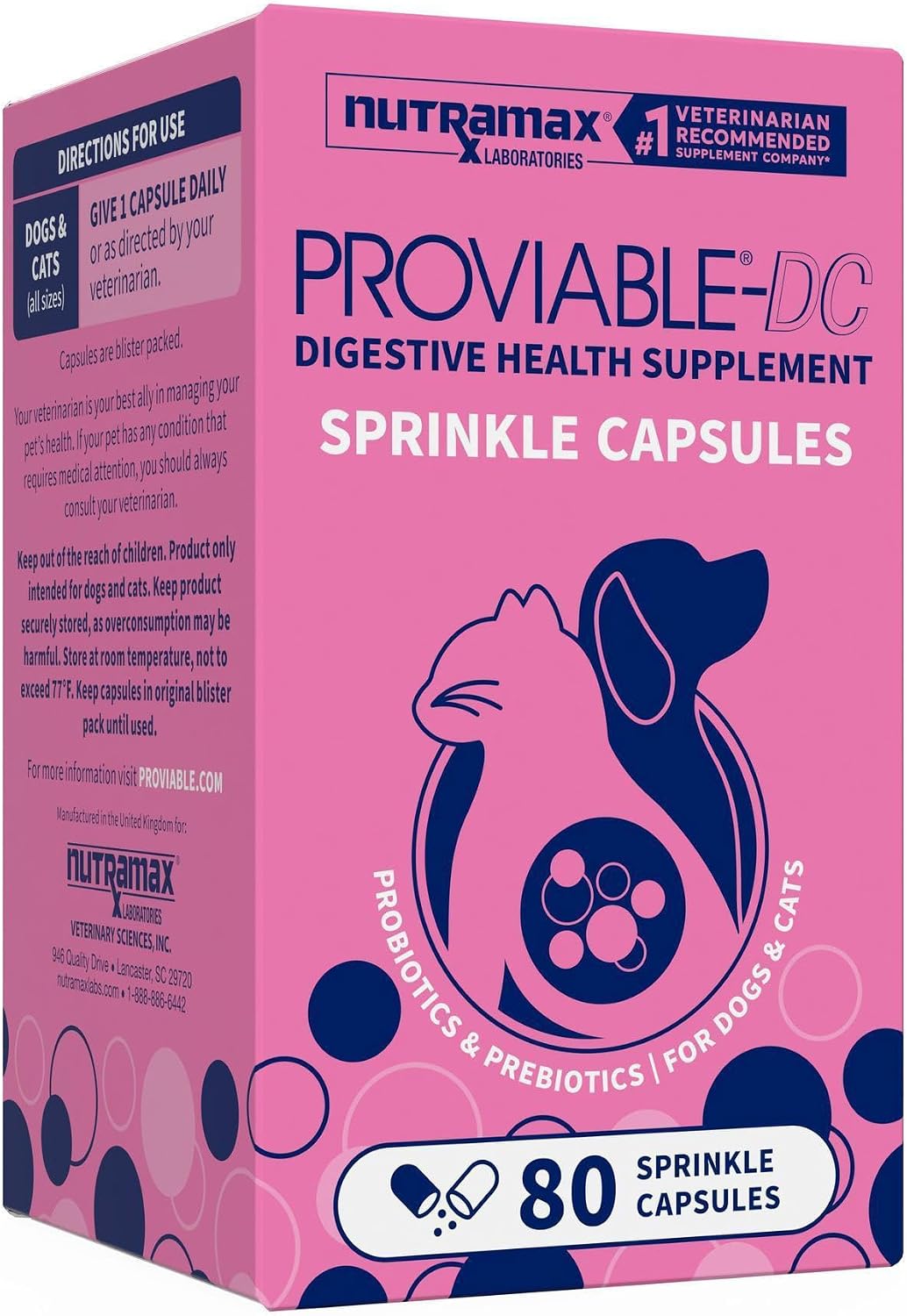
Nutramax Proviable’s seven-strain formula and roughly 5 billion CFU per capsule cover broad ground — useful when you don’t know exactly which strain deficit you’re addressing. FortiFlora’s single Enterococcus faecium SF68 strain, at a comparatively modest 100 million CFU, has more published veterinary research behind that one organism specifically than most multi-strain blends have behind their entire ingredient panel combined.
When it matters: if your vet has recommended a specific strain for a specific condition (post-antibiotic recovery, acute diarrhea), strain documentation should outweigh raw CFU count.
When it doesn’t: for general everyday gut maintenance in an otherwise healthy dog, a broader blend at a solid CFU count is a reasonable default with no need to chase a specific published strain.
Read the strain name, not just the CFU number — a documented strain at a modest count often beats an undocumented blend at a big one.
Format and Palatability
The best probiotic on paper is worthless if your dog won’t take it. Powders that mix into food (FortiFlora) tend to win with picky or nauseated eaters because they disappear into the meal entirely. Soft chews (Zesty Paws) work well for dogs that are food-motivated and treat-driven but can be spat out or picked around by a suspicious eater. Capsules (Proviable) are easiest to dose precisely but require either swallowing whole or opening onto food.
None of these formats is objectively better — the right one is whichever your specific dog will actually take consistently, every single day, without a fight. A supplement that gets skipped half the time because your dog hates it delivers roughly half its intended benefit.
When it matters: a dog recovering from illness who’s already off their food, or a notoriously picky eater, needs a format they’ll actually accept — this should override strain or price considerations.
When it doesn’t: a food-motivated dog with no history of supplement refusal can go with whichever format offers the best strain profile and value.
The best probiotic is the one your dog will actually eat every day — format compliance beats a marginally better strain profile.
Vet-Channel vs. Consumer Brands
FortiFlora and Proviable both originated as veterinary-channel products — they’re the supplements vets reach for and recommend directly, backed by clinical usage history in GI protocols. Zesty Paws and most soft-chew brands are consumer-direct: sold on the strength of ingredient panels and owner reviews rather than a veterinary recommendation built into the brand.
This isn’t a strict quality hierarchy — a well-formulated consumer product can be perfectly effective for general maintenance — but it does affect how much weight to put on a brand’s own claims versus independently published research. Vet-channel products tend to have more third-party clinical evidence specifically because they’re positioned for use inside a treatment plan, not just a wellness routine.
When it matters: for a diagnosed condition or a vet-directed recovery plan, a vet-channel product with published clinical support is the safer default.
When it doesn’t: for routine, non-medical gut maintenance, a well-reviewed consumer brand is a reasonable choice without needing veterinary-channel pedigree.
Vet-channel origin correlates with more published clinical evidence — worth weighing for a medical recovery plan, less critical for everyday maintenance.
Cost Per Dose and Course Length
Box price is misleading on its own — pack size varies enormously across formats, and the real comparison is cost per day. FortiFlora’s 30 sachets run out fastest relative to price; Proviable’s 80 capsules and Zesty Paws’ 90 chews both stretch substantially further per purchase, which matters if you’re supplementing indefinitely rather than for a defined recovery window.
That distinction — defined course versus indefinite maintenance — is the real decision point. A month-long recovery course makes the per-day cost close to irrelevant. Committing to daily supplementation for a year turns a modest per-day gap into a meaningfully different annual cost.
When it matters: for long-term, indefinite daily use, the higher-count, longer-lasting packages (Proviable, Zesty Paws) win on cost per serving.
When it doesn’t: for a short, defined recovery course, absolute box price rarely differs enough to be the deciding factor.
| Purina Pro Plan FortiFlora | Nutramax Proviable | Zesty Paws Probiotics | |
|---|---|---|---|
| Price (USD) | $30.99 | $44.99 | $32.97 |
| Price (CAD) | $33.99 | $28.77 (80-count) | $39.97 |
| Servings Per Package | 30 | 80 | 90 |
| Strains | 1 (E. faecium SF68) | 7 + prebiotic | 3 (Gut First blend) + prebiotic |
| Format | Powder sachet | Sprinkle capsule | Soft chew |
| Best For | Acute recovery, picky eaters | Ongoing daily maintenance | Picky eaters, everyday maintenance |
| Our Score | 4.2/5 | 4.4/5 | 4.1/5 |
Our Verdict
There’s no single “best” probiotic here — the right pick depends on what you’re actually solving for. FortiFlora earns its vet-channel reputation for acute recovery and picky-eater compliance; Nutramax Proviable’s seven-strain blend is the strongest all-around choice for ongoing daily maintenance with no specific condition to target; Zesty Paws splits the difference with a food-motivated chew format and solid multi-strain research at a lower cost per day than either alternative.
If your vet has recommended a specific strain, follow that recommendation over any of the general guidance above — this guide covers the general case, not your dog’s specific chart.
Frequently Asked Questions
Do I need a probiotic with billions of CFU, or is a lower count fine?
Is Nutramax Proviable or Zesty Paws better for daily maintenance?
Should I use FortiFlora for ongoing daily use instead of a defined recovery course?
My dog won’t take capsules or chews — what are my options?
Which One Is Right for You?
Best for Acute Recovery
Bottom line: The strain vets reach for first — well-documented, highly palatable, best for a defined recovery window.
Best Multi-Strain Formula
Bottom line: Broadest strain coverage of the three, with an 80-day supply that makes it the best value for indefinite daily use.
Best for Picky Eaters
Bottom line: A pumpkin-flavored chew most dogs will eat without a fight, at the lowest cost per serving of the three.