Massage Gun Buying Guide 2026: Stall Force Beats Speed
Stall force, amplitude, battery life, and heat therapy all move the needle differently — here’s what actually separates a good percussion massager from a gimmick.

How We Researched
Three massage guns compared across price tiers, from a $110 budget pick to a $329 mid-range flagship. AI-assisted secondary research pulled from manufacturer spec sheets and Amazon listings — no paid placement, no manufacturer influence on scores.
* As an Amazon Associate I earn from qualifying purchases. Disclosure
What You’ll Learn
- Why stall force matters more than motor speed
- What amplitude actually measures — and when it’s worth paying for
- Whether heat and cold attachments are gimmicks or genuinely useful
- How much battery life you actually need
- When a pressure sensor is worth the upcharge
- Whether the cheapest option is a false economy
3 products in this guide
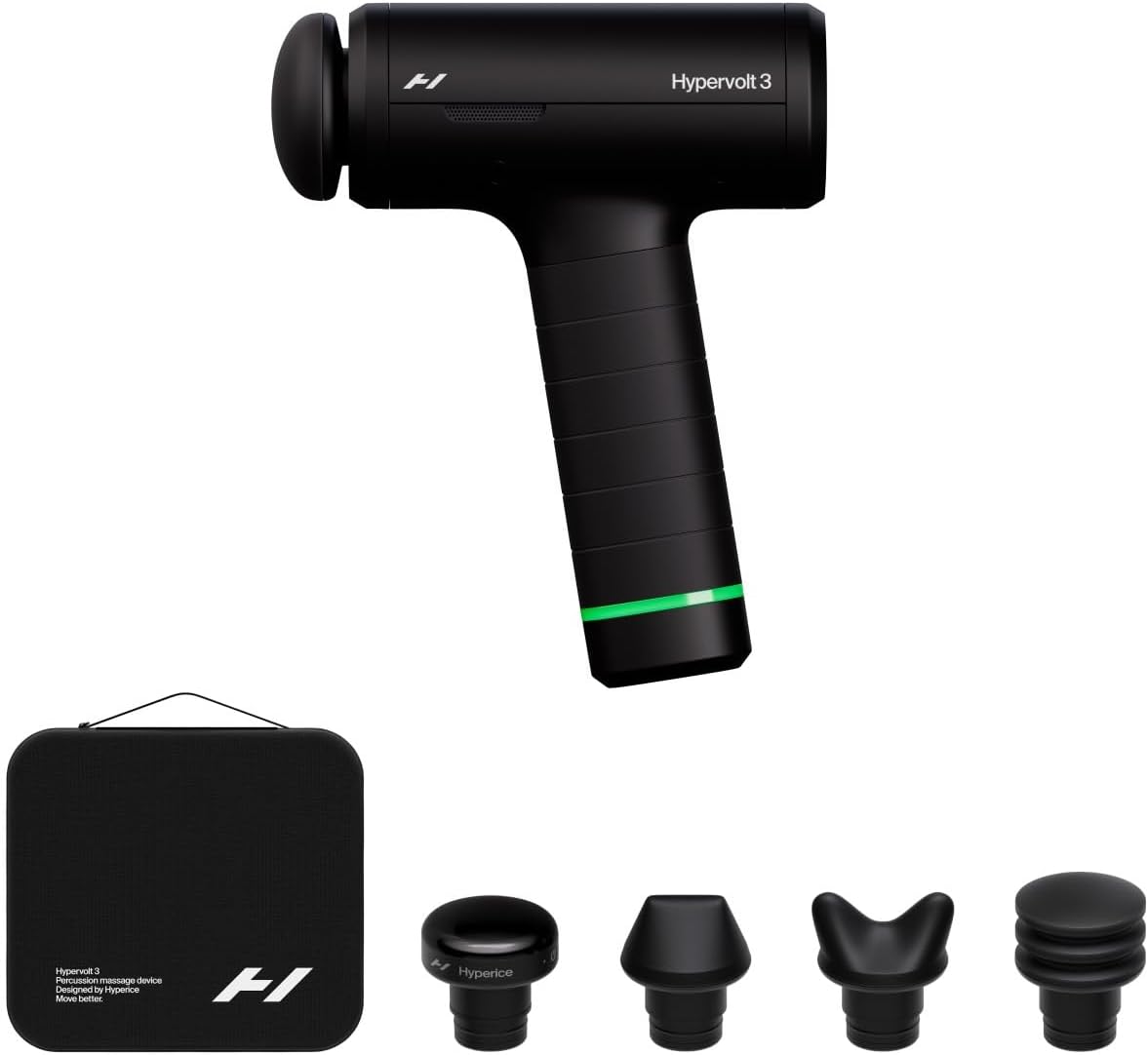
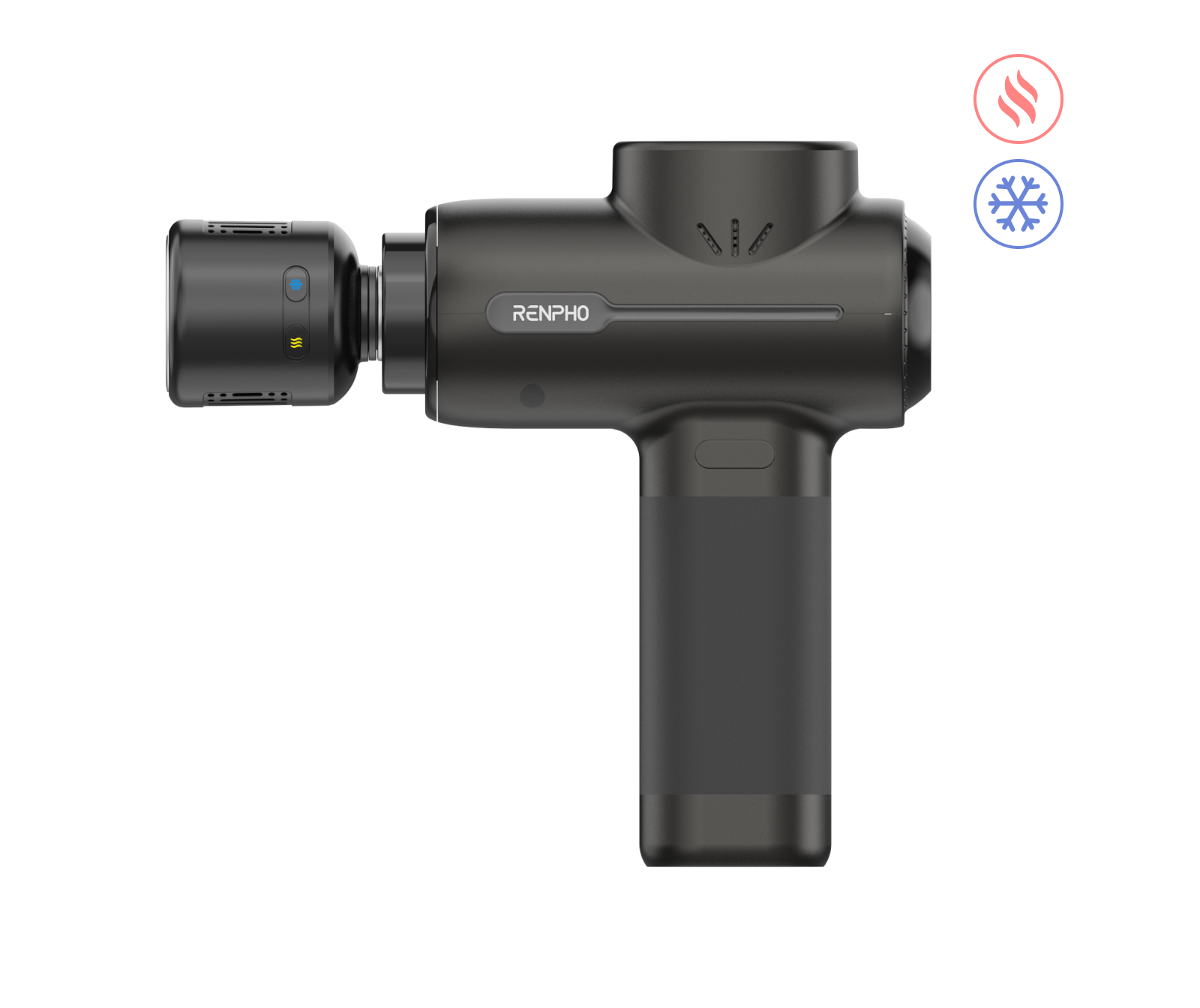
A massage gun’s spec sheet is full of numbers that sound impressive but don’t always translate to real recovery value. Stall force, amplitude, and RPM get thrown around interchangeably in marketing copy, but they measure different things — and only some of them predict how a gun actually feels on a tight muscle. This guide breaks down what to check before buying, using three current models spanning $110 to $329 as concrete reference points.
Stall Force and Amplitude
Stall force measures how much resistance the motor can push against before it slows down — the number that matters most for anyone working through dense muscle like glutes or quads. A gun with low stall force bogs down exactly when you press it into a tight spot, which is the moment you need power most.
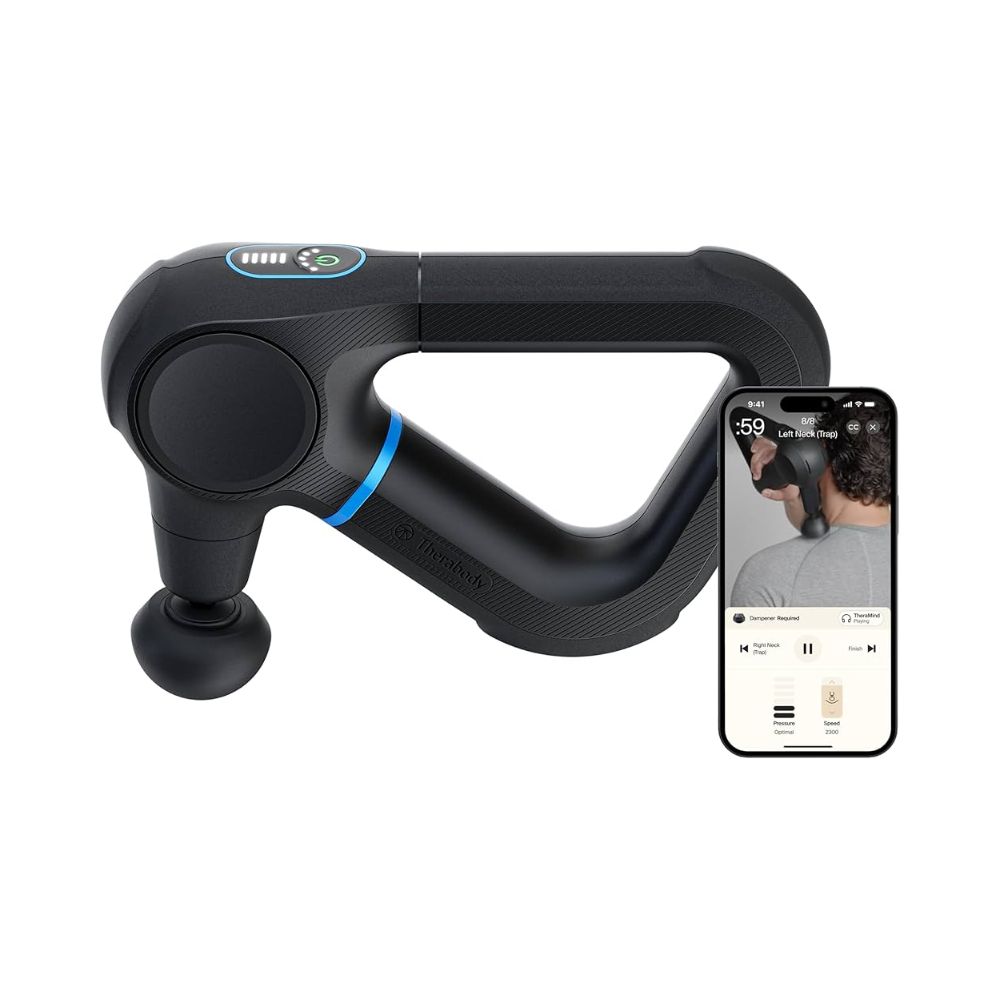
Amplitude, measured in millimeters, is how far the head travels on each stroke. A longer stroke (Theragun’s 16mm, for example) reaches deeper into tissue than a shorter one, while a higher RPM alone just means faster, shallower taps.
When it matters: if you’re working on large muscle groups (quads, glutes, lats) or have dense muscle mass from regular strength training, both stall force and amplitude directly affect whether the device can actually do its job.
When it doesn’t: for light, general-purpose use on smaller muscle groups like calves or forearms, even a budget gun’s spec sheet is more than sufficient — the gap only shows up under real resistance.
Stall force predicts real-world performance far better than motor speed or RPM alone.
Battery Life and Portability
Battery ratings across this category swing wildly — from about two hours on the Theragun Prime to four hours on the Hyperice Hypervolt 3 and roughly six hours on higher-capacity models. Weight matters just as much for actual usability: a 2-lb gun held at arm’s length for a 10-minute session feels very different from a 1.5-lb one.
Most attachments and cases add negligible bulk, so the gun’s own body weight is really what determines fatigue during longer sessions or travel.
When it matters: daily users or anyone traveling with the device regularly should weight battery life and total kit weight heavily — recharging every day gets old fast.
When it doesn’t: occasional, at-home use rarely drains even a 2-hour battery within a single session, so this becomes a convenience factor rather than a dealbreaker.
A lighter gun with a shorter battery often beats a heavier one with a longer battery for everyday, at-home use.
Attachments and Heat/Cold Therapy
Most guns ship with four to six interchangeable heads — flat, ball, fork, and bullet shapes cover the majority of muscle groups. A genuine heat or cold attachment is the real differentiator: it turns the gun into a two-in-one recovery tool instead of requiring a separate heating pad or ice pack.
Not every “heated” attachment performs the same — RENPHO’s Thermacool head genuinely reaches both a warm and cool temperature range, while some competing guns only offer a mild warm setting without a cooling function at all.
When it matters: anyone using percussion therapy specifically for pre-workout warm-up or post-workout inflammation gets real added value from a functioning heat/cold head.
When it doesn’t: if percussion alone is the goal and you already own a heating pad or ice pack, this feature is a nice-to-have rather than essential.
Check whether a “heated” attachment actually reaches a useful temperature range before counting it as a real feature.
Noise Level and Smart Features
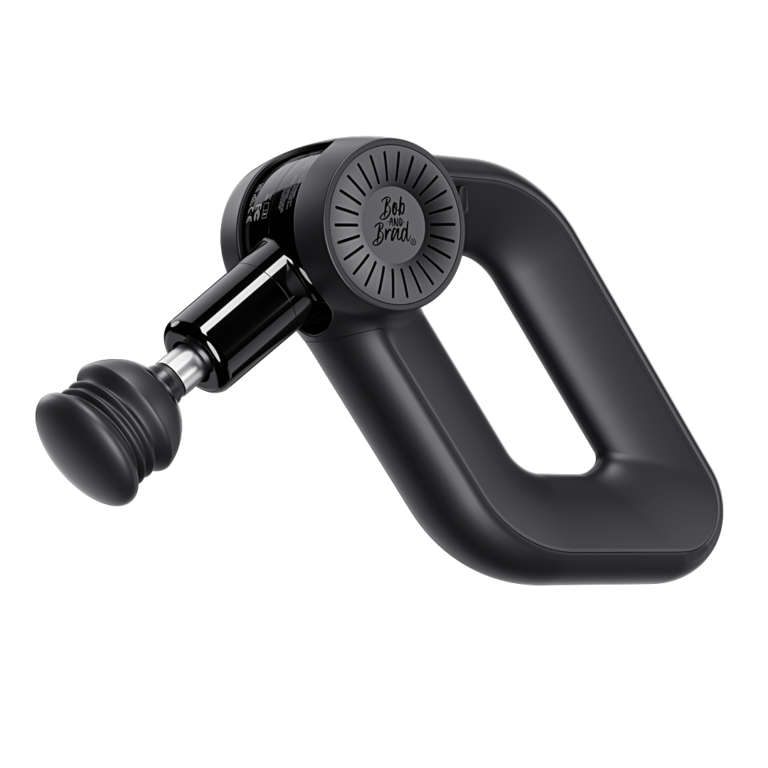
Older percussion guns run loud enough to be heard through a wall — 60 dB or higher isn’t unusual. Newer motor designs, like Hyperice’s QuietGlide tuning, bring that down to around 48 dB, closer to normal conversation. A built-in pressure sensor is the other feature worth watching: it tracks how hard the head is actually pressed into muscle, giving feedback most budget guns skip entirely.
Companion apps vary from genuinely useful (guided routines tied to specific muscle groups) to little more than a battery indicator. None of the guns compared here require the app to function — it’s an enhancement, not a dependency.
When it matters: shared living spaces, early-morning or late-night use, or offices make noise level a real practical concern.
When it doesn’t: solo use in a private space at any hour makes noise level mostly irrelevant.
A pressure sensor is a genuine upgrade for building consistent technique, not just a marketing checkbox.
| Theragun Prime (6th Gen) | Hyperice Hypervolt 3 | RENPHO Active+ Thermacool | |
|---|---|---|---|
| Price | $329.99 | $249 | $110 |
| Stall Force | 30 lbs | Not disclosed | 50 lbs |
| Amplitude | 16mm | Not disclosed | 10mm |
| Battery Life | 120 minutes | 4 hours | ~2.5 hours |
| Heat/Cold Head | No | Heat only | Yes, both |
| Pressure Sensor | No | Yes | No |
| Our Score | 4.4/5 | 4.2/5 | 4.1/5 |
Our Verdict
For most buyers, stall force and amplitude matter more than a longer feature list — that’s why the RENPHO Active+ Thermacool earns its spot despite costing a third of the Theragun Prime. Buyers who want the most durable, highest-amplitude build and don’t mind a shorter battery should go with the Prime; anyone prioritizing quiet operation and real-time feedback should look at the Hypervolt 3.
Budget-conscious buyers who still want genuine percussion power and heat therapy get the best value from the RENPHO Active+ Thermacool — it undercuts the category on price without cutting the two specs that actually matter most.
Frequently Asked Questions
Is a cheaper massage gun like the RENPHO Active+ Thermacool worth it, or should I spend more?
How much battery life do I actually need?
Do I need a pressure sensor?
Does the heat and cold attachment actually work, or is it a gimmick?
What’s the difference between stall force and amplitude?
Which One Is Right for You?
Best Overall
Bottom line: The deepest stroke and most durable build in this comparison, for buyers who prioritize raw performance over battery life.
Quietest & Smartest
Bottom line: Real-time pressure feedback and the quietest motor in this comparison, for buyers who want a smarter recovery routine.
Best Budget
Bottom line: The strongest stall force in this comparison at less than a third of the price, with genuine heat and cold therapy included.