How to Choose the Right Pickleball Gear for Beginners (2026)
The three things that actually decide whether you enjoy your first season on the court — the ball, the paddle, and the shoe — and what to look for in each.

How We Researched
3 pieces of starter gear reviewed across the $10–$220 range, cross-checked against USA Pickleball’s official equipment list and manufacturer spec sheets. No paid placement — badges and scores reflect editorial judgment only.
* As an Amazon Associate I earn from qualifying purchases. Disclosure
What You’ll Learn
- Why paddle core thickness changes your whole game
- How long an outdoor ball actually lasts before it cracks
- Why running shoes are the wrong choice for the court
- What USAP/USAPA approval actually certifies
- Where to spend more, and where a starter product is genuinely fine
3 products in this guide

Most new players show up to their first pickleball session with whatever paddle a friend lent them, balls from a big-box multipack, and running shoes already in the closet — and within a few weeks, one of those three choices is usually the reason they’re frustrated or hurt. This guide breaks down what actually matters in each of the three pieces of starter gear, based on manufacturer specs and USA Pickleball’s official equipment standards, not marketing copy.
Paddle Core Thickness: Power vs. Control
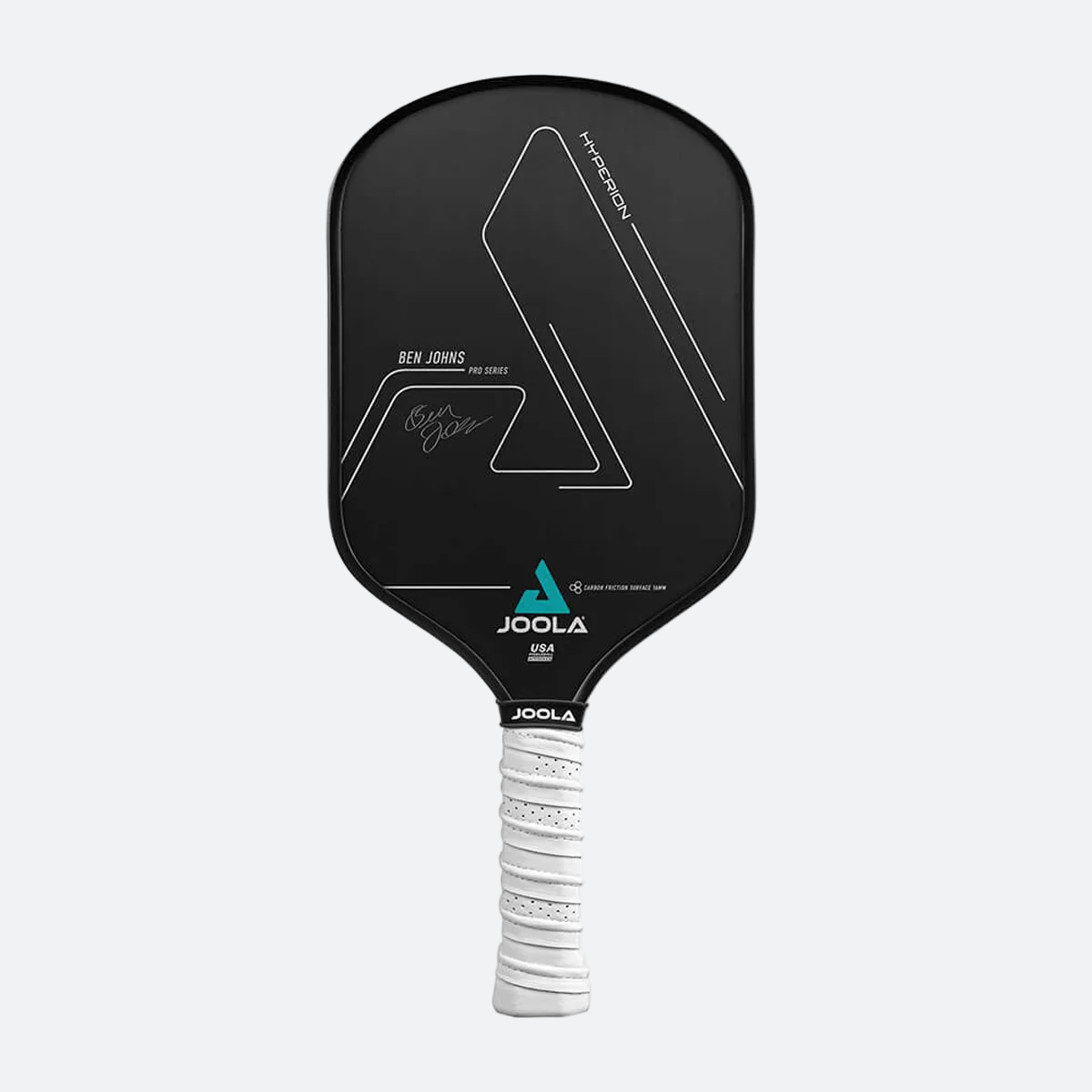
Pickleball paddles are built around a core — usually 13mm, 14mm, or 16mm of honeycomb polymer — and that number is the single biggest factor in how the paddle plays. A thinner 13–14mm core flexes more on contact, giving the ball a softer, more controllable response that’s easier to place precisely during a dink rally at the net. A thicker 16mm core, like the one in the JOOLA Hyperion CFS 16, stays stiffer on contact, transferring more energy into the ball for harder, faster drives.
Beginners are often steered toward control paddles by default, but that’s not universally right — a new player who came from tennis or racquetball and already swings hard may actually find a 16mm power paddle more intuitive than a soft control paddle that seems to “absorb” their shots.
When it matters: if your game is going to be built around dinking and soft resets at the net, a thinner control-oriented core will forgive more mishits and give you better touch.
When it doesn’t: if you’re coming from a racquet sport and your instinct is already to drive the ball, a thicker power core will feel more natural from day one — don’t force yourself into a control paddle just because it’s the “beginner-safe” recommendation.
Core thickness (13–16mm) is a bigger factor in how a paddle feels than price — check it before you check the brand name.
Ball Durability: Why Outdoor Balls Wear Out Fast
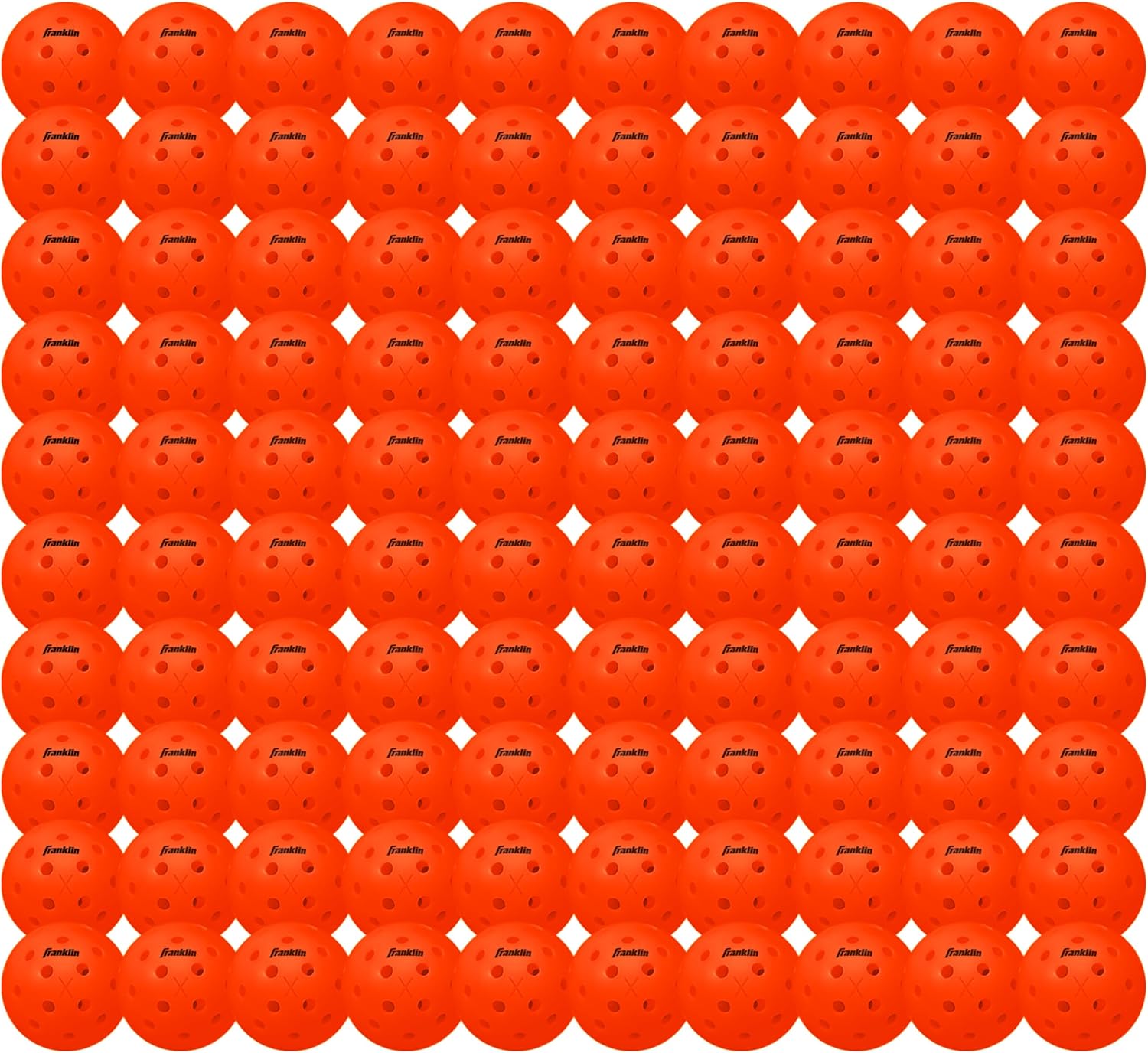
Outdoor pickleballs are hollow, precision-drilled polyethylene shells, and that construction means they don’t last forever — especially on rough concrete or asphalt courts. The Franklin Sports X-40, the official ball of the US Open Pickleball Championships and USA Pickleball’s approved outdoor ball, typically holds up for 15 to 25 sessions on abrasive surfaces before the shell starts to crack, and cold weather below 50°F speeds that wear up further as the plastic stiffens.
New players are often surprised that a “tournament-grade” ball wears out this fast — it’s a function of outdoor court surfaces being genuinely hard on plastic, not a quality flaw specific to one brand. Every outdoor ball on the market faces the same physics.
When it matters: if you’re playing multiple times a week on an outdoor concrete court, budget for replacing balls regularly rather than expecting a single 3-pack to last a season.
When it doesn’t: if you’re playing occasionally, or mostly on a smoother indoor or backyard sport-court surface, ball wear is a much smaller concern and a single pack will go a long way.
Even the official tournament ball cracks within 15–25 outdoor sessions — buy balls in multi-packs, not one at a time.
Court Traction: Why Running Shoes Don’t Cut It
Running shoes are built almost entirely for forward motion — heel-to-toe strides in a straight line. Pickleball is the opposite: constant lateral cuts, quick stops, and explosive side-to-side pushes at the kitchen line. Wearing running shoes on a court is one of the most common reasons new players roll an ankle or blow out a tread within a few sessions, because the shoe simply isn’t built to support that movement pattern.
Court-specific shoes like the Skechers Viper Court Pro address this with two things running shoes skip: a rubber compound outsole with a tread pattern designed for lateral slides, and firmer arch support to stabilize the foot during quick direction changes — the Viper Court Pro’s Arch Fit insole carries the American Podiatric Medical Association’s Seal of Acceptance for exactly this reason.
When it matters: if you’re playing on a hard outdoor or indoor court more than once a week, a proper court shoe meaningfully reduces both injury risk and the “sliding out” feeling on quick direction changes.
When it doesn’t: for one or two casual games, borrowed running shoes won’t ruin your day — but don’t make them a long-term habit once you’re playing regularly.
Running shoes are built for straight-line motion, not the lateral cuts pickleball demands — a court-specific outsole and arch support matter more than most beginners expect.
| Franklin X-40 Balls | JOOLA Hyperion CFS 16 | Skechers Viper Court Pro | |
|---|---|---|---|
| Price (USD) | $9.99 (3-pack) | $159.95 | $114.95 |
| Price (CAD) | $13.99 | $268.48 | $158.99 |
| Certification | USA Pickleball / US Open official | USAP PBCoR .43 | APMA Seal of Acceptance |
| Best for | Every beginner needs balls | Power & spin players | Lateral movement & support |
Our Verdict
The ball is the one non-negotiable — everything else can be borrowed or improvised for a session or two, but you need your own balls, and USA Pickleball-approved outdoor balls like the Franklin X-40 wear out fast enough that a single 3-pack won’t last a season of regular play. Beyond that, prioritize the shoe before the paddle if you’re only upgrading one thing: a proper court shoe like the Skechers Viper Court Pro addresses the injury risk running shoes create, while a mid-range paddle will serve a true beginner fine for months.
Once you know whether your game leans toward soft dinking or hard drives, that’s when a paddle like the JOOLA Hyperion CFS 16 — built for power and spin — becomes worth the upgrade over a generic starter paddle.
Frequently Asked Questions
Do I need a court-specific paddle to start, or can I use a cheap starter set?
How many pickleballs should a beginner buy?
Can I really not wear running shoes to play pickleball?
Is a 16mm paddle too advanced for a true beginner?
What does USAP or USAPA approval actually mean?
Which One Is Right for You?
Tournament-Grade Balls
Bottom line: The non-negotiable first purchase — every beginner needs balls, and this is the tournament standard.
Best for Power & Spin
Bottom line: Pro-tour shape and power at a fraction of the price of JOOLA’s flagship line.
Best All-Around Shoe
Bottom line: The single upgrade most beginners should make first — proper lateral traction and arch support.