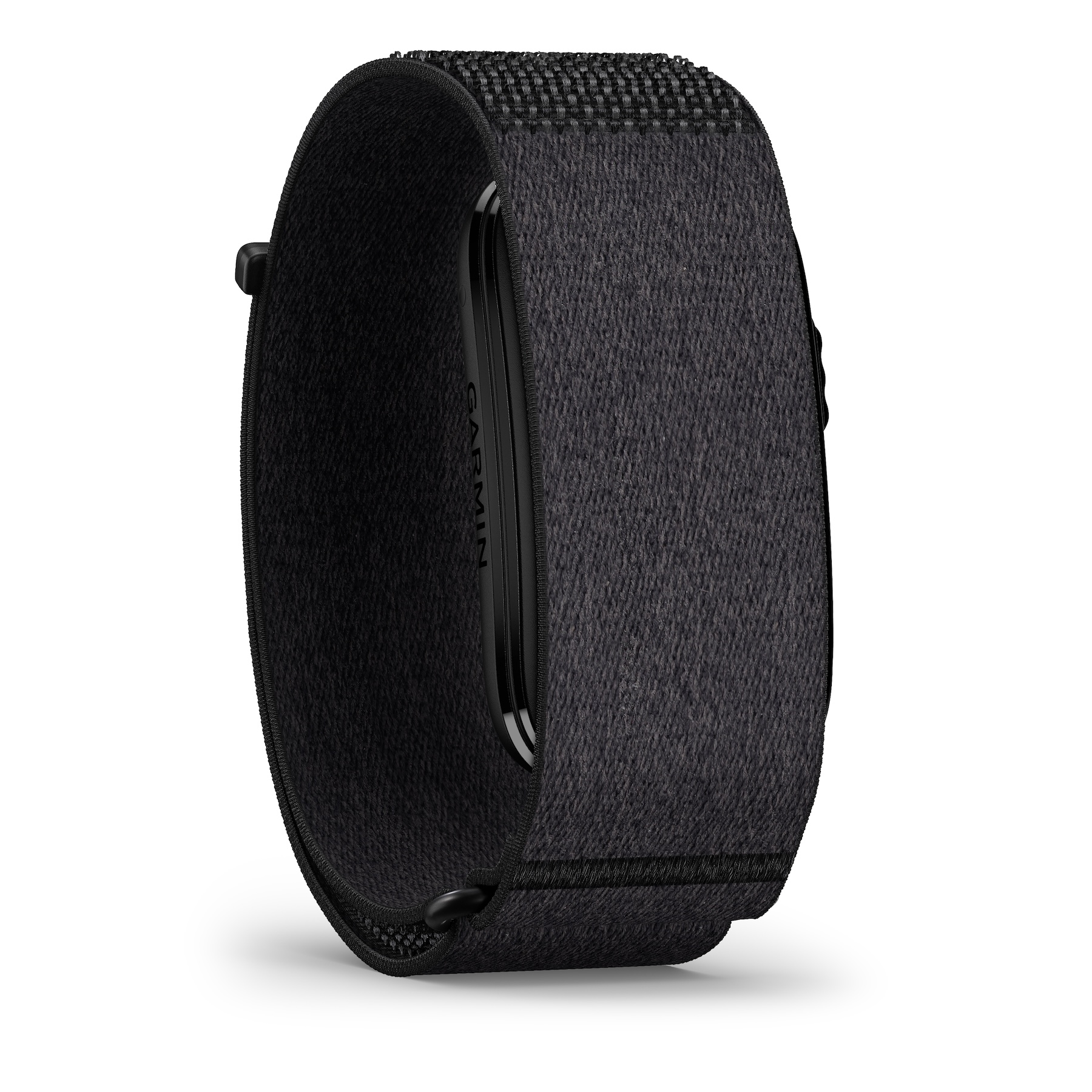
The CIRQA delivers most of Garmin’s health-tracking depth — Training Readiness, Body Battery, HRV Status, and automatic detection across 80-plus activities — without a recurring subscription fee, in a 10-day-battery, 20-gram band. The optional $59 bicep placement closes most of the accuracy gap that wrist-worn optical sensors run into during hard efforts, and 5 ATM water resistance means it survives showers and pool laps without a second thought. Its automatic workout detection still lags Whoop and Fitbit Air, occasionally missing moderate-intensity sessions like casual bike rides.
Pros
- No subscription required for core health tracking
- 10-day battery life in a 20-gram screenless design
- Optional bicep band delivers near heart-rate-strap accuracy
- Full Garmin Connect ecosystem with 80+ auto-detected activities
- 5 ATM water resistance
Cons
- Automatic activity detection misses some moderate-intensity workouts
- No onboard GPS — route and pace data require a paired phone
- Missed workouts can't have heart rate data added after the fact
As an Amazon Associate I earn from qualifying purchases. Disclosure
Overview
Screen-free fitness trackers have mostly forced a choice: Whoop’s ongoing membership or Oura’s finger-sizing kit and app paywall. Garmin’s answer, announced July 21, 2026, is the CIRQA Smart Band — a $199.99 wristband with no display and, more importantly, no subscription required for its core health data. It ships in seven colorways, from Citron Gray to Black, and syncs into the same Garmin Connect app that already runs Forerunner watches and Venu smartwatches, just without a screen to check mid-run.
The pitch is simple: pay once, keep the metrics. HRV, sleep staging, Training Readiness, stress tracking, and automatic detection across 80-plus activity types all work without paying beyond the device price. Tom’s Guide put it bluntly, writing that the balance of price, battery, and training insight is strong enough that Fitbit Air and Whoop “should be a bit worried.” A $59 bicep band sells separately for buyers who want arm-based heart rate data instead of the standard wrist placement.
Key Specifications
| Price (USD) | $199.99 |
| Battery Life | Up to 10 days |
| Weight | 20g |
| Sizes | Small/Medium, Large/XL |
| Colors | 7 — Citron Gray, Mauve, French Gray, Dark Olive, Captain Blue, French Blue, Black |
| Water Resistance | 5 ATM |
| Sensors | Wrist heart rate, HRV, SpO2, skin temperature, respiration, stress |
| GPS | Connected GPS via paired phone — no onboard GPS chip |
| Subscription | None required for core health tracking |
Garmin CIRQA Health and Activity Tracking Accuracy
DC Rainmaker’s accuracy deep-dive — a multi-week test pitting the CIRQA against the Whoop 5.0, Fitbit Air, Amazfit Helio, and Polar Loop — found heart rate performance “right in the mix” with that field: strong in steady-state runs and indoor cycling, less consistent during high-intensity intervals in cold weather. Moving the band from the wrist to the optional bicep placement closed most of that gap, delivering what the review called heart-rate-strap-level accuracy for workouts.
The bigger issue for a screenless device is automatic activity recognition, since there’s no display to confirm a workout started. DC Rainmaker’s testing found the CIRQA’s auto-detection improved over the review period through backend updates but still missed moderate-intensity sessions its rivals caught — casual bike commutes in particular, which the review noted it “never detected” in several instances. Whoop ranked highest for auto-detection in that same test, with Fitbit Air close behind. Overnight sleep tracking fared better: TechRadar’s reviewer found the CIRQA generally accurate against a chest-strap heart rate monitor, with only one workout showing a 10 bpm outlier across the test period.
Battery Life and All-Day Comfort
Garmin rates the CIRQA at up to 10 days per charge — nearly double the Fitbit Air’s rated week and well ahead of ring-style rivals like the Amazfit Helio, which typically needs a charge every few days. At 20 grams with no screen to light up, it disappears on the wrist in a way few smartwatches manage, and the lack of notifications or buttons to fumble with mid-workout keeps the design entirely passive.
Two sizes — Small/Medium and Large/XL — cover most wrist circumferences, and 5 ATM water resistance means it stays on through showers, pool laps, and rain without a second thought. The optional $59 bicep band is worth considering for anyone doing HIIT or lifting, both for the accuracy gain noted above and because a looser wrist band can shift position during explosive movements.
Garmin Connect App and No-Subscription Value
Every core metric — Body Battery, Training Readiness, VO2 max estimates, sleep stages, HRV Status, and stress — lives in the Garmin Connect app at no cost beyond the hardware. That’s the CIRQA’s clearest differentiator against Whoop, whose device functions as little more than a charging case without an active membership running $199 to $359 a year. Oura’s Ring 5 takes a middle path, locking its Readiness score and AI Advisor behind a $5.99-a-month fee while leaving basic data free.
Garmin Connect itself is the same app that already serves millions of Forerunner, Venu, and Fenix owners, so the CIRQA inherits a mature interface rather than a bolted-on companion app. Anyone weighing total cost of ownership over two or three years — hardware plus whatever subscription a rival demands — will find the CIRQA’s $199.99 asking price looks considerably smaller once those recurring fees are added up elsewhere.
How Does It Stack Up Against the Competition?
Here’s how the CIRQA compares with three other screen-free trackers on the market in 2026.
| Feature | Garmin CIRQA | Whoop 5.0 | Fitbit Air | Amazfit Helio Ring |
|---|---|---|---|---|
| Price (USD) | $199.99 | $299 | $99.99 | $149.99 |
| Subscription | None required | Required, $199–$359/yr | None required | None required |
| Battery Life | Up to 10 days | Up to 14 days | Up to 7 days | Up to 4 days |
| Screen | None | None | None | None |
| GPS | Connected (via phone) | None (phone-dependent) | None | None |
| TTP Review | This review ↑ | Read our review → | Read our review → | — |
Prices change frequently — always verify current pricing before purchasing.
Is the Garmin CIRQA Worth It?
The CIRQA earns its keep for anyone who wants Garmin’s health-tracking depth — Training Readiness, Body Battery, HRV Status, 80-plus auto-detected activities — without paying a cent past the $199.99 hardware price. Ten days of battery life and a 20-gram screenless design make it easy to forget you’re wearing it, and the optional bicep band closes most of the accuracy gap that wrist-worn optical sensors run into during hard efforts.
The trade-off is real: DC Rainmaker’s testing found its automatic workout detection lags Whoop and Fitbit Air, missing some moderate-intensity sessions those rivals caught, and there’s no way to add heart rate data to a workout after the fact if it’s missed entirely. Buyers who log every session manually anyway won’t notice; anyone who relies on the band to catch spontaneous activity should weigh that gap before switching from a subscription-based rival.