How to Clean and Maintain Your Pickleball Paddle (2026)
A $150 power paddle plays like a $50 one within a season if the face grit wears down and the core takes on moisture — five minutes of care after each session prevents both.

How We Researched
Steps drawn from Selkirk’s own paddle care guide and PB5 Star’s paddle maintenance tips, cross-checked against our own paddle review. No manufacturer paid for placement.
* As an Amazon Associate I earn from qualifying purchases. Disclosure
What You’ll Learn
- How to wipe down the face after every session
- How to deep-clean and restore surface grit weekly
- When to replace the grip
- How to store a paddle so heat doesn’t warp it
- What to check for signs of internal damage
2 products referenced in this guide
How do you clean and maintain a pickleball paddle without wrecking the surface grit that gives it spin? The honeycomb core and textured carbon-fiber face that make a modern paddle hit hard are also the two things sweat, heat, and the wrong cleaning product damage fastest — the five steps below cover the routine that actually protects both.
Wipe the Face Down After Every Session
A damp microfiber cloth run over the face and edge guard right after play takes about thirty seconds and stops sweat and court dust from working into the surface texture. Selkirk’s own care guide recommends water and a lint-free cloth only — household cleaners leave a sticky residue that dulls the face over time.
Dry the handle with a separate cloth while you’re at it. A grip that stays damp between sessions breaks down faster and gets slick right when you need traction most.
Deep-Clean the Face and Restore Grit Weekly
Once a week (or every other week for casual players), go past the quick wipe: a rubber paddle eraser or carbon-fiber cleaning block rubbed over the face in small circular motions lifts embedded dirt without sanding down the texture that generates spin. If you’d rather use liquid, warm water with a small amount of mild soap on a non-abrasive sponge works, followed by a full dry before storing.
Skip Magic Erasers on a carbon-fiber face — they’re a mild abrasive and will permanently strip surface grit rather than restore it. Bleach, acetone, and alcohol-based cleaners are off-limits too; they break down the protective coating over the face.
Replace the Grip Every 100–150 Hours of Play
An overgrip is the cheapest, most overlooked part of paddle care. Per PB5 Star’s paddle care guide, most players get 100 to 150 hours of play out of one before it turns smooth and stops absorbing sweat — for someone playing a few times a week, that’s roughly once a month. Don’t wait for it to look worn; a grip that’s gone slick costs you control well before it looks obviously bad.
Swapping one takes a few minutes: peel the old grip off starting at the butt cap, wrap the new one on at a slight overlapping angle working toward the paddle face, and finish with the included grip tape.
Store It at Room Temperature, Never in a Hot Car
Heat is the fastest way to ruin a paddle that’s otherwise been cared for perfectly. A car interior can hit 130–150°F in direct summer sun, hot enough to soften the adhesive bonding the face to the core and cause delamination — a bubbled or peeling face that no amount of cleaning fixes. Cold is less dramatic but still a problem, since it makes the face and edge guard more brittle and prone to cracking on impact.
A padded paddle cover in a closet or bag at normal room temperature is enough. Keep it out of the trunk, off a sunny windowsill, and away from a garage that swings hot in summer and cold in winter.
Inspect for Cracks, Dead Spots, and a Loose Edge Guard
Every few weeks, run a quick check before you assume a flat shot is just an off day:
- Tap the face in a grid pattern, listening for a hollow or dead sound compared to the rest of the paddle — that’s a sign of internal core damage
- Check the edge guard for lifting, gaps, or looseness where it meets the face
- Look for visible cracks, chips, or delamination bubbles on the face itself
- Confirm the grip is still tightly wrapped with no unraveling at the top or bottom
A paddle with a genuinely dead spot or cracked face won’t perform consistently no matter how well you clean it — at that point it’s a replacement, not a cleaning problem.
The Right Gear Makes It Easier
Good habits go further with the right equipment to start from.
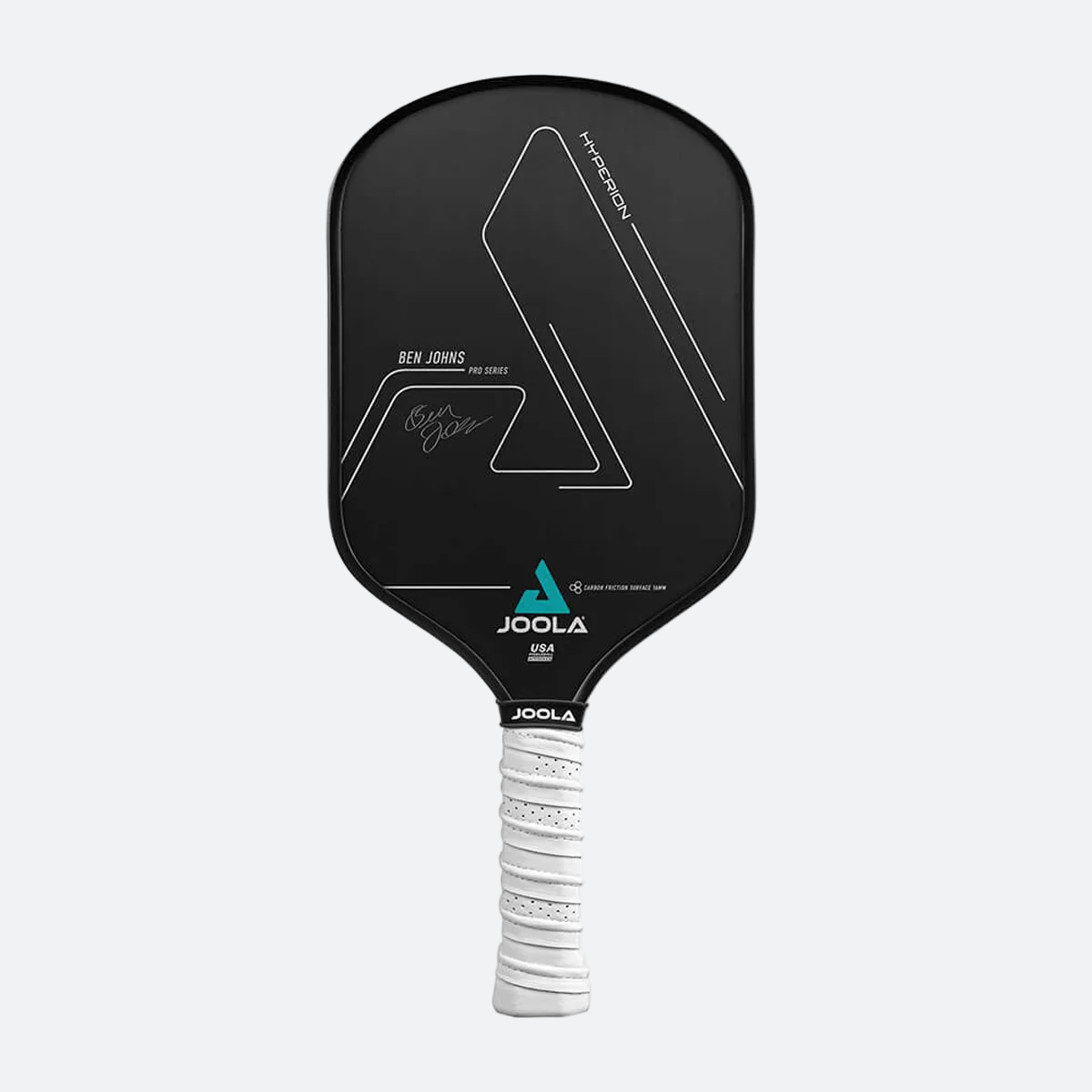
JOOLA Hyperion CFS 16 PaddleJOOLA Hyperion CFS 16 Paddle — its textured Carbon-Flex5 surface is exactly the kind of face that rewards this routine: erasers and a damp cloth keep the grit that drives its spin intact for years instead of months.
Franklin Sports X-40 Outdoor PickleballsFranklin Sports X-40 Outdoor Pickleballs — a seamless, USAPA-approved ball that won’t leave the chalky, gritty residue on your paddle face that a cracked or degraded off-brand ball tends to shed onto it.
Still building out your kit? See our Pickleball Gear Beginners Guide →See our Pickleball Gear Beginners Guide →