AI development mini series · Part 1
AI makes confident mistakes. We built a process to catch them
Why a second AI checks our drafts, and how

We run Top Trusted Products, a product-review site, and AI writes our drafts. A reader is right to be wary of that, and two recent studies show why.
AI answers often go further than their sources
In October 2025 the European Broadcasting Union and the BBC published a study in which journalists rated 2,709 answers from four AI assistants to news questions, collected in late May and early June 2025. They found at least one significant issue in 45% of the answers. In 31% there were significant sourcing problems, such as a cited source that didn’t back the claim or no source at all. The study covered news questions, and it counted any significant issue, which is a lower bar than outright error.
A 2025 paper in Royal Society Open Science had ten language models summarise scientific papers, 4,900 summaries in all. Three of the models overgeneralised in 26% to 73% of cases. In a direct comparison with summaries written by people, the AI summaries were nearly five times as likely to contain broad generalisations.
Neither study looked at product articles, and neither tested a process like ours. But claims that go further than their sources, and sources that don’t back the claim, are what our process is built to catch.
Source citation enforced by independent AI fact-checkers
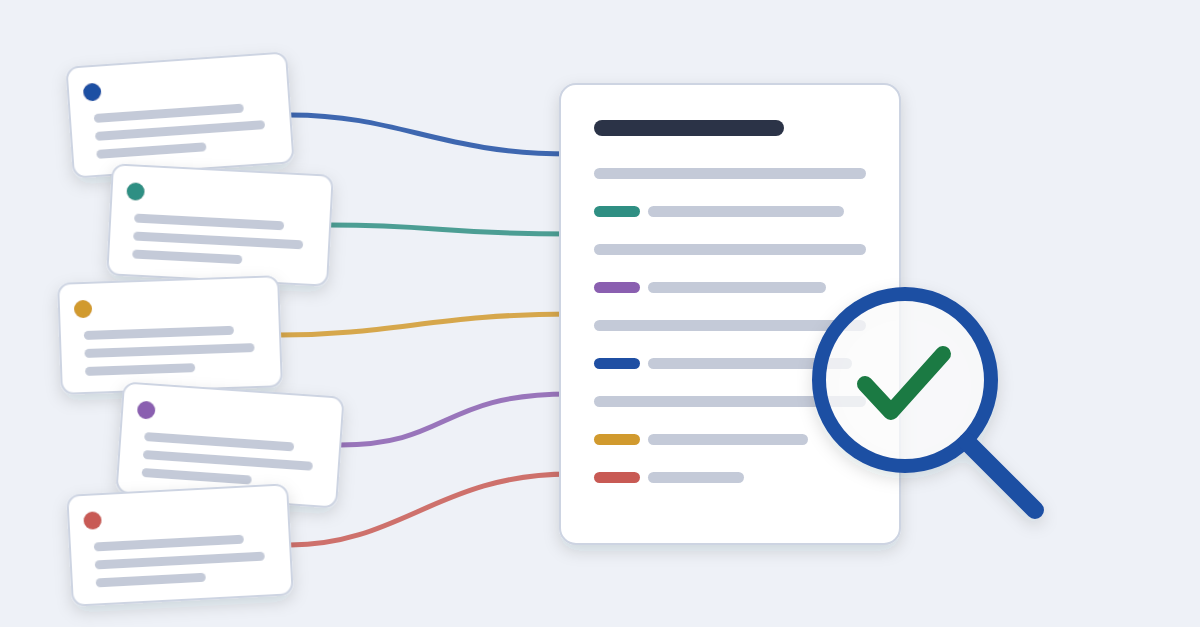
Before an article is written, the research is saved: the pages its facts, figures and opinions come from are stored along with their addresses. Store prices and listings, which can’t be saved that way, are taken from the store’s own data. As the draft is written, its claims are listed against the saved page or store data that supports them. Articles written this way list their sources at the end, with links, so a reader can check what we say against them. Quotes have to match the saved page word for word, and figures have to match their source.
Then a second AI session, one that did not write the draft, reads it against the saved sources. Its job is to find any sentence the sources don’t support, any overstatement and any caveat that went missing. The writer fixes what it finds and the checker reads again. Since October 2, 2026 this has applied to our review, guide and other article drafts, and the publishing step is built to refuse a draft that lacks the checker’s passing verdict on that exact text.
The checker is strict. By November 9, 2026 it had read 263 drafts, covering 259 articles, and 262 of them needed changes after the first read. Nearly all cleared by the third read: 108 on the second and 151 on the third. Three needed a fourth.
Two examples show what it finds. In one draft the text called a product quiet on the strength of a roundup, and left out the roundup tester’s remark that only the low setting was quiet and the others were about as loud as the tester’s usual model. In another, a draft spoke of “hands-on impressions” in the plural, and the sources held a single event demo. Neither looked wrong on the page, and both were fixed before the article went out.
An AI sorted the 2,100 or so problems raised on first reads into types, and a second AI agreed with its sorting on 69 of 90 checked. Omission and going beyond the sources were the two largest, about a quarter each.
Checking the checker
The checker is an AI too, so it gets checked. Each week another AI reads one or two recently published articles at random. Five of these spot checks have run, covering six articles. The first found three accuracy problems in two articles the checker had passed, and one of the three was rated low. The next four found none. Five is too few to say how often the checker misses something.
Why this helps a reader
A chatbot answer usually reads as one voice, and when it does cite sources, they don’t always back what it says. An article written this way since October 2 draws on the named sources saved for it, usually several, so a reader can see where they agree, where they differ and who said what. Its claims are listed against the research behind it, and a second AI has read the draft against that research and sent it back until it passed.
The two studies describe how AI tools go wrong when nobody holds them to their sources. Our process is built to catch those failures before an article goes out.