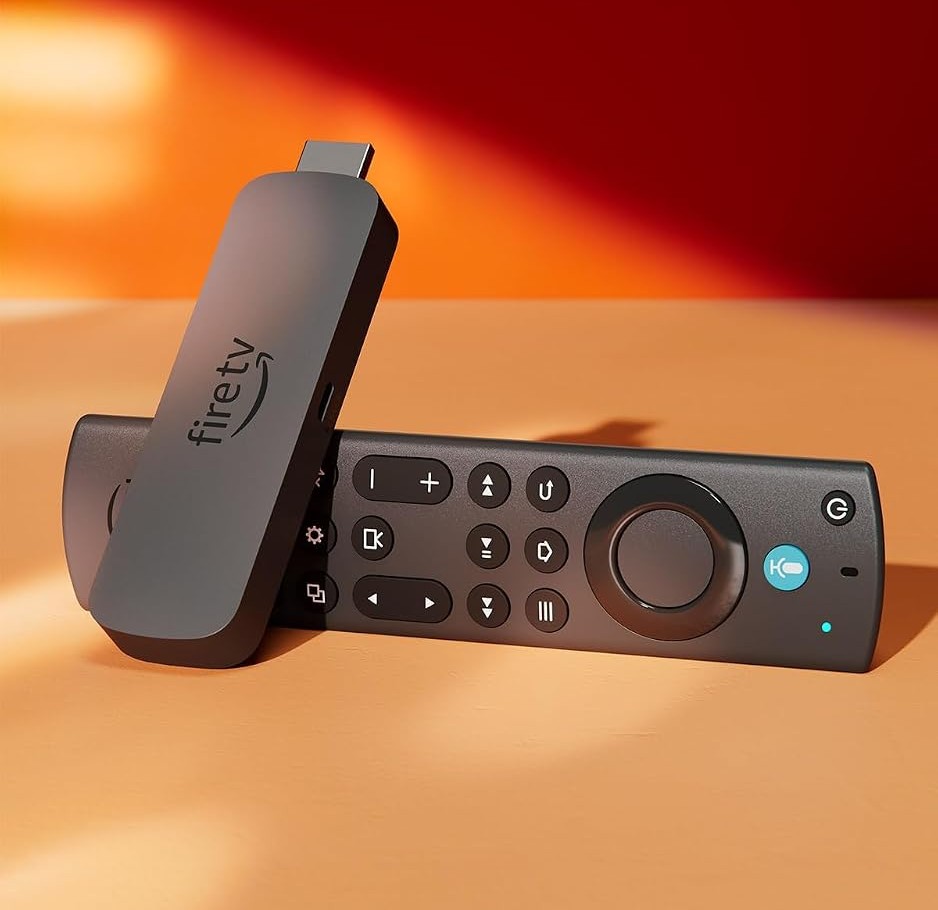
Get the Fire TV Stick 4K Max if you want Dolby Vision, HDR10+ and Dolby Atmos in a quick stick that tucks behind the TV. It runs nearly every major app, adds Wi-Fi 6E, the Ambient Experience and 16GB of storage, and unlike Amazon's new Fire TV Stick 4K it still runs Fire OS with sideloading. The trade-off is a home screen that pushes sponsored rows and Amazon's own shows. If a neutral interface and wired internet matter more, the Google TV Streamer fits better.
Pros
- Dolby Vision, HDR10+ and Dolby Atmos support
- Quick app launches and smooth menus
- Wi-Fi 6E and 16GB of storage
- Fire OS with sideloading
- Ambient Experience art and widgets
Cons
- Ad-heavy home screen built around Amazon's own shows
- Micro-USB power; a TV's USB port may not be enough
- Remote's app buttons can't be remapped
- Can block the next HDMI port without the extender
As an Amazon Associate I earn from qualifying purchases. Disclosure
Overview
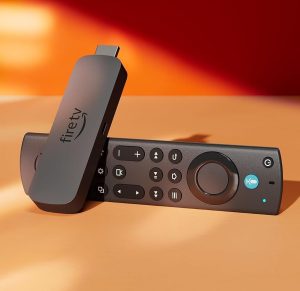
If your TV’s built-in apps have gone slow, the Fire TV Stick 4K Max is Amazon’s quickest fix that still hides behind the set. It is the most powerful stick in Amazon’s lineup, with a 2.0GHz quad-core processor, 2GB of memory and 16GB of storage, and it plays 4K at up to 60 frames per second in Dolby Vision, HDR10, HDR10+ and HLG with Dolby Atmos sound. It costs $84.99 on Amazon as of November 2026, and Amazon often discounts its own devices during its big sales events.
This second-generation model came out in September 2023, and its place in the lineup changed in September 2026, when Amazon launched a new Fire TV Stick 4K to replace the 4K Select and 4K Plus. The new 4K runs Vega OS, Amazon’s own system, in place of the Android-based Fire OS, and 9to5Google reports that it drops sideloading. The 4K Max keeps Fire OS and still lets you sideload apps. It is also one of the devices International Business Times UK names for Amazon’s redesigned 2026 home screen, which raises the number of apps you can keep on the main screen from six to 20.
Key Specifications
| Price (USD) | $84.99 |
| Video | 4K up to 60fps; Dolby Vision, HDR10, HDR10+, HLG |
| Audio | Dolby Atmos, Dolby Digital Plus |
| Processor | MediaTek MT8696T, quad-core 2.0GHz |
| Memory and storage | 2GB RAM, 16GB storage |
| Wireless | Wi-Fi 6E (tri-band), Bluetooth 5.2 |
| Ports | HDMI, micro-USB for power |
| Size and weight | 99 x 30 x 14 mm without the HDMI connector; 46 g |
| Remote | Alexa Voice Remote Enhanced, with TV power and volume buttons |
| In the box | Stick, remote with two AAA batteries, USB cable and power adapter, HDMI extender |
| Operating system | Fire OS |
Fire TV Stick 4K Max Picture, Sound and Speed
Picture: What Hi-Fi? scored its picture 5 out of 5 on a reference Sony OLED, describing a sharp, detailed image with smooth motion in Netflix and Prime Video films. Set side by side with the Google TV Streamer, its picture looked nearly identical; the Google showed a touch more detail and slightly punchier colours, not enough in What Hi-Fi’s view to justify paying more for it. Support for all four major HDR formats means it works with a Dolby Vision LG TV as well as an HDR10+ Samsung.
Sound: The same comparison went the other way on audio. What Hi-Fi rated the sound 4 out of 5, warmer and more dynamic than the Google TV Streamer, with clear dialogue in films, though it found music timing could be better. Expert Reviews heard wider, slightly more detailed sound through a Denon soundbar than from its LG OLED’s own apps.
Speed: Testers agree the 4K Max is quick in menus and between apps. Expert Reviews found no noticeable speed difference from the Fire TV Cube in everyday use; where the Cube loaded an app or programme faster, the gap was tenths of a second. Tom’s Guide was less impressed by the jump over the first-generation model. In its timings of five apps, the 4K Max opened Netflix in 14 seconds against 17 for Roku’s Streaming Stick 4K and Google’s Chromecast with Google TV 4K. The Chromecast was quicker to open YouTube (6 seconds against 9) and the Roku quicker with Sling (9 against 11), and the Apple TV 4K (2022) opened Netflix in 4. Wi-Fi 6E helps only if your router has the 6GHz band.
Fire OS, Apps and Extras
App support is close to complete: What Hi-Fi lists Netflix, Disney+, Apple TV and Prime Video along with niche services such as Mubi and Shudder, plus AirPlay 2, which it points to as the way around the missing Apple Music app. The 4K Max also runs Xbox cloud gaming for Game Pass Ultimate subscribers and Amazon’s Luna service. Alexa voice search handles simple requests by title, actor or app well; in its 2023 testing, Expert Reviews found the newer conversational searches still a work in progress.
The Ambient Experience is the extra testers warmed to. When nothing is playing, the TV shows art, your own Amazon Photos and widgets for weather, your calendar and smart home controls instead of going dark, and the 16GB of storage leaves room for it alongside more apps.
The most common complaint is a home screen that is ad-heavy and built around Amazon’s own shows. Android Central notes there is no way to hide those rows, though pre-installed apps can be hidden or deleted.
Remote, Power and Setup
Setup takes minutes: plug it in, join Wi-Fi and sign in, either with the remote or through the Fire TV phone app. The Alexa Voice Remote Enhanced turns the TV on and off and controls its volume, so the TV’s own remote can go in a drawer. Its four app shortcut buttons can’t be reprogrammed, which leaves some of them useless if you don’t subscribe to those services, and What Hi-Fi points out that a find-my-remote feature needs the optional Remote Pro.
Power is the dated part. The stick still uses micro-USB rather than USB-C, and Amazon advises using the included wall adapter; Android Central got occasional on-screen warnings to do so when it ran the stick from its LG TV’s USB port. What Hi-Fi found the stick can block the HDMI socket next to it, which the included extender cable solves.
How Does It Stack Up Against the Competition?
The 4K Max competes with Roku’s Streaming Stick Plus and with set-top boxes from Google and Amazon that add wired internet and smart home features.
| Feature | Fire TV Stick 4K Max | Roku Streaming Stick Plus | Google TV Streamer | Fire TV Cube |
|---|---|---|---|---|
| Price (USD) | $84.99 | $46.00 | $149.99 (Nov 15) | $199.99 |
| Type | Streaming stick | Streaming stick | Set-top box | Set-top box with built-in Alexa speaker |
| HDR formats | Dolby Vision, HDR10, HDR10+, HLG | HDR10, HDR10+, HLG | Dolby Vision, HDR10, HDR10+, HLG | Dolby Vision, HDR10, HDR10+, HLG |
| Wi-Fi | Wi-Fi 6E | Dual-band Wi-Fi 5 (802.11ac) | Wi-Fi 5 (802.11ac) | Wi-Fi 6E |
| Ethernet port | No | No | Yes, gigabit | Yes |
| Extras | Ambient Experience, AirPlay 2 | Works with AirPlay, HomeKit, Google Home and Alexa | Matter, Thread border router | HDMI input, hands-free Alexa |
| TTP Review | This review ↑ | — | — | Read our review → |
| Amazon | View on Amazon | View on Amazon | View on Amazon | View on Amazon |
Are some of these out of stock? Get an email when they’re back with our free Stock Check
Prices change frequently — always verify current pricing before purchasing.
Fire TV Stick 4K Max: Worth It for Full-Format 4K That Hides Behind the TV
If you want every HDR format and the quickest Fire stick for a slow smart TV, this is the one to get. It covers every major HDR format and Dolby Atmos, opens apps quickly, and keeps Fire OS with sideloading. As of November 2026 it costs more on Amazon than the new Fire TV Stick 4K. That stick runs Vega OS and doesn’t support Dolby Vision, while the 4K Max also has twice the storage (16GB against 8GB) and Wi-Fi 6E. If you mainly watch in HDR10 and never sideload, the new Fire TV Stick 4K does the job, and it can run off a compatible TV’s USB port. If your TV supports Dolby Vision or you rely on an app from outside Amazon’s store, the 4K Max is the one that covers both.
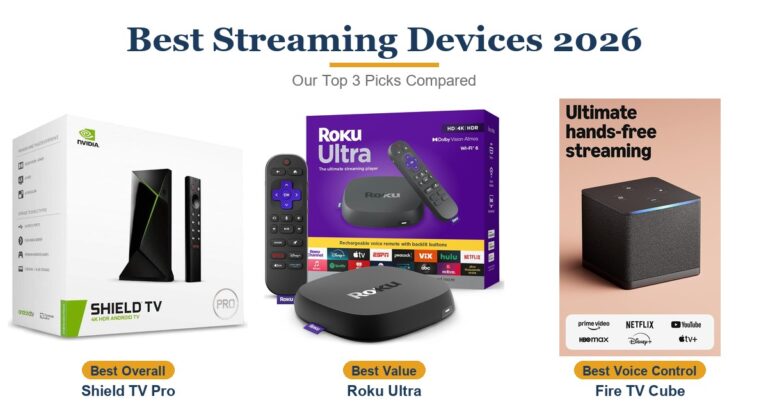
The Roku Streaming Stick Plus suits anyone who wants one less plug behind the TV, since it can draw power from the TV’s own USB port through USB-C. Tom’s Guide calls Roku’s voice controls a major highlight, though it also notes the stick forgoes Dolby Vision and Dolby Atmos. It also costs about half as much on Amazon as of November 2026. Even at the 4K Max’s 2023 price, Tom’s Guide said it would still choose Roku’s previous 4K stick, and Expert Reviews, also in 2023, called the standard Fire TV Stick 4K and Roku Streaming Stick 4K of the time “absolutely fine” if an extra second’s wait doesn’t bother you. If you’d rather have a home screen that pulls recommendations from all your apps instead of leading with Amazon’s own, the Google TV Streamer fits better and adds gigabit Ethernet. Engadget picks it for all-in-one streaming because of its interface, though What Hi-Fi found the Fire stick sounds better. The Fire TV Cube makes sense if you want hands-free Alexa or an HDMI input for a cable box.
Sources
- Fire TV Stick 4K Max (2nd Gen) — Amazon Product Listing
- What Hi-Fi? — Amazon Fire TV Stick 4K Max (2nd Generation) review
- Expert Reviews — Amazon Fire TV Stick 4K Max (2nd gen) review
- Tom’s Guide — Amazon Fire TV Stick 4K Max (2nd gen) review
- Android Central — Amazon Fire TV Stick 4K Max (2023) review
- SlashGear — Fire TV Stick 4K Max (2nd Gen) Review
- CNX Software — Amazon Fire TV Stick 4K Max (2023) features a 2 GHz MediaTek MT8696T CPU
- Engadget — The best streaming devices for 2026
- International Business Times UK — The Amazon Fire TV Stick 4K Max Redesign Is Finally Here
- Tom’s Guide — Fire TV Stick 4K Select hands-on
- 9to5Google — Amazon’s new Fire TV Stick 4K ditches Android, sideloading apps
- Android Central — Amazon just refreshed its Fire TV Stick 4K
- Thurrott — Amazon Launches New Fire TV Stick 4K With Redesigned Remote
- NBC Select — The best streaming devices of 2026
- iPhone in Canada — Amazon Launches Faster Fire TV Stick 4K in Canada
- Tom’s Guide — Roku Streaming Stick Plus review
- Roku — Roku Streaming Stick Plus
- Google — Google TV Streamer (4K) Tech Specs
- Amazon — Third-generation Fire TV Cube announcement
- What Hi-Fi? — Amazon Fire TV Cube (3rd Generation) review
Reader Poll
What would make you pick the 4K Max over the new Fire TV Stick 4K?
Help Our Editors Know What Matters to You
Explore on Amazon →