For round-the-clock sleep and health tracking you can forget you're wearing, the Fitbit Air is the band to buy in Canada, sold by Amazon.ca, and its core features need no subscription. Which?'s lab found it tracked heart rate during exercise better than its fitness-tracker and smartwatch averages, though other testers saw readings run high or lag on some runs, and the battery lasts about a week. Workouts are the weak spot: it has no built-in GPS, and sessions shorter than about 15 minutes often go unlogged. If you train seriously, WHOOP 5.0's deeper app and two-week battery are worth weighing against its yearly membership.
Pros
- Light, narrow and easy to wear all night
- Sleep tracking most testers found believable
- Accurate heart-rate sensor in Which?'s lab tests
- About a week per charge
- No subscription needed for core features
- Works with Android and iPhone
Cons
- No built-in GPS; distance is estimated from steps
- Auto-logging misses workouts under about 15 minutes
- No screen to check the time or stats
- Fabric loop stays damp after showers
As an Amazon Associate I earn from qualifying purchases. Disclosure
Overview
The Fitbit Air is Google’s take on the WHOOP idea: a small sensor pebble on a fabric strap, with no screen, no buttons and no required subscription. It records heart rate, sleep, overnight blood oxygen and skin temperature changes around the clock, then sends it all to the Google Health app on an Android phone or iPhone. Google launched it in May 2026 for people who want health trends in the morning without another screen buzzing on their wrist.
In Canada it sells on Amazon.ca, sold by Amazon.ca itself, at $129.99 CAD (November 2026), the price Google set for its Canadian launch, and its core tracking needs no subscription. That one-time cost is the main contrast with WHOOP, whose Canadian memberships started at CA$259 a year in November 2026. The rest of the appeal is the same on both sides of the border: 12 g with its band and about a week per charge. Which?’s lab also rated its heart-rate tracking during exercise better than its averages for fitness trackers and smartwatches, though other testers saw it run high or lag on some runs.
Key Specifications
| Price (CAD) | $129.99 (Nov 13) |
| Display and buttons | None (vibration motor and a status light only) |
| Sensors | Optical heart rate, 3-axis accelerometer and gyroscope, red and infrared sensors for blood oxygen (SpO2), device temperature sensor |
| Battery life (rated) | Up to 7 days; full charge in 90 minutes; 5 minutes of charging for 1 day |
| Water resistance | Up to 50 m |
| Weight | 5.2 g tracker; 12 g with band |
| Tracker size (without band) | 34.9 x 17 x 8.3 mm |
| Band fit | One size, 130-210 mm wrists (textile band) |
| GPS | None built in |
| Phone app | Google Health (Android 11 or later, iOS 16.4 or later) |
| Subscription | Optional Google Health Premium |
| In the box | Tracker, wristband, USB-C charging cable |
Fitbit Air Sleep and Health Tracking
Sleep is the reason to buy one. The Air logs sleep stages, overnight heart rate, blood oxygen and skin temperature changes, and the app turns them into a nightly sleep score out of 100. Because the band is so easy to forget, it stays on every night, and nightly trends are only as good as the nights you wear it.
Most testers found the nightly results believable and consistent. Tom’s Guide wore it against a Garmin Forerunner 70 every night for a week and found the two close across the board. Android Authority went further, calling it “some of the best sleep tracking I’ve tested.”
The one dissent is about short wake-ups. Digit compared it with an Apple Watch Series 12 for about a week and found the Air missed some brief night-time awakenings that the watch recorded, enough for its reviewer to question the sleep score. Android Authority’s tester, by contrast, found overnight wake-ups lined up closely with reality.
Around the clock, it tracks resting heart rate, heart rate variability and a daily readiness score, and it can alert you to irregular heart rhythms. Which?’s lab measured its resting heart-rate error at 0.83%, against a 20.25% average for the smart rings it has tested, the screen-free option it compares the Air with. It can’t take an ECG reading; for that you need a smartwatch or WHOOP’s MG band.
Workout Tracking and Heart Rate Accuracy
Workouts are where the stripped-back design costs you. The Air logs walks, runs, rides and some other activities by itself, but only after about 15 minutes of continuous activity, so a quick 10-minute session can go unrecorded unless you start it in the app first. With no screen, you also can’t see heart rate or pace mid-session.
Distance is the next weak spot. Over a full day of Which?’s testing it was 10.80% out, close to the fitness-tracker average but well behind the 2.98% average for smartwatches that carry their own satellite receiver. The cause is the missing built-in GPS: unless your phone comes along, the band can only estimate distance from your steps. Expert Reviews saw the same pattern on runs, where its Garmin Forerunner 970 recorded about 1.3 times the Air’s distance at first and still about 1.1 times after six weeks of use and a couple of phone-GPS runs to recalibrate its stride. Gadgets & Wearables’ 5K test against a Garmin came out better, with heart rate and distance surprisingly close.
Heart rate during exercise is where results split. Which?’s lab put the Air’s running heart-rate error at 2.35%, against averages of 9.22% for fitness trackers and 6.13% for smartwatches. Tom’s Guide found its reliability similar to Garmin’s entry-level Forerunner 70 in jumping-jack and run tests. Expert Reviews, though, saw readings run high early in runs, and in one long workout the Air averaged 150 bpm against 128 bpm from its Garmin. Android Authority called its heart-rate tracking good rather than great: some runs matched its chest strap closely, while others lagged during sharp intensity changes.
It can broadcast heart rate to gym equipment and apps such as Peloton. Because heart rate is recorded continuously, a workout logged late can usually be trimmed to the right start time afterwards, though Gadgets & Wearables found the app doesn’t always give enough editing control to repair a session.
Comfort, Battery and Design
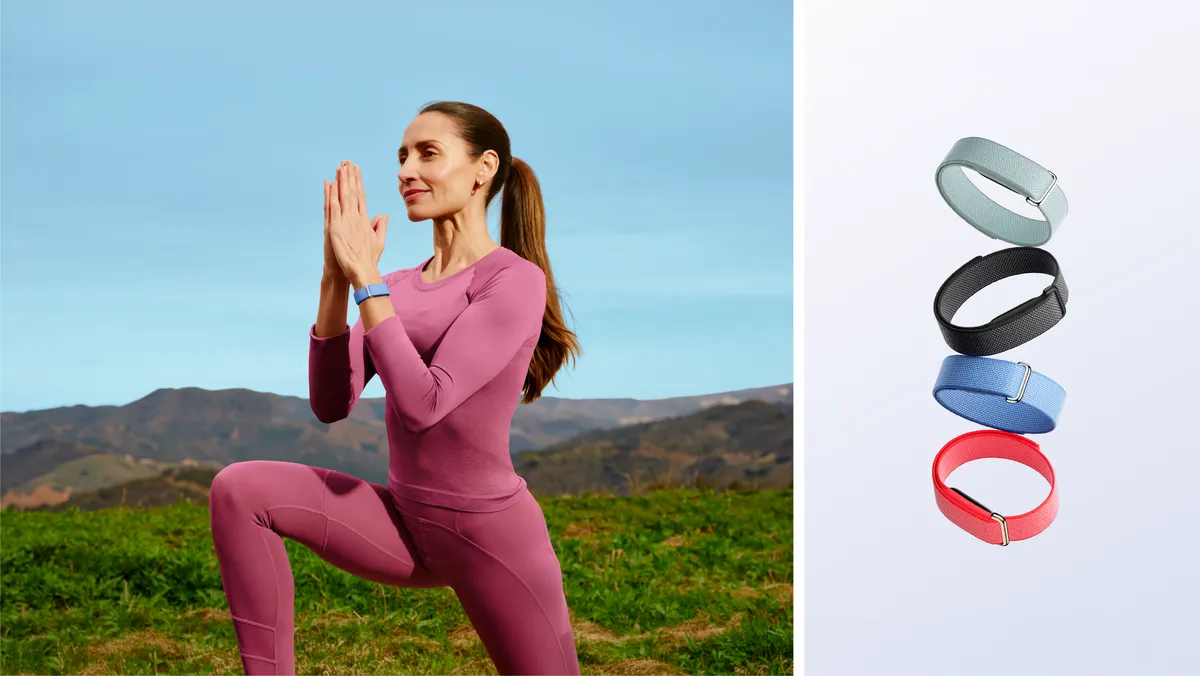
Comfort is the Air’s clearest win. Testers repeatedly forgot they were wearing it, day and night, and Which?’s lab gave it a top rating for comfort. Its strap is 17 mm wide, against 25 mm for WHOOP’s bands in Expert Reviews’ comparison; the5krunner, though, found it too narrow for most wrists. The pebble pops out of its frame, so swapping to Google’s silicone or dressier bands takes seconds.
The default fabric loop can stay damp for a while after a shower or a sweaty workout, though Digit’s reviewer didn’t find it uncomfortable after showers. The silicone Active band dries faster, which suits frequent showers and sweaty sessions, though Android Authority recorded better workout heart-rate data on the fabric loop, likely because it held the sensor more steadily. It is water resistant to 50 m, fine for showers and the pool.
Google rates the battery at up to seven days, and testers got roughly six to eight days in daily use (iPhone in Canada estimated nine). Tom’s Guide finished a week with 15% left, and Which?’s lab measured 199 hours, more than eight days. A full charge takes about 90 minutes by Google’s figure, five minutes adds about a day, and Which? measured 67% in 30 minutes. The band vibrates and your phone gets a notification when about a day of charge is left, which helps, because the magnetic charging cable is its own design and not one you can borrow.
The vibration motor also powers a silent alarm that tries to wake you in a lighter stage of sleep; Digit’s reviewer felt it but wasn’t woken by it, while MySmartPrice’s reviewer, who struggles with alarms, found the wrist buzz more effective than a sound alarm. It won’t buzz for texts or calls.
Google Health App and Premium
Everything you see lives in the Google Health app, formerly the Fitbit app. The free tier covers sleep scores and stages, heart rate and heart rate variability, breathing rate, blood oxygen, readiness, cardio load and steps, plus food, water and weight logging. Expert Reviews found the experience largely complete without paying; Which? disagreed, finding that the free app lists numbers with almost no guidance.
Google Health Premium adds a Gemini-based Coach that builds workout plans and explains trends. On Google’s Canadian store, the three-month Premium trial offered with Fitbit devices renews at $12.99 CAD a month (November 2026), or about $156 CAD over twelve months, more than the band itself costs. Testers split on whether it earns that: Tom’s Guide found the Coach more helpful than Apple’s and Samsung’s equivalents, while Which? found it mostly read your own data back to you.
How Does It Stack Up Against the Competition?
These four screen-free bands are the ones test sites most often weigh against the Air; WHOOP is sold only with a yearly membership.
| Feature | Fitbit Air | WHOOP 5.0 | Garmin CIRQA Smart Band | Amazfit Helio Strap | Polar Loop |
|---|---|---|---|---|---|
| Price (CAD) | $129.99 (Nov 13) | $259.00 (with 12-month membership) (Nov 1) | $279.99 | $139.99 | Deal $208.79 |
| Subscription needed for core tracking | No | Yes (membership includes the band) | No | No | No |
| Rated battery life | Up to 7 days | 14+ days | Up to 10 days | Up to 10 days | Up to 8 days |
| Water rating | Up to 50 m (5 ATM) | IP68 | 5 ATM | 5 ATM | WR30 |
| TTP Review | This review ↑ | Read our review → | Read our review → | — | — |
| Amazon | View on Amazon | View on Amazon | View on Amazon | View on Amazon | View on Amazon |
Are some of these out of stock? Get an email when they’re back with our free Stock Check
Prices change frequently — always verify current pricing before purchasing.
Fitbit Air: Worth It for Comfortable, Subscription-Free Sleep Tracking
For Canadians who want round-the-clock sleep and recovery tracking without a monthly bill, the Air does that job with less on the wrist than any rival here. As of November 2026 it costs $129.99 CAD on Amazon.ca, close to the Amazfit Helio Strap’s $139.99 CAD and about half the Garmin CIRQA’s $279.99 CAD or the Polar Loop’s $269.99 CAD. One feature didn’t cross the border at launch: when iPhone in Canada reviewed it in May 2026, the Google Health app’s medical-record storage was available only in the US.
Runners and cyclists who want pace, mapped routes and live heart rate should look at a GPS watch, or at Google’s screen-equipped Fitbit Edge, which adds built-in GPS. In the5krunner’s comparison, WHOOP 5.0 wins on app depth, automatic workout detection and battery life, worth weighing if a yearly membership doesn’t bother you. The same comparison makes the CIRQA the better buy for existing Garmin owners, and Garmin’s band has a single button that starts a workout without the phone. For about the same price, the Amazfit Helio Strap is the one to weigh if workouts matter more: Gadgets & Wearables rates it the strongest low-cost pick for training, and its battery is rated for 10 days.

Sources
- Google — Fitbit Air Tech Specs
- Fitbit Air — Amazon.ca Product Listing
- Which? — Fitbit Air review: is this screenless tracker worth the money?
- Tom’s Guide — Fitbit Air review
- Android Authority — Google Fitbit Air review
- Expert Reviews — Fitbit Air review
- Digit — Google Fitbit Air review
- iPhone in Canada — Fitbit Air Review
- the5krunner — WHOOP Alternatives Compared
- Gadgets & Wearables — Best screenless fitness trackers compared for 2026
- MySmartPrice — Google Fitbit Air Review
- the5krunner — Fitbit Air Specifications
- WHOOP — Memberships
- Garmin — CIRQA Smart Band announcement
- the5krunner — Garmin CIRQA Specs
- Amazfit — Helio Strap
- Polar — Polar Loop
- iPhone in Canada — Fitbit Air Arrives in Canada
- Google Store Canada — Offers and terms
Reader Poll
What would you mostly use a screen-free band like the Fitbit Air for?
Help Our Editors Know What Matters to You
Explore on Amazon →