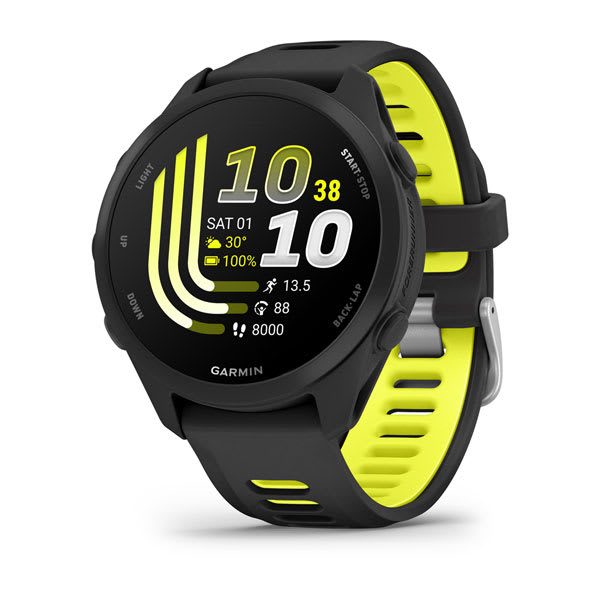
For Canadian road runners who want a watch that coaches them, the Forerunner 170 is a strong pick: Training Readiness and Training Status tell you when to push, and Garmin Pay, if your card issuer takes part, lets you leave the phone at home. Its GPS and heart rate held close to dual-band watches and chest straps on steady runs, in a light 41 g case. The trade-offs are older hardware: single-band GPS that may drift among tall buildings, and a heart-rate sensor that lags a chest strap slightly in hard intervals. If you'd skip tap-to-pay and the altimeter, the Forerunner 70 is nearly the same watch, and the COROS Pace 4 is the value pick if Garmin's smart features don't matter.
Pros
- Training Readiness and Training Status at this level
- Heart rate close to a chest strap on steady runs
- Garmin Pay contactless payments
- Barometric altimeter for smoother elevation data
- Light 41 g case, comfortable to sleep in
- Fast charging
Cons
- Single-band GPS can drift among tall buildings
- Older Gen 4 heart-rate sensor lags slightly in intervals
- No triathlon mode or offline maps
- Shorter rated battery than the Forerunner 70 and Pace 4
As an Amazon Associate I earn from qualifying purchases. Disclosure
Overview
The Forerunner 170 is Garmin’s 2026 running watch for people who want real training guidance without paying for a flagship: a light 43 mm watch with a 1.2-inch AMOLED touchscreen, five buttons, Garmin’s Training Readiness and Training Status scores, and Garmin Pay for tapping to pay mid-run. It went on sale in May 2026 as the replacement for the Forerunner 165, and it sits one step above the new Forerunner 70, which shares most of its hardware.
On Amazon.ca it costs $419.98 CAD, against $349.99 CAD for the Forerunner 70 and $349.00 CAD for the COROS Pace 4 (October 2026), so the step up from the 70 is about $70 CAD here. For that, the 170 adds tap-to-pay through Garmin Pay, a compass, thermometer and barometric altimeter, open-water swim tracking, and pairing with bike power meters and smart trainers. Owners of the 165 will recognise the case, screen and heart-rate sensor, now joined by a gyroscope, so the reasons to move up are on the software side: Garmin’s latest interface from the Forerunner 570 and 970, morning readiness scores and load tracking, running power from the wrist, and on-the-spot Quick Workouts. Several of the tests cited here were run on the Forerunner 170 Music, which is this watch with music storage and Wi-Fi added, and we say so where a finding comes from it.
Key Specifications
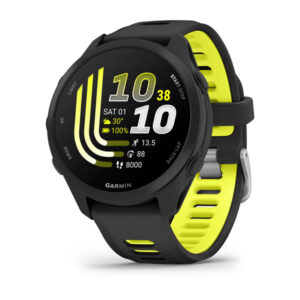
| Model | Forerunner 170, part number 010-03920-00 (Black with Black/Amp Yellow band) |
| Price (CAD) | $419.98 |
| Display | 1.2-inch AMOLED touchscreen, 390 x 390 pixels, plus five buttons |
| Case and lens | 42.6 x 42.6 x 11.9 mm fiber-reinforced polymer; chemically strengthened glass |
| Weight | 41 g |
| Water rating | 5 ATM |
| Satellite systems | GPS, GLONASS, Galileo, BeiDou and QZSS, single-frequency |
| Sensors | Elevate Gen 4 optical heart rate, Pulse Ox, barometric altimeter, compass, gyroscope, thermometer |
| Battery (Garmin’s ratings) | Up to 10 days smartwatch (4 days with always-on display), 19 days battery saver, 20 hours GPS only, 14 hours All-Systems |
| Payments | Garmin Pay (NFC), with a participating bank |
| Connectivity | Bluetooth and ANT+; no Wi-Fi and no music storage on this model (both come with the Forerunner 170 Music) |
| In the box | Watch and charging cable |
Garmin Forerunner 170 GPS and Heart-Rate Accuracy
On open roads and in suburbs, the 170’s GPS tracked well in the tests we read. The5krunner ran it beside a Stryd footpod and other watches: on a suburban loop it logged 3.73 km, exactly what the footpod recorded, and on a measured parkrun course it came within 7 m of the average of three other watches. Testers who compared the Music version with other watches, including the dual-band Forerunner 970, COROS Pace 4 and Forerunner 265 and an Apple Watch Ultra 3, found little or no difference, and Canadian Running’s comparison took in city streets and bridges.
Where single-band GPS may still struggle is among tall buildings and under dense foliage, the places where testers expect dual-band tracking to help most. The5krunner’s urban-canyon route, with a 50 m underpass, was hard on every watch it tested: the 170 came in 40 m long over 2.98 km; it held the line next to some buildings, which the site thinks was probably more luck than anything else, and the dual-band Forerunner 970 drew the most accurate track on the day. Its advice for anyone pacing by GPS downtown is a footpod. Tom’s Guide, for its part, found the Music version fine on its city runs.
Heart rate is the pleasant surprise, given that Garmin kept the Elevate Gen 4 sensor rather than the Gen 5 on its higher-end watches. On a steady parkrun, the5krunner measured a bias of just -0.1 bpm against a chest-strap reference, with limits of agreement of -2.6 to +2.5 bpm, and TechRadar’s 25-minute treadmill test of the Music version put average and maximum heart rate within 1 to 4 bpm of a Polar H10. Intervals are its weaker spot, but only just. The5krunner still called its short-interval accuracy excellent, even as the spread against the chest strap grew to -7.8 to +8.7 bpm and the reading took a moment to settle after the last rep; Tom’s Guide also saw the Music version trail a strap during an interval session. The watch pairs with Bluetooth and ANT+ chest straps for anyone who wants strap-level precision in intervals.
The barometric altimeter’s clearest benefit is live data: the 170 shows current elevation and total ascent during a run, which the Forerunner 70 only does when you follow a loaded course. On the finished graph the gap is smaller. The5krunner’s single ride test and Tom’s Guide’s testing of the Music version showed smoother profiles from the 170, while DC Rainmaker, wearing both watches on a 5 km trail run, saw totals only a few meters apart and expects most people won’t notice the difference. The5krunner expects the altimeter to matter most on long hikes and ultra runs.
Training Tools and Smart Features
The software is where the 170 moves past the 165. Training Readiness folds sleep, HRV status, recovery time and recent load into one morning score, and Training Status tells you whether the past week of training is building fitness or tipping into overreaching; Garmin used to keep both for its higher-end Forerunners. Add wrist-based running power and running dynamics, Garmin Coach plans that adapt daily (including run/walk plans for beginners), daily suggested workouts and a race predictor, and there’s plenty to manage a marathon build. Tom’s Guide’s reviewer, a marathoner who tested the Music version, found it had everything needed to keep an eye on training load.
The new Quick Workout tool builds a session from how long you have, up to an hour, and how hard you want to go. Tom’s Guide found its sessions on the tough side and scaled them back, and T3 thinks the one-hour ceiling might feel too inflexible for half- and full-marathon training.
It stops short of Garmin’s top tier in a few places. There’s no triathlon or multisport mode, though each leg can be recorded separately, and no offline maps, only breadcrumb routes with turn-by-turn directions. T3 also lists Endurance Score, Heat and Altitude Acclimation and Real-time Stamina among the metrics it leaves out.
Garmin Pay is the headline reason to pick the 170 over the 70: add a card from a participating bank and you can buy a drink mid-run without a phone. Smart notifications, LiveTrack and incident detection work through a paired phone. There’s no microphone, speaker or voice assistant, and this standard model has no Wi-Fi or music storage; the Forerunner 170 Music adds offline playlists from Spotify, Amazon Music and Deezer. Setting it up takes patience: the5krunner, a Garmin user for more than a decade, found pairing and settings more involved than on Apple’s watches and expects first-time owners to look things up.
Battery Life and Charging
Garmin rates the 170 at up to 10 days as a smartwatch, or 4 with the always-on display, plus 20 hours of GPS-only tracking and 14 hours in All-Systems mode. That’s three days less than the Forerunner 70’s rating, because the 170’s extra sensors draw on the same battery, and well short of the 19 days COROS quotes for the Pace 4.
Real-world results depend mostly on the display setting. T3 measured about 10% drain a day without GPS, and TechRadar’s Music version lasted just over a week with several GPS workouts. With the screen always on at medium brightness and a run every day, Tom’s Guide got about three and a half days from the Music version. GPS runtime matches the ratings: a three-and-a-half-hour All-Systems walk took a quarter of T3’s battery, in line with 14 hours.
Charging is quick. T3’s went from 15% to 50% in 20 minutes and to full in 65 minutes, and it uses Garmin’s long-running four-pin cable, so a charger from an older Garmin works.
Design and Display
At 41 g, with a 42.6 mm case and a standard 20 mm quick-release strap, it’s light and small enough to wear to bed for sleep and HRV tracking, and testers found it comfortable day and night. The five buttons work alongside the touchscreen, which helps with sweaty fingers or gloves.
The screen splits opinion. Most testers found the 1.2-inch AMOLED easy to read even in direct sunlight; TechRadar is the exception, finding the Music version’s screen not particularly bright even at full power. T3 notes that Garmin doesn’t publish a brightness figure.
The savings show in the materials. The case and bezel are fiber-reinforced polymer, and the lens is chemically strengthened glass rather than Gorilla Glass or sapphire, which the5krunner warns scratches more easily.
How Does It Stack Up Against the Competition?
Garmin’s own Forerunner 70, covered throughout this review, is about $70 CAD less on Amazon.ca as of October 2026 and drops Garmin Pay, the altimeter, the compass and the thermometer. Outside Garmin, the 170’s rivals are light running watches from COROS, Polar and Suunto.
| Feature | Garmin Forerunner 170 | COROS PACE 4 | Polar Pacer Pro | Suunto Run 2 |
|---|---|---|---|---|
| Price (CAD) | $419.98 | $349.00 | $449.90 | $489.00 (4GB) |
| Display | 1.2-inch AMOLED | 1.2-inch AMOLED | 1.2-inch MIP (always on) | 1.32-inch AMOLED |
| Weight | 41 g | 40 g (with silicone band) | 41 g (with strap) | 35 g (watch body) |
| Smartwatch battery (maker’s rating) | Up to 10 days | Up to 19 days | Up to 6.5 days | About 10 days |
| GPS battery (maker’s rating, mode) | 14 hours (All-Systems) | 41 hours (All-Systems) | 30 hours (GPS and heart rate) | 24 hours (dual-band) |
| Dual-band GPS | No | Yes | No | Yes |
| Contactless payments | Yes (Garmin Pay) | No | No | No |
| Offline maps | No (breadcrumb routes) | Yes (added by a September 2026 update) | No (route guidance) | Yes |
| TTP Review | This review ↑ | Read our review → | — | — |
| Amazon | View on Amazon | View on Amazon | View on Amazon | View on Amazon |
Prices change frequently — always verify current pricing before purchasing.
Garmin Forerunner 170: Worth It for Road Runners Who Want Guidance
The 170 earns its place for Canadian runners who train mostly on roads and paths and want the watch to tell them when to push and when to back off. Training Readiness and Training Status are the reason to choose it over the 165, and Garmin Pay and the altimeter are the reason to choose it over the 70, but check your card first: Garmin Canada’s list of participating issuers names ATB Financial, Brim, Questrade, Wealthsimple and Zoomer among others, so a card from your bank may not work. For winter running, Garmin rates the watch to operate down to -20°C (-4°F) and to charge only between 0°C and 45°C (32°F and 113°F), so top it up indoors. It also suits anyone whose running history already lives in Garmin Connect, since the 170 will keep getting new features and the 165 won’t.
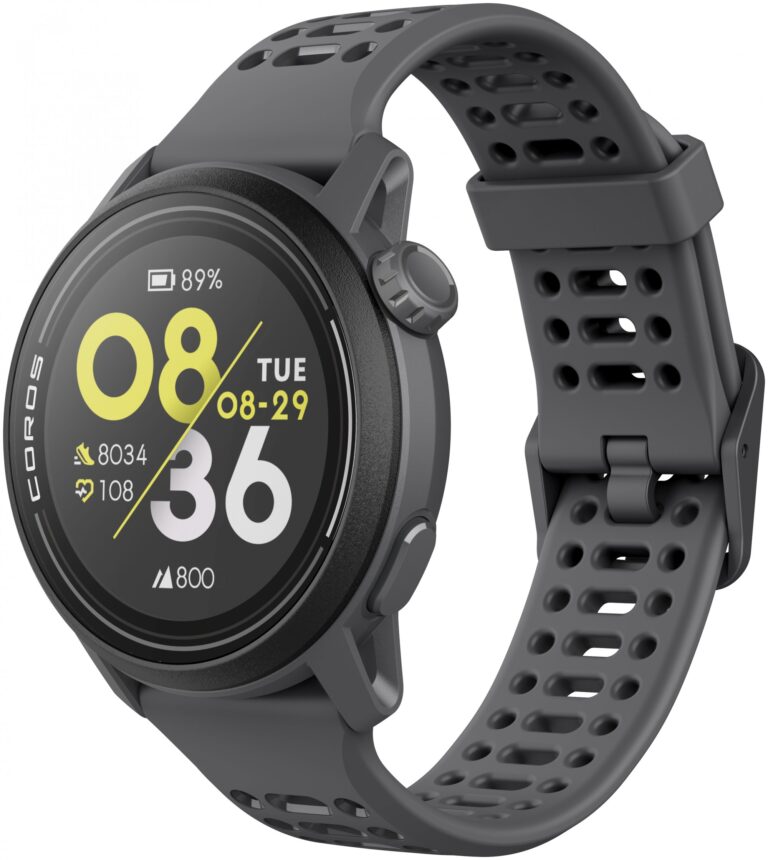
If you’d never use tap-to-pay, the altimeter, open-water swims or a cycling power meter, the Forerunner 70 is nearly the same watch, and the testers who compared them point those runners to the 70. Tom’s Guide rates the COROS Pace 4 better value if you don’t need Garmin’s smart features, and T3 thinks it arguably offers more value for experienced runners; it adds dual-band GPS, maps and a triathlon mode, while the Suunto Run 2 brings dual-band GPS, maps and a 2,000-nit screen. If you run among the tallest buildings and want the most reliable tracking there, either is the safer bet on paper than the single-band 170. If a discounted older model appeals, our Garmin Forerunner 165 review covers what you give up.
Sources
- Garmin — Forerunner 170 product page
- Garmin — Forerunner 170 Series Owner’s Manual (specifications and battery)
- Garmin — Forerunner 70 and Forerunner 170 announcement
- Garmin Forerunner 170 — Amazon.ca Product Listing
- the5krunner — Garmin Forerunner 170 review
- the5krunner — Garmin Forerunner 170 specifications
- Tom’s Guide — Garmin Forerunner 170 review
- Tom’s Guide — Garmin Forerunner 165 vs Forerunner 170
- TechRadar — Garmin Forerunner 170 review
- T3 — Garmin Forerunner 170 review
- DC Rainmaker — Garmin Forerunner 70 vs Forerunner 170
- Canadian Running — Garmin Forerunner 170 Music and Forerunner 70 review
- COROS — PACE 4
- the5krunner — COROS Pace 4 review
- Polar — Pacer Pro
- the5krunner — Polar Pacer Pro specifications
- Correr Juntos — Polar Pacer Pro review
- Suunto — Suunto Run 2
- Suunto — Suunto Run 2 announcement
- the5krunner — Suunto Run 2 review
- Tom’s Guide — Suunto Run 2 review
- Garmin Canada — Forerunner 170 product page
- Garmin Canada — Garmin Pay participating banks
Reader Poll
What would make the Forerunner 170 worth it over the Forerunner 70 for you?
Help Our Editors Know What Matters to You
Explore on Amazon →