Best Dog Harnesses of 2026: Everyday Walks and Mild Pullers
Ruffwear’s Front Range is the harness to buy once for an average-build dog; the Julius-K9 adds a handle, the Kurgo costs least.

As an Amazon Associate I earn from qualifying purchases. Disclosure
At a glance
The best dog harnesses of 2026 differ less in padding than in three things: where the leash clips on, whether there is a handle, and how well the harness suits your dog’s shape. We compared more than 20 harnesses named in two current independent test roundups with the harnesses we have reviewed, and chose three for everyday walks: a padded all-rounder with two leash points, a handle harness for dogs that already walk nicely, and a low-cost harness with the most adjustment. They are ranked by our review scores.

Buy it if you want one padded harness with a chest and a back leash point that lasts for years of daily walks.
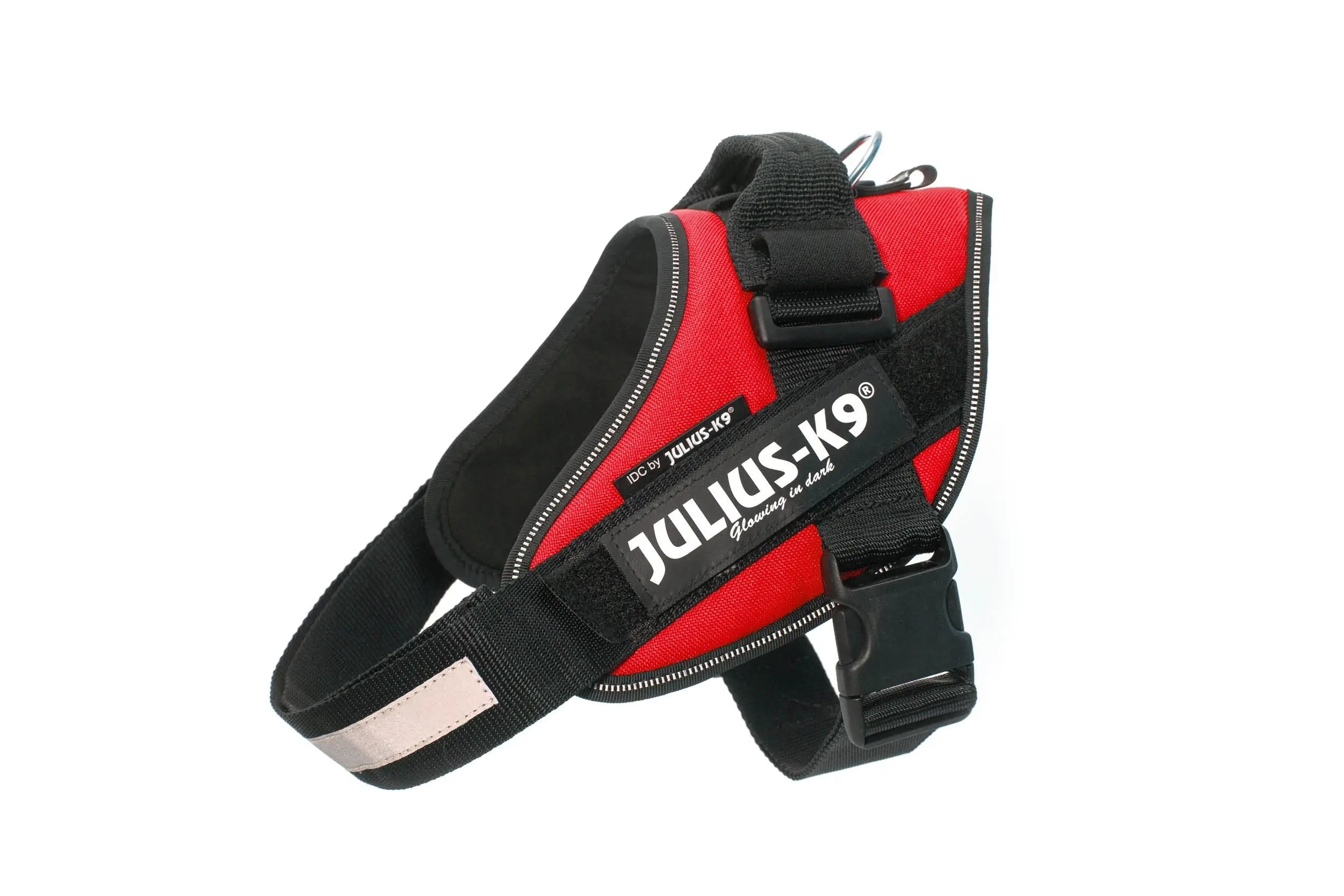
Buy it if your dog already walks on a loose leash and you want a sturdy handle to hold on stairs or at the car door.
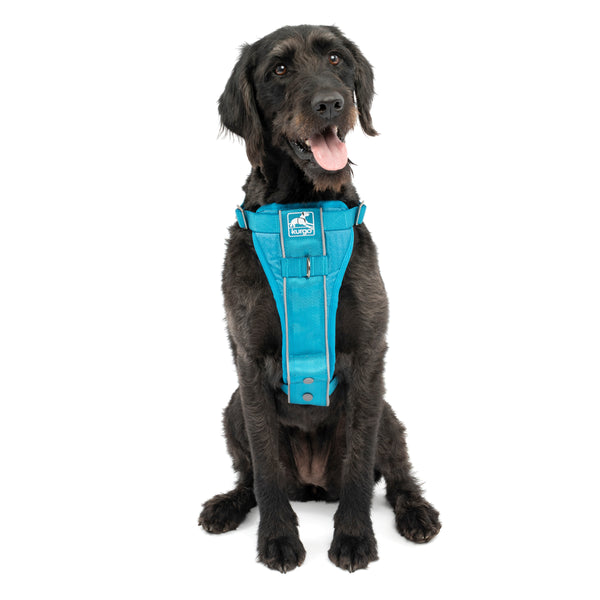
Buy it if you want front and back leash points and the most fit adjustment for the least money.
Ruffwear Front Range Dog Harness: Best for Most Everyday Walks
The Front Range is Wirecutter’s top pick for the best dog harness, and the reason to pay more for it than for the other two is how long it lasts. Rover’s test dog Enzo still had his in rotation six years later, and a dog trainer Treeline Review knows has used hers for over four years on several puppies and adult dogs. Wirecutter’s listed flaw is that for some dogs, its straps and leash points may fall short on strength. It is a padded head-in harness with four points of adjustment and two leash points: an aluminum V-ring on the back for ordinary walks and a reinforced webbing loop on the chest that takes the edge off mild pulling.
The two test sites part ways on bigger dogs. Wirecutter, which tested on dogs from 8 to 85 pounds, says it fits most dogs with chests from 13 to 42 inches. Treeline Review found it very short in the back on all its medium and large test dogs, generally wouldn’t recommend it for dogs over 30 pounds, and names it its best harness for small dogs instead. It also has no handle, which is where the Julius-K9 comes in. Ruffwear’s guarantee covers defects in materials and craftsmanship, not normal wear and tear.
Julius-K9 IDC Powerharness: Best for Dogs That Already Walk Nicely
The IDC Powerharness is the only one of the three with a grab handle, and that handle is the reason to choose it. Julius-K9 designs it for sudden situations: it lets you stop your dog quickly and helps you move it on stairs or in and out of the car. Putting it on is just as quick, since you drop it over the head and close one buckle. Dog Gear Review found that suits big-headed dogs and dogs that are wary of a tight harness going over their heads.
What it gives up is a chest leash point. The leash clips to a back ring only, and Dog Gear Review wouldn’t use it on a dog that pulls without Julius-K9’s separate Front Control Y-Belt, because without a front attachment point it won’t teach better leash manners. For a mild puller, the Ruffwear or the Kurgo has that front point built in. Julius-K9 USA’s warranty runs up to one year against defects in material or workmanship.
Kurgo Tru-Fit Smart Harness: Best for a Tight Budget
The Tru-Fit is the cheapest of the three and still has front and back leash attachments, like the Ruffwear. It slips over the head and closes with a couple of quick-release buckles, and its five adjustment points are the most of our picks, which helps a dog that sits between sizes. Wirecutter, which has kept it as a longtime pick, names it the best choice for a strong harness that’s easy to put on.
Wirecutter also found its buckles less sturdy than those on some of its other picks, and its testers once lost the separate strap that goes around the dog’s middle, which is held on by a loop and a snap. A 10-inch seat belt loop comes in the box, but Kurgo says it is there to prevent distracted driving and that the harness is not crash tested. Kurgo backs it with its Lifetime Guarantee.
How the Picks Compare
| Ruffwear Front Range | Julius-K9 IDC Powerharness | Kurgo Tru-Fit Smart Harness | |
|---|---|---|---|
| Price (USD)Price (CAD) | $59.99$59.99 | $41.57$94.68 | $24.95$39.75 |
| Our score | 4.3/5 | 4.0/5 | 3.8/5 |
| Leash points | Chest loop and back V-ring | Back ring only (chest ring with the Front Control Y-Belt add-on) | Front and back |
| Grab handle | No | Yes | No |
| Adjustment points (maker) | 4 | 2 (chest and belly straps) | 5 |
| Sizes (maker) | XXS to L/XL, 13-42 in chest | 3XS to 3XL (Julius-K9 USA) | X-Small to X-Large, dogs of 5-110 lb |
| Car use | Not crash tested | Stiftung Warentest 2018 crash test (with seat-belt strap): “mangelhaft” (poor) | 10-inch seat belt loop for distraction only; not crash tested |
| Warranty (by part) | Guarantee against defects in materials and craftsmanship; not normal wear and tear | Up to 1 year, defects in material or workmanship (Julius-K9 USA) | Kurgo Lifetime Guarantee |
| Amazon | View on AmazonView on Amazon | View on AmazonView on Amazon | View on AmazonView on Amazon |
Prices are for the size each Amazon listing links to: Ruffwear Medium, Julius-K9 Size 0 (M on Julius-K9 USA’s chart) and Kurgo Large. Amazon prices sizes differently.
Should the Leash Clip to the Chest or the Back?
A chest clip is the usual answer to pulling: Wirecutter notes that experts often recommend one, because a leash on the chest guides a pulling dog to the side instead of letting it throw its whole weight forward. Treeline Review’s harness tester, a certified dog trainer, disagrees: “Front clips on harnesses should not be used as a pulling deterrent and should be used only under a trainer’s guidance if absolutely necessary.” For walking and easier hikes, Treeline says a back clip works well.
When it matters: your dog pulls mildly and you are working on leash manners, ideally with a trainer. The Ruffwear and the Kurgo give you both: the chest point for a dog that pulls and the back ring for everyday walks. A dog that pulls hard may do better in a harness built around pulling.
When it doesn’t: your dog already walks on a loose leash. A back ring is all you need, and the Julius-K9 adds the handle.
Will the Harness Suit Your Dog’s Shape?
Start with a tape measure rather than the bathroom scale: Chewy merchandising director Zach Neumann told Wirecutter that harness sizing depends on measurements, not weight. Measure your dog’s chest before you order; Kurgo asks for the neck as well. Treeline Review found that many harnesses on the market are extremely short in the back and ride up in the armpits, and a poorly fitted harness can cause rubbing and chafing and restrict how your dog moves.
When it matters: a dog between sizes, or one whose weight changes through the year. The Kurgo’s five adjustment points give the most room to fine-tune, and the Ruffwear’s four come next; the Julius-K9 adjusts only at the chest and belly straps, so its size has to be right.
When it doesn’t: a dog that falls squarely in one size on the chart and has an average build. Any of the three will do, and the choice comes down to the leash points and the handle.
Can Any of These Double as a Car Harness?
None of the three is built to protect a dog in a crash. DogNerdly notes the Ruffwear isn’t tested to keep a dog safe in a collision, Kurgo says the Tru-Fit’s seat belt loop is there to prevent distracted driving only, and Stiftung Warentest’s February 2018 test of a Size 0 IDC Powerharness with a seat-belt strap rated it “mangelhaft” (poor) in the crash test. For car safety, Treeline Review recommends a harness that is crash tested and certified by the Center for Pet Safety.
When it matters: your dog rides in the car often. Buy a crash-tested car harness for the drive; Kurgo says its own Enhanced Strength Tru-Fit was crash tested at a university facility for dogs up to 75 lb.
When it doesn’t: your dog rarely rides in the car. For an occasional ride, the Kurgo’s seat belt loop keeps your dog in the back seat so it can’t distract the driver, though it gives no crash protection.
How We Chose
We started from what separates harnesses for everyday walks: where the leash clips on, whether there is a handle, how far the fit adjusts, how long the harness holds up, and what the maker’s guarantee covers. We read the current best-of lists from Wirecutter and Treeline Review, which between them name more than 20 harnesses, and weighed them against the harnesses we have reviewed. Each pick has its own review, built from the maker’s specifications, independent editorial tests and a 2018 Stiftung Warentest crash test, and checked by a separate fact-checker. Picks are ordered by our review scores.
Which Dog Harness Should You Buy?
For most dogs of an average build, the Ruffwear Front Range is the one to buy once: padded, with a chest and a back leash point, and a record of lasting years. If your dog already walks nicely and you want something to hold on to, the Julius-K9 IDC Powerharness goes on with one buckle and gives you a sturdy handle. And if you want both leash points and the most adjustment for the least money, the Kurgo Tru-Fit is an easy daily harness to keep by the door.
Our picks
Buy it for years of daily walks.
Buy it for a calm walker you want to hold on to.
Buy it for two leash points on a budget.
Browse all Pet Supplies reviews →Pet Supplies reviews →
Frequently Asked Questions
How tight should a dog harness be?
Is a harness better than a collar for walking a dog?
What kind of harness should a puppy wear?
Which of these harnesses fits a toy breed?
Can I put a dog harness in the washing machine?
Sources
- Wirecutter – The Best Dog Harnesses
- Treeline Review – Best Dog Harnesses of 2026
- Ruffwear – Front Range Harness
- Ruffwear – Front Range Flex Harness
- Ruffwear – Our Guarantee
- Rover – Rover Test Pups Review and Compare Top Ruffwear Harnesses
- DogNerdly – Ruffwear Front Range Harness Review
- Julius-K9 – IDC Powerharness
- Julius-K9 USA – IDC Powerharness
- Julius-K9 UK – Product FAQ
- Julius-K9 USA – Warranty Policy
- Dog Gear Review – Julius-K9 IDC Powerharness Review
- Stiftung Warentest – Julius K9 IDC-Powergeschirr mit Sicherheitsgurt (February 2018)
- Kurgo – Tru-Fit Smart Dog Walking Harness
- Kurgo – Enhanced Strength Tru-Fit Dog Car Harness
Reader Poll
What matters most in your dog's next harness?
Help Our Editors Know What Matters to You
Explore on Amazon →