Best Sunscreen for Face of 2026: Matched to Your Skin Type
CeraVe’s mineral SPF 50 tops our list for sensitive, dry skin; La Roche-Posay suits oily faces.

As an Amazon Associate I earn from qualifying purchases. Disclosure
At a glance
The best sunscreen for face use in 2026 is the one your skin will put up with every morning, so skin type decides it before the SPF number does. We started from the current face-sunscreen picks of five outlets and the four face sunscreens we have reviewed, then chose three that each solve a different problem: a fragrance-free mineral cream for sensitive and dry skin, a matte chemical lotion for oily faces, and a budget lotion that also covers the body. They are ranked by our review scores.

Buy it if fragrance or chemical filters make your skin sting, or your face runs dry.
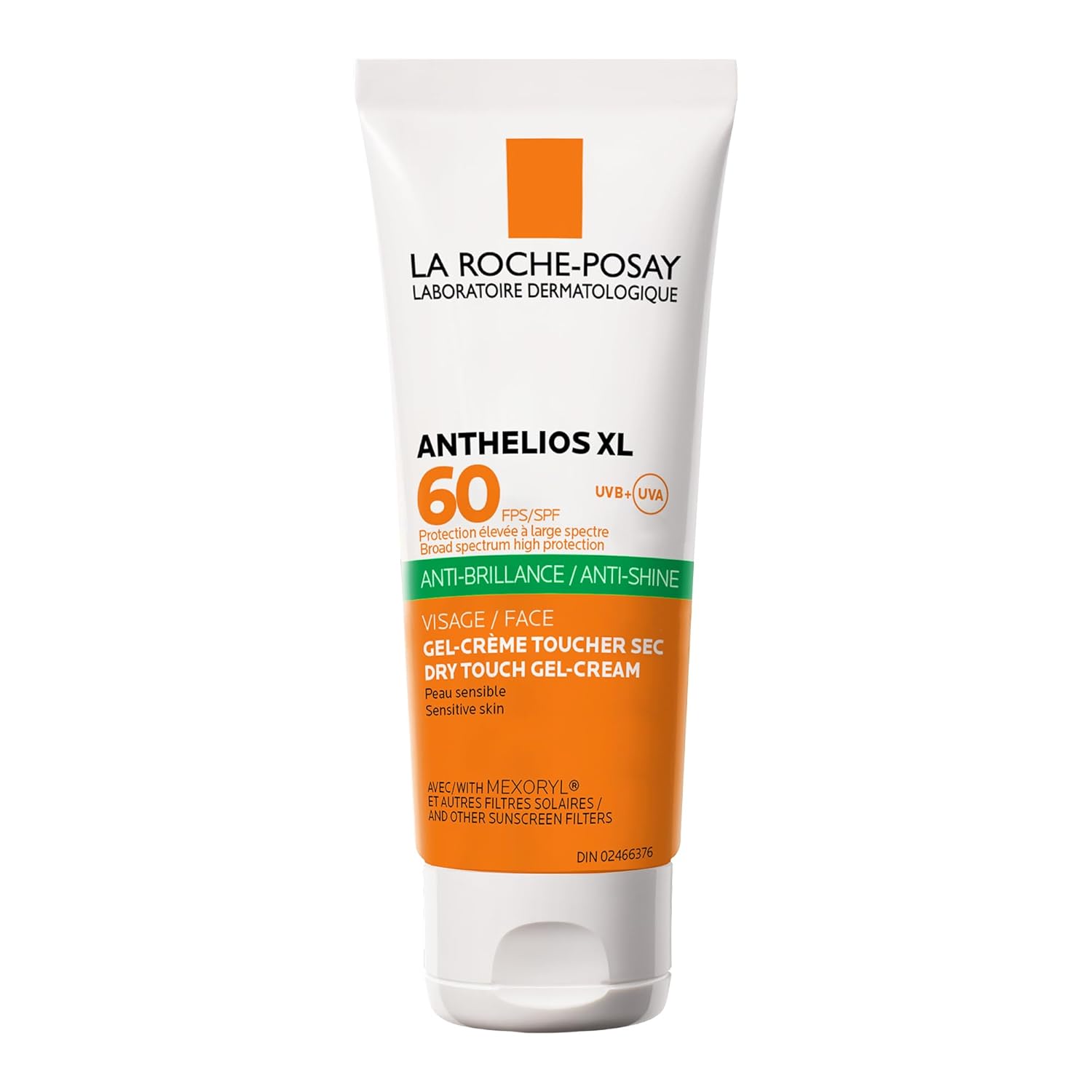
Buy it if your face turns shiny under ordinary sunscreen and you want it to last through a swim.

Buy it if you want one light, water-resistant lotion for face and body at a drugstore price.
CeraVe 100% Mineral Sunscreen SPF 50: Best for Sensitive and Dry Skin
This is the gentlest formula of the three. CeraVe sells it as Hydrating Mineral Sunscreen SPF 50 Face Lotion: its only UV filters are titanium dioxide and zinc oxide, it leaves out fragrance, oil and parabens, and it carries the National Eczema Association Seal of Acceptance. Who What Wear names it the best overall sunscreen in both its eczema and its sensitive-skin roundups, and Healthline picks it as its best drugstore sunscreen for rosacea.
The other two picks are built to dry down; this one is built to moisturize. CeraVe adds three ceramides to help restore the skin barrier, niacinamide to help calm skin and hyaluronic acid for hydration, which makes it the natural match for dry or easily irritated faces. Against the La Roche-Posay it gives up water resistance, and on very oily skin Review Dermatica warns it can look greasy. Its main limitation is a white cast: CeraVe’s own page says one can sometimes remain, it shows most on deeper skin tones, and the thick cream needs working in one area at a time.
La Roche-Posay Anthelios Clear Skin Dry Touch SPF 60: Best for Oily Skin
For a face that turns shiny soon after ordinary sunscreen, this is the one to buy. Two oil-absorbing powders, perlite and silica, are built into the base so it dries to a matte finish, and it pairs SPF 60 with 80 minutes of water resistance and no fragrance on its label. Dermatologists quoted in sunscreen roundups call it a good fit for oily, acne-prone skin, and NBC Select picks it as the oily-skin choice in its guide to sunscreens for acne-prone skin. For breakouts themselves, though, the dermatologists NBC Select spoke to rank chemical formulas like this one behind mineral and mineral-based ones, so its case rests on oil control.
Choose it over the CeraVe when your skin runs oily rather than dry: it trades the mineral cream’s moisture for chemical filters and a dry finish. That oil-absorbing base is its main limitation on drier faces, which DermFND warns are left feeling tight and possibly flaky. In Canada it is sold as Anthelios Dry Touch SPF 60, and the Canadian label adds a fifth filter, drometrizole trisiloxane (Mexoryl XL), at 0.5%.
Neutrogena Ultra Sheer Dry-Touch Sunscreen SPF 70: Best Budget Pick for Face and Body
When a greasy feel is what stops you from reapplying, this lotion fixes it cheaply, and one tube covers face and body. Neutrogena sells it as fast-absorbing, and it dries light and non-greasy, with SPF 70 and 80 minutes of water resistance; TODAY’s tester found it needs a good rub to sink in, after which the white cream disappears within seconds. TODAY’s editor-tested list of face sunscreens names it the best budget sunscreen, and NBC Select makes it the budget pick in its roundup of water-resistant sunscreens.
Next to the La Roche-Posay it uses the same four chemical filters, with more octocrylene (10% against 7%), but it is a face-and-body lotion rather than a face formula. Its main limitation is that it contains fragrance, which matters if your skin reacts to scent. Neutrogena also warns on the label that it may stain some fabrics. It comes in 3 fl oz and 5 fl oz tubes.
How the Picks Compare
| CeraVe 100% Mineral SPF 50 | La Roche-Posay Anthelios Clear Skin SPF 60 | Neutrogena Ultra Sheer Dry-Touch SPF 70 | |
|---|---|---|---|
| Price (USD)Price (CAD) | $13.97See price on Amazon | $20.99$35.95 | $9.88See price on Amazon |
| Our score | 4.3/5 | 4.2/5 | 4.1/5 |
| UV filters (US label) | Mineral: titanium dioxide 9%, zinc oxide 7% | Chemical: avobenzone 3%, homosalate 15%, octisalate 5%, octocrylene 7% | Chemical: avobenzone 3%, homosalate 15%, octisalate 5%, octocrylene 10% |
| SPF (label) | 50, broad spectrum | 60, broad spectrum | 70, broad spectrum |
| Water resistance (label) | None | 80 minutes | 80 minutes |
| Fragrance | Fragrance-free | None listed on the label | Contains fragrance |
| What the base adds | Ceramides, niacinamide, hyaluronic acid | Perlite and silica to absorb oil | Silica and aluminum starch octenylsuccinate to absorb oil |
| Made for | Face | Face | Face and body |
| Size | 2.5 fl oz (75 mL) | 1.7 fl oz (50 mL) | 3 fl oz (88 mL); 5 fl oz also sold |
| Amazon | View on AmazonView on Amazon | View on AmazonView on Amazon | View on AmazonView on Amazon |
Mineral or Chemical Filters: Which Will Your Skin Tolerate?
Mineral filters (zinc oxide and titanium dioxide) are thought to scatter and reflect UV rays, while chemical filters absorb them and turn the energy into a small amount of heat. Neither kind is better across the board, but they wear differently. Dermatologist Dmitriy Schwarzburg, quoted by Who What Wear, says mineral sunscreens tend to be less irritating and less likely to sting around the eyes, while chemical ones often feel lighter and look more transparent, which makes them easier for many people to wear every day.
When it matters: if your skin is sensitive, eczema-prone or reacts to fragrance, start with the CeraVe, the only fully mineral pick here.
When it doesn’t: if your skin tolerates both kinds, the finish matters more, and the two chemical lotions win on feel: the La Roche-Posay for a matte face, the Neutrogena for face and body.
Does SPF 70 Protect Much More Than SPF 50?
Less than the numbers suggest. The American Academy of Dermatology recommends a broad-spectrum sunscreen of SPF 30 or higher, and dermatologist Sejal Shah, also quoted by Who What Wear, puts SPF 30 at about 97% of UVB rays blocked and SPF 50 at about 98%. All three picks clear that bar comfortably, and a higher number doesn’t buy more time in the sun: each label still says to reapply at least every two hours. That small gap is measured at the full label amount, though. DermFND points out that most people apply less, and estimates that at half the amount SPF 70 still gives roughly SPF 20-25 against SPF 50’s 15-18, so a higher number works as a margin if you tend to under-apply.
When it matters: if you tend to apply a thin layer, where the higher number gives you some margin; at the full label amount, the step up to SPF 60 or 70 adds little.
When it doesn’t: for everyday wear, choose on skin type and finish, and reapply on schedule whichever you buy.
Do You Need Water Resistance on Your Face?
A water-resistant sunscreen keeps working on wet or sweaty skin for a set time, 40 or 80 minutes, before it needs reapplying, and not every sunscreen has the claim. The American Academy of Dermatology’s checklist asks for the words “water resistant” on the label, alongside broad spectrum and SPF 30 or higher. The La Roche-Posay and the Neutrogena are both rated for 80 minutes. The CeraVe has no water-resistance claim, and its label tells you to use a water-resistant sunscreen if you are swimming or sweating.
When it matters: swims, sports and hot summer days. Pick the La Roche-Posay for the face, or the Neutrogena if you want one tube for everything.
When it doesn’t: commutes, errands and desk days where you stay dry; the CeraVe’s gentler formula is the better trade there.
How We Chose
We started from the current face-sunscreen recommendations of five outlets: Fortune, Who What Wear, TODAY, Treeline Review and NBC Select. Treeline Review says it tested more than 50 face sunscreens over four years. NBC Select says it tried more than 110 for its ranking. We then weighed their picks against the four face sunscreens we have reviewed. Our criteria were the decisions that split buyers: skin type, mineral or chemical filters, fragrance, finish and water resistance. The facts here come from the drug labels, the makers’ pages, guidance from the American Academy of Dermatology and Health Canada, and the dermatologists and editors behind those roundups. Picks are ordered by our review scores.
Which Face Sunscreen Should You Buy?
Choose by what your skin does under sunscreen. If fragrance or chemical filters make it sting or flare, the CeraVe is the gentle, moisturizing choice and the one we rate highest. If your face turns shiny by midday, the La Roche-Posay keeps it matte and holds up through a swim. If you want one light, water-resistant tube for face and body, the Neutrogena is the budget pick that does the job.
Our picks
For sensitive and dry faces.
For oily, shine-prone faces.
For one tube that covers face and body.
Browse all Health & Beauty reviews →Health & Beauty reviews →
Frequently Asked Questions
Which of these face sunscreens works best under makeup?
Which one is least likely to leave a white cast on darker skin?
Is the CeraVe the same as CeraVe’s Invisible Mineral Sunscreen?
Can I use the Neutrogena on my body as well as my face?
How can I tell a sunscreen is approved for sale in Canada?
Sources
- DailyMed – CeraVe Hydrating Sunscreen SPF 50 Face drug label
- CeraVe – Hydrating Mineral Sunscreen SPF 50 Face Lotion
- CeraVe – Invisible Mineral Sunscreen SPF 50
- DailyMed – CeraVe Invisible Mineral Sunscreen SPF 50 drug label
- Who What Wear – The Best Sunscreens for Eczema
- Who What Wear – The Best Sunscreens for Sensitive Skin
- Healthline – Sunscreens for Rosacea
- DermFND – CeraVe Hydrating Mineral Sunscreen SPF 50
- Review Dermatica – CeraVe Hydrating Mineral Sunscreen SPF 50 Review
- DailyMed – La Roche-Posay Anthelios Clear Skin Dry Touch SPF 60 drug label
- NBC Select – Best Sunscreens for Acne-Prone Skin
- CNN Underscored – Best Face Sunscreens, According to Dermatologists
- Forbes Vetted – The Best Sunscreens for Oily Skin
- DermFND – La Roche-Posay Anthelios Clear Skin Dry Touch Sunscreen SPF 60
- Well.ca – La Roche-Posay Anthelios Dry Touch SPF 60 (Canadian label)
- Neutrogena – Ultra Sheer Dry-Touch Sunscreen Broad Spectrum SPF 70
- Neutrogena – Ultra Sheer Sunscreen Collection
- DermFND – Neutrogena Ultra Sheer Dry-Touch Sunscreen SPF 70
- NBC Select – The Best Water-Resistant Sunscreens
- TODAY – The Best Face Sunscreens for Every Skin Type, Editor-Tested
- Fortune – The Best Face Sunscreens
- Who What Wear – The Best Face Sunscreens, Tested and Reviewed
- Treeline Review – Best Face Sunscreens (Long-Term Tested)
- NBC Select – 100 Best Face Sunscreens, Tested and Ranked
- American Academy of Dermatology – How to select a sunscreen
- Health Canada – Sunscreens
Reader Poll
What matters most when you choose a face sunscreen?
Help Our Editors Know What Matters to You
Explore on Amazon →