KitchenAid Artisan vs Cuisinart Precision Master: Cuisinart Wins
Both are die-cast, tilt-head mixers with attachment hubs built for the same job — but a 175-watt motor gap and a roughly $170 price difference change who each one is actually right for.

How We Researched
We compared manufacturer spec sheets from KitchenAid.com and Cuisinart.com against The Kitchn’s hands-on test of the Artisan’s dough hook, Reviewed.com and Whisk & Bite’s testing notes on the Precision Master, and aggregated owner feedback for both. No manufacturer paid for placement.
* As an Amazon Associate I earn from qualifying purchases. Disclosure
What You’ll Learn
- Which motor actually handles stiff bread dough better
- Whether the Cuisinart’s extra half-quart of bowl capacity matters
- Which has the bigger attachment ecosystem
- How the warranties compare
- Which is the better value for most home bakers
- Whether the KitchenAid’s price premium is worth paying
The Two Stand Mixers Compared
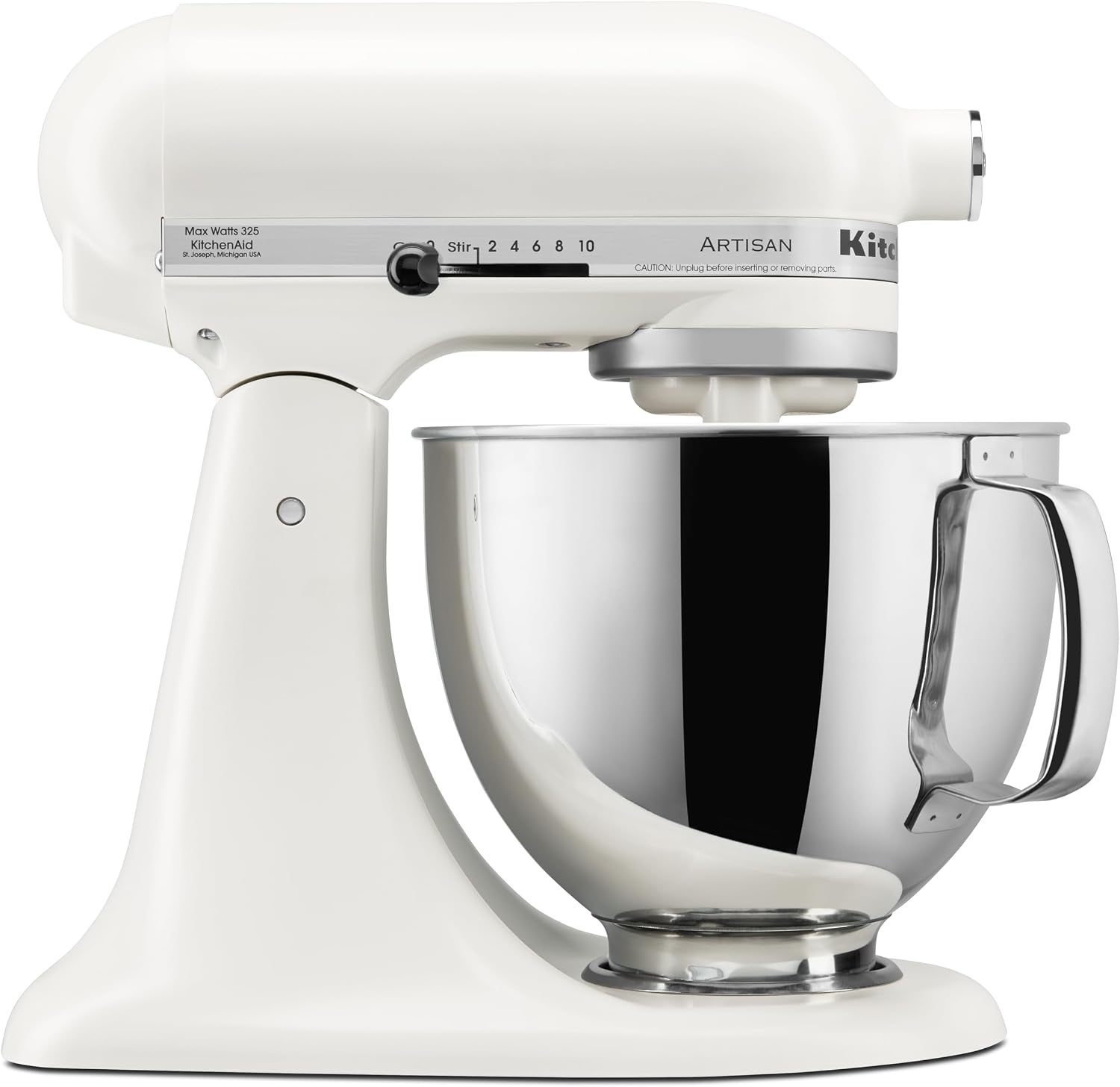 Best Attachment Ecosystem
Bottom line: The Artisan’s attachment hub and decades-proven all-metal build make it the mixer most home bakers picture when someone says “stand mixer” — even though its motor is the weaker of these two head-to-head.
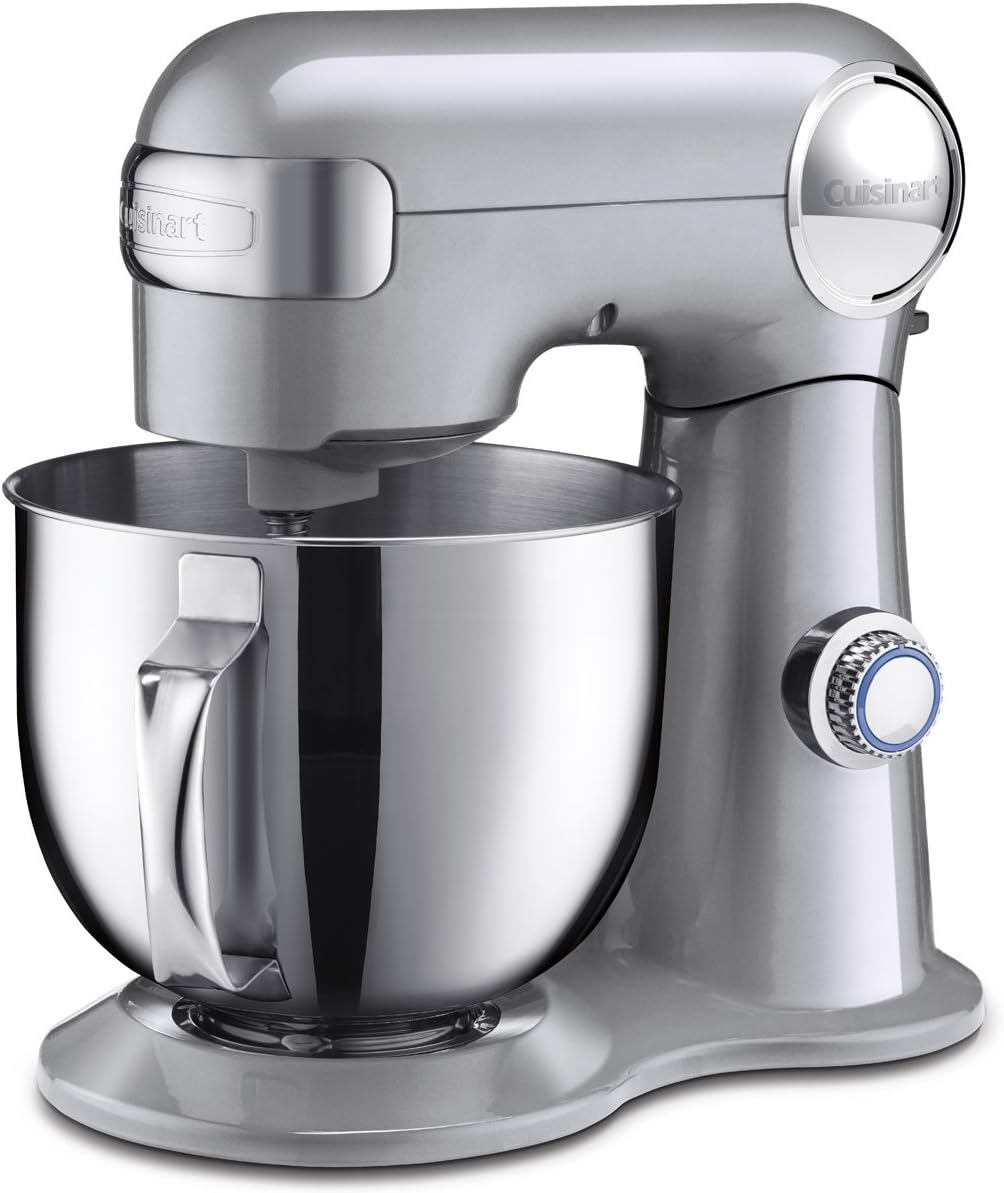 Best Value
Bottom line: A 500-watt motor and 5.5-quart bowl at roughly half the Artisan’s price make the Precision Master the easy pick for home bakers who don’t specifically need KitchenAid’s attachment ecosystem.
The KitchenAid Artisan and the Cuisinart Precision Master both use the same basic formula — a die-cast metal tilt-head body with a front-mounted power hub for optional attachments — which is exactly why they get cross-shopped so often. We compared manufacturer specs, The Kitchn’s tested results on the Artisan’s dough hook, and aggregated owner feedback on both to work out which one actually earns its price, and which buyers should pick the cheaper option instead.
| Spec | KitchenAid Artisan | Cuisinart Precision Master |
|---|---|---|
| Price (USD) | $379.95 | $289.95 |
| Price (CAD) | $379.99 | $292.60 |
| Motor | 325 watts | 500 watts |
| Bowl Capacity | 5 quarts | 5.5 quarts |
| Speeds | 10 | 12 |
| Attachment Hub | Yes — 10+ third-party accessories | Yes — pasta, grinder, spiralizer |
| Warranty | 1-year limited | 3-year limited |
| Body Material | Die-cast metal | Die-cast metal |
Motor Power & Dough-Kneading Performance
The Cuisinart’s 500-watt motor gives it a real power advantage on paper — 175 watts more than the Artisan’s 325 watts — and reviewers at Reviewed.com and Whisk & Bite both note it handles standard bread doughs and stiff cookie batter without bogging down. The Kitchn’s test of the KitchenAid found its C-shaped dough hook kneaded a 2-pound loaf of whole wheat dough to a smooth finish in about 8 minutes, but only at Speed 2 — reviewers testing the Artisan line have found pushing higher speeds on stiff dough causes the head to work harder and the unit to walk slightly on the counter.
Neither motor is built for commercial-style volume. The Cuisinart’s extra wattage buys it more headroom before a double batch of bagel or pizza dough starts to strain the motor, but for single-batch cookies, cake batter, and standard sandwich bread, the two perform similarly in practice.
Winner: Cuisinart, for bakers who regularly make stiffer doughs — the extra wattage is a genuine cushion the Artisan’s spec sheet doesn’t have.
Bowl Capacity & Batch Size
The Cuisinart’s 5.5-quart bowl edges out the KitchenAid’s 5-quart bowl, and Cuisinart’s own sizing guidance puts a bowl this size at roughly nine dozen cookies per batch — a number that lines up with what KitchenAid rates its 5-quart bowl for too. In practice, both comfortably fit a double batch of chocolate chip cookies, a standard two-loaf bread recipe, or a full angel food cake.
The half-quart gap matters most at the edges — a triple batch of bagel or pizza dough is closer to what a 6-quart-plus bowl-lift mixer is built to handle, and neither of these mixers is sized for that. For the batch sizes most home kitchens actually make in one session, the difference between 5 and 5.5 quarts is smaller than the spec sheets suggest.
Winner: Cuisinart, by a narrow margin — more bowl for less money, though most home bakers won’t notice the difference day to day.
Attachment Ecosystem
Both mixers use a front-mounted power hub instead of shipping as single-purpose machines, but the depth of what plugs into that hub is where they diverge. KitchenAid’s hub supports more than 10 optional accessories — a pasta roller and cutter set, a food grinder, a spiralizer, and more — built up over decades as the de facto standard, with a third-party accessory market that dwarfs any competitor’s.
Cuisinart’s hub accepts its own pasta roller/cutter set, meat grinder, spiralizer, and frozen dessert maker — genuinely useful, but a noticeably smaller catalog than KitchenAid’s, and without the same third-party support.
Winner: KitchenAid, clearly — if the attachment ecosystem itself is the reason to buy a hub-equipped mixer, the Artisan has the deeper one.
Build Quality & Warranty
Both use die-cast metal bodies rather than the mostly-plastic housings on sub-$100 mixers, and both are dishwasher-safe for their bowl, beater/whisk, and dough hook. The Artisan’s reputation is built on longevity — 20-year-old units still turning up working at garage sales is a real, widely repeated data point, thanks to a gear-driven transmission with no plastic gearbox to strip under load.
On paper, though, Cuisinart backs the Precision Master with a 3-year limited warranty against KitchenAid’s standard 1-year — a meaningfully longer commitment, even if it doesn’t erase the Artisan’s decades-long track record in the field. One recurring KitchenAid complaint is the head-lock lever loosening slightly after years of heavy use, a minor issue KitchenAid’s wide service network makes easy to address.
Winner: Cuisinart on paper (longer warranty), KitchenAid on proven long-term track record — this one’s close enough that either mixer is a safe long-term bet.
Price & Overall Value
The Cuisinart undercuts the KitchenAid by roughly $170 at current pricing — more than a third off — while matching or beating it on motor power, bowl size, speed count, and warranty length. That gap is the single biggest factor in this comparison: it’s hard to justify paying more for less power and a shorter warranty unless the KitchenAid’s specific attachment ecosystem is the deciding factor.
Winner: Cuisinart, for value — the Artisan only pulls ahead once the buyer already knows they want KitchenAid-specific attachments.
Our Verdict
For most home bakers making cookies, cakes, and the occasional loaf a few times a month, the Cuisinart Precision Master is the easier recommendation — more motor power, a slightly bigger bowl, a longer warranty, and a price that’s roughly a third of what the Artisan costs. It has the specs of a mixer twice its price without feeling like a downgrade from the category leader.
The KitchenAid Artisan earns its premium specifically through its attachment ecosystem and decades-proven durability track record — if a pasta roller, food grinder, or spiralizer from KitchenAid’s much deeper accessory catalog is part of the plan, or the iconic all-metal build matters for its own sake, the Artisan is still worth the extra cost.
Buy the Cuisinart if you want the strongest motor and biggest bowl for the money. Buy the KitchenAid if the attachment hub’s accessory ecosystem is a real part of why you’re buying a stand mixer at all.
Read Our KitchenAid Artisan Review → Read Our KitchenAid Artisan Review → Read Our Cuisinart Precision Master Review → Read Our Cuisinart Precision Master Review →
Frequently Asked Questions
Which should I buy if I want the widest range of attachments?
Is the Cuisinart Precision Master powerful enough for bread dough?
Is the extra cost of the KitchenAid Artisan worth it over the Cuisinart?
Which has the longer warranty?
Which bowl is bigger?