Outdoor String Lights Buying Guide 2026: Solar vs. Plug-In
Solar or plug-in, shatterproof plastic or glass, dimmer or none — here’s what actually separates a good outdoor string light set from a disappointing one.

How We Researched
3 patio string light sets reviewed, spanning solar and plug-in power, budget and premium price tiers. AI-assisted secondary research, manufacturer specifications, and aggregated owner feedback — no paid placement.
* As an Amazon Associate I earn from qualifying purchases. Disclosure
What You’ll Learn
- Whether solar or plug-in power fits your yard better
- Why bulb material affects both looks and longevity
- Which control features (dimmers, remotes, timers) are worth paying for
- How to plan coverage for a small balcony vs. a full backyard
- What a wind-speed rating does — and doesn’t — tell you
3 products in this guide
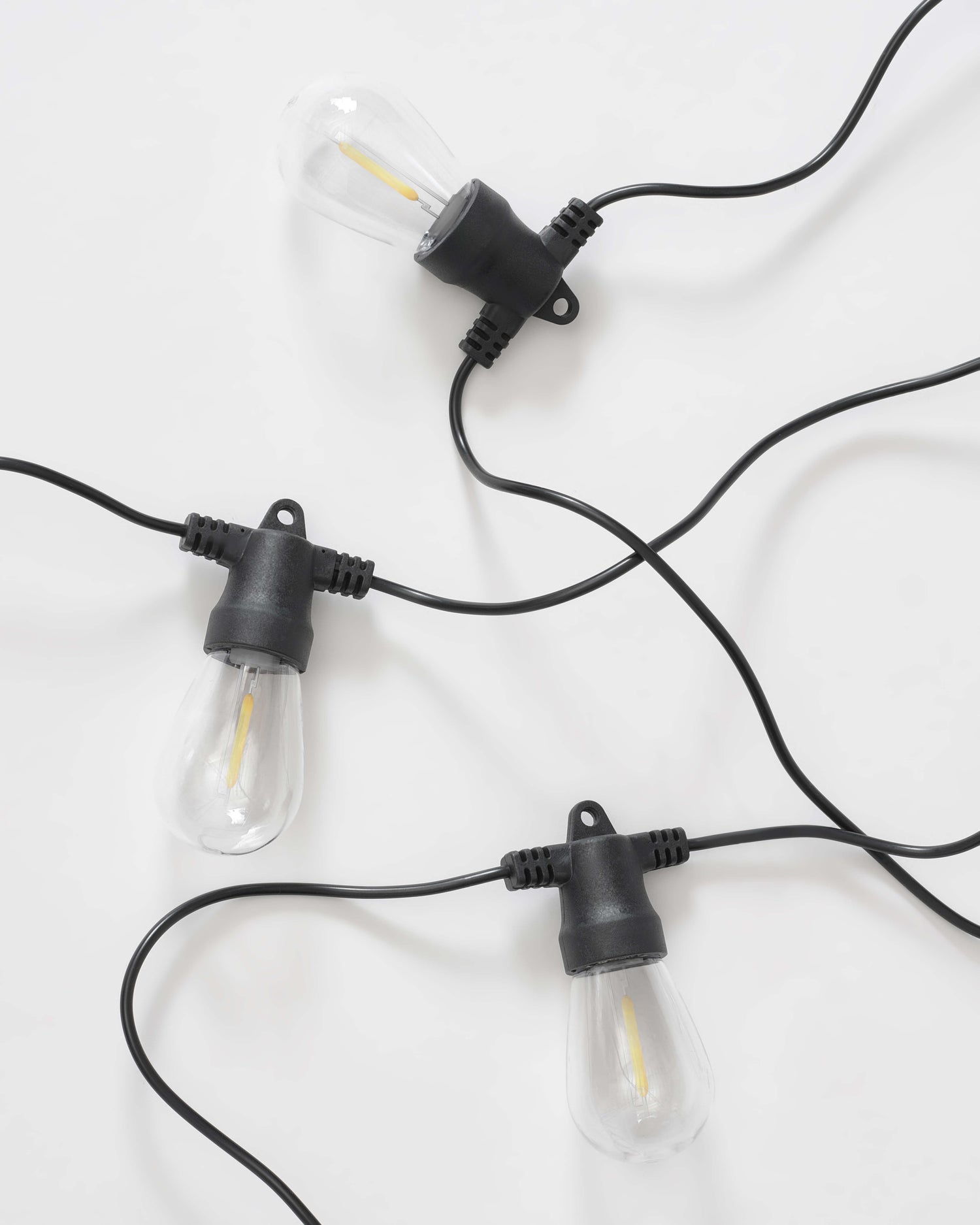
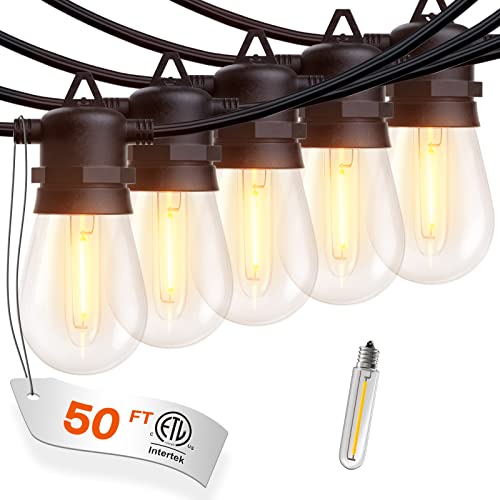
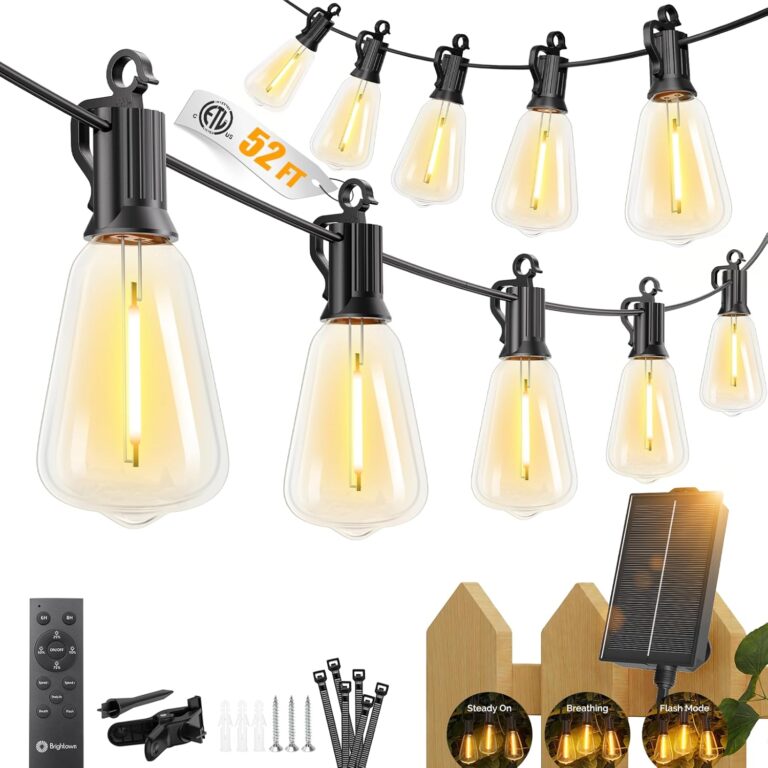
Outdoor string lights look similar in every listing photo, but the actual differences — power source, bulb material, and what the controls can do — decide whether a set survives its first winter or ends up back in the returns pile. We looked at three current patio string light sets, one solar, one solar-with-USB-backup, and one plug-in, to work out what’s actually worth paying for.
Solar vs. Plug-In Power
Solar string lights need no outlet and no wiring, which is the whole appeal for a detached pergola, fence line, or balcony without power access. The tradeoff is that output depends on how much direct sun the panel gets — a shaded yard, a run of overcast days, or a short winter charging window all cut into runtime, sometimes leaving the string dark right when it’s needed most.
Plug-in sets skip that uncertainty entirely. As long as there’s a nearby outdoor outlet or a weatherproof extension cord, a plug-in string delivers the same brightness every single night, rain or shine, with no panel to place or charge to manage.
When it matters: if your outdoor space has no accessible outlet, or you want lights on a shed, tree, or freestanding arbor away from the house, solar is the only realistic option regardless of its runtime tradeoffs.
When it doesn’t: if you’re lighting a deck or patio that already has outdoor power, plug-in delivers more consistent results for less money — there’s no reason to pay a solar premium you won’t benefit from.
Choose solar only where an outlet genuinely isn’t an option — everywhere else, plug-in is cheaper and more reliable.
Bulb Material & Wind Durability
Nearly every current string light in this category uses shatterproof plastic bulb shells rather than glass — a real upgrade over the fairy-light era, since a plastic bulb survives a stray patio chair or a branch falling in a storm instead of shattering. What varies more between sets is the published wind-speed rating, which most budget and mid-tier brands simply don’t quote.
Manufacturer-published wind ratings tell you whether a company actually tested for storm conditions rather than assuming calm weather. A cable and mounting hardware rated to a specific wind speed is a stronger signal of real outdoor durability than a general weatherproof claim alone.
When it matters: an exposed rooftop deck, an open yard with no windbreak, or a coastal property where gusts are routine.
When it doesn’t: a sheltered patio under an eave or pergola roof, where wind exposure is minimal regardless of the strand’s rating.
A published wind-speed rating is the clearest sign a brand engineered for real outdoor conditions, not just marketing copy.
Brightness Controls: Dimmers, Remotes & Timers
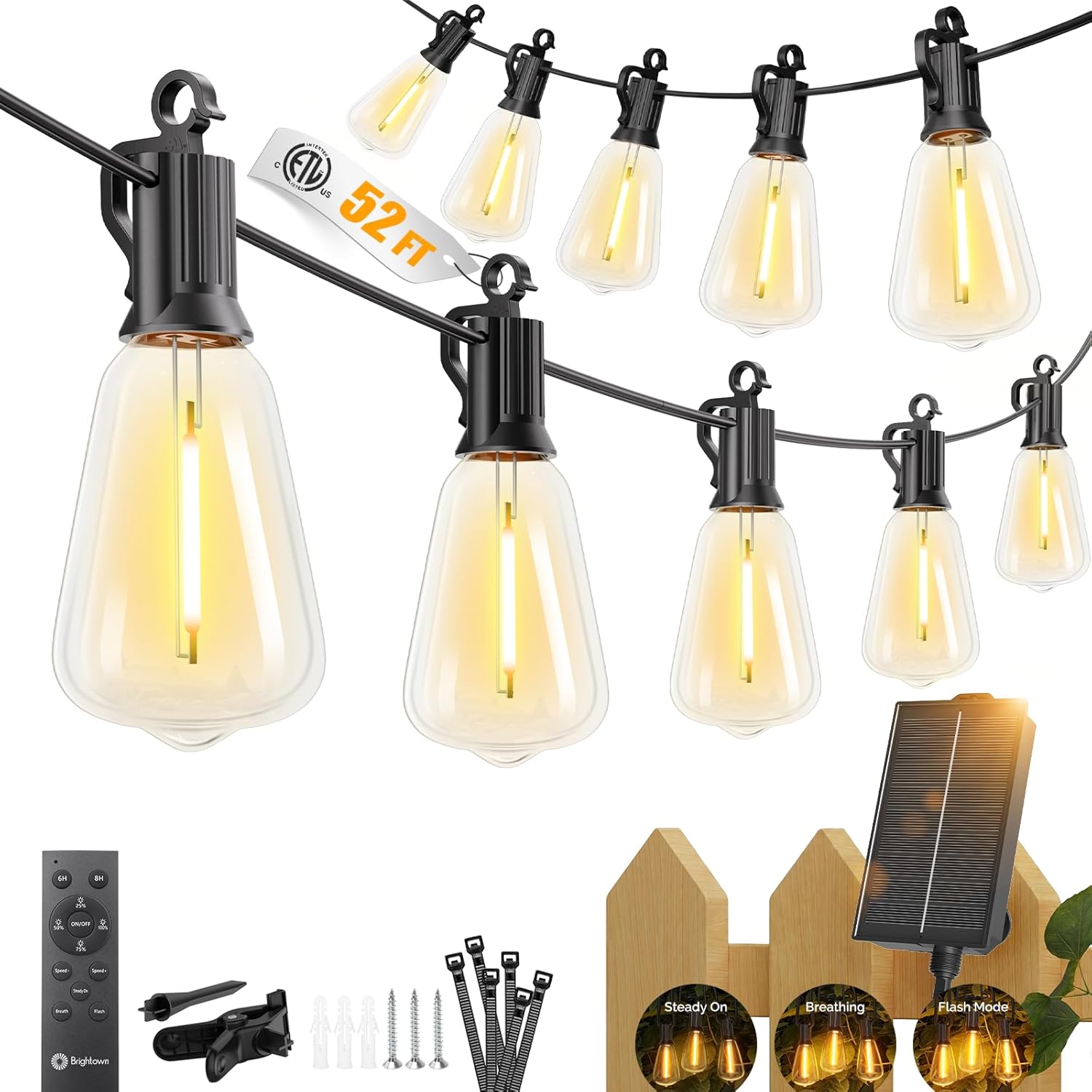
The cheapest string lights are single-brightness and steady-on only — fine for basic ambiance, but limiting if you want a dinner-table brightness early and a dimmer glow for late evening. A genuine multi-level dimmer, controllable from a remote, is a meaningfully different experience than a strand with no brightness adjustment at all.
Timers matter more than they sound: an auto-off after a set number of hours means the lights don’t run all night burning through battery or electricity unnecessarily, and it removes the chore of remembering to switch them off.
When it matters: if the lights get used for both everyday ambiance and occasional parties, a set with real brightness levels and modes adapts to both without buying two products.
When it doesn’t: if the lights only need to do one job — stay on at one brightness for evening ambiance — a simple on/off set is one less thing to configure.
A remote-controlled dimmer with multiple modes earns its price premium if you’ll actually use more than one brightness setting.
Length, Coverage & Connectability
A single strand’s length only tells part of the coverage story — what matters for a larger space is whether multiple strands can be daisy-chained together off one power source. A plug-in set built for connectability can wrap an entire deck railing, fence line, and pergola in one continuous run; a solar set is typically sold as a single fixed length with no official multi-strand spec.
For a small balcony or single pergola beam, one 50-foot strand is usually plenty. For a full backyard perimeter, checking the connectable-strand rating before buying saves having to return a set that can’t be extended.
When it matters: wrapping a deck railing, fence line, and patio in a single continuous run from one outlet.
When it doesn’t: a single small space like a balcony or pergola beam, where one strand’s length already covers the area.
Check the connectable-strand rating before buying if you’re covering more than a single small space — not every set is built to expand.
| Brightown 52FT Solar | Brightech Ambience Pro | Addlon 50FT Edison Strand | |
|---|---|---|---|
| Price (USD) | Deal $17.98 until Oct 25 | $21.99 | Deal $16.99 |
| Power Source | Solar + USB backup | Solar (detachable panel) | Plug-in (outlet required) |
| Bulb Material | Shatterproof LED | Shatterproof, 50 mph wind-rated | Shatterproof plastic |
| Dimmer / Remote | Yes, 4 levels + 3 modes | No | No |
| Connectable Strands | Not published | Not published | Up to 28 |
| Our Score | 4.4/5 | 4.4/5 | 4.3/5 |
| Amazon | View on AmazonView on Amazon | View on AmazonView on Amazon | View on AmazonView on Amazon |
Our Verdict
For most patios and decks with an accessible outlet, the Addlon 50FT Edison Strand is the easiest recommendation — it costs the least of the three, delivers consistent full brightness with no weather dependency, and scales to a larger space through its 28-strand daisy-chain rating. Anyone lighting a detached or outlet-free space should look at solar instead, and between the two solar options here, the choice comes down to feature depth versus build toughness: Brightown packs in a remote, dimmer, and USB backup for cloudy stretches, while the Brightech Ambience Pro is the sturdier build with a published 50 mph wind rating and glass-style Edison bulbs.
None of the three is a wrong choice for the right yard — the decision mostly comes down to whether an outlet is nearby, how much control over brightness you actually want, and whether the space is exposed to real wind.
Frequently Asked Questions
Should I buy solar or plug-in outdoor string lights?
Is a wind-speed rating actually important?
What’s the benefit of a USB backup on a solar string light?
How many strands can I connect together?
Are shatterproof bulbs worth it over glass Edison bulbs?
Which One Is Right for You?
Best Solar Pick
Bottom line: the most feature-packed solar option, with a USB backup that keeps it running through cloudy stretches.
Best Wind Resistance
Bottom line: the sturdiest build of the three, with a published wind rating most competitors don’t quote at all.
Best Value
Bottom line: the least expensive of the three and the most expandable, if there’s an outlet nearby to power it.