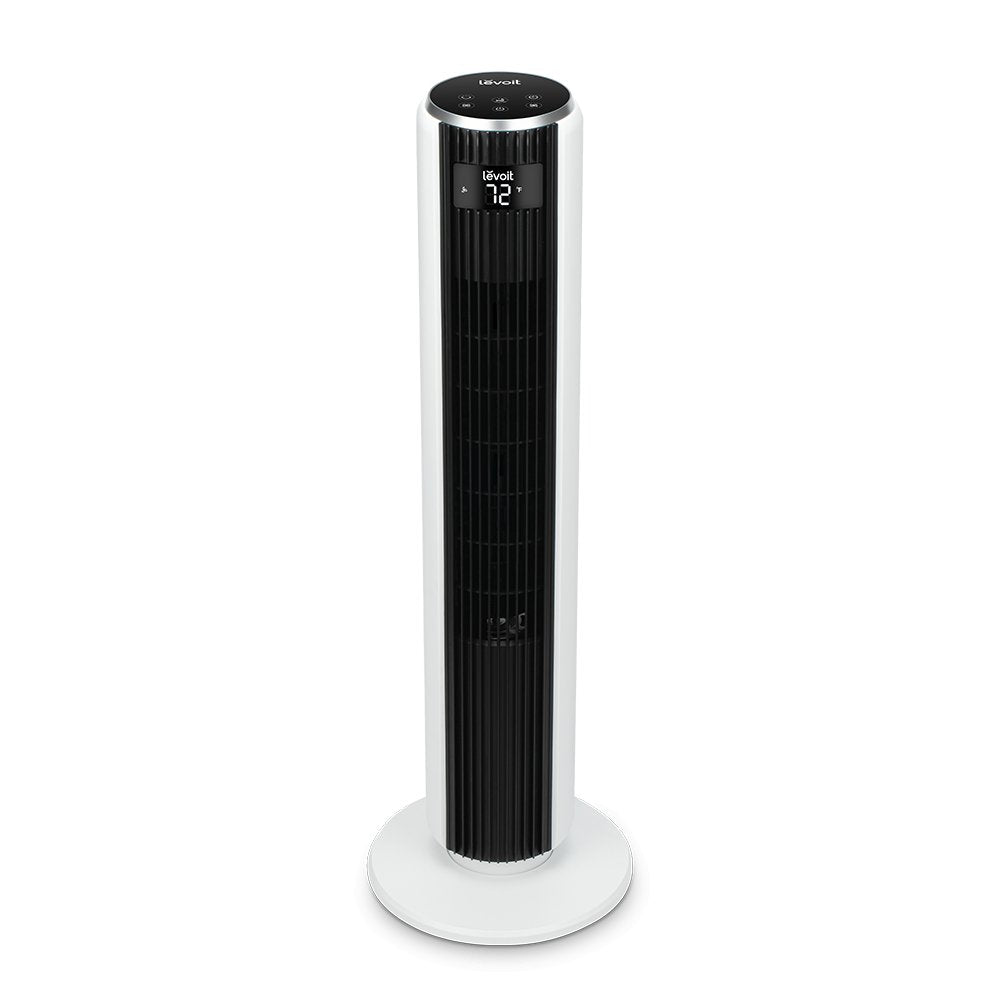
The Levoit Classic 36 is one of the best-value tower fans you can buy for a bedroom or office, delivering quiet, capable cooling without an app or a premium price. Its standout is a temperature-smart Auto mode that most fans under $75 do not offer, backed by a genuinely quiet 28 dB sleep setting and a light, easy-to-move build. The main trade-offs are an AC motor that climbs toward 48 dB on Turbo and a narrower 90-degree oscillation than pricier towers.
Pros
- Strong airflow for the price
- Quiet 28 dB on low speed
- Smart temperature Auto mode
- Advanced Sleep mode for bedrooms
- Remote with onboard storage slot
- Light 8.5 lb, easy to move
Cons
- AC motor climbs to 48 dB on Turbo
- Narrower 90-degree oscillation
- No app or voice control
As an Amazon Associate I earn from qualifying purchases. Disclosure
Overview
The Levoit Classic 36-inch Tower Fan is a budget-friendly cooling pick for anyone who wants quiet, whole-room airflow without spending smart-fan money. At 36 inches tall and just 8.5 pounds, it slots into a bedroom corner or beside a desk, oscillates 90 degrees, and runs as low as 28 dB — quiet enough to sleep next to. It is widely available on Amazon.com and directly from Levoit.
What makes the Classic 36 stand out in the under-$75 tier is that it borrows features usually reserved for pricier fans: a temperature-responsive Auto mode, a dedicated Advanced Sleep mode, and a full remote with an onboard storage slot so it never goes missing. CNN Underscored calls it a sleek, affordable option that looks at home in an office or bedroom, and Homes & Gardens praised it as quiet, powerful, and easy to live with for the price.
Key Specifications
| Height | 36.2 in (92 cm) |
| Weight | 8.5 lb (3.9 kg) |
| Max airflow velocity | 25 ft/s |
| Noise level | 28–48 dB |
| Motor / power | AC 120V, 39 W |
| Speeds / modes | 5 speeds, 4 modes (Normal, Auto, Advanced Sleep, Turbo) |
| Oscillation | 90° |
| Timer | 1–12 hours |
| Extras | Temperature sensor, remote with onboard storage slot |
Levoit Classic 36 Cooling Power & Airflow
For a fan in this price range, the Classic 36 moves a respectable amount of air. Levoit rates it at 25 ft/s of velocity, and its Turbo mode delivers a strong burst that circulates cold air across a mid-size bedroom or home office. The 90-degree oscillation covers a standard room from a corner placement, though it is a narrower sweep than the 120-to-180-degree arcs on premium towers.
Homes & Gardens found it cooled a room quickly and quietly in daily use, and the smart Auto mode is the standout feature at this price: a built-in temperature sensor steps the speed up or down on its own so the fan is not stuck blasting at full power all night. The five manual speeds give enough range to dial in a gentle breeze or a focused stream, even if it cannot match the fine 12-speed control of a higher-end model.
Noise Levels & Sleep-Friendly Operation
At its lowest speed the Classic 36 measures 28 dB, quiet enough to run beside a bed without masking conversation or disrupting sleep. An Advanced Sleep mode lowers the speed, dims the display, and quiets the fan further for overnight use, which is exactly what you want from a bedroom fan.
The trade-off is the AC motor: on its top Turbo setting the fan climbs toward 48 dB, noticeably louder than the whisper-quiet DC-motor towers that cost twice as much. For background cooling and sleeping that ceiling rarely matters, but anyone who runs a fan on high all day will hear it working harder than a premium model would.
Design, Controls & Setup
The Classic 36 keeps things simple and practical. It weighs just 8.5 pounds, so it is easy to carry between rooms, and tool-free assembly takes only a couple of minutes. The touch controls sit on top of the tower, and the included remote handles speed, mode, oscillation, and the timer from across the room.
A small but genuinely useful touch is the built-in remote storage slot on the back of the fan — a detail missing from several pricier competitors, including smart towers, where the remote is easy to lose. The 1-to-12-hour timer rounds out a control set that covers everything most people need without an app or account to set up.
How Does It Stack Up Against the Competition?
The Classic 36 competes on price and simplicity, undercutting smart and premium towers while keeping the features that matter for everyday cooling.
| Feature | Levoit Classic 36 | Dreo Pilot Max S | Dyson Cool AM07 | Pelonis 40″ |
|---|---|---|---|---|
| Price (USD) | $74.99 | $85.56 | $249.99 | $69.99 |
| Height | 36.2 in | 42.5 in | 39.6 in | 40 in |
| Oscillation | 90° | 120° | 70° | 90° |
| Speeds | 5 | 12 | 10 | 3 |
| Smart / voice control | Auto sensor, no voice | App + Alexa/Google | Remote only | Remote only |
| Motor | AC, 28 dB low | DC, 20 dB low | DC, bladeless | AC, 27 dB low |
| TTP Review | This review ↑ | Read our review → | Read our review → | — |
Prices change frequently — always verify current pricing before purchasing.
Is the Levoit Classic 36 Worth It?
If you want a quiet, capable tower fan for a bedroom or office and do not need an app, the Classic 36 is one of the best values you can buy. It delivers strong everyday airflow, a genuinely quiet 28 dB sleep setting, and a temperature-smart Auto mode that most fans under $75 simply do not offer — all in a light, easy-to-move package with a place to actually store the remote.
Step up only if you need more than it offers: the Dreo Pilot Max S adds app and voice control plus a quieter DC motor and wider 120-degree throw for about twice the price, and the Dyson Cool AM07 is the premium bladeless choice if budget is no object. But for shoppers who just want reliable, affordable summer cooling that runs quietly at night, the Levoit Classic 36 is an easy recommendation.

Check the latest price for the Levoit Classic 36
Check Current Price on Amazon