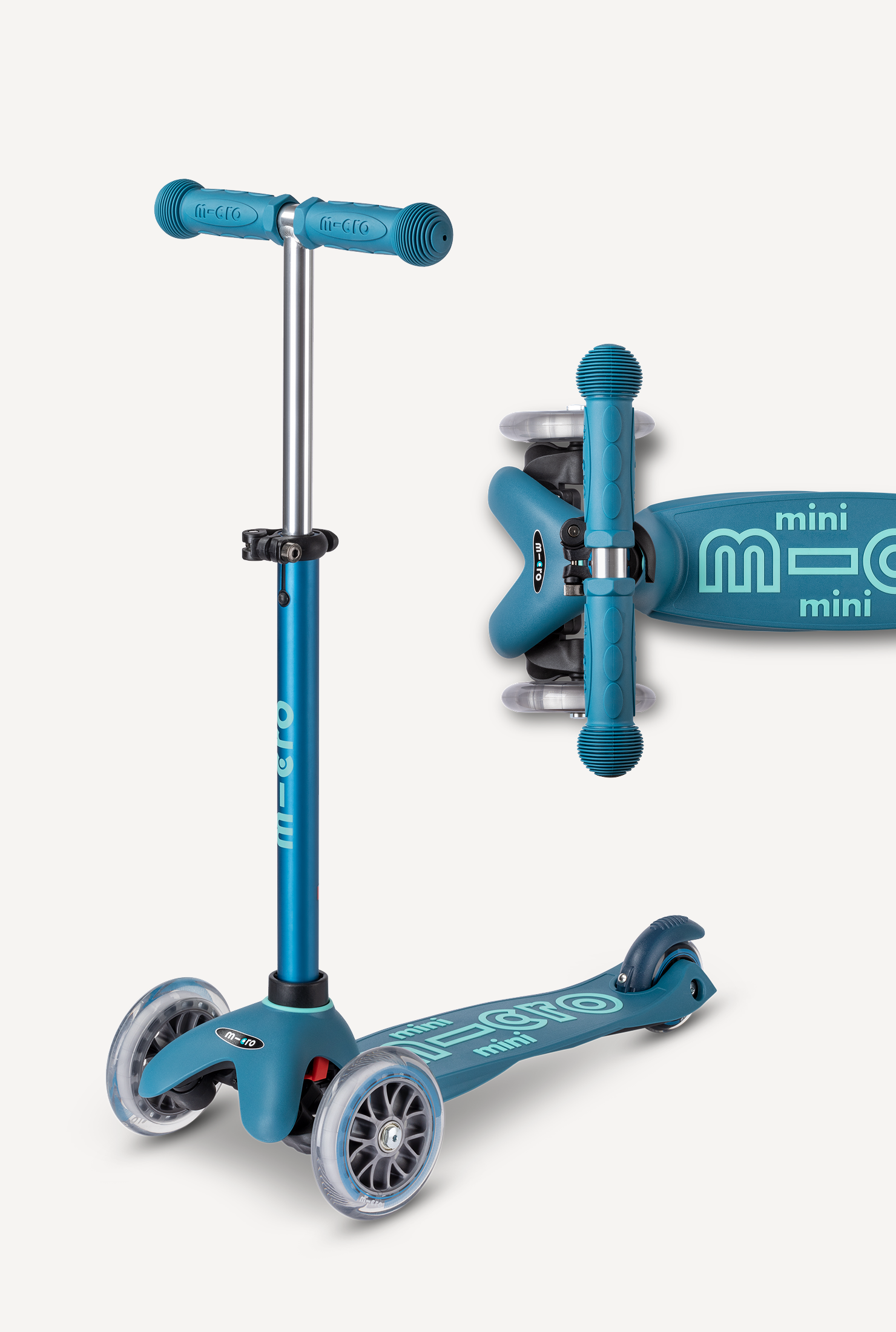
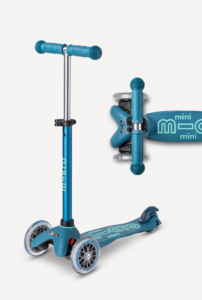
The Micro Mini Deluxe is the premier first scooter for children ages 2–5, combining Swiss-engineered lean-to-steer mechanics with an aircraft-grade aluminum T-bar that adjusts across the full preschool age range without tools. Its 120mm polyurethane wheels with ABEC bearings deliver a smooth, quiet ride that budget alternatives cannot match. The 2-year warranty and replaceable-parts design mean the scooter can serve multiple children or multiple years without replacement. The trade-offs are a higher price than most toddler scooters and no folding mechanism — parents who need packable portability will need to look at the Globber Primo instead.
Pros
- Swiss lean-to-steer design builds balance and coordination
- Premium 120mm PU wheels with ABEC bearings — smooth and quiet
- Adjustable handlebar spans full 2–5 age range, no tools needed
- 110 lb weight capacity far exceeds budget alternatives
- 2-year warranty with replaceable parts for long-term use
- CPSC certified with non-slip silicone-injected deck
Cons
- Higher price than most toddler scooters
- Does not fold flat — T-bar is removable but not fold-and-carry
- Single rear wheel means less braking surface than dual-rear designs
As an Amazon Associate I earn from qualifying purchases. Disclosure
Overview
The Micro Mini Deluxe 3-Wheel Kick Scooter is the go-to first scooter for children ages 2–5 who are just beginning to develop balance and coordination. Designed and engineered in Switzerland, it uses Micro’s signature lean-to-steer mechanism — children shift their body weight side to side to steer rather than twisting a handlebar — which makes it simultaneously safer and more developmental than traditional toddler scooters. Available on Amazon.com, it holds the top spot in the children’s scooters bestseller category and has for years.
What makes the current model stand out is the full package of premium materials at a price that remains below a comparable quality benchmark: aircraft-grade aluminum T-bar, silicone-injected anti-slip footplate, high-rebound polyurethane wheels with quality ABEC bearings, and a fully adjustable handlebar that spans the entire 2–5 age window without needing tools. The New York Times Wirecutter named the Micro Mini its toddler pick, noting that it shares the same core design philosophy as the brand’s higher-rated Maxi Deluxe but scaled specifically for younger, smaller riders.
Key Specifications
| Recommended Age | 2–5 years |
| Max Rider Weight | 110 lbs (50 kg) |
| Scooter Weight | 4.2 lbs (1.9 kg) |
| Handlebar Height Range | 19.25″ – 27″ from deck |
| Front Wheel Diameter | 120mm polyurethane |
| Rear Wheel Diameter | 80mm polyurethane |
| Deck Dimensions | 12″ × 4.5″ |
| Frame Material | Anodized aluminum T-bar, composite deck |
| Steering Mechanism | Lean-to-steer (weight-shift) |
| Braking | Rear fender brake + foot drag |
| Safety Certifications | CPSC certified |
| Warranty | 2-year manufacturer defect warranty |
Micro Mini Deluxe Lean-to-Steer Performance
The core differentiator of the Micro Mini is how it teaches balance rather than just enabling riding. Unlike handlebar-turn scooters that let kids grip and pivot, the lean-to-steer mechanism requires young riders to shift their center of gravity to initiate a turn — the same physical principle behind skateboarding and snowboarding. Two Wheeling Tots, which test-rode the scooter with child participants, found it “very lightweight and nimble, providing great maneuverability” and noted that young riders picked up the steering intuition more quickly than expected. The three-wheel configuration also keeps the deck stable while the child is standing still, which removes the most common frustration for toddlers learning to ride.
The 120mm front wheels and 80mm rear wheel use high-rebound polyurethane with quality ABEC bearings. The result, as Two Wheeling Tots testers noted, is a ride that is “so quiet” across standard sidewalk surfaces — no chattering, no wheel vibration. The rear fender brake is foot-operated and positioned naturally for small feet, with foot dragging available as a secondary stop. The silicone-injected, non-slip deck provides confident footing even for children still developing foot placement awareness. For a product aimed at 2-year-olds, these safety-by-design choices carry real weight.
Build Quality and Adjustability
The anodized aluminum T-bar is the first thing parents notice — it feels noticeably more solid than the plastic handlebar assemblies found on budget alternatives. The T-bar adjusts across a 19.25″ to 27″ range using a simple clamp mechanism that requires no tools, allowing parents to reset the height in seconds as the child grows. This single feature accounts for a large portion of the scooter’s multi-year value: a 2-year-old and a 5-year-old can each ride the same scooter at the correct ergonomic height, which means one purchase covers the full preschool window rather than two or three progressively larger budget scooters.
Deck construction: The footplate uses a silicone-injection molding process that embeds an anti-slip surface with the Micro logo pattern directly into the material rather than adding a peel-off grip tape overlay. This approach is more durable and continues to provide grip as the scooter ages. Parts availability: Micro designs all its scooters with replaceable wheels, bearings, and T-bars, so the scooter can be repaired and extended rather than discarded when a component wears out — a meaningful consideration for a product used daily over three or more years. The CPSC-certified build and 2-year manufacturer warranty underline confidence in material durability.
Developmental Benefits and Safety
Pediatric occupational therapists and early childhood educators consistently reference lean-to-steer scooters when discussing balance board toys and balance bikes as tools for developing vestibular processing and proprioception in toddlers. The Micro Mini specifically is cited in this context because the steering demand is proportionally higher than on a passive ride-on toy but lower than on a balance bike — making it a natural developmental bridge. The three-wheel stance eliminates the need for a child to hold the scooter upright while learning, reducing cognitive load and frustration significantly compared to a two-wheel scooter.
From a pure safety standpoint, the design addresses the most common toddler injury vectors. Tip-over risk is minimized by the wide dual front wheel stance. Runaway speed is checked by the instinctive rear-fender brake that sits underfoot. Grip loss is mitigated by the non-slip deck and the soft rubberized handlebar grips that allow small hands to hold firmly without cramping. For outdoor summer use on driveways, sidewalks, and smooth park paths — exactly the environments these scooters see most — the combination delivers a genuinely low-incident ride experience.
How Does It Stack Up Against the Competition?
The Micro Mini sits at the premium end of the toddler scooter market. Here’s how it compares to three frequently purchased alternatives at different price points.
| Feature | Micro Mini Deluxe | Razor Jr. Folding Kiddie | Yvolution Y Glider Kiwi | Globber Primo Foldable |
|---|---|---|---|---|
| Price (USD) | $99.99 | $41.94 | $62.99 | $70.00 |
| Age Range | 2–5 years | 3+ years | 3–8 years | 3–7+ years |
| Max Rider Weight | 110 lbs | 44 lbs | 110 lbs | 110 lbs |
| Steering Type | Lean-to-steer | Handlebar turn | Lean-to-steer | Lean-to-steer |
| Frame Material | Aluminum T-bar | Steel | Aluminum | Aluminum |
| Wheel Quality | 120/80mm PU + ABEC bearings | Small PVC wheels | 120/80mm PU | 121/80mm PU |
| Foldable | No (T-bar removable) | Yes | No | Yes |
| Warranty | 2 years | 90 days | 1 year | 2 years |
| TTP Review | This review ↑ | — | — | — |
| Amazon | View on Amazon | View on Amazon | View on Amazon | — |
Prices change frequently — always verify current pricing before purchasing.
Is the Micro Mini Deluxe Worth It?
For parents buying a first scooter for a child between 2 and 5, the Micro Mini Deluxe is the clearest recommendation at its price point. The lean-to-steer mechanism delivers genuine developmental value that budget alternatives with handlebar-turn steering cannot replicate, and the premium aluminum build and ABEC bearings produce a ride quality that children actually want to return to — which drives the mileage that makes a $99.99 investment worthwhile. Wirecutter’s endorsement as the top toddler pick reflects a wide consensus among parents and reviewers who have compared it directly against the competition.
Shoppers who should consider alternatives: if portability is a priority, the Globber Primo Foldable offers lean-to-steer steering with a folding mechanism at roughly $30 less. If the budget is firmly capped at $40–50, the Razor Jr. Folding Kiddie Kick is a functional starter scooter, though the lower weight capacity (44 lbs), handlebar-turn steering, and shorter warranty reflect the price difference meaningfully. For families planning to use the scooter across multiple children or over three-plus years, the Micro Mini’s durability and repairability make the premium essentially disappear over the product’s lifetime.
Sources
- Micro Kickboard — Official Micro Mini Product Page & Specifications
- Micro Mini Deluxe 3-Wheel Kick Scooter — Amazon.com Product Listing
- Two Wheeling Tots — Mini Micro Scooter Review
- Mommyhood101 — Best Kids Scooters of 2026, Tested & Reviewed
- Micro Mobility — New York Times Wirecutter Best Kids Scooter Recognition