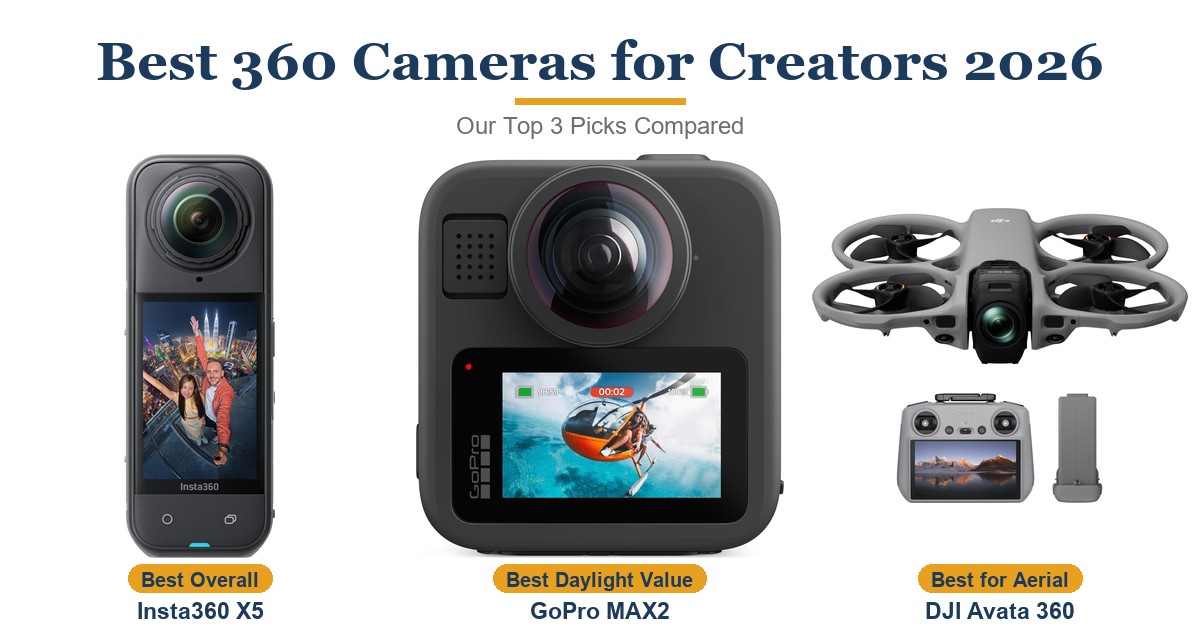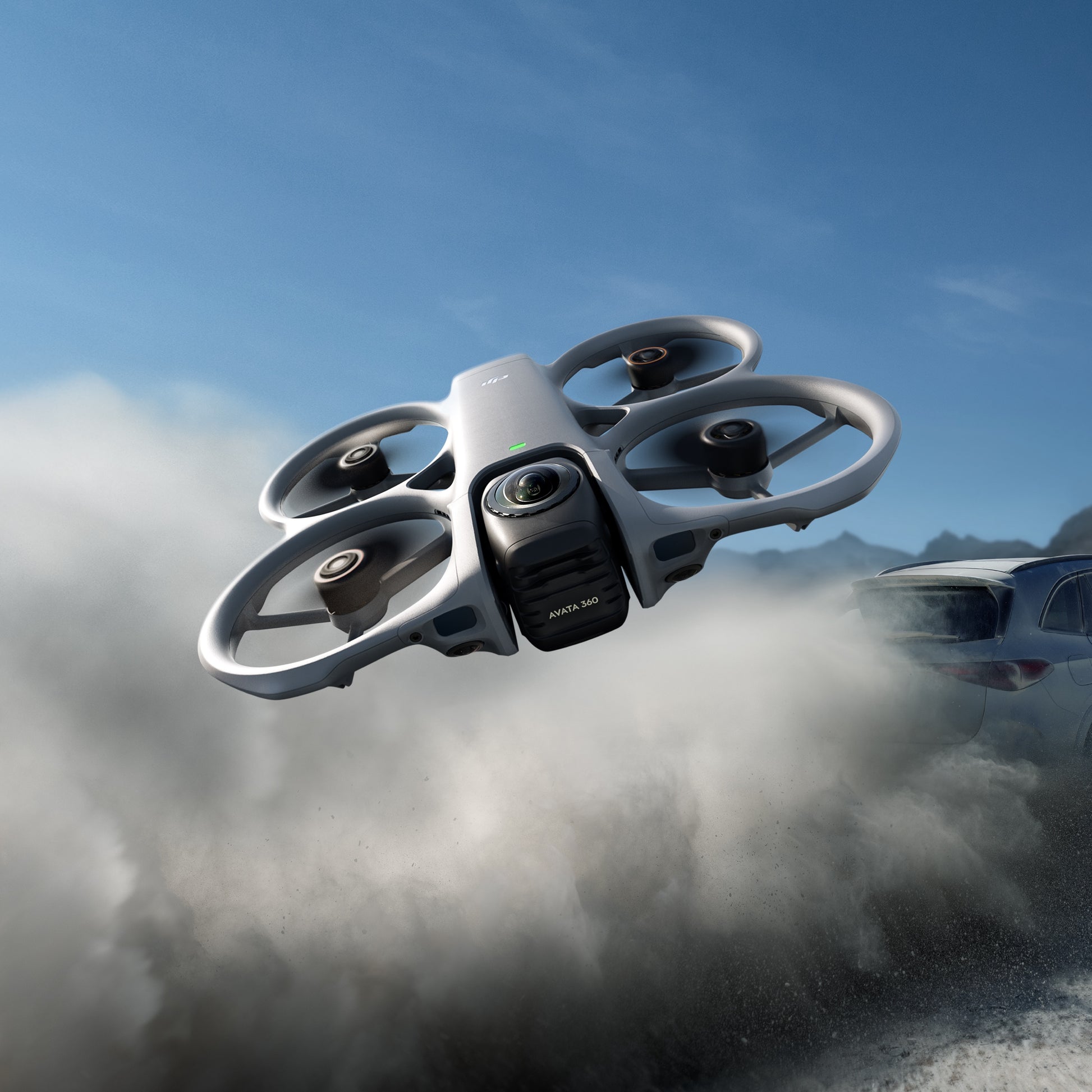
The DJI Avata 360 is built for creators who want to capture the full scene around them and pick the best angle after landing, backed by an 8K/60fps 360-degree sensor pair that outshoots its closest rival. The O4+ transmission and RC 2 controller keep it approachable without a goggles-only learning curve, and it's available directly on Amazon.ca for Canadian pilots at $899.00 CAD. The real-world battery life falling short of DJI's rated 23 minutes is the trade-off worth planning around.
Pros
- True 8K/60fps 360-degree capture with 120MP stills from dual 1-inch-equivalent sensors
- Roughly a third the price of the Insta360 Antigravity A1
- O4+ transmission holds a stable signal up to 20 km
- Handles wind and fast Sport Mode flight up to 18 m/s with confidence
- Omnidirectional obstacle sensing plus integrated propeller guards
Cons
- Real-world battery life runs closer to 15 to 18 minutes than the rated 23
- 360 footage needs DJI Fly or DJI Studio reframing before it's shareable
- Noticeably loud in flight compared to smaller selfie drones
As an Amazon Associate I earn from qualifying purchases. Disclosure
Overview
At $899.00 CAD, the DJI Avata 360 undercuts the closest 360-degree drone rival by more than $1,200 CAD while adding stereo 8K/60fps capture the Avata line never had before. It’s a cinewhoop-style FPV drone built for creators who want the “fly first, frame later” workflow — capture the full sphere around the aircraft, then pick the angle after landing instead of committing to a single lens shot mid-flight. It’s sold on Amazon.com and Amazon.ca alongside DJI’s own store, with the RC 2 controller bundle reviewed here as the standard entry point.
The dual 1-inch-equivalent sensor array is the real generational leap here, replacing the single forward-facing camera on the standard Avata 2 and adding a Single Lens mode that still shoots traditional 4K/60fps FPV footage when a full 360° capture isn’t needed. DJI paired that with its O4+ transmission system and omnidirectional obstacle sensing — including at night — features that were previously split across different Avata and Mavic-series products. It’s listed on Amazon.ca at $899.00 CAD, an easier ask for Canadian creators chasing FPV shots over prairie skylines, coastal cliffs, or a Toronto skyline flight than the pricier 360° alternatives on the market.
Key Specifications
| Camera System | Dual 1-inch-equivalent sensors, 8K/60fps 360° HDR video |
| Still Photos | 120MP blended 360° stills |
| Single Lens Mode | 4K/60fps traditional FPV framing |
| Weight | 455 g (1 lb) |
| Dimensions | 246 x 199 x 55.5 mm (9.69 x 7.83 x 2.19 in) |
| Max Flight Time | Up to 23 minutes (rated) |
| Max Speed | 18 m/s in Sport Mode (approx. 40 mph) |
| Transmission | DJI O4+, up to 20 km range |
| Obstacle Sensing | Omnidirectional, including low-light/night |
| Controller | DJI RC 2 with built-in screen (included) |
| Price (CAD) | $899.00 |
DJI Avata 360 Camera & 360° Image Quality
The headline feature is the dual-sensor array that captures the full sphere around the aircraft at 8K/60fps HDR, then lets a pilot reframe the shot after the flight instead of committing to one angle in real time. TechRadar’s comparison testing against Insta360’s rival drone found the Avata 360’s footage noticeably sharper, crediting the larger 1-inch-equivalent sensors and the jump to 8K60 versus the competing drone’s 8K30 cap.
Still photography benefits from the same sensor pair, producing 120-megapixel blended stills that hold up to cropping for print or social use. When the full-sphere workflow isn’t needed, Single Lens mode switches the front camera to a conventional 4K/60fps FPV feed, so the drone doesn’t force every flight into 360° post-production.
Flight Performance & Battery Life
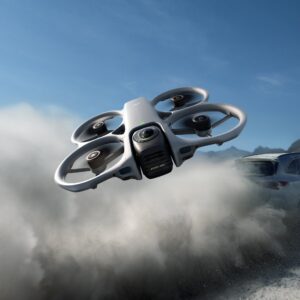
TechRadar’s side-by-side testing found the Avata 360 flies faster, handles wind better, and responds more crisply to control inputs than its closest 360° rival, with Sport Mode topping out around 18 m/s. Reviewers at multiple outlets, including Digital Camera World and DroneXL, described the flight stability in gusty conditions as a genuine strength, backed by the integrated propeller guard and omnidirectional obstacle sensing.
Battery life is the trade-off. DJI rates the pack at up to 23 minutes, but hands-on testing from Geeky Gadgets and other reviewers puts real-world flight closer to 15 to 18 minutes once cautious margins and warning notifications are factored in — worth planning for if a shoot requires back-to-back flights without spare batteries.
App & Controls: From Capture to Reframe
The included DJI RC 2 controller with its built-in screen makes the Avata 360 flyable without goggles, which widens its audience beyond dedicated FPV pilots who are used to flying by headset. DJI’s O4+ transmission held a stable 1080p60 live feed throughout DroneXL’s and ProVideo Coalition’s flight tests, even at range.
The catch is that 360° footage isn’t ready to share straight off the drone — every clip has to pass through DJI Fly or DJI Studio to be reframed into a standard video before posting. Several reviewers also flagged the Avata 360 as noticeably loud in flight, with a higher-pitched whine than smaller selfie drones like the DJI Neo.
How Does It Stack Up Against the Competition?
The Avata 360 sits between DJI’s own non-360 FPV drone and Insta360’s premium 360-degree rival — here’s how the numbers compare.
| Feature | DJI Avata 360 | DJI Avata 2 | Insta360 Antigravity A1 | DJI Neo |
|---|---|---|---|---|
| Price (CAD) | $899.00 | $809.99 | $2,914.24 | $404.00 |
| Camera | Dual 1-inch-equiv., 8K/60fps 360°, 120MP stills | Single 1/1.3-inch, 4K up to 100fps (no 360°) | Dual 1/1.28-inch, 8K/30fps 360° | Single sensor, 4K/30fps (no 360°) |
| Weight | 455 g | approx. 377 g | 249 g | 135 g |
| Rated Flight Time | Up to 23 min | Up to 23 min | Not independently confirmed at launch | Up to 18 min |
| Transmission Range | Up to 20 km (O4+) | Up to 13 km (O4) | Shorter range, newer system | Short-range, entry-level system |
| TTP Review | This review ↑ | — | — | — |
| Amazon | View on Amazon | View on Amazon | View on Amazon | View on Amazon |
Prices change frequently — always verify current pricing before purchasing.
Is the DJI Avata 360 Worth It?
The DJI Avata 360 is the strongest case yet for shooting drone footage without deciding on an angle mid-flight — the 8K/60fps 360° capture beats its nearest 360-degree rival on resolution and frame rate while costing roughly a third as much, and the O4+ transmission and RC 2 controller make it approachable without a goggles-only learning curve.
Pilots who only need standard FPV footage and don’t want the extra reframing step are better served by the cheaper DJI Avata 2, and anyone flying short, casual clips should look at the far smaller DJI Neo instead. The real-world battery life running shorter than the rated 23 minutes, plus the noticeably loud motors, are the trade-offs worth planning around before buying in.