Choose the Right Stand Mixer: A Home Baking Buying Guide
Wattage, bowl size, tilt-head vs. bowl-lift, and attachment hubs — what actually separates a $100 mixer from a $500 one, and which matters for how you bake.

How We Researched
Three stand mixers spanning budget to premium, cross-checked against Reviewed.com, olive magazine, and Whisk & Bite testing, plus manufacturer spec sheets. No manufacturer paid for placement.
* As an Amazon Associate I earn from qualifying purchases. Disclosure
What You’ll Learn
- Why motor wattage numbers alone can be misleading
- What bowl capacity actually means for real recipes
- Tilt-head vs. bowl-lift, and which fits your kitchen
- Why an attachment hub matters more than it looks like it would
- How to match your budget to how often you’ll actually bake
- Which of our three reviewed mixers fits which kind of baker
3 mixers referenced in this guide
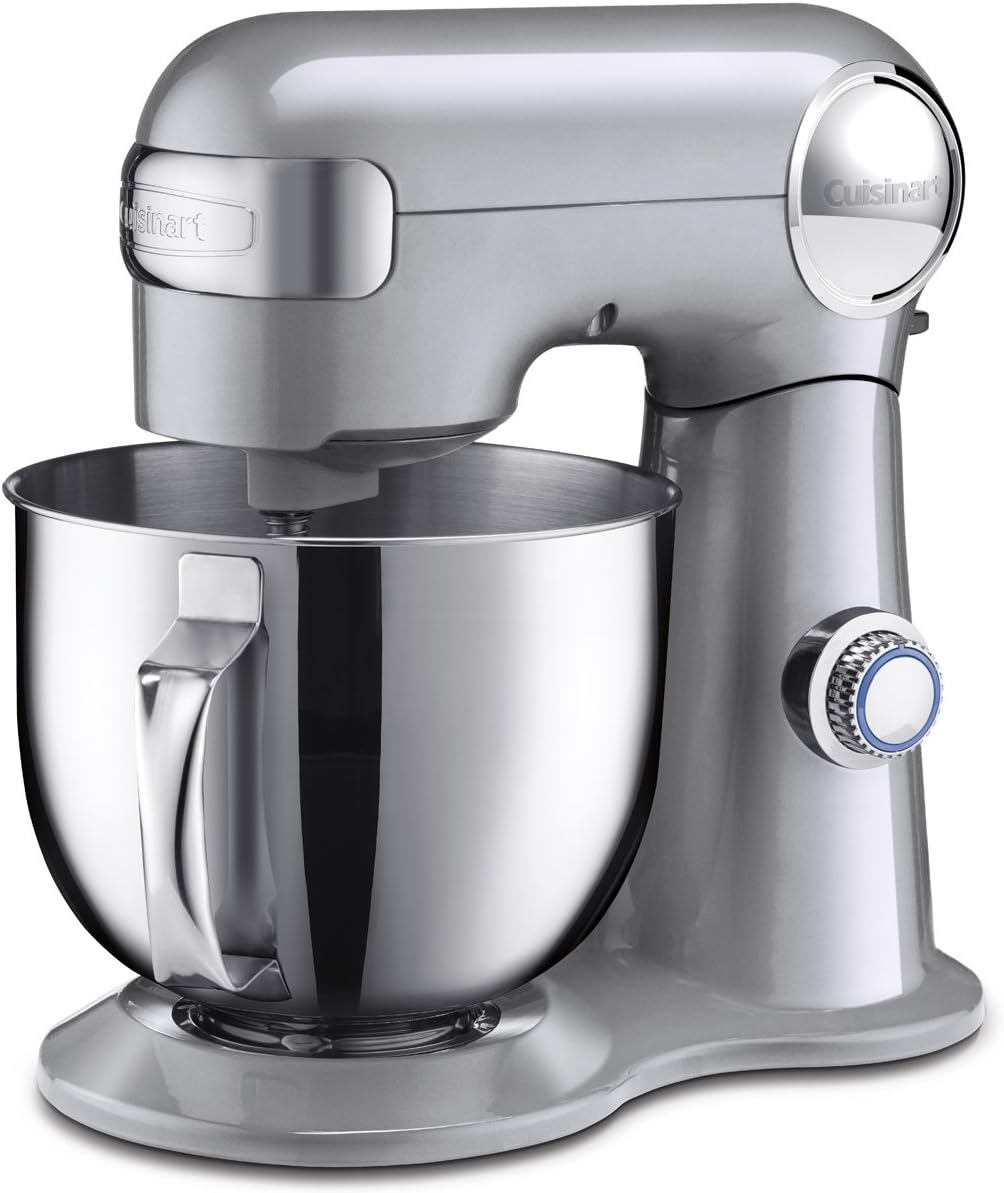
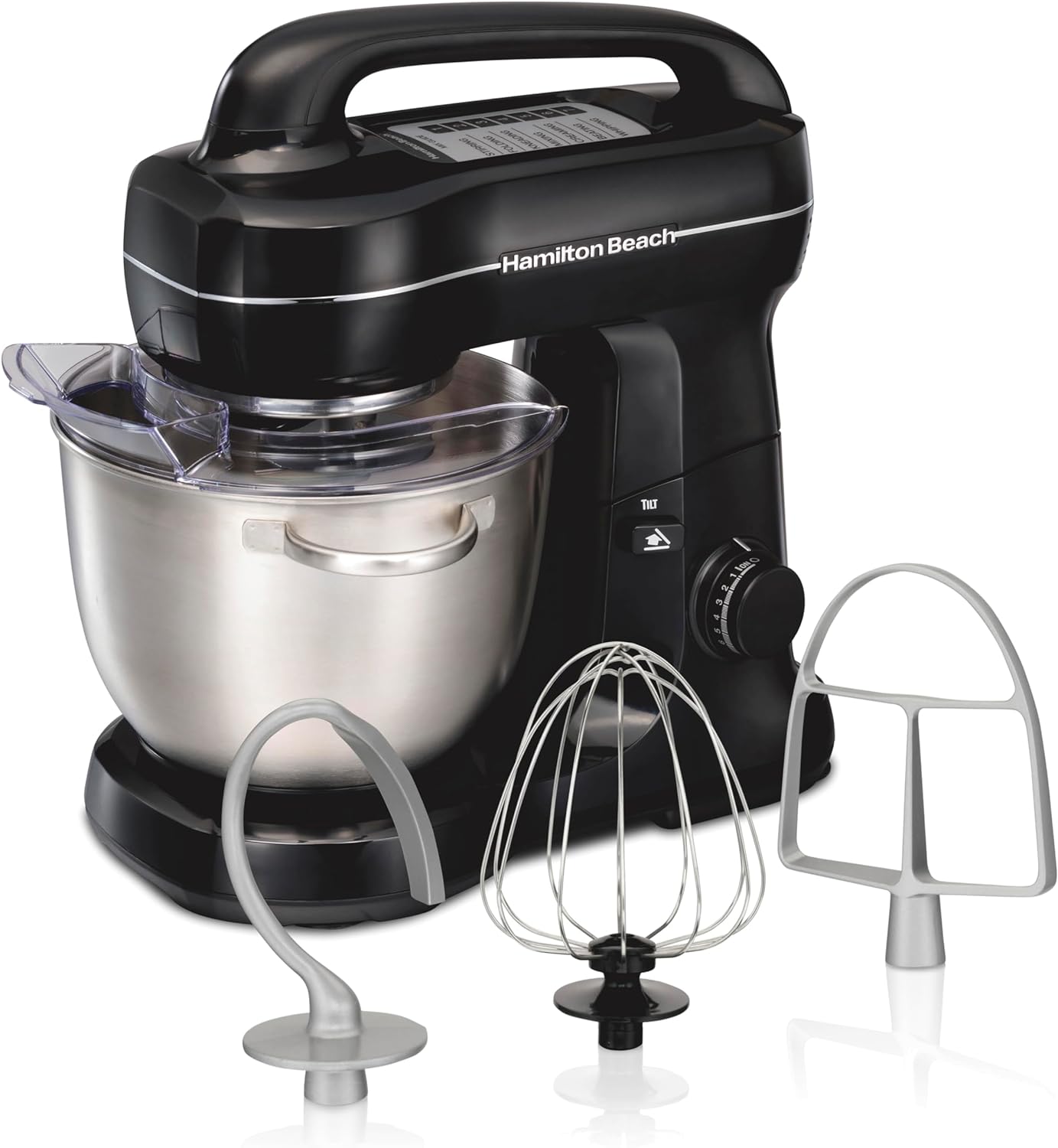
A stand mixer is one of the few kitchen appliances people genuinely fight over on forums — partly brand loyalty, partly because the specs that matter (wattage, bowl size, attachment compatibility) are easy to compare on a spec sheet but hard to translate into “will this work for what I actually bake.” This guide breaks down the five decisions that matter, using three mixers spanning $100 to $500 as concrete reference points.
Motor Power (Wattage)
Wattage is the number every stand mixer listing leads with, and it’s a genuinely useful shorthand — but not a purely linear one. For light baking like cookies and cake batter, 300 watts is plenty; stiff bread dough and heavy mixtures are where a weaker motor starts to bog down or stall, which is exactly the gap between our budget and mid-tier picks below.
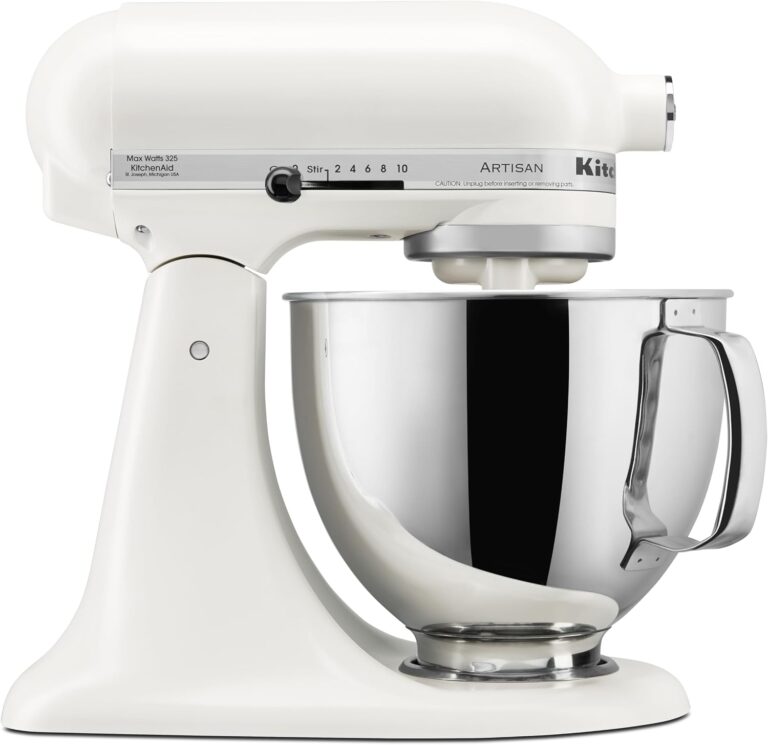
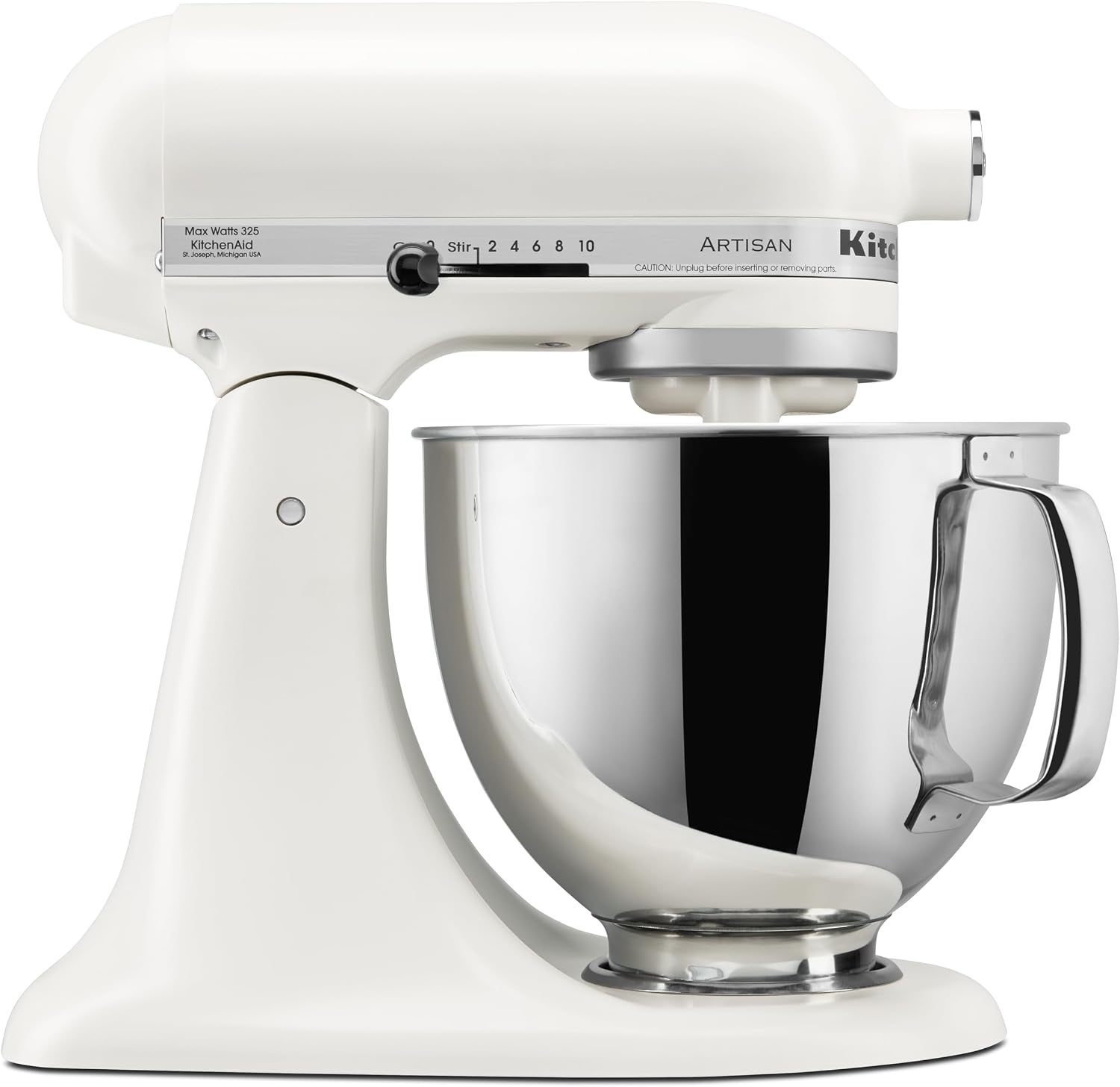
Wattage alone doesn’t tell the whole story, either. KitchenAid’s Artisan line has built its reputation on planetary mixing geometry — the beater orbits the bowl while spinning on its own axis — squeezing strong real-world performance out of a comparatively modest 300-watt motor. A mixer with a bigger number on the box isn’t automatically the better mixer.
When it matters: if bread dough, bagels, or other stiff, high-hydration mixes are a regular part of what you bake, motor power (and how the beater actually moves through the bowl) is the first spec to check.
When it doesn’t: for cookies, cakes, buttercream, and other everyday baking, even a 300-watt entry-level motor handles the job without strain.
A higher watt number helps with heavy dough, but it isn’t the whole performance story — mixing geometry and build quality matter just as much.
Bowl Capacity
A 4.5- to 5.5-quart bowl covers most home baking — roughly up to nine dozen cookies in a single batch, or a standard loaf of bread. Households that bake for a crowd, batch bread regularly, or want to double recipes without running the mixer twice should look at 6- to 6.5-quart-plus bowls instead.
Smaller bowls aren’t a flaw — they’re a fit question. A 4-quart bowl is genuinely enough for an individual or couple baking occasionally, and a smaller bowl also means a lighter, more countertop- and cabinet-friendly mixer.
When it matters: baking for a family, hosting regularly, or doubling recipes routinely — undersizing the bowl means running two batches instead of one.
When it doesn’t: occasional or solo baking, where a smaller bowl saves counter space without costing capability.
Match bowl size to how much you actually bake at once, not to the biggest number available — a bigger bowl you rarely fill just takes up space.
Tilt-Head vs. Bowl-Lift Design
Tilt-head mixers — the style all three mixers in this guide use — tilt the motor head back for bowl access, which is faster and more convenient for everyday use: no crank, no separate locking mechanism. Bowl-lift mixers instead raise the bowl up into a fixed head, which tends to feel sturdier under heavy loads and typically pairs with larger bowl capacities on commercial-style models.
For the vast majority of home bakers, tilt-head is the right default — it’s simpler to use daily and the mixers that offer it cover the full price range, from entry-level to premium.
When it matters: serious bread bakers running large, stiff batches repeatedly may prefer a bowl-lift mixer’s added stability.
When it doesn’t: for everyday baking, tilt-head’s convenience outweighs the marginal stability advantage of bowl-lift.
Tilt-head is the practical default for most kitchens — reserve bowl-lift for genuinely heavy, frequent bread-baking use.
Attachment Ecosystem & Versatility
A front-mounted attachment hub — the port used for pasta rollers, meat grinders, spiralizers, and similar add-ons — is what separates a mixer that can grow with a kitchen from one that will only ever whisk, beat, and knead. KitchenAid’s decades-old hub has the largest first- and third-party attachment market of any stand mixer; Cuisinart’s Precision Master uses the same style of port with its own smaller but genuinely useful attachment lineup.
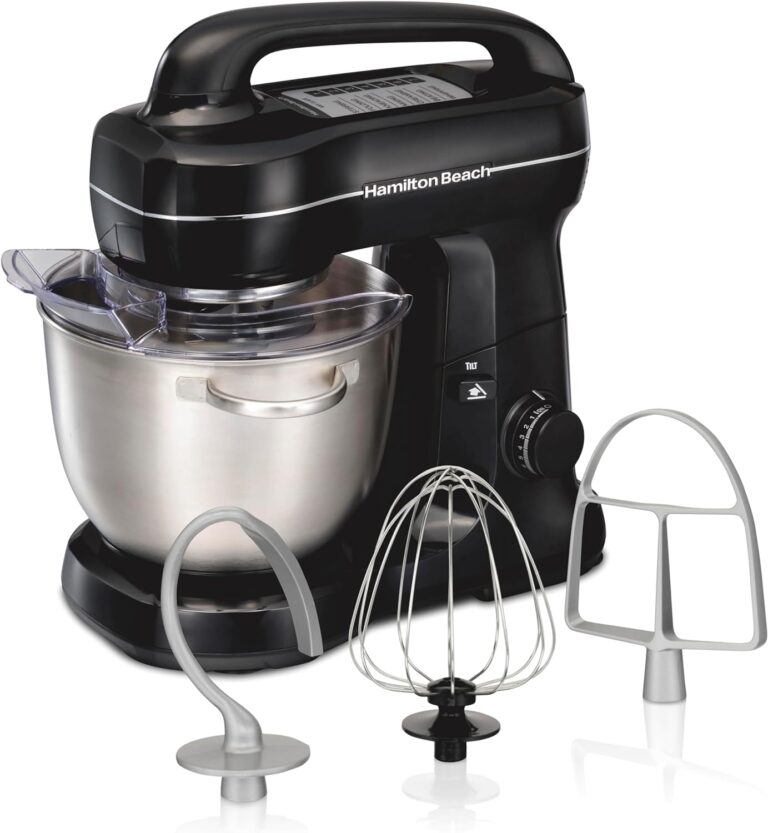
Budget mixers without a hub, like the Hamilton Beach 7-Speed, aren’t lesser for it if a household only ever needs the included whisk, paddle, and dough hook — the hub is a future-proofing feature, not a baseline requirement.
When it matters: anyone who might eventually want to make fresh pasta, grind meat, or add other attachments should prioritize a mixer with a hub from the start — retrofitting isn’t possible.
When it doesn’t: if whisking, beating, and kneading covers everything you plan to do, a hub-less budget mixer loses nothing.
An attachment hub is a one-way door — buy for the kitchen you might grow into, not just the one you have today.
Price Tier — Budget vs. Mid-Range vs. Premium
Roughly three tiers cover the stand mixer market: sub-$100 budget mixers built to answer “do I even want one of these” cheaply, $150–$250 mid-range mixers with real power and an attachment hub, and $400-plus premium mixers backed by the widest accessory ecosystem and strongest brand reputation. Each tier is a legitimate choice — the mistake is buying above the tier your actual baking habits justify.
Frequency is the better question to ask than budget alone: someone who isn’t sure they’ll use a stand mixer regularly gets more value testing the waters at the budget tier than committing $500 upfront, while a household already baking bread weekly will outgrow a budget mixer within months.
When it matters: uncertain, first-time buyers benefit most from starting cheap and upgrading only if the habit sticks.
When it doesn’t: confirmed regular bakers rarely regret buying the mid-range or premium tier outright — it’s the mixer they’ll use anyway.
Buy for your actual baking frequency, not your aspirational one — a budget mixer that gets used beats a premium one gathering dust.
| Hamilton Beach 7-Speed | Cuisinart Precision Master | KitchenAid Artisan | |
|---|---|---|---|
| Price (USD) | $151.95 | $289.95 | $379.95 |
| Price (CAD) | $179 | $292.60 | $379.99 |
| Motor | 300W | 500W | 300W |
| Bowl Capacity | 4 qt | 5.5 qt | 5 qt |
| Attachment Hub | No | Yes | Yes (widest ecosystem) |
| Our Score | 4.2/5 | 4.3/5 | 4.1/5 |
Our Verdict
For most people asking “which stand mixer should I buy,” the Cuisinart Precision Master is the easiest answer — a genuine attachment hub, a 500-watt motor, and a 5.5-quart bowl for under half the price of the category leader. It’s the mixer this guide would default to for a household that already knows it wants to bake regularly.
The Hamilton Beach 7-Speed earns its place for anyone still deciding whether stand-mixer baking is worth the counter space, and the KitchenAid Artisan remains the right call for buyers who specifically want the deepest attachment ecosystem and the brand’s decades of reputation, even at a real price premium.
Read Our Cuisinart Precision Master Review → Read Our Cuisinart Precision Master Review → Browse all Kitchen & Cooking reviews → Browse all Kitchen & Cooking reviews →
Frequently Asked Questions
Do I need a 500-watt motor for a stand mixer?
Is a bigger bowl always better?
What’s the real benefit of an attachment hub?
Should a first-time buyer start with a cheap stand mixer?
Is the Cuisinart Precision Master as good as a KitchenAid?
Which One Is Right for You?
Category Benchmark
Bottom line: the reputation pick for buyers who want the deepest accessory ecosystem and don’t mind paying for it.
Best Value
Bottom line: the mixer this guide defaults to — real power and a real attachment hub at less than half the price of the category leader.
Budget Pick
Bottom line: a sub-$100 way to find out if stand-mixer baking earns its counter space, without a long-term commitment.