Smart Ring Buying Guide: Choose by Sensors and Subscription
Oura’s new Ring 5 shrank the hardware and added live workout tracking, but the subscription question hasn’t gone away. Here’s what actually separates these rings before you buy.

How We Researched
We compared Oura’s own published specs for the Ring 5 and Ring 4 against Amazon listings, manufacturer pricing pages, and independent hands-on coverage of the subscription-free RingConn Gen 3 from outlets including Tom’s Guide and The Gadgeteer. No manufacturer paid for placement.
* As an Amazon Associate I earn from qualifying purchases. Disclosure
What You’ll Learn
- Why more sensor pathways actually matters (and when it doesn’t)
- How much smaller and longer-lasting the Ring 5 really is
- What Oura’s membership costs over three years vs. going subscription-free
- Which ring can track a workout live, and which can’t
- Whether the $50 price gap between Ring 5 and Ring 4 is worth paying
2 products in this guide
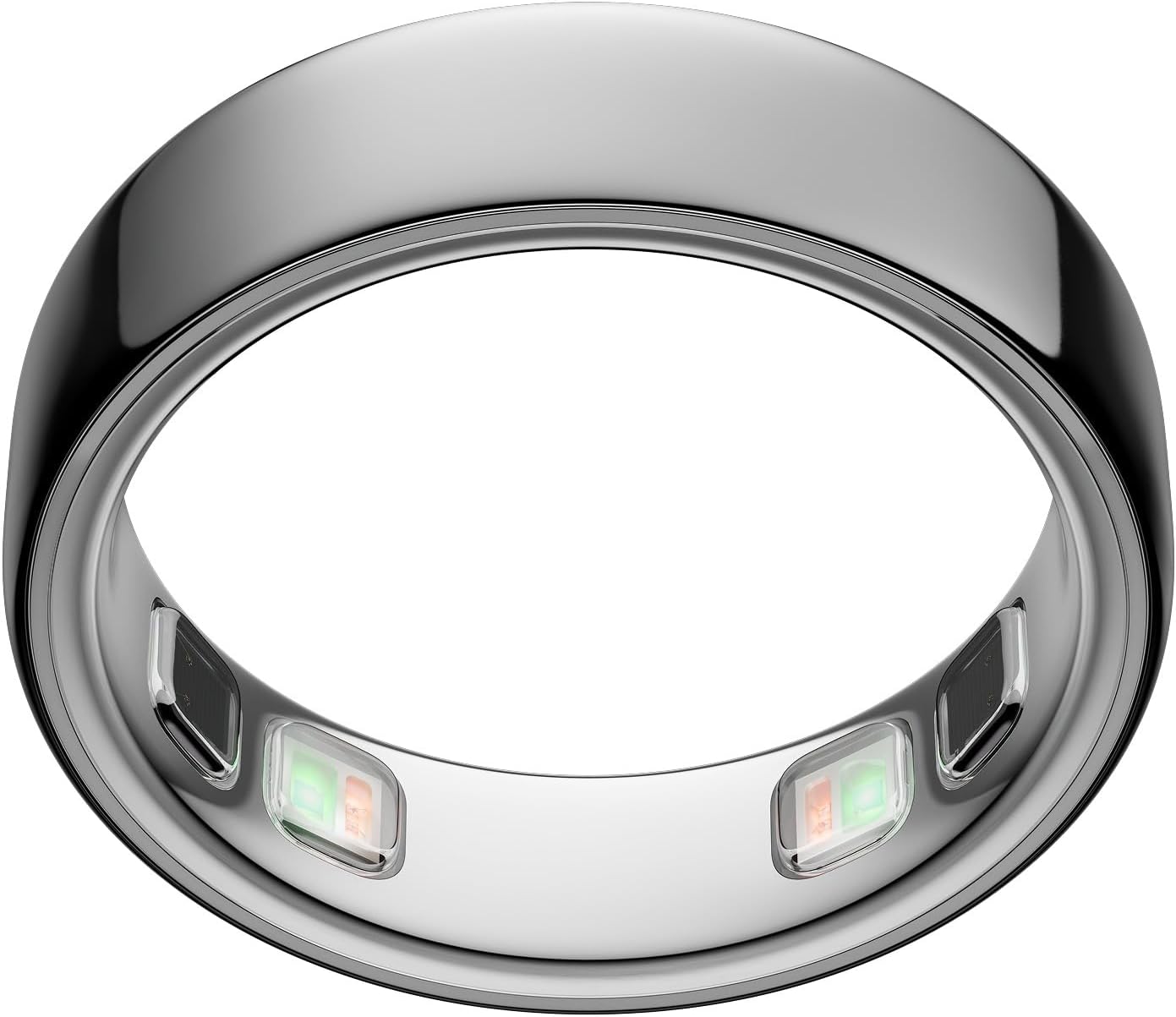
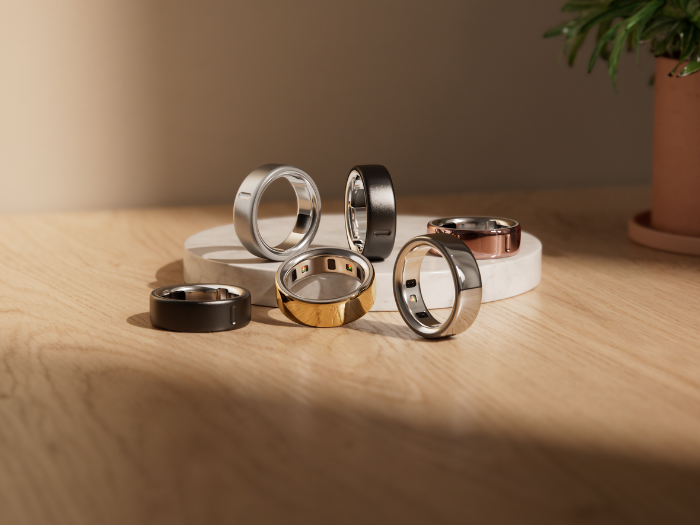
Oura has owned the smart ring conversation for three years running, and its fifth-generation ring changes more than the number on the box — it’s smaller, packs more sensors, and finally tracks a workout while you’re doing it. But Oura’s own previous-generation ring, the Ring 4, is still one of the most accurate sleep trackers on the market and now costs less. We looked at what genuinely changed between generations, what a subscription-free rival brings to the table, and where your $50 is actually going.
Sensor Accuracy: Why More Signal Paths Matter
The Ring 4 uses an 18-path multi-wavelength PPG sensor array that Oura has tuned specifically for sleep-stage and HRV accuracy — it’s the reason the Ring 4 has been a top pick for recovery-focused athletes since launch. The Ring 5 goes further, with what Oura describes as roughly 4x more powerful sensors across 12 signal pathways, aimed at reducing the nighttime dropouts and skin-tone/temperature variability that occasionally trip up optical sensors.
In practice, both rings deliver clinically-referenced sleep and HRV tracking that independent reviewers have rated highly. The Ring 5’s sensor upgrade shows up most in edge cases — cold hands, darker skin tones, restless sleepers — rather than in the average night’s readout.
When it matters: if you’ve had inconsistent readings on an older ring, or you’re tracking recovery closely as an athlete, the newer sensor array is a real (if incremental) upgrade.
When it doesn’t: if you mainly check your daily readiness score and sleep stages, the Ring 4’s 18-path sensor is already accurate enough that you likely won’t notice a difference.
More sensor pathways mostly fix edge cases, not everyday accuracy — don’t pay extra for this alone.
Size, Comfort, and Battery Life
Oura says the Ring 5 is roughly 40% smaller and lighter than the Ring 4, which matters more than it sounds for a device you wear 24/7 — bulkier rings are more likely to catch on gloves, get bumped during workouts, or simply feel odd on a smaller finger. Battery life lands at 6–9 days on the Ring 5 depending on usage, close to the Ring 4’s rated 8 days with an 80-minute full charge.
Neither ring will get you through a long trip without a charger, but the practical difference between “about a week” and “about a week” is small. The size reduction is the more noticeable change day to day.
When it matters: first-time ring wearers, people with smaller fingers, or anyone self-conscious about a chunky ring on their hand.
When it doesn’t: if you already own and like the fit of the Ring 4, the size difference alone isn’t a strong reason to upgrade.
Battery life is basically a wash — the Ring 5’s real physical upgrade is size, not runtime.
The Subscription Question: What You’re Really Paying Over Three Years
Both the Ring 5 and Ring 4 require an Oura membership to unlock full insights — $5.99/month (or $69.99/year) in the US, $7.99/month in Canada. That’s on top of the $399 (Ring 5) or $349 (Ring 4) hardware cost. Over three years, that membership adds roughly $180–250 to the total price, depending on plan and region.
This is exactly where a subscription-free rival like the RingConn Gen 3 changes the math. At $349 with every health-tracking feature included for free, RingConn’s total three-year cost comes in over $200 lower than an equivalent Oura ring, according to hands-on comparisons from Tom’s Guide and The Gadgeteer. RingConn doesn’t yet match Oura’s AI Advisor coaching or years of sleep-algorithm refinement, but for buyers who specifically want to avoid an ongoing fee, it’s a legitimate reason to look outside the Oura lineup entirely.
When it matters: if a recurring fee is a dealbreaker on principle, or you’re comparing total cost of ownership rather than sticker price.
When it doesn’t: if you specifically want Oura’s AI-driven coaching and app polish, the membership is buying real software features, not just a paywall on data you already own.
Sticker price isn’t the real comparison — factor in ~$180–250 of membership fees over three years before deciding between Oura and a subscription-free ring.
Live Workout Tracking: A Feature Only the Ring 5 Has
The Ring 5 introduces live workout tracking for running, cycling, and lifting — the ring surfaces real-time metrics during the session instead of only a post-workout summary. This is new to the Oura lineup; the Ring 4 does not offer real-time in-session tracking at all.
For runners and cyclists who like to glance at pace or heart-rate zone mid-session, this closes a real gap between Oura and dedicated fitness watches. For anyone who uses a ring purely for sleep and recovery data and never opens the app during exercise, it won’t change how you use the device.
When it matters: structured runs, rides, or lifting sessions where you actively check metrics in real time.
When it doesn’t: if you already track workouts on a separate watch or app and only want the ring for sleep and recovery.
Live workout tracking is the single biggest functional gap between the two rings — everything else is refinement.
| Oura Ring 5 | Oura Ring 4 | |
|---|---|---|
| Price (USD) | $399 | $349 |
| Price (CAD) | $529.99 | $469.99 |
| Sensor array | ~4x more powerful, 12 pathways | 18-path PPG |
| Battery life | 6–9 days | Up to 8 days |
| Size vs. previous gen | ~40% smaller/lighter | — |
| Live workout tracking | Yes (run/ride/lift) | No |
| Membership required | $5.99/mo (US) | $5.99/mo (US) |
| Our Score | 4.6/5 | 4.7/5 |
Our Verdict
Buy the Oura Ring 5 if you want the newest sensors, the smallest and lightest build Oura has made, and you’ll actually use live workout tracking. Buy the Oura Ring 4 if you want essentially the same best-in-class sleep and recovery tracking for $50 less, and you don’t need real-time workout metrics. If a monthly subscription is the actual dealbreaker rather than the hardware, the subscription-free RingConn Gen 3 is worth researching before you commit to either Oura ring.
Frequently Asked Questions
Is the Oura Ring 5 worth the extra $50 over the Ring 4?
Do I have to pay a monthly subscription for a smart ring?
Which Oura ring has better battery life?
Can I track a workout in real time with these rings?
Do these rings work with both iPhone and Android?
Which One Is Right for You?
Most Advanced
Bottom line: choose this if you want the newest hardware and will actually use live in-session workout tracking.
Best Sleep-Tracking Value
Bottom line: choose this if you want proven sleep and recovery accuracy for less, and don’t need live workout tracking.