Air Fryer Size Guide 2026: What Size Fits Your Household
Air fryer capacity runs from compact 4-quart glass models to 26-quart oven-style units — here’s how to match the quart number on the box to how many people you’re actually feeding.

How We Researched
We compared three published air fryer reviews spanning the capacity range — a 4-quart glass-container model, a 6-quart dual-basket unit, and a 26.4-quart oven-style combo — against independent testing from Tom’s Guide, TechGearLab, CNN Underscored, and The Kitchenly. No manufacturer paid for placement.
* As an Amazon Associate I earn from qualifying purchases. Disclosure
What You’ll Learn
- How air fryer quart capacity maps to household size
- Why “capacity” on the box isn’t always usable capacity
- The real tradeoffs between single-basket, dual-basket, and glass-container designs
- How much counter space each size actually needs
- Why a bigger unit isn’t automatically the better buy
3 sizes in this guide
Picking the right air fryer size for your household comes down to one number: quart capacity. But 6 quarts means something different for a couple who cooks one meal a night than it does for a family plating four dinners at once. We compared three air fryers that sit at different points on that scale — a 4-quart glass-container model, a 6-quart dual-basket unit, and a 26.4-quart oven-style combo — to work out which capacity actually fits which household.
How Many Quarts for 1-2 People?
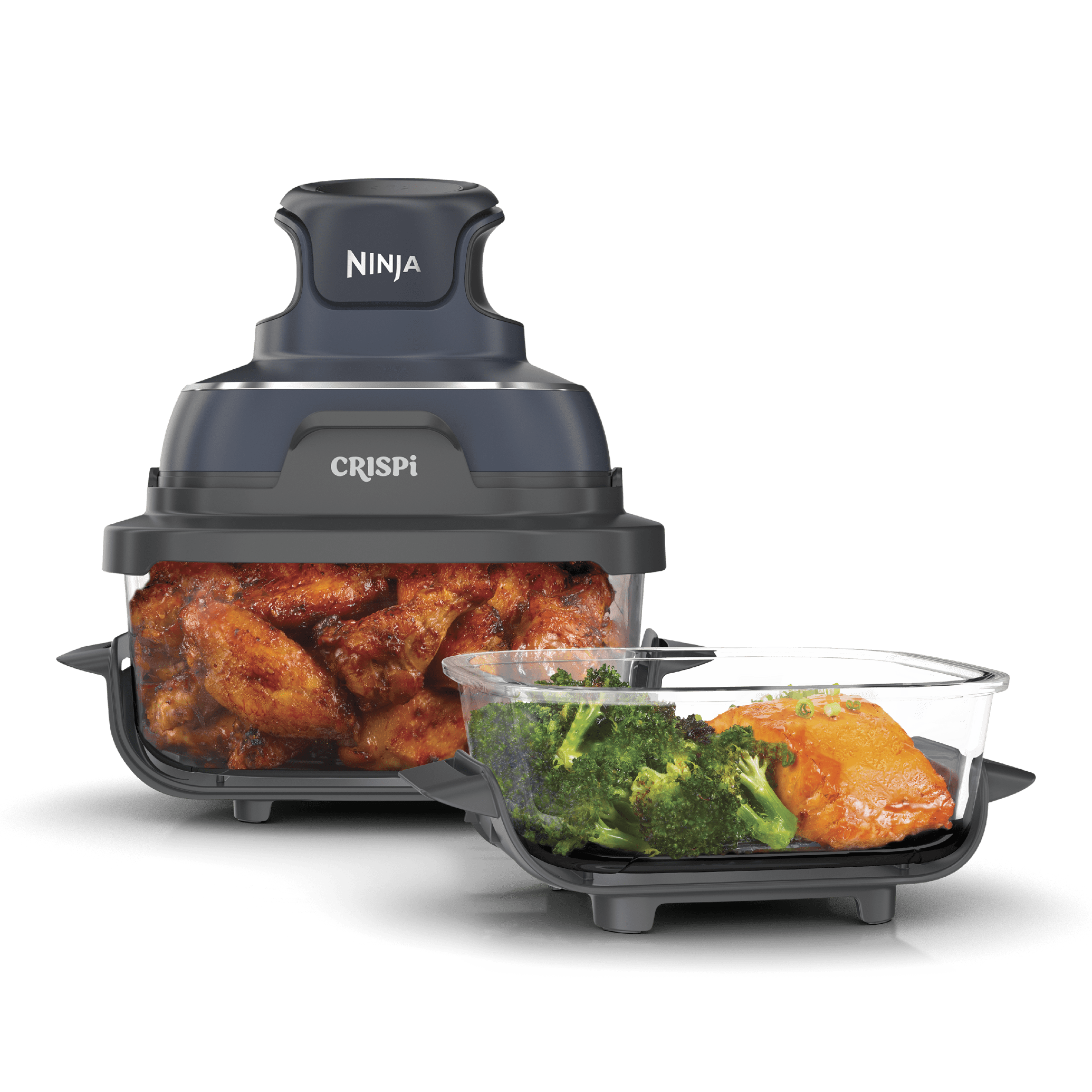
A basket or container in the 3.5-to-4-quart range is enough for one full dinner at a time for one or two people — think a chicken breast and a tray of vegetables, or two servings of fries. The Ninja Crispi 4-in-1 sits right at that mark, splitting its capacity across a 4-quart glass bowl and a smaller 6-cup bowl rather than one drawer. Tom’s Guide ran it through their standard air-fryer test battery and found the Max Crisp setting produced browning close to what a full-size countertop fryer delivers, while CNN Underscored’s 2026 roundup singled it out for how evenly its smaller batches cooked compared to other portable models in the test group.
The container split matters more than it looks on paper: the 6-cup bowl can finish a sauce or a side while the 4-quart bowl handles the main, which a single-basket fryer of the same total capacity can’t do at the same time. What you give up at this size is headroom — cooking for three or more means running a second batch, and there’s no dedicated bake, broil, or dehydrate mode to fall back on.
When it matters: apartments, dorms, and studio kitchens where counter space is the real constraint, and for anyone who reliably cooks one meal at a time rather than batching.
When it doesn’t: if you meal-prep for the week in one sitting even as a household of one, a 4-quart ceiling turns a single cooking session into two or three, which erodes the time savings an air fryer is supposed to deliver.
A 4-quart glass or basket fryer comfortably handles dinner for two — go bigger only if you routinely cook for three or batch-prep in advance.
How Many Quarts for a Household of 2-3?
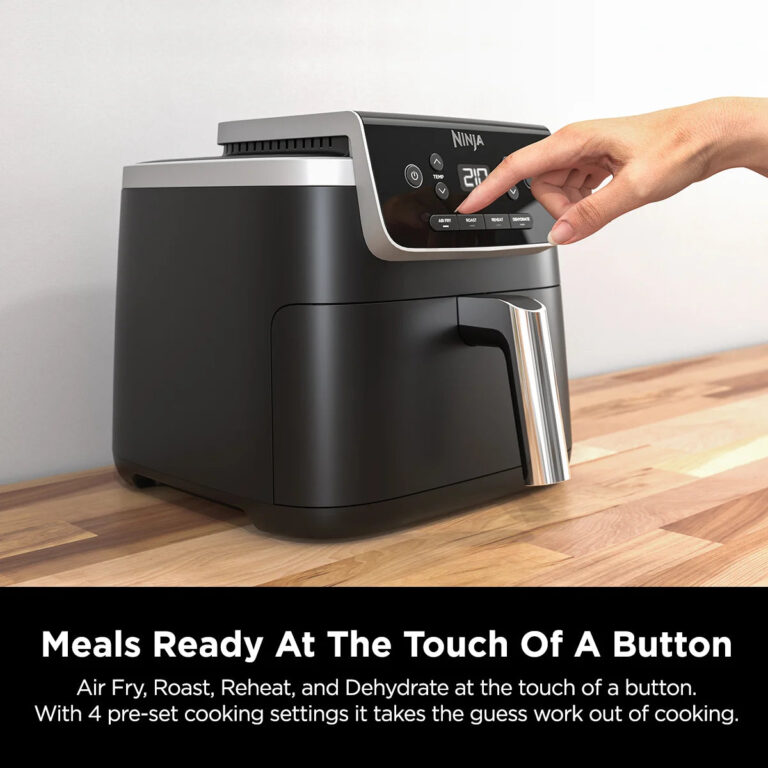
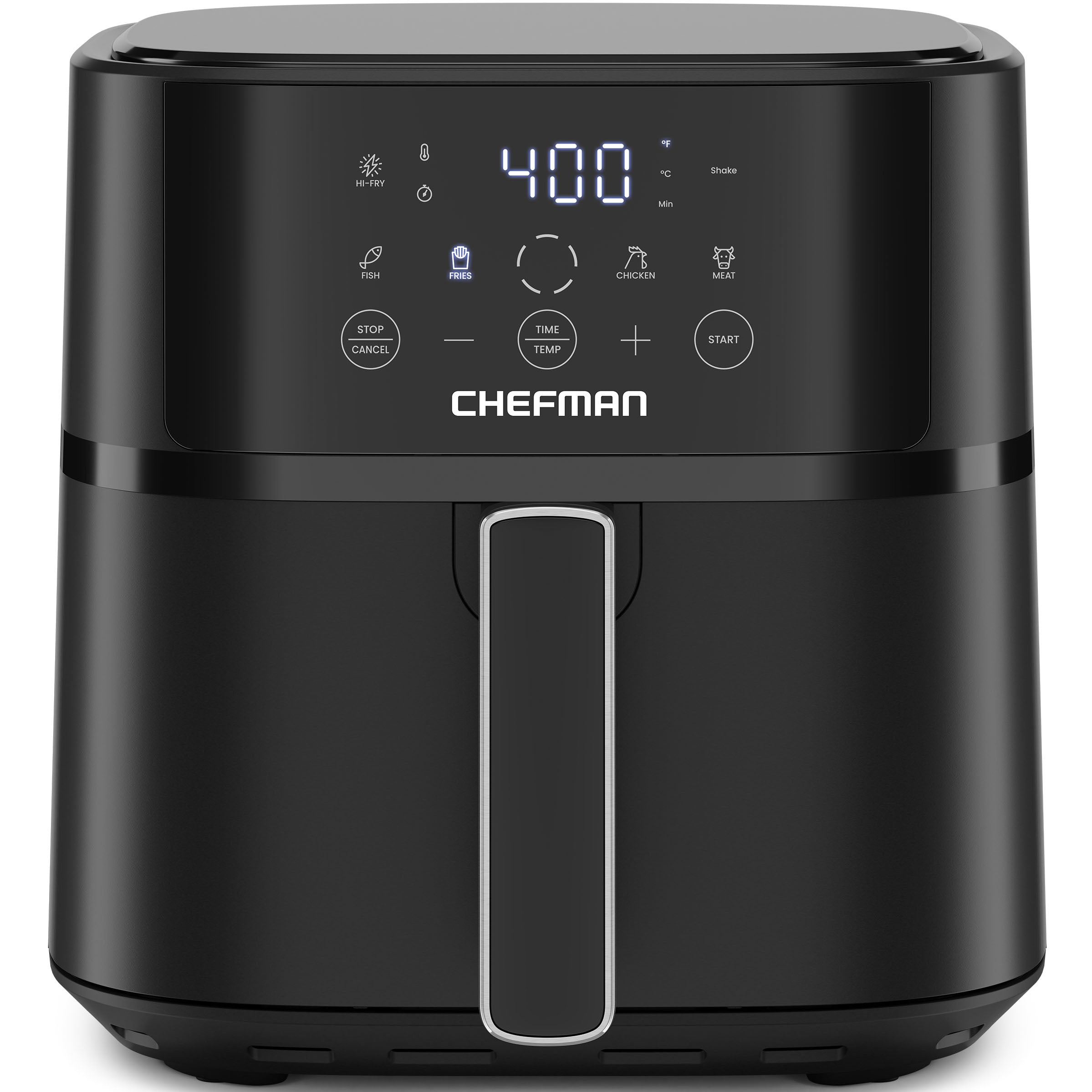
Six quarts is the capacity most manufacturers actually build toward for small households, and it’s usually split into two 3-quart baskets rather than one large drawer. The Chefman Air Fryer 6 QT is a straightforward example: its dual-basket layout lets you run a protein in one basket and a side in the other, fully separated, so flavors don’t transfer between the two. Its Hi-Fry 450°F setting delivered crispy wings and fries in TechGearLab’s testing.
The same TechGearLab review is worth knowing about before buying at this size: their instruments measured internal temperature swinging as much as 16.7°F from the set point, which showed up as inconsistent results on food with less margin for error — their tater tots test came out overcooked on the outside and mushy in the center, even though wings and fries turned out fine. That’s a real tradeoff of a budget dual-basket design, not a dealbreaker, but it means checking food a few minutes early the first time you cook something new in it.
When it matters: cooking two different dishes for the same meal without one basket’s aroma bleeding into the other — a genuine advantage of the dual-basket layout over a single large drawer.
When it doesn’t: if precision matters more than speed for what you cook most — delicate items with a narrow crisp-versus-dry window are exactly where a 16.7°F swing shows up, so a model with tighter temperature control may serve better.
A 6-quart dual-basket fryer covers most 2-3 person households well, but budget models trade some temperature precision for that price and capacity.
How Many Quarts for a Family of 4 or More?
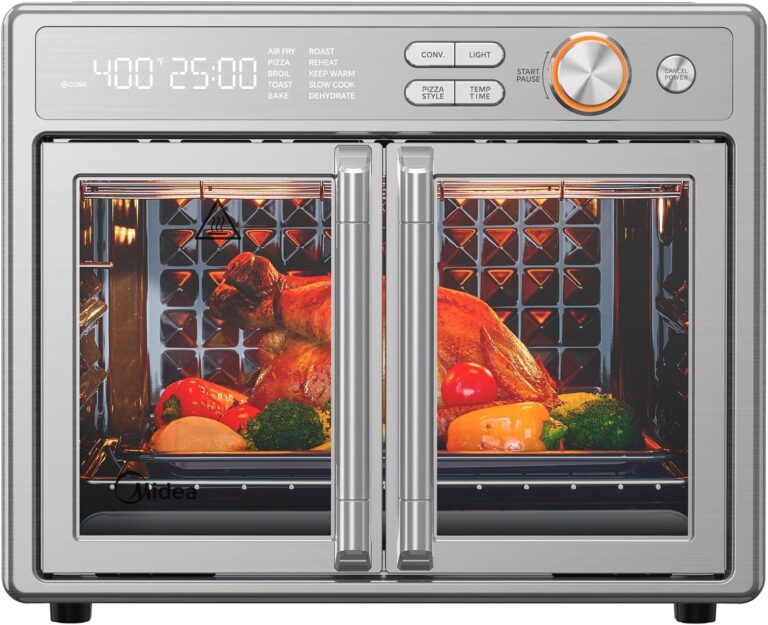
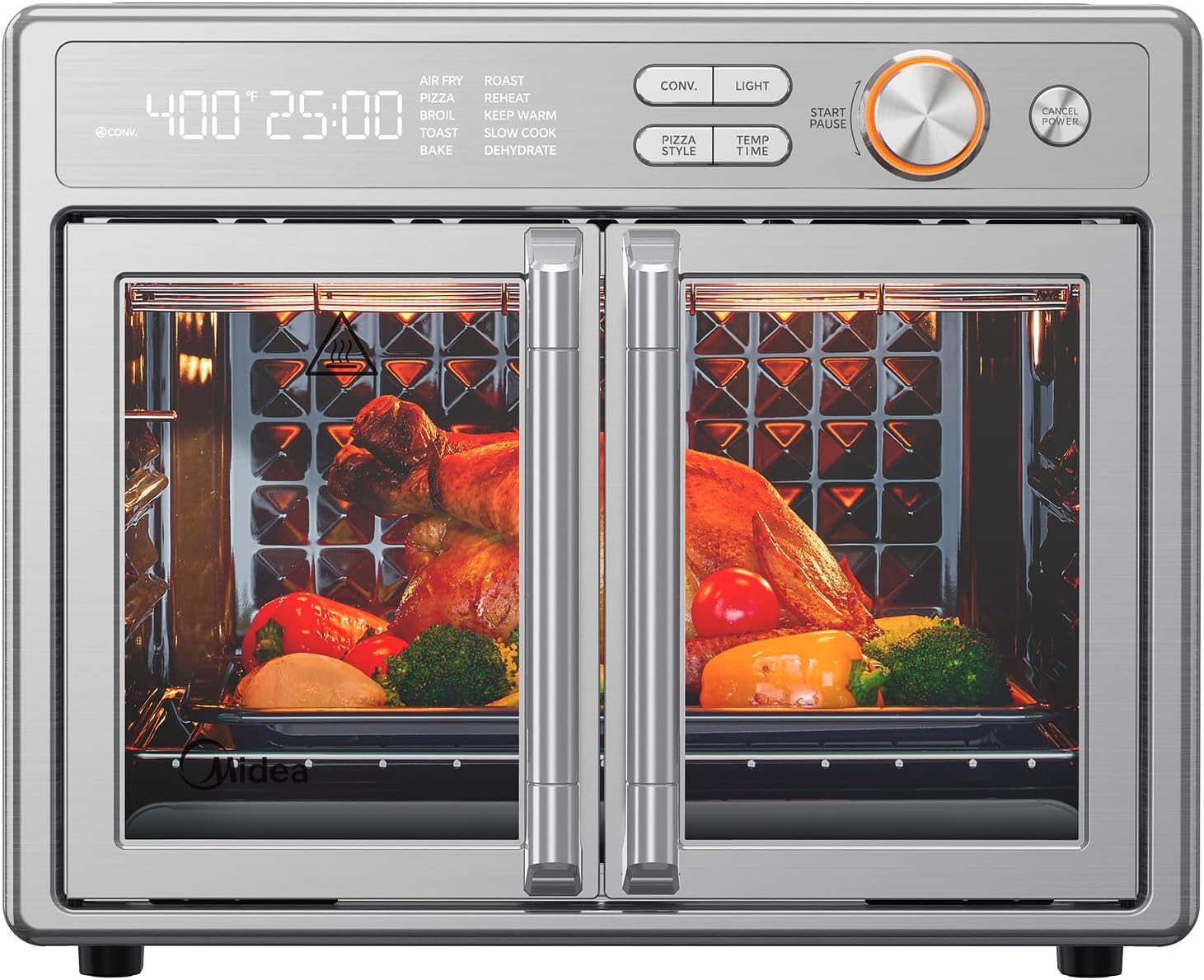
Past a certain point, a basket-style air fryer stops scaling and an oven-style combo takes over — and the Midea Flexify Pro 10+4 is a good example of why. At 26.4 quarts with three rack positions (per Consumer Reports’ spec listing), it fits multiple trays of food without batching: The Kitchenly, which reviewed the Pro, ran two trays of vegetables at once and found both cooked evenly. Its 1,750W graphene heating system heats up instantly by Midea’s account, though Midea publishes no preheat time. The Kitchenly also found the 450°F Flash Air Fry mode turned frozen fries golden in about 12 minutes and cooked chicken wings crisp outside and juicy inside without needing to flip them mid-cycle.
That capacity comes with real tradeoffs beyond price. At 17 × 16.4 × 13.8 inches and 21.3 pounds (per Midea’s listing), it needs dedicated counter space rather than a gap beside a coffee maker, and The Kitchenly noted the exterior can run warm during long roasts, so leave clearance from walls and cabinets. The box also includes only one wire rack, so cooking on two levels beyond the enamel tray means buying a second rack.
When it matters: households that regularly cook a full meal for four or more people at once and want one appliance instead of running a basket fryer in shifts.
When it doesn’t: if your household is larger but rarely cooks for everyone at the same time — staggered schedules mean the extra capacity and counter footprint may go mostly unused.
Feeding four or more people at once calls for real oven-style capacity, not just a bigger basket — expect to pay a real premium and give up real counter space for it.
Quick Comparison
| Ninja Crispi 4-in-1 | Chefman 6 QT | Midea Flexify Pro 10+4 | |
|---|---|---|---|
| Price (USD) | $152.95 | $59.99 | $169.99 |
| Price (CAD) | $209.90 | $137.07 | Not confirmed at writing |
| Capacity | 4-qt + 6-cup (glass) | 6 qt (dual 3-qt baskets) | 26.4 qt (3 rack positions) |
| Best For | 1-2 people | 2-3 people | Families of 4+ |
| Cooking Functions | 4 | 4 presets + Hi-Fry | 10+4 modes |
| Our Score | 4.0/5 | 3.9/5 | 4.1/5 |
Our Verdict
Match the quart number to how you actually cook, not to the biggest number on the shelf. For one or two people cooking one meal at a time, the Ninja Crispi’s 4-quart glass containers are plenty and add a genuine chemical-free storage advantage over a coated basket. For a household of 2-3 that wants dual-basket flexibility without a premium price, the Chefman 6 QT is the practical choice — just budget a few extra minutes the first time you cook something temperature-sensitive. And for a family regularly cooking full meals for four or more, only real oven-style capacity like the Midea Flexify Pro’s 26.4 quarts avoids cooking in shifts.
Buy small if you’ll actually use small — the biggest unit on this list also asks for the most counter space and the highest price, and that premium is wasted on a household that rarely cooks for a crowd.
Frequently Asked Questions
Is a bigger air fryer always the better buy?
Does the quart number on the box match the actual usable capacity?
Can a 6-quart air fryer realistically feed a family of four?
What’s the real difference between a basket air fryer and an oven-style combo?
Are glass air fryer containers worth it over a standard nonstick basket?
Which Size Is Right for You?
Best for 1-2 People
Bottom line: Two PFAS-free glass containers cover a full dinner for two without a coated basket to scrub or scratch.
Best Value for 2-3 People
Bottom line: Dual 3-quart baskets cook two dishes at once at a compact-fryer price, with a modest temperature-consistency tradeoff.
Best for Families of 4+
Bottom line: 26.4-quart oven-style capacity with three rack positions cooks a full family meal at once — at a real price and counter-space premium.