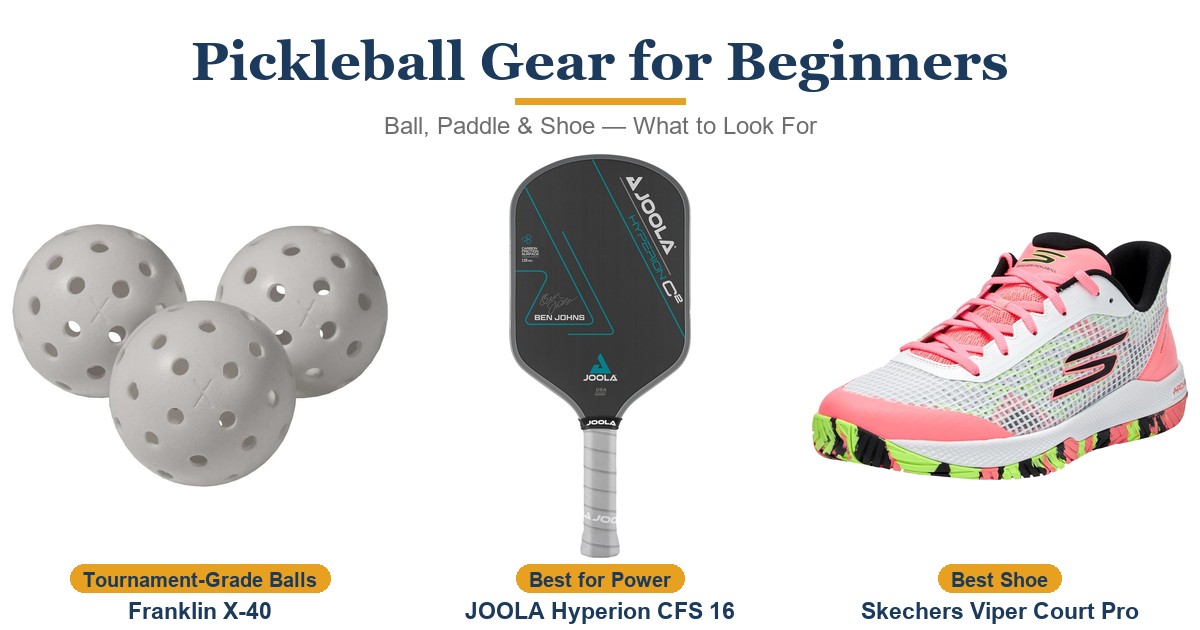
The Skechers Viper Court Pro, available through Amazon.ca, is a smart step up for Canadian beginners who've outgrown running shoes on the court. The Goodyear Gold outsole delivers confident lateral traction and the APMA-certified Arch Fit insole adds real mid-foot support during long sessions. The tradeoff: its Relaxed Fit toe box and standard-wear rubber prioritize comfort and value over the maximum durability a heavier daily player might want.
Pros
- Goodyear Gold rubber outsole built specifically for pickleball's lateral slides and quick stops
- APMA-certified Arch Fit insole developed from 120,000 real foot scans
- Ultra Go foam midsole stays lightweight without going mushy on court
- Short break-in period compared to leather-heavy court shoes
- Worn by ranked players on the pro tour as a sponsor shoe
Cons
- Tread on the Goodyear outsole shows wear faster than premium court-specific rivals after months of regular play
- Relaxed Fit toe box runs slightly loose for narrow-footed players
- Mesh upper runs warmer than mesh-heavier tennis shoes in direct summer sun
As an Amazon Associate I earn from qualifying purchases. Disclosure
Overview
Most beginners start pickleball in whatever running shoes are already in the closet, and it usually shows up as ankle rolls or blown-out treads within a few weeks — running shoes are built for forward motion, not the constant lateral cuts a pickleball court demands. The Skechers Viper Court Pro was built specifically for that lateral movement, pairing a court-specific rubber outsole with Skechers’ APMA-certified Arch Fit insole at an approx. $158.99 CAD price point that undercuts most dedicated court shoes.
Skechers entered the pickleball category relatively late compared to tennis-shoe crossovers from Adidas and Diadem, but the Viper Court line has become one of the more visible sponsor shoes on the pro tour since launch, worn by ranked players in tournament play — and it ships to Canadian buyers through Amazon.ca.
Key Specifications
| Insole | Arch Fit EVA insole, APMA Seal of Acceptance |
| Midsole | Ultra Go responsive foam cushioning |
| Outsole | Goodyear Gold compound rubber, court-specific tread |
| Upper | Breathable mesh with synthetic overlays, lace-up |
| Fit | Relaxed Fit — roomier toe box |
| Price (CAD) | $158.99 |
Skechers Viper Court Pro Traction & Court Performance
The Goodyear Gold compound outsole is the headline feature — it’s the same rubber partnership Skechers uses on its running lines, retooled here with a tread pattern built for the quick stops, explosive starts, and controlled slides pickleball’s kitchen-line exchanges demand. On a hard outdoor court, that translates to noticeably more confidence planting and pushing off than a generic cross-trainer offers.
Skechers markets the Viper Court Pro as built for “elite” performance, and it’s become common on the pro tour as a sponsor shoe — a signal that the traction holds up under repeated hard cuts, not just casual weekend play.
Arch Support & Fit
The Arch Fit EVA insole carries the American Podiatric Medical Association’s Seal of Acceptance, a certification Skechers built from roughly 120,000 3D foot scans to shape the arch geometry. For players coming from flat gym-shoe insoles, the difference in mid-foot support is immediately noticeable during long rallies.
The shoe runs in a Relaxed Fit through the toe box, which is comfortable for most feet but narrow-footed players may find it slightly loose without an aftermarket insole swap; wide-footed players, conversely, will likely appreciate the extra room.
Comfort & Wearability
Ultra Go foam in the midsole keeps the shoe light without feeling mushy underfoot — a common complaint with softer running-shoe foams repurposed for court sports. The breathable mesh upper holds up reasonably well across multi-hour club sessions, though it runs warmer than mesh-heavier tennis shoes in direct summer sun.
Break-in time is short compared to leather-heavy court shoes — most players report feeling comfortable within the first session or two rather than needing a multi-week break-in period.
How Does It Stack Up Against the Competition?
Court-specific pickleball shoes now span a wide price range, and the Viper Court Pro sits in the middle — cheaper than premium tour-endorsed options, pricier than generic cross-trainers repurposed for the sport.
| Feature | Skechers Viper Court Pro | K-Swiss Express Light | ACACIA ProShot | Diadem Court Burst |
|---|---|---|---|---|
| Price (CAD) | $158.99 | $144.99 | $137.99 | $192.99 |
| Arch Support | APMA-certified Arch Fit | Standard cushioned | Standard cushioned | Premium contoured |
| Outsole | Goodyear Gold compound | Non-marking rubber | Court-specific rubber | Diadem Grip rubber |
| Best for | Balanced traction & support | Budget performance | Value entry point | Premium comfort |
| TTP Review | This review ↑ | — | — | — |
Prices change frequently — always verify current pricing before purchasing.
Is the Skechers Viper Court Pro Worth It?
The Skechers Viper Court Pro makes sense for a beginner who has outgrown running shoes on the court but doesn’t want to spend $195 CAD-plus on a premium option right away. The Goodyear Gold outsole and APMA-certified Arch Fit insole cover the two things that matter most for new players: confident lateral movement and support through long sessions.
Players with narrow feet or who play daily on abrasive outdoor courts may eventually want to size down or step up to a shoe with a firmer, longer-wearing outsole — the Relaxed Fit toe box and standard-wear rubber are built for comfort and value, not maximum durability under heavy daily use.

Check the latest price for Skechers Viper Court Pro
Check Current Price on Amazon.ca