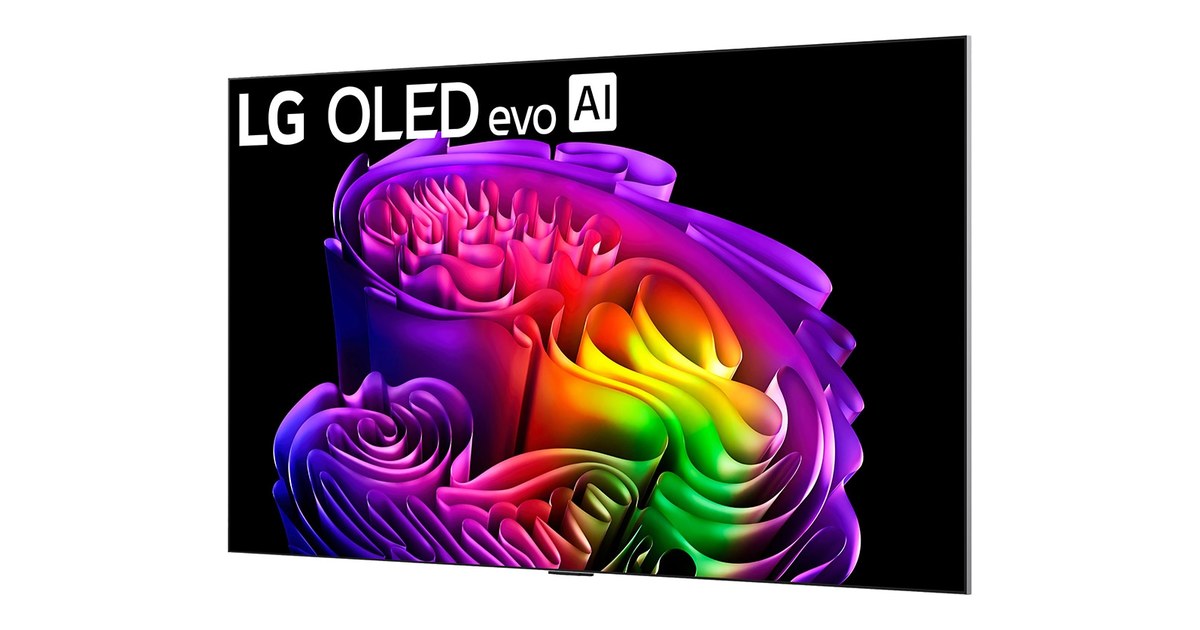
Buy the G6 if your TV faces windows or lamps, or doubles as your main gaming screen: it is brighter than last year's G5, above all across a full white screen, and its anti-reflection layer keeps blacks deep in a lit room. Four HDMI 2.1 inputs at up to 4K 165Hz make it one of the best TVs for consoles and PCs, and the Canadian 65-inch comes with a flush wall mount. The built-in sound is middling, so budget for a soundbar. Film purists may prefer Sony's Bravia 8 II.
Pros
- Much brighter than the G5, with deep OLED blacks
- Anti-reflection layer keeps dark scenes watchable in lit rooms
- Four HDMI 2.1 inputs at up to 4K 165Hz with very low input lag
- Near-reference colour accuracy in Filmmaker Mode
- Flush wall mount in the box in Canada
Cons
- Middling built-in sound; plan for a soundbar
- No HDR10+ or DTS support
- Slight green tint in some scenes and off-axis
- No stand in the box
As an Amazon Associate I earn from qualifying purchases. Disclosure
Overview
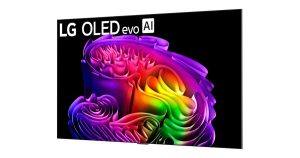
LG’s G6 is the 2026 OLED for people who watch with the curtains open and play on a console or gaming PC. It sits above the mid-range C6 in LG’s lineup and comes in sizes from 48 to 83 inches. Amazon.ca sells the 65-inch version, model OLED65G6WUA, which LG Canada lists with a flush wall mount in the box and no stand.
What it adds over last year’s G5 is a brighter picture from its Primary RGB Tandem panel and new α11 Gen3 processor, plus an improved anti-reflection layer that keeps blacks deep when lamps or windows face the screen. That puts it in the same class as Sony’s Bravia 8 II and Samsung’s S95H, the rivals head-to-head comparisons set it against, and each of those still beats it at something.
Built from 12 sources, including 5 independent reviewers such as TechRadar, What Hi-Fi? and Expert Reviews. Here’s where they agree, and where they don’t.
Where the reviews agree
- It is clearly brighter than the 2025 G5, in small highlights and full-screen whites, while keeping OLED’s deep blacks.
- Its glossy screen handles room light much better than earlier LG OLEDs, so dark scenes stay watchable with the lights on.
- For gaming it has few equals: four HDMI 2.1 inputs at up to 4K 165Hz, VRR and very low input lag.
Where they split
- TechRadar and Expert Reviews found shadow detail excellent; What Hi-Fi? saw very minor black crush in the darkest shots and rates Sony’s Bravia 8 II ahead there.
Key Specifications
| Model (Canada) | OLED65G6WUA (65-inch, wall-mount version) |
| Price (CAD) | Deal $2,799.99 |
| Panel | 4K OLED (Primary RGB Tandem) |
| Processor | α11 AI Processor 4K Gen3 |
| Refresh rate | 120Hz native, VRR up to 165Hz |
| HDR formats | Dolby Vision, HDR10, HLG (no HDR10+) |
| HDMI | 4 x HDMI 2.1, up to 4K 165Hz; eARC on HDMI 2 |
| Audio | 4.2 channel, 60W, Dolby Atmos (no DTS) |
| Wireless | Wi-Fi 5, Bluetooth 5.3 |
| Size and weight without stand | 1441 x 826 x 24.3 mm, 22 kg |
| In the box | Flush wall mount (stand not included) |
| Panel warranty (LG Canada) | 5 years on the panel (OLED Care+; panel parts only after year one) |
LG G6 OLED TV Picture Quality
In Filmmaker Mode, the G6 comes very close to reference accuracy out of the box, with colour that looks rich without looking pushed. TechRadar measured a delta-E of 1.4 there, which it says is indistinguishable from perfect to the eye, and 99.3% coverage of the DCI-P3 colour space used for HDR. Contrast is excellent, and the colour banding that could stripe smooth gradients on the G5 is largely gone. Upscaling is a strength too: lower-resolution sources gain detail without obvious processing artefacts.
Its weak spots are small: a slight green cast in skin tones, some black crush in the darkest shots, and brighter modes that can overdo colour. Expert Reviews saw the green cast only from a steep angle, while TechRadar saw it in skin tones, most of all in a darker room, and reduced it by lowering contrast from 100 to 95. What Hi-Fi?, retesting after LG’s software updates, found some very minor black crush, an area where it still rates Sony’s Bravia 8 II ahead, and found the default Standard mode’s colours a bit overbaked, where Expert Reviews found no preset bar Vivid overblown.
Brightness and Bright-Room Viewing
This is where the G6 earns its price: it is the OLED to pick for a living room with big windows. The biggest gain over the G5 is on a full white screen, which matters for bright rooms and sport; how much the small highlights gained depends on the test. On a full white screen, TechRadar measured 455 nits (G5: 331) and Expert Reviews 500. Peaks vary by test: TechRadar measured 2,471 nits in Filmmaker Mode in its review and 3,004 (G5: 2,268) in a later side-by-side, and Expert Reviews just over 3,400 nits on a 2% window, though about the G5’s level on a 5% window.
Brightness alone doesn’t beat glare, and the bigger change is the screen. With overhead lights on, dark films stay watchable with few mirror-like reflections, and blacks keep their depth instead of turning grey. Tom’s Guide, in a comparison written before its full testing, rates Samsung’s matte-screened S95H better against direct glare, while TechRadar, comparing the two, still chose the G6 as its bright-room OLED.
Gaming on the LG G6
For console and PC players the G6 has every feature that matters, and it responds fast. Each of its four HDMI 2.1 inputs runs 4K at up to 165Hz, and it supports Dolby Vision in games, automatic switching to its game mode and variable refresh with both Nvidia and AMD graphics cards. Sony’s Bravia 8 II, by contrast, has two HDMI 2.1 inputs. LG’s Game Optimizer menu gathers the gaming settings, including input delay, in one place. In play, motion stays smooth and controls feel responsive. TechRadar measured 8.9 ms of input lag with Boost mode on, and Expert Reviews 9.1 ms in the fastest game mode.
The fast pixel response that suits games has a side effect: RTINGS lists very noticeable stutter, caused by it, among its cons. LG’s Cinematic Movement setting reduces that judder without adding the soap-opera look.
LG G6 OLED TV Built-In Sound
The built-in sound is the G6’s weak point, so plan on a soundbar or AV receiver for a TV at this level. Its 4.2-channel, 60W system sounds fuller than the G5’s did, and the AI Sound Pro mode, which upmixes to a virtual 11.1.2 layout, is the setting to use. Bass and scale fall short, though: What Hi-Fi? found the low end weak on a film soundtrack and rates LG’s step-down C6 as sounding better, while Expert Reviews, which also preferred AI Sound Pro, found that the mode’s extra bass sometimes tips the speakers into crackling distortion.
Sony’s Bravia 8 II, which uses actuators to vibrate the screen plus two subwoofers, sounds much fuller and more precise. The G6 also has no DTS decoding, so DTS soundtracks need a player or audio system that decodes them.
webOS, HDR Formats and Wall Mount
Day to day, the G6 is easy to live with. LG’s webOS 26 is easy to navigate, with customizable Quick Cards and a Quick Menu for picture and sound settings, and Apple AirPlay 2 and Google Cast are built in. The G6 supports Dolby Vision but not HDR10+, the format some streaming services and 4K Blu-rays use. LG has no announced plans for Dolby Vision 2 on it: Expert Reviews reports LG has ruled it out for this generation, while What Hi-Fi? says LG has hinted it could come in an update.
The Canadian model is designed for the wall. The OLED65G6WUA comes with a flush wall mount and no stand, while a separate OLED65G6SUB version comes with a stand. The panel is 24.3 mm deep, weighs 22 kg without a stand and uses a 300 x 300 mm VESA pattern. LG Canada’s spec sheet lists OLED Care+ with a five-year panel warranty, though after the first year it covers panel parts only, with labour charged separately, and it states a four-year warranty of good working order for Québec consumers.
How Does It Stack Up Against the Competition?
The G6’s rivals on a Canadian shortlist are LG’s own step-down C6, Sony’s Bravia 8 II and Samsung’s S95H, all compared here at 65 inches.
| Feature | LG G6 OLED TV | LG C6 OLED TV | Sony Bravia 8 II | Samsung S95H |
|---|---|---|---|---|
| Price (CAD) | Deal $2,799.99 (65") | $1,998.00 (65") | Deal $2,998.00 (65") until Dec 3 | $3,999.99 (65") (Nov 18) |
| Panel | RGB Tandem WOLED | WOLED | QD-OLED | QD-OLED |
| Screen finish | Glossy, anti-reflection layer | Glossy | Glossy, anti-reflective coating | Matte (Glare Free) |
| Max refresh rate | 165Hz | 165Hz | 120Hz | 165Hz |
| HDMI 2.1 inputs | 4 | 4 | 2 (of 4 HDMI) | 4 |
| HDR formats | Dolby Vision, HDR10, HLG | Dolby Vision, HDR10, HLG | Dolby Vision, HDR10, HLG | HDR10+ (no Dolby Vision) |
| Built-in audio | 4.2 channel, 60W | 2.2 channel, 40W | Acoustic Surface Audio+ (screen actuators, two subwoofers) | 4.2.2 channel, 70W |
| TTP Review | This review ↑ | Read our review → | — | — |
| Amazon | View on Amazon | View on Amazon | View on Amazon | — |
Prices change frequently — always verify current pricing before purchasing.
LG G6 OLED TV: Worth It for Bright Rooms and Serious Gaming
Buy the G6 if your TV faces windows or lamps, or doubles as your main gaming screen. It keeps OLED’s deep blacks in a lit room better than LG’s earlier OLEDs, and its four HDMI 2.1 inputs at up to 4K 165Hz give consoles and a gaming PC full-speed connections. In Canada the 65-inch also comes with a flush wall mount in the box, and LG Canada adds a five-year panel warranty, which counts for a set meant to hang on the wall for years.
Look elsewhere if your room is dark or the budget is tight. As of November 2026, LG’s C6 cost several hundred dollars less on Amazon.ca, and TechRadar’s side-by-side test found its picture more accurate out of the box, though its screen reflects far more. If you can still find last year’s G5 for less, RTINGS, which found the two very similar overall, says most people are better off with it; the G6’s gains are mainly brightness, reflection handling and smoother gradients.
Film fans should look at Sony’s Bravia 8 II, which What Hi-Fi?’s retest still rates ahead for dark detail and well ahead for sound. If direct sun hits the screen, Samsung’s matte-screened S95H is worth a look.
Sources
- LG Canada — 65 Inch LG OLED evo AI G6 4K Smart TV (OLED65G6WUA)
- LG G6 OLED TV — Amazon.ca Product Listing
- TechRadar — LG G6 review
- What Hi-Fi? — LG G6 (OLED65G6) review
- Expert Reviews — LG G6 OLED review
- RTINGS — LG G6 OLED TV Review
- TechRadar — LG’s newest OLED TVs tested side by side
- Tom’s Guide — LG G6 vs Samsung S95H
- What Hi-Fi? — LG G6 vs Sony Bravia 8 II
- TechRadar — Sony Bravia 8 II review
- LG Canada — 65 Inch LG OLED evo AI C6 4K Smart TV (OLED65C6PUA)
- Samsung Canada — 2026 S95H 65 Inch OLED 4K Vision AI Smart TV
Reader Poll
Where would a G6 go in your home?
Help Our Editors Know What Matters to You
Explore on Amazon →