JBL Flip 7 vs Marshall Emberton III: Full 2026 Comparison
Two of this year’s most popular portable Bluetooth speakers, compared on sound, battery life, durability, and price so you can pick the right one for how you actually listen.

How We Researched
Built from JBL’s and Marshall’s own published specifications, TechRadar and SoundGuys testing impressions, Tom’s Guide’s hands-on notes, and current Amazon.com/Amazon.ca listings. No manufacturer paid for placement.
* As an Amazon Associate I earn from qualifying purchases. Disclosure
What You’ll Learn
- Which speaker actually sounds louder and cleaner at full volume
- How much battery life you really get day to day
- Which one survives a pool day or beach trip better
- Whether Auracast and USB-C audio input matter for how you listen
- Which speaker is the better deal right now
The Two Speakers Compared
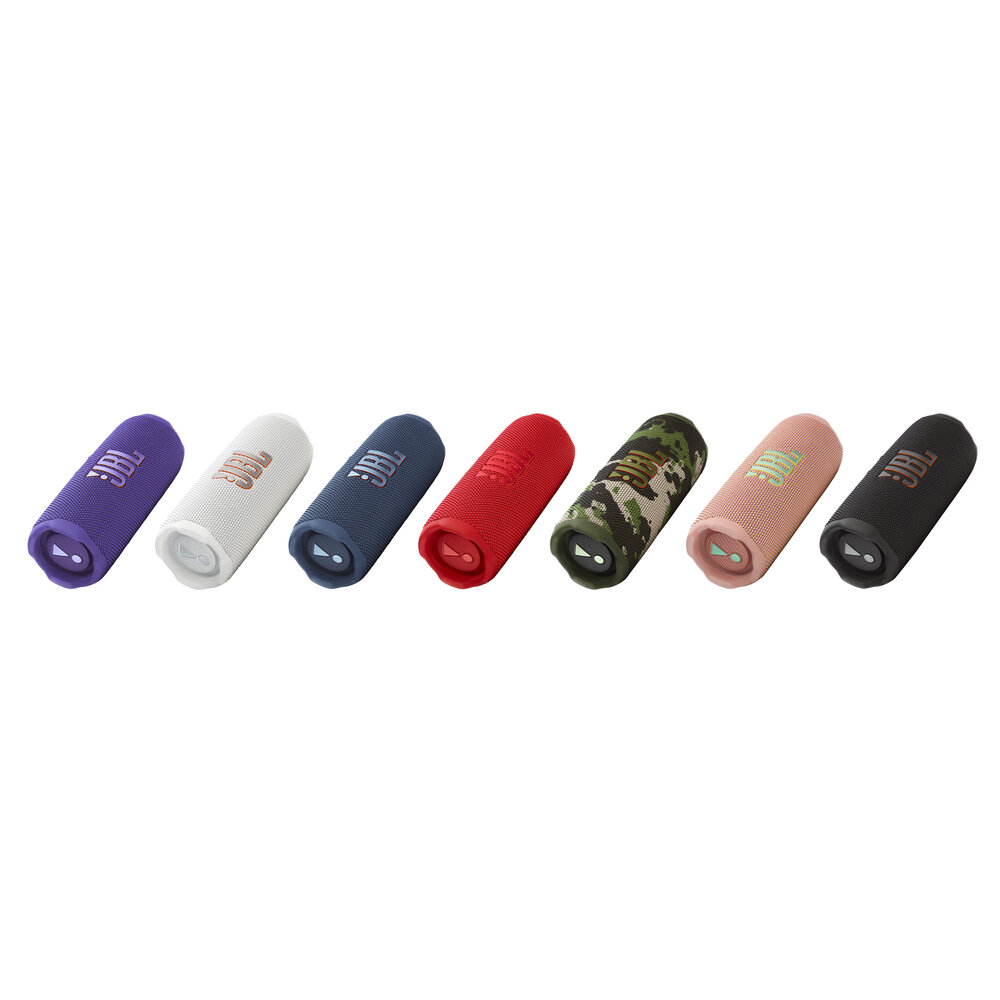 Best Overall Value
Bottom line: The stronger all-rounder — tougher water rating, richer connectivity, and a lower price than the Marshall.
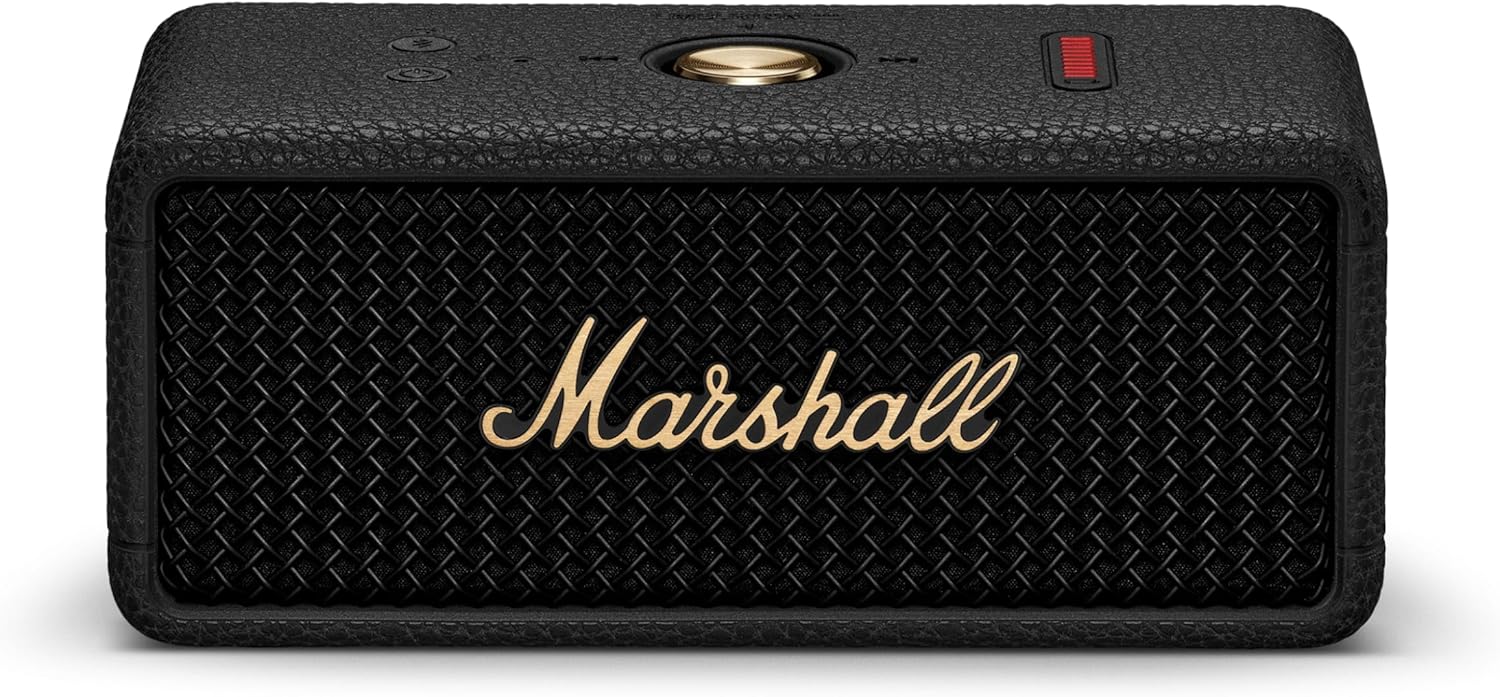 Best Battery Life
Bottom line: Doubles the JBL’s battery life and keeps Marshall’s amp-stack look, at a small price premium and a lower durability rating.
The JBL Flip 7 and Marshall Emberton III both launched into the same crowded under-$200 portable speaker field, and both back it up with real reviews from TechRadar, SoundGuys, and Tom’s Guide rather than marketing copy alone. They solve different problems, though: the Flip 7 is built for durability and loud outdoor sound, while the Emberton III is built to run all day and look good doing it. Here’s how the JBL Flip 7 vs Marshall Emberton III comparison actually shakes out on the specs that matter.
| Spec | JBL Flip 7 | Marshall Emberton III |
|---|---|---|
| Price (USD) | $149.95 | $129.99 |
| Price (CAD) | $189.98 | $219.99 |
| Output Power | 35W RMS | 2x 10W Class D |
| Battery Life (rated) | Up to 16 hrs | Up to 32 hrs |
| Real-World Battery (reviewer-tested) | ~14 hrs (SoundGuys, Gizmodo) | Not independently tested yet |
| Water & Dust Resistance | IP68 | IP67 |
| Drop Protection | 1-meter rated | Not rated |
| Weight | 0.56 kg (1.23 lbs) | 0.68 kg (1.5 lbs) |
| Bluetooth Version | 5.4 | 5.3 |
| EQ Options | 7-band custom EQ | 3 fixed presets |
| USB-C Audio Input | Yes (lossless) | No |
| Multi-Speaker Pairing | Auracast (any Auracast device) | Stack Mode (Marshall speakers only) |
Sound Quality & Volume
TechRadar called the Flip 7 the new benchmark for portable speakers in its size class, crediting the redesigned driver array and AI Sound Boost tuning for crisper highs and bass that holds up rather than distorting as volume climbs. SoundGuys found the gains over the Flip 6 incremental rather than a total overhaul, but the result is a speaker loud enough to fill a backyard or campsite without the harshness some rivals show at similar output.
Tom’s Guide praised the Emberton III’s low end for something this compact, and the twin 10W drivers with passive radiators do give it more bass punch at moderate volumes than the size suggests. TechRadar’s testers found it gets noticeably harsher once pushed toward maximum output, though — a common trait for speakers this small trying to move real air.
Winner: JBL Flip 7 for anyone who actually cranks the volume outdoors — it stays cleaner at full output. The Emberton III still wins for background listening at a picnic table or in a dorm room, where its bass punch matters more than headroom.
Battery Life & Charging
The Emberton III’s rated 32 hours doubles the Flip 7’s 16-hour figure, and Marshall backs it with a roughly two-hour full charge over USB-C. Marshall hasn’t published independent, standardized battery testing for this model yet, so treat 32 hours as an upper bound rather than a guaranteed number at high volume.
JBL’s 16-hour rating shrinks to roughly 14 hours in SoundGuys’ and Gizmodo’s real-world testing at moderate-to-loud volume — a gap that’s common across JBL’s lineup. A full charge takes about 2.5 hours, with no quick-charge shortcut built in.
Winner: Marshall Emberton III, by a wide margin — even accounting for the ratings gap between a manufacturer number and a reviewer-tested one, doubling the JBL’s runway is hard to argue with for weekend trips or long days outside an outlet.
Durability & Build
The Flip 7 carries a full IP68 rating — survivable in roughly 1.5 meters of water, plus dust and sand resistance — and adds 1-meter drop protection, a first for the Flip line and a spec Marshall doesn’t publish separately for the Emberton III.
The Emberton III’s IP67 rating still covers 1 meter of water for 30 minutes plus dust protection, one notch below the Flip 7 — genuinely rugged for everyday beach or pool use, but there’s no published drop-protection figure to weigh against JBL’s.
Winner: JBL Flip 7 — both speakers survive a splash or a dunk, but only the Flip 7 is rated to survive an actual fall.
Design & Portability
The Emberton III’s brass control knob and faux-leather strap carry Marshall’s amp-stack heritage look through a third generation — that aesthetic, per Marshall’s own product positioning, is a major reason buyers consider it over a more utilitarian-looking speaker in the first place. The built-in strap also means it clips onto a bag without needing a separate accessory.
The Flip 7 is lighter at 0.56 kg (1.23 lbs) versus the Emberton III’s 0.68 kg (1.5 lbs), and JBL’s PushLock attachment accepts a swappable carabiner, wrist strap, or bike mount depending on where the speaker is headed — more flexible than a single fixed strap for anyone who carries it differently from one outing to the next.
Winner: Marshall Emberton III for the design-forward buyer who wants a speaker that looks intentional on a shelf, not just functional in a bag — the Flip 7’s PushLock system wins on raw carrying flexibility, but design is the reason people choose Marshall in the first place.
Connectivity & Multi-Speaker Features
The Flip 7 runs Bluetooth 5.4 and adds lossless USB-C audio input — a feature most speakers under $150 skip entirely — plus Auracast support, which lets it join a broadcast alongside any other Auracast-enabled speaker, not just JBL’s own lineup.
The Emberton III runs Bluetooth 5.3, one generation behind, with no USB-C audio input. Its Stack Mode pairs two or more Marshall speakers for wider stereo coverage, but only within Marshall’s own ecosystem — there’s no cross-brand broadcast option here.
Winner: JBL Flip 7 — wired lossless input and brand-agnostic Auracast pairing are meaningfully more flexible than Marshall’s Marshall-only Stack Mode.
Price & Value
At $149.95, the Flip 7 undercuts the Emberton III’s $159.00 by about $9 — a small gap on its own, but one that stacks on top of the Flip 7 already winning on durability and connectivity. In Canada the gap is wider: $189.98 CAD versus $249.98 CAD.
The Emberton III’s case for its higher price is entirely about battery life and design — 32 hours and Marshall’s brass-badged look are genuinely differentiating if either matters to you, but buyers who don’t care about all-day runway are paying a premium for less durability and fewer connectivity options.
Winner: JBL Flip 7 for most buyers — it’s both cheaper and stronger on durability and connectivity. The Emberton III only pulls ahead if maximum battery life or Marshall’s design language is the deciding factor.
Our Verdict
For most people shopping this price range, the JBL Flip 7 is the stronger buy: it’s tougher (IP68 vs. IP67), more flexible on connectivity (USB-C lossless audio, brand-agnostic Auracast), and a few dollars cheaper. It’s the speaker we’d hand someone heading to the pool, a campsite, or a bike ride where getting dropped or splashed is a real possibility.
The Marshall Emberton III earns its keep for a narrower buyer: someone who wants a full day-plus of playback without hunting for an outlet, doesn’t mind a slightly lower durability rating, and likes Marshall’s amp-stack look more than JBL’s sportier design. If battery life is the single spec you care about most, it’s the clear pick.
Buy the JBL Flip 7 if you want the tougher, more connected speaker for less money. Buy the Marshall Emberton III if all-day battery life and Marshall’s design language matter more to you than raw durability.
Read Our JBL Flip 7 Review → Read Our JBL Flip 7 Review → Read Our Marshall Emberton III Review → Read Our Marshall Emberton III Review →
Frequently Asked Questions
Which has better sound, the JBL Flip 7 or Marshall Emberton 3?
Is the Marshall Emberton 3’s extra battery life worth the higher price?
Which speaker is more durable for pool or beach use?
Can either speaker pair with other speakers for stereo or party sound?
Does either speaker support wired audio input?