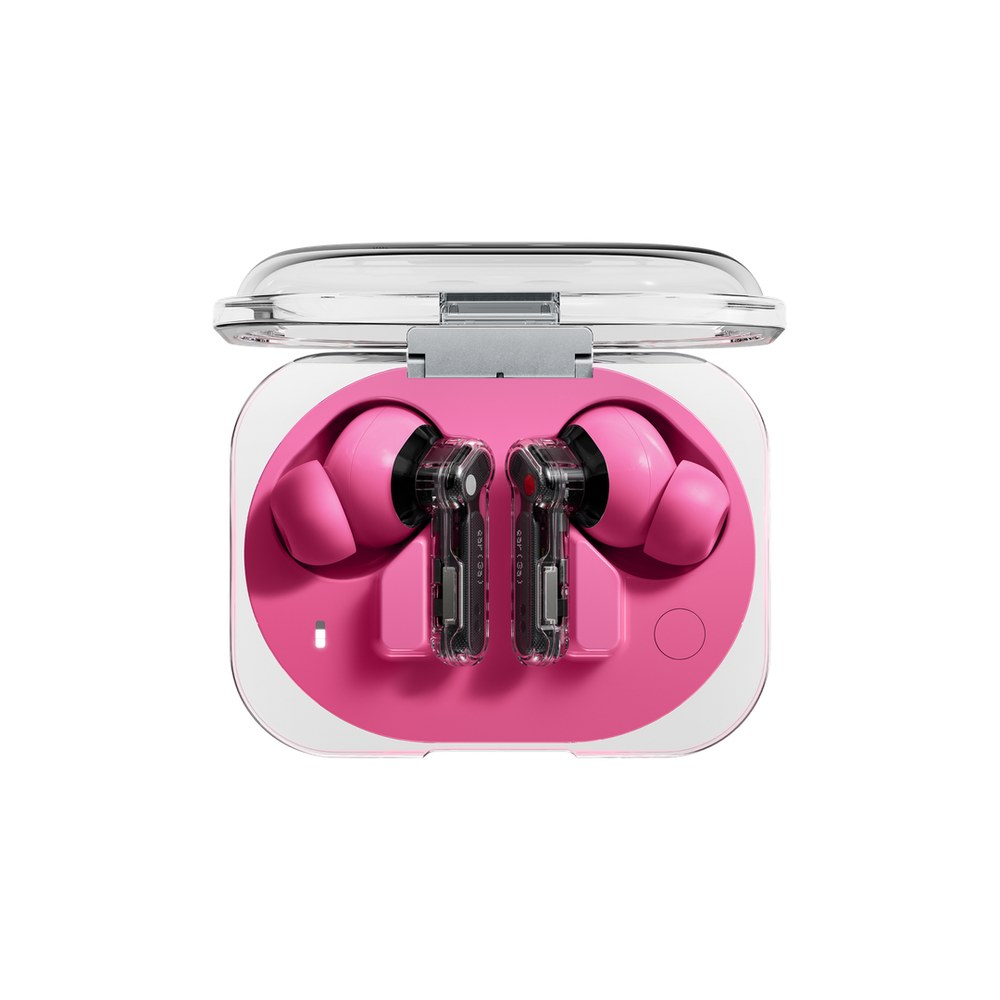
For Canadian buyers who like to tune their sound, the Nothing Ear (3a) is an easy pick on Amazon.ca: its eight-band EQ and LDAC are uncommon at this level, it adds two-device multipoint, and with the bass pulled down it sounds detailed. It is comfortable, its pinch controls are reliable, and on-bud call recording works as promised. The main trade-off is stamina, at a rated 6 hours with noise cancelling on. If wireless charging or the best all-rounder matters most, the EarFun Air Pro 4+, also sold on Amazon.ca, fits better.
Pros
- Eight-band parametric EQ in the app
- LDAC and two-device multipoint
- Comfortable fit with pinch controls
- IP54 earbuds and case
- On-bud call recording and Audio Snapshot
Cons
- Rated 6 hours per charge with ANC on
- Bass-heavy default tuning needs EQ work
- No wireless charging
- ANC lets voices and high pitches through
As an Amazon Associate I earn from qualifying purchases. Disclosure
Overview
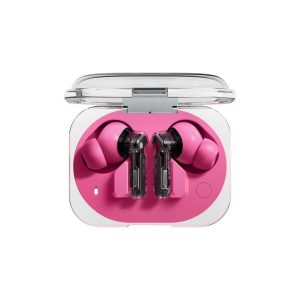
Budget noise-cancelling earbuds usually save money by dropping things: the hi-res codec, the detailed EQ, the water-resistant case. The Nothing Ear (3a) keeps all three and adds a rare trick: 32 MB of onboard storage that lets you save a clip of whatever you’re hearing or record a phone call with a pinch of both stems. It is the successor to 2024’s Ear (a) and sits below Nothing’s flagship Ear (3), in white, black, yellow or pink.
Nothing launched the Ear (3a) in Canada on July 7, 2026, in all four colours, and Amazon.ca sells it directly. The upgrades over the Ear (a) are mostly inside: a larger 12 mm driver, Bluetooth 6.0, an eight-band parametric EQ in the Nothing X app that the Ear (a) lacked, and an IP54 rating for the case. As of October 2026 its Amazon.ca price sits between its rivals’ rather than below them. The default sound leans hard on bass, and the case is fussier than it should be.
Key Specifications
| Price (CAD) | $139.99 |
| Driver | 12 mm dynamic (PMI + TPU diaphragm) |
| Codecs | SBC, AAC, LDAC |
| Bluetooth | 6.0, dual connection (multipoint) |
| Noise cancelling | Adaptive ANC, rated to 45 dB (40-5,000 Hz) |
| Battery (AAC) | Up to 6 hours ANC on / 10 hours ANC off; up to 25 / 42 hours with the case |
| Battery (LDAC) | Up to 4.5 hours ANC on / 6 hours ANC off; up to 20 / 28 hours with the case |
| Charging | USB-C, 70 minutes to full; 5 minutes for 1 hour of playback (ANC off) |
| Microphones | 6 total (3 per earbud) |
| Water and dust resistance | IP54 (earbuds and case) |
| Weight | 4.53 g per earbud; case 40.92 g |
| Onboard storage | 32 MB (Audio Snapshot and call recording) |
Nothing Ear (3a) Sound Quality and EQ
Out of the box, the Ear (3a) is tuned for bass, with more of it than the Ear (a) had. How much that matters depends on who is listening. Gizmodo liked the default sound and couldn’t hear a difference from the flagship Ear (3), though T3 and WhistleOut both found the Ear (3) sounds better. Expert Reviews found the stock tuning muddy and boomy and called the equaliser “a must.” BGR landed in between: energetic out of the box, but heavy enough to crowd the midrange on most tracks.
SoundGuys’ panel model predicts most listeners will enjoy the stock sound: the default Balanced preset and More Treble both scored above 4.6 out of 5. Compared only against other headphones and earbuds, though, their timbre score fell to 3.4, the middle of “okay,” and SoundGuys’ own reviewer found the stock sound far too bassy.
The fix is in the app. The Nothing X app offers simple presets plus an eight-band parametric EQ, and you can load tunings other owners have shared. With the low end pulled down they show far more detail, and BGR heard a warm midrange with crisp treble that never turned harsh.
LDAC: Sony’s hi-res codec is an uncommon extra at this price. On an Android phone, Expert Reviews heard a little more detail and slightly better instrument separation with it switched on. It comes at a battery cost, covered below.
What’s missing: There is no hearing-test EQ that tunes the sound to your ears, a feature the Ear (3) has. Spatial audio is the fixed kind with no head tracking, and testers found it added little.
Noise Cancelling and Transparency Mode
Nothing rates the adaptive noise cancelling at up to 45 dB across 40 to 5,000 Hz. In SoundGuys’ lab, it cut outside noise by an average of 80.9% in perceived loudness, enough for a normal commute, with its weakest results in the high frequencies. That pattern shows up in daily use too: low rumble from trains, planes and fans is dulled, while voices and sharper sounds get through.
The testers split on how it ranks. BGR rated it as good as or better than anything else at this price and nearly as effective as the Ear (3). Expert Reviews called it solid but not among the better options in the class, pointing to the OnePlus Buds 4 for stronger cancelling, and Gizmodo still heard train screeches and announcements on the subway. Against the Ear (3), T3 found the flagship’s noise cancelling noticeably better, while Expert Reviews rated the 3a ahead thanks to its better seal.
Transparency mode drew the same split. Expert Reviews found it improved and natural-sounding, while BGR thought it sounded unnatural enough to leave off except for quick conversations.
Battery Life and Charging
Nothing rates the earbuds at up to 6 hours with noise cancelling on and 10 hours with it off, or 25 and 42 hours with the case. Those figures assume AAC: switching to LDAC cuts the ANC-on rating to 4.5 hours. Each of the three rivals in the table below is rated for 8 hours or more with ANC on. Testers split on how much that matters: BGR puts it on the lower end and SoundGuys scores the battery below average, while T3 calls it about par for this kind of earbud and Expert Reviews got slightly more at lower volume.
The ratings hold up in testing. SoundGuys ran four battery tests with ANC off, and the earbuds died at almost exactly the 10-hour mark each time. In Gizmodo’s test, an hour at 50% volume used 15% of the charge, which works out to a little over six and a half hours.
Charging is quick, at about an hour of playback with ANC off from a five-minute top-up and 70 minutes for a full charge over USB-C. There is no wireless charging, which BGR counts as a real miss even at this price, while 9to5Google needed to top up the case so rarely that it didn’t matter.
Fit, Controls and the Charging Case
Comfort is a strength. Each bud weighs about 4.5 g, the four tip sizes now include an extra-small, and testers wore them comfortably for hours at a time, with BGR finding they stayed put through workouts. Expert Reviews called them the most comfortable and secure Nothing earbuds yet, though it still found the EarFun Air Pro 4+ and a few other rivals more secure.
Controls are pinches on the stems rather than taps, which avoids accidental presses when you adjust the buds. Expert Reviews could remap single, double and triple pinches and pinch-and-hold in the app, including for volume and noise-control modes, though T3 found it needed the phone to change volume.
The case draws the most design complaints. Its raised lip makes it awkward to open one-handed, and two testers needed a fingernail to pry it. Testers split on its size: T3 and WhistleOut found it chunky, while 9to5Google found it smaller than the Ear (3)’s case and Expert Reviews called it pocket-friendly. The buds can also sit at a slight angle when you drop them in, and SoundGuys found a bud left askew can miss its charging contacts. On the plus side, the case is IP54-rated like the earbuds, which the Ear (a) case wasn’t, and its three-segment light shows the charge level and pairing status.
Calls and the Recording Features
Each earbud has three microphones, and Nothing added mesh to cut wind noise. SoundGuys’ windy-conditions call sample was its standout result, usually where earbuds fall flat, though echo crept in in a reverberant room. Expert Reviews still heard wind whistling through the microphones while listening, and WhistleOut found a big gap in microphone quality to AirPods Pro and the Ear (3).
Audio Snapshot: Pinch both stems and the earbuds save up to 60 seconds of whatever is playing, with an option to include up to 30 seconds from before the pinch. Clips sync to the Nothing X app, where they can be transcribed. 9to5Google noticed the clips sound worse than the audio did through the earbuds.
Call recording: The same pinch during a call records up to two hours on the buds, and the other person hears an alert that recording has started. In Canada, section 184 of the Criminal Code makes intercepting a private communication an offence, but it doesn’t apply to a person who has the consent of either the speaker or the intended recipient. Transcription runs free on the phone, while a more accurate cloud “Pro” tier is free for three months and then needs a paid subscription. SoundGuys notes that recording and transcription need a Nothing account.
Several testers saw little everyday use for them, though Gizmodo, which interviews people for work, found call recording useful; they matter mainly if you record interviews or work calls.
The rest of the connection list is complete for the price: two-device multipoint, Google Fast Pair on Android, a low-latency mode for games and video, and find-my-earbuds in the app.
How Does It Stack Up Against the Competition?
As of October 2026, all four sell in the same budget tier on Amazon, so the choice comes down to battery, codecs and extras.
| Feature | Nothing Ear (3a) | Sony WF-C710N | Soundcore Liberty 5 | EarFun Air Pro 4+ |
|---|---|---|---|---|
| Price (CAD) | $139.99 | $98.00 | Deal $99.99 | Deal $109.99 |
| Rated battery, earbuds (ANC on) | 6 hours | 8.5 hours | 8 hours | 8 hours |
| Rated battery, earbuds (ANC off) | 10 hours | 12 hours | 12 hours | 12 hours |
| Hi-res codecs | LDAC | None (SBC, AAC only) | LDAC | LDAC, aptX Lossless |
| Water and dust rating | IP54 | IPX4 | IP55 | IP55 |
| Driver | 12 mm dynamic | 5 mm | 9.2 mm | 10 mm dynamic + balanced armature |
| Bluetooth | 6.0 | 5.3 | 5.4 | 6.0 |
| TTP Review | This review ↑ | Read our review → | — | — |
| Amazon | View on Amazon | View on Amazon | View on Amazon | View on Amazon |
Prices change frequently — always verify current pricing before purchasing.
Nothing Ear (3a): Worth It for Budget Buyers Who Like to Tune Their Sound
Buy the Ear (3a) if you’ll spend ten minutes in the EQ. At $139.99 CAD on Amazon.ca in October 2026, it costs less than the Sony WF-C710N’s $168.00 CAD and more than the Soundcore Liberty 5’s $99.99 CAD, and it brings LDAC, multipoint, a comfortable fit and reliable pinch controls. The recording features work as promised. If you mostly listen in commutes of an hour or two and charge each night, the rated 6 hours with ANC on won’t get in the way.
Look elsewhere if noise cancelling comes first: Expert Reviews found stronger cancelling at this price, though BGR rated it among the best in the class. The EarFun Air Pro 4+ supports aptX Lossless and charges wirelessly, and Expert Reviews rates it the better all-rounder, while the Soundcore Liberty 5 adds IP55 protection. If you want Nothing’s own step-up, the Ear (3) adds wireless charging and a hearing-test EQ, and two of the testers found it sounds better.

Sources
- Nothing — Ear (3a) Product Page and Specifications
- Nothing Ear (3a) — Amazon.ca Product Listing
- SoundGuys — Nothing Ear (3a) review
- BGR — Nothing Ear (3a) Review: Raising The Bar For Budget Earbuds
- Expert Reviews — Nothing Ear (3a) review
- Gizmodo — Nothing Ear 3a Review: You Can Skip the Flagship
- 9to5Google — Nothing Ear (3a) Review
- T3 — Nothing Ear (3a) review
- WhistleOut — Nothing Ear 3a review
- Sony — WF-C710N Specifications
- PC Gamer — Sony WF-C710N review
- SoundGuys — Anker Soundcore Liberty 5 review
- PC Gamer — Soundcore Liberty 5 earbuds review
- Tom’s Guide — EarFun Air Pro 4+ review
- Expert Reviews — EarFun Air Pro 4+ review
- Notebookcheck — EarFun Air Pro 4+ wireless earbuds review
- Justice Laws Website — Criminal Code, section 184
- MobileSyrup — Nothing Ear (3a) now in Canada with ‘Audio Snapshot’ feature
Reader Poll
How long do you usually listen in one go?
Help Our Editors Know What Matters to You
Explore on Amazon →