Buy the fenix 9 Pro Solar if you spend days at a time away from a charger: even with no sun, Garmin rates the 47mm for 21 days as a smartwatch, and a 100-mile test of the 51mm Solar inReach, with about half the time under blue sky, beat Garmin's no-sun GPS ratings in every mode. It keeps Garmin's routable maps, now smoother, along with accurate GPS and a full titanium case. The trade-off is a screen that is less sharp, with slightly muted colours, than the AMOLED model's, so day-trip users who want the clearest maps should pick that version.
Pros
- Weeks of battery, with solar top-ups
- Accurate GPS tracking
- Smoother routable maps
- Full titanium case
- Always-on screen
- Green flashlight mode alongside white and red
Cons
- Screen less sharp, with slightly muted colours, next to the AMOLED version
- 2 mm thicker than the 47mm AMOLED model
- No satellite messaging or LTE on this version
- Heavy next to lightweight running watches
As an Amazon Associate I earn from qualifying purchases. Disclosure
Overview
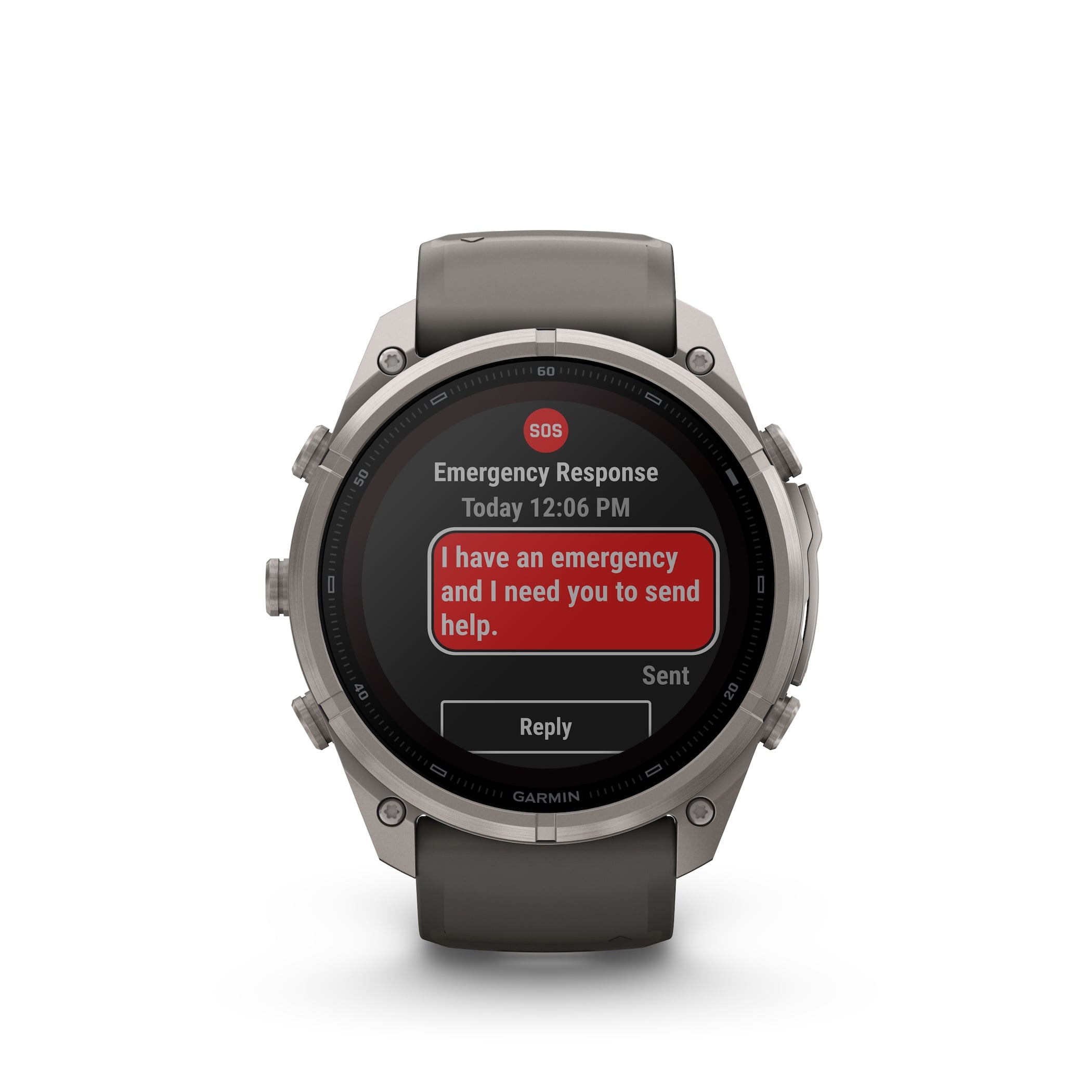
The fenix 9 Pro Solar is the version of Garmin’s flagship adventure watch built to stay away from the charger. It swaps the AMOLED screen of the regular fenix 9 Pro for a memory-in-pixel (MIP) display under a solar-charging lens. Garmin rates the 47mm model at up to 21 days as a smartwatch, or 34 days if you spend three hours a day outside in 50,000-lux light. It comes in 47mm and 51mm sizes, both with a full titanium case, and its pitch is simple: more days between charges.
The Solar shares the rest of the fenix 9 Pro package: the titanium case, 64 GB of storage, the faster map engine and Garmin’s full set of training and navigation tools. The 47mm listing reviewed here is the version without inReach, so it has no satellite messaging, SOS or LTE; Garmin sells those features in separate Pro Solar inReach models.
Built from 12 sources, including Tom's Guide and the5krunner. Here’s where they agree, and where they don’t.
Where the reviews agree
- Maps pan more smoothly than on earlier Fenix watches.
- GPS tracking is accurate on the trail.
- It recharges quickly, in about an hour from low or empty to full.
Where they split
- How much smoother the maps are: Lifehacker Japan found panning much smoother, while Zelpio saw only a slight but visible gain over the fenix 8 Pro side by side.
Key Specifications
| Sizes | 47mm and 51mm (this listing: 47mm) |
| Display (47mm) | 33 mm (1.3 in) memory-in-pixel, 260 x 260 pixels |
| Lens | Power Sapphire, with solar charging |
| Case (47mm) | Titanium, 47 x 47 x 15.8 mm |
| Weight (47mm) | 84 g with band (case only 63 g) |
| Smartwatch battery (47mm) | Up to 21 days, or 34 days with solar |
| GPS battery, Normal mode (47mm) | Up to 54 hours, or 81 hours with solar |
| Expedition mode (47mm) | Up to 30 days, or 68 days with solar |
| Storage | 64 GB (maps and music) |
| Water rating | 10 ATM (100 m); dive-rated to 40 m |
| Flashlight | Built-in LED with white, red and green modes |
| Satellite messaging and LTE | Only on the separate Pro Solar inReach models |
| Price (USD) | $1,099.99 |
Garmin fenix 9 Pro Solar Battery Life and Solar Charging
Battery life is the reason to choose this version, and it holds up even before the sun helps. With no solar input at all, Garmin rates the 47mm Solar at 21 days as a smartwatch and 54 hours of GPS in Normal mode, against 18 days and 32 hours for the 47mm AMOLED fenix 9 Pro. Expedition mode stretches to 30 days, or 68 with solar.
One long test backs the no-sun ratings. HikingGuy tested the 51mm Solar inReach, which Garmin rates the same as the Solar without inReach, over more than 100 trail miles, with roughly half blue sky and half tree cover. It averaged 100 hours in Normal GPS mode against Garmin’s rating of 75 hours without sun and 124 with it. It beat the no-sun rating in every GPS mode it tried, though it stayed short of Garmin’s with-solar figures in every mode. In Zelpio’s 10-hour side-by-side hike, with the solar watch deliberately facing the sun, the solar model managed roughly double the battery life of the AMOLED versions. Those hour counts are from the 51mm, and the smaller 47mm will run shorter.
Garmin’s “with solar” smartwatch and Expedition figures assume three hours a day outside in 50,000-lux light, and its GPS figures assume the whole activity outdoors in that light, so how much the lens adds depends on how much daylight you spend outdoors. When you do plug in, charging is quick: about an hour gets it from low or empty to full.
Maps, Navigation and GPS Accuracy
Navigation is where this generation improved most, and the Solar gets all of it. Garmin gave the fenix 9 half again as much RAM as the fenix 8 and a reworked map engine, and it says map panning is up to 30% faster. The 64 GB of storage holds twice as many maps as the fenix 8, by Garmin’s count. On the Solar, map panning is smoother than on earlier Fenix watches, though testers differ on how much: Lifehacker Japan found it much smoother, while Zelpio saw a slight but visible difference side by side with the fenix 8 Pro. A new perspective view shows the trail ahead the way a car’s GPS does.
It is still not the slickest map display on a wrist. HikingGuy found panning “nowhere near as smooth as an Apple Watch Ultra” and saw occasional lag, though route calculation worked as expected. What Garmin offers in return is routable maps: the watch knows where you are on the trail network and can build a route on the fly, which Tom’s Guide counts among the best mapping features available.
GPS tracking is accurate, and Normal mode is the one to use. HikingGuy, wearing the 51mm Solar inReach and AMOLED models, often found it more accurate than a dedicated Garmin handheld, even under dense Pacific Northwest forest. In that test, Max Battery saved power at a cost: its tracks stayed close on easy ground but wandered in canyons and under canopy. Heart-rate readings come from the same optical sensor as the fenix 8, and in testing it tracked a chest strap closely on runs and rides.
The Memory-in-Pixel Screen
The screen is what you give up for the battery. Memory-in-pixel panels reflect ambient light rather than producing their own, and this one is always on by default. Testers found the AMOLED version just as readable in bright sun, so battery, not visibility, is the reason to pick the Solar. At 260 x 260 pixels on the 47mm, against 454 x 454 on the 47mm AMOLED Pro, it shows less detail. The testers who used the Solar found the AMOLED model’s screen crisper (Lifehacker Japan noticed it most in bright outdoor light, along with slightly muted colours on the Solar).
That difference matters most on busy maps, where the AMOLED’s extra detail and shading are easier to read, though most of the time it makes no big difference. HikingGuy also found the MIP can be hard to read in shade, where the light is too dim for the screen and too bright for the backlight to help. It also stresses that preference between the two screen types is personal, and that the MIP’s always-on display suits people who want to glance at the watch without raising the wrist.
Titanium Build, Weight and Flashlight
The Pro line is the first Fenix with a full titanium case, and it feels like a premium tool, but it is not small. The 47mm Solar measures 15.8 mm thick, 2 mm thicker than the 47mm AMOLED version, and weighs 84 g with its band. HikingGuy noticed the extra height of the 51mm Solar inReach at first and stopped noticing it after a few days, while Lifehacker Japan found the Solar clearly heavier than a lightweight Forerunner for everyday wear.
The built-in LED flashlight now adds a green mode to the usual white and red, meant to keep your night vision. It is handy in a dark room or hotel when you don’t want to shine a phone screen at yourself or anyone nearby, but it is no replacement for a headlamp on night runs or hikes. HikingGuy also found the redesigned buttons give clearer feedback than the fenix 8’s, which matters when you’re wearing gloves or the screen is wet.
How Does It Stack Up Against the Competition?
These are the long-battery adventure watches that buyers weigh against the fenix 9 Pro Solar, including Garmin’s own Enduro 4. Battery figures are each maker’s ratings.
| Feature | Garmin fenix 9 Pro Solar | Garmin Enduro 4 | Apple Watch Ultra 4 | Suunto Vertical 2 |
|---|---|---|---|---|
| Price (USD) | $1,099.99 | $899.99 | $774.00 | $599.00 |
| Display | 1.3-in MIP, solar lens | 1.4-in MIP, solar lens | Always-on OLED | 1.5-in AMOLED |
| Smartwatch battery (maker) | 21 days (34 with solar) | 36 days (90 with solar) | 50 hours of normal use | 20 days |
| GPS battery (maker) | 54 hours in Normal mode (81 with solar) | 80 hours in Normal mode (144 with solar) | 18 hours of workout tracking | 65 hours in Performance mode |
| Water rating | 10 ATM (100 m); dive-rated to 40 m | 10 ATM (100 m), no dive features | 100 m; scuba to 40 m with an app | 100 m |
| Amazon | View on Amazon | View on Amazon | View on Amazon | View on Amazon |
Prices change frequently — always verify current pricing before purchasing.
Garmin fenix 9 Pro Solar: Worth It for Long Trips Away From a Charger
Buy it if your trips run longer than a few days or you simply hate charging a watch. HikingGuy’s advice is to pick the Solar when you need more than four or five days of hiking without a charge, and the 47mm still gives weeks of everyday use from Garmin’s ratings. It also makes a natural step up for anyone on a fenix 7 or older, especially if you liked an always-on MIP screen. Fenix 8 owners have little reason to switch.
Look elsewhere if the screen matters more than the battery. If you mostly do day hikes and runs, the AMOLED fenix 9 Pro gives you a brighter, sharper map display with the same features. If battery is the only priority, the Enduro 4 is rated for 36 days as a smartwatch and 80 hours of GPS without sun. Its fibre-reinforced polymer case with a titanium bezel is lighter, though it comes only in a 51mm size and has no dive features. HikingGuy found Apple’s Watch Ultra pans maps more smoothly, and the Ultra 4 includes Emergency SOS and Messages via satellite free for two years after activation (Messages needs a carrier plan), but Apple rates it at up to 50 hours of normal use. The Suunto Vertical 2 pairs a bright 1.5-inch AMOLED with 65 hours of GPS in its most accurate mode.
Sources
- Garmin — fēnix 9 Series Owner’s Manual: Battery Information
- Garmin — fēnix 9 and fēnix 9 Pro announcement
- Garmin fenix 9 Pro Solar — Amazon Product Listing
- HikingGuy — Garmin Fenix 9 Pro Review: 100+ Miles Tested
- Lifehacker Japan — Garmin Fenix 9 Pro Solar review
- Zelpio — Garmin Fenix 9 and Fenix 9 Pro Review
- Tom’s Guide — Garmin Fenix 9 Pro review
- the5krunner — Garmin Fenix 9 Pro specifications
- the5krunner — Garmin Enduro 4 specifications
- Garmin — Enduro 4 Owner’s Manual
- Apple — Apple Watch Ultra 4 Technical Specifications
- Suunto — Suunto Vertical 2
Reader Poll
Which fenix 9 Pro would you pick?
Help Our Editors Know What Matters to You
Explore on Amazon →