Buy it if you want a boiler machine you can keep, repair and upgrade for years, and you enjoy learning the craft: it makes rich, full-bodied espresso and steams milk for a single flat white fast. It also has an unusually large water tank, and it is sold on Amazon.ca. The trade-off is that it has no PID, so steady shots depend on a short flush-and-wait routine. If you want that consistency and a full accessory kit out of the box, the Breville Bambino Plus fits better.
Pros
- Rich, full-bodied espresso once dialed in
- Brass boiler holds heat better than older Classics
- Strong steam wand for one milk drink at a time
- Large 2.1 L (72 oz) water tank
- Repairable and easy to upgrade, with 58 mm baskets
Cons
- No PID: needs a flush-and-wait routine for steady shots
- Plastic tamper; no milk jug or cleaning tools included
- Tall drip tray leaves little room for mugs
- Steam fades with large jugs of milk
As an Amazon Associate I earn from qualifying purchases. Disclosure
Overview
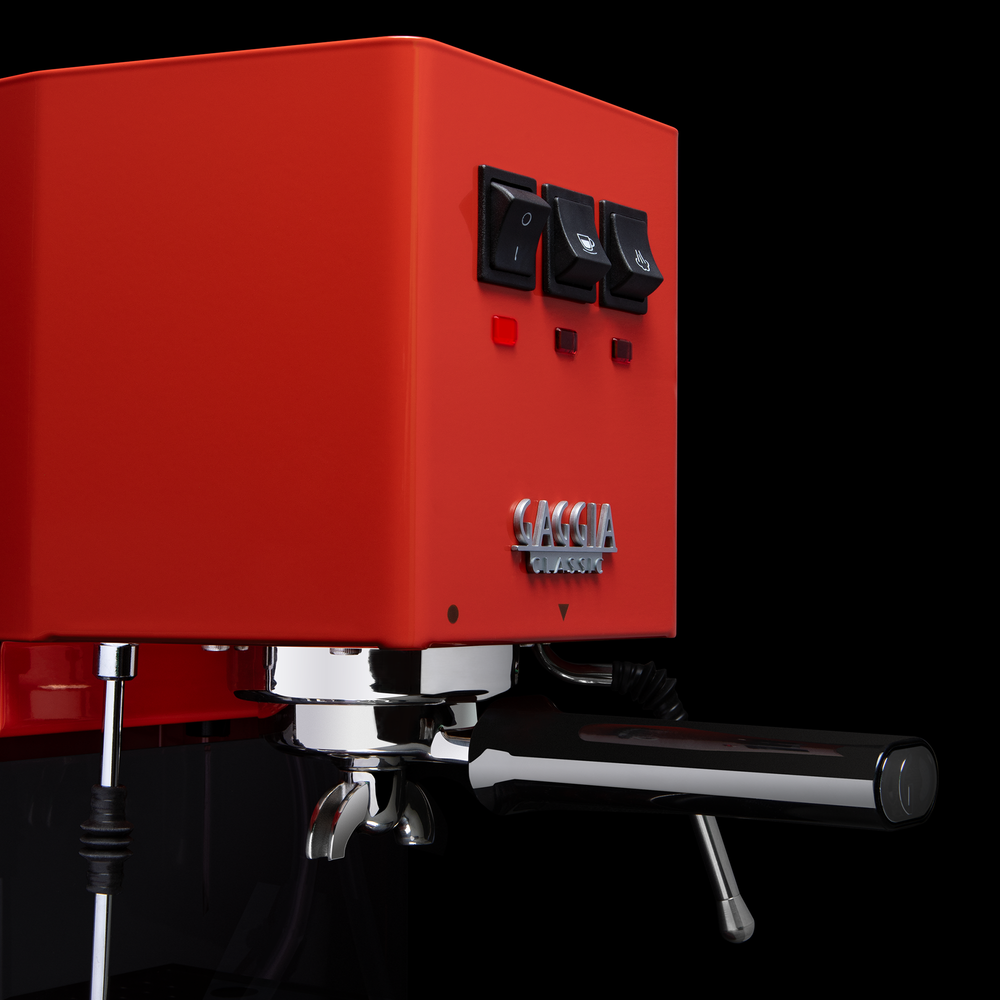
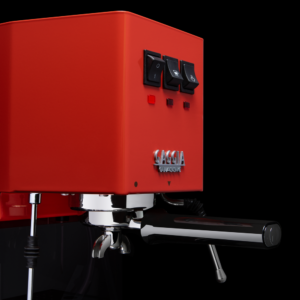
The Classic Pro E24 is the newest version of Gaggia’s long-running Classic, the single-boiler espresso machine that home baristas have been buying, fixing and modifying for decades. It pairs a commercial-size 58mm portafilter with a steam wand, is made in Italy and is sold on Amazon in the US and Canada. It suits one person making one or two drinks at a time who wants to learn espresso by hand and keep the machine for years.
The change from the Classic Evo Pro it replaces is inside: the boiler is now larger and made of lead-free brass instead of aluminum, and Gaggia lists a solid brass group head. Gaggia says the new boiler improves both thermal stability and steaming; Whole Latte Love’s test confirmed a big gain in temperature stability, but its milk steamed in the same 24 seconds on both machines. The name change matters to Canadian shoppers, because the Amazon.ca listing is sold by Amazon’s US store and still carries the older Classic Evo Pro name; Amazon’s US store sells the same item, model RI9380/46 in brushed stainless steel, as the E24. Its closest rival, the Breville Bambino Plus, is sold by Amazon.ca itself.
Built from 13 sources, including Tom's Guide and TechRadar. Here’s where they agree, and where they don’t.
Where the reviews agree
- Once it is dialed in, it pulls rich, full-bodied espresso with thick crema.
- The box is thin for the price: a plastic tamper, but no milk jug and no cleaning tools.
- Its 2.1-liter (72 oz) water tank is unusually large.
Where they split
- Warm-up: TechRadar and Tom’s Guide were brewing within one to two minutes; Kaffeemacher’s measurements of its 1,100 W version say the group needs about 15 minutes.
- Noise: TechRadar measured 66 dB and called it quiet; Kaffeemacher measured 69 dB(A) on its 1,100 W unit and called it rather loud.
Key Specifications
| Price (CAD) | $740.88 |
| Boiler | Single boiler, lead-free brass, about 104 mL (3.5 oz) capacity |
| Pump and pressure | 15-bar Ulka pump, OPV calibrated to 9 bar |
| Temperature control | Pressurestat; no PID |
| Portafilter | 58mm stainless steel |
| Steam wand | Commercial style, stainless steel, two-hole tip, rotating |
| Water tank | 2.1 L (72 oz) |
| Drip tray | About 473 mL (16 oz) |
| Power | 1,425 W, 110-120 V |
| Dimensions (H x W x D) | About 36 x 20 x 24 cm (14.2 x 8 x 9.5 in) |
| Weight | About 8.6 kg (19 lb) |
| In the box | Plastic tamper, coffee scoop, single, double and pressurized filter baskets |
| Made in | Italy |
Gaggia Classic Pro E24 Espresso Quality and Temperature
Once it is dialed in it pulls rich, thick espresso, and the testers split on how much help it needs to do that every time. Tom’s Guide and Kaffeemacher needed a short routine for steady shots, while TechRadar got consistently great shots one after another without much tinkering.
There is no PID, so the boiler heats until a pressurestat switches it off, and the brew temperature can’t be adjusted. Kaffeemacher measured what that means with a thermometer in the portafilter. Its test unit was a 1,100 W version, less powerful than the US model. After a warm-up of more than 15 minutes, five double shots pulled a minute apart fell from 95.8°C to 88.2°C, too hot at first and too cool by the end.
Changing the routine fixed most of it. In Kaffeemacher’s second run, flushing water through the group for 7 to 8 seconds before the first shot and waiting 1.5 to 2 minutes between shots kept the same five pulls between 90.1°C and 92.3°C, and within a single shot the temperature held almost flat. Even then it brews at around 91°C, a little below the 93°C Kaffeemacher aims for, so Kaffeemacher recommends darker roasts and says light specialty roasts aren’t its strength; Tom’s Guide, though, found it did justice to everything from light-medium to dark roasts.
In daily use the routine is short. Tom’s Guide found the brass boiler steadier than it expected. It needed a light routine of purging the steam valve and flushing the group, under two minutes’ work, rather than the long temperature surfing it had needed on a Rancilio Silvia V6, and it still got the odd thin, watery shot when it skipped that. Pull the espresso before you steam milk: straight after steaming the boiler is far too hot, and a shot pulled then comes out thin.
When it is in its window the espresso is very good, with thick, full-bodied shots and plenty of crema. Kaffeemacher’s view is that its best shots match anything a high-end machine pours, and it reckons you’ll probably nail four or five shots in ten perfectly, where such a machine nails nine. Its overall score of 48 out of 100 (51.5 with the routine) is well below ours. That scale also marks down things this machine never tries to do, such as volumetric dosing and pulling many shots in a row, while we judge it on making one or two drinks at home.
Milk Steaming
The steam wand is strong enough for one milk drink at a time, which is the job it was built for.
Expect a short wait first. After a shot, the single boiler has to climb to steam temperature, which took 20 to 30 seconds in Tom’s Guide’s test and about a minute in Kaffeemacher’s. Once it is there, the wand is quick: Tom’s Guide textured milk for a 240 mL (eight-ounce) flat white in under 10 seconds.
Large jugs are where it runs short. Steam power fades partway through a big pitcher of milk, so very milky lattes, or several milk drinks served together, are not its strength.
TechRadar caught its bare skin on the hot wand during testing: the wand has an insulated grip but no cool-touch design. Because it only swivels, with no ball joint, TechRadar also needed a while to find the right angle.
Build, Size and Daily Use
It is built to be owned for a long time and fixed when something wears, and day to day it is about as simple as an espresso machine gets.
The Classic’s internals are easy to open, service and modify, and a large owner community shares parts and upgrades for it. Tom’s Guide has seen reports of these machines lasting up to 15 years. Kaffeemacher judged the build solid for the price, with switches that click properly, though it found sharp sheet-metal edges in places, especially on the drip tray.
One switch brews and one switches to steam. There is no display, shot timer or volumetric dosing, so a scale under the cup does the measuring. Gaggia’s figures put the body at about 20 cm (8 in) wide. Tom’s Guide found it compact enough for a small coffee station, while TechRadar felt its boxy frame dominated the worktop, and both point space-starved buyers to the smaller Bambino Plus. The high drip tray also leaves little room under the portafilter, so fitting a mug, or a scale with a glass on it, is a squeeze.
The tank sits behind the drip tray, which has to come out before the tank can be removed, but you can refill it from the top through a panel behind the cup warmer. There is no water filter, so plan to descale on a schedule that suits your water hardness.
It uses little power while it waits: Kaffeemacher measured 0.067 kWh to heat up and pull one double shot.
What Comes in the Box, and What You Will Add
Plan to buy a few extras, because the box holds little beyond the machine.
Gaggia includes a plastic tamper, a scoop and three baskets: single, double and a pressurized one for pre-ground coffee. There is no milk jug, no backflush disc and no cleaning tools, and three of the tests called the plastic tamper flimsy or worse. That is stingy at this price, though none of the missing pieces is expensive.
You also need a proper espresso grinder. The pressurized basket will take store-bought pre-ground coffee, but every test pairs this machine with freshly ground beans from a separate grinder.
The bare box has an upside: a huge aftermarket. The baskets are the commercial 58mm size, so better baskets and tampers are easy to find, and add-on kits such as Gaggimate add digital temperature control later. One catch from Kaffeemacher: the portafilter’s bayonet is thicker and slightly offset, so a standard 58mm portafilter from another machine won’t lock in.
How Does It Stack Up Against the Competition?
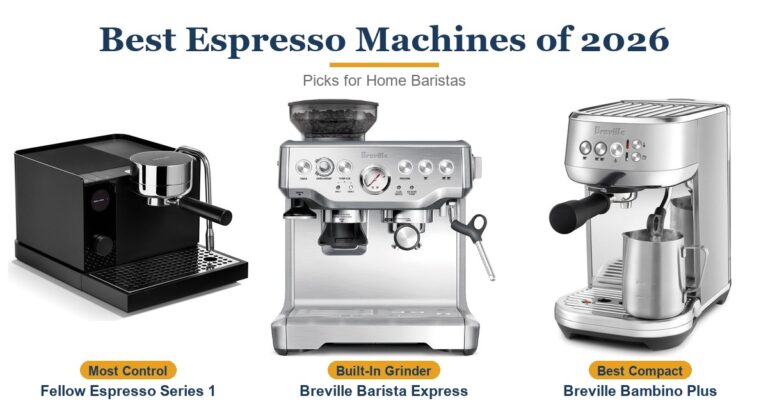
The Breville Bambino Plus is the alternative testers name most often at this price, the Barista Express adds a grinder, and the Rancilio Silvia V6 is the Italian single boiler Tom’s Guide also reviewed and compares it with.
| Feature | Gaggia Classic Pro E24 | Breville Bambino Plus | Breville Barista Express | Rancilio Silvia V6 |
|---|---|---|---|---|
| Price (CAD) | $740.88 | $479.99 | $749.99 | $2,274.71 (Nov 16) |
| Heating | Single brass boiler | ThermoJet heater | Thermocoil heater | Single boiler |
| PID temperature control | No | Yes | Yes | No |
| Portafilter | 58 mm | 54mm | 54mm | 58mm |
| Milk | Manual steam wand | Automatic or manual steam wand | Manual steam wand | Manual steam wand |
| Built-in grinder | No | No | Yes, conical burr | No |
| Tamper included | Plastic | 54mm tamper | Integrated tamper | 58mm tamper |
| TTP Review | This review ↑ | Read our review → | Read our review → | — |
| Amazon | View on Amazon | View on Amazon | View on Amazon | View on Amazon |
Prices change frequently — always verify current pricing before purchasing.
Gaggia Classic Pro E24: Worth It for Hands-On Home Baristas
Buy it if you make one or two drinks at a time, enjoy the process, and want a machine you can keep, repair and upgrade for years. With a good grinder, it makes rich espresso and steams a flat white fast. On Amazon.ca it was $740.88 CAD in November 2026, well above the Breville Bambino Plus.
If you want steady shots without a routine, or everything in the box, the Breville Bambino Plus is the better buy for most Canadians. For less money on Amazon.ca as of November 2026, it adds a PID, automatic milk frothing, a proper tamper, a milk jug and a cleaning disc. It also heats up in seconds. What the Gaggia offers in return is a boiler, a stronger steam wand and a longer-lived, repairable build.
If you don’t own a grinder yet, the Breville Barista Express builds a conical burr grinder in and adds PID temperature control. The Rancilio Silvia V6 shares the Gaggia’s single-boiler design and comes with a proper 58mm tamper, but Tom’s Guide, which tested both, says it would buy the Gaggia over the Rancilio in the US.
Sources
- Gaggia — Gaggia Classic Pro E24: Official Product Specifications
- Gaggia Classic Pro E24 — Amazon.ca Product Listing
- Tom’s Guide — Gaggia Classic E24 Evo Pro review
- Tom’s Guide — I tested the latest Gaggia Classic Evo Pro E24: have this legendary machine’s flaws finally been fixed?
- TechRadar — Gaggia Classic E24 Evo Pro review
- Kaffeemacher — Gaggia Classic Evo Pro E24 in the Test
- Whole Latte Love — Gaggia Classic Pro E24 Review
- Tom’s Guide — Rancilio Silvia (V6) review
- Breville — the Bambino Plus
- Breville — Bambino Plus Instruction Book
- Home Coffee Expert — Breville Bambino Plus Review
- Breville — the Barista Express
- Rancilio — Silvia
Reader Poll
What would you rather put up with in a home espresso machine?
Help Our Editors Know What Matters to You
Explore on Amazon →