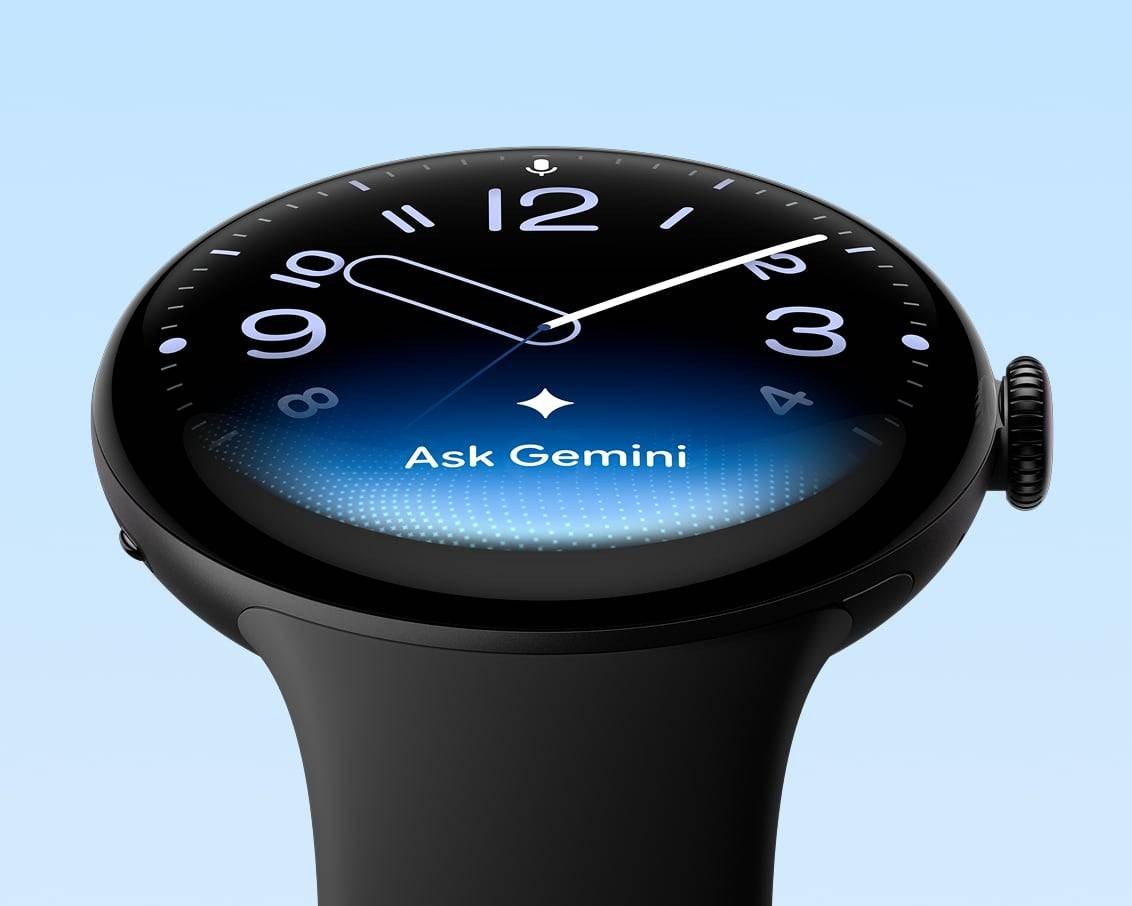
Buy the Pixel Watch 5 if you use an Android phone and want a watch that can call for help automatically: Loss of Pulse Detection works in Canada and fall detection comes built in, along with new monthly blood pressure and insulin resistance trends. Its distance and heart-rate tracking closely matched the Apple Watch Ultra 3 on a long head-to-head walk, and the gesture controls make it easy to use one-handed. It is only a small step up from the Pixel Watch 4, so owners of that watch can skip it, and anyone who wants several days between charges should look at Garmin's Venu 4.
Pros
- Loss of Pulse Detection can call emergency services automatically
- Accurate steps and distance in head-to-head tests
- Gestures make most everyday tasks one-handed
- Bright, domed 3,000-nit display
- Fast charging: about 45 minutes to full on the 41 mm
Cons
- Little changed from the Pixel Watch 4
- The 41 mm battery lasted under two days in testing
- Breathing Emergency Detection is so far listed only for European countries
- Coaching needs a Google Health Premium subscription
As an Amazon Associate I earn from qualifying purchases. Disclosure
Overview
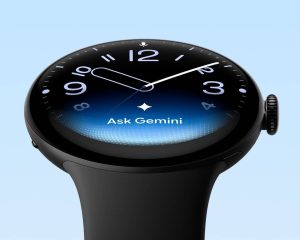
The best reason to buy the Google Pixel Watch 5 is what it does when something goes wrong. Loss of Pulse Detection, which Tom’s Guide notes is still unique to Pixel Watches, can automatically call emergency services if it detects no pulse, and Google has added monthly Blood Pressure Trends and Insulin Resistance Trends on top of the usual heart-rate, sleep and workout tracking. It works with most Android phones running Android 12 or newer, not iPhones, and comes in 41 mm and 45 mm sizes, each with a Wi-Fi or LTE version.
It is also a familiar watch. It keeps the Pixel Watch 4’s design, display and battery-life rating, and most testers found it a minor upgrade: the changes are a faster Snapdragon W5 Gen 2 Accelerated chip with 3 GB of RAM and 64 GB of storage, Wear OS 7, GPS routes that are corrected on Google’s servers after each workout, and the new health trends. In Canada, the 41 mm Wi-Fi model was $549.99 CAD on Amazon.ca in October 2026. Google gives it a one-year warranty, and eligible new and returning users get three months of Google Health Premium.
Key Specifications
| Model reviewed | 41 mm, Wi-Fi (GA10900-US), Matte Black case with Obsidian Active Band |
| Sizes | 41 mm or 45 mm; Wi-Fi or 4G LTE |
| Size and weight (41 mm) | 12.3 mm thick; 31.0 g without band |
| Display | Domed 320 ppi AMOLED LTPO, 1-60 Hz, up to 3,000 nits; Corning Gorilla Glass 5 |
| Chip, memory and software | Qualcomm Snapdragon W5 Gen 2 Accelerated with Cortex-M55 co-processor; 64 GB storage; Wear OS 7.0 |
| Battery (41 mm) | 332 mAh; up to 30 hours with always-on display, up to 48 hours with Battery Saver |
| Charging (41 mm) | About 15 minutes to 50%, about 45 minutes to 100% |
| GPS and connectivity | Dual-frequency GPS (GPS, Galileo, Glonass); Bluetooth 6.0, Wi-Fi, NFC |
| Health sensors | Multi-path optical heart rate, ECG-compatible electrical sensors, SpO2, skin temperature, skin conductance (cEDA) |
| Durability | 5 ATM and IP68 |
| Compatibility | Most phones running Android 12.0 or newer |
| Warranty | 1 year |
| Price (CAD) | $549.99 |
Google Pixel Watch 5 Health, Safety and Fitness Tracking
Its tracking held up well in head-to-head tests. On a seven-mile walk around Seattle, under old-growth trees and between office towers, Tom’s Guide found it logged distance slightly more accurately than the Apple Watch Ultra 3, with strikingly similar heart-rate averages and maximums. In the same tester’s 4,000-step walk against the Galaxy Watch 9, both watches landed within 20 steps of a hand count and the Pixel came closer on steps, distance and climb, though it reported an oddly slow pace and a strangely high average heart rate, even if its maximum looked right. Android Central found its heart rate stayed closer to the Garmin Cirqa’s than the Galaxy Watch 9’s did across several workouts, but in a 5K race the watch logged the distance accurately without recording the GPS route. Google says its server-side route correction makes GPS twice as accurate as before under obstructed skies, and Woman & Home found the signal held firm among high-rise buildings where other running watches had lagged or dropped out.
The training side is thinner than a Garmin’s. Tom’s Guide found its recovery insights somewhat lacking next to Garmin’s recovery-time suggestions and missed an e-bike mode, and the Irish Examiner’s tester found it rarely detected a bike ride on its own, so you need to remember to start one.
The safety and health features are what set it apart. Loss of Pulse Detection works in Canada and the US on the Pixel Watch 3 and later. On the Wi-Fi model the emergency call goes through your phone, so it has to be within Bluetooth range, while the LTE model calls over its own connection, and Google notes it may not detect every loss of pulse. Breathing Emergency Detection, which can call for help after a breathing emergency, was listed only for several European countries at Google’s August 2026 announcement, and Google says the US FDA has not cleared it. Blood Pressure Trends and Insulin Resistance Trends, both listed on Google’s Canadian product page, turn weeks of wear into monthly reports rather than readings, so the watch cannot tell you your blood pressure, and both arrived after launch, so several reviews were written before they were available. Google says the new sleep tracking is 15% more accurate at identifying sleep stages, and Tom’s Guide found its sleep reports broadly matched the Galaxy Watch 9’s; Samsung’s watch adds sleep apnea risk detection, a feature FDA-cleared in the US.
The coaching is a separate subscription. The Gemini-built health coach needs Google Health Premium, which eligible new and returning users get free for three months; after that it renews at $12.99 CAD a month on Google’s Canadian store (October 2026), about $156 CAD a year at that rate. Opinions on the coach were mixed: Tech Advisor liked being able to explain why it was tired, while Tom’s Guide found it kept returning to a goal from their first conversation months earlier.
Gemini, Gestures and Wear OS 7
The software is where it feels newest. Expert Reviews notes one feature only the Pixel Watch 5 has, for now: a new At a Glance card that floats at the foot of the watch face while something is under way, such as a flight or a workout, and opens with a pinch. Most quick jobs now take one hand, because pinch and wrist-twist gestures cover notifications, calls, music and workouts; its tester had “very few occasions” when it needed its other hand, and the gestures have also reached older Pixel Watches. Performance is smooth, and some simple Gemini commands now work offline.
Raise to Talk, which starts Gemini when you lift the watch to your mouth, gets mixed reports. Android Central found it good at knowing when to listen, Expert Reviews found it a bit overzealous, and in Tech Advisor’s testing it seldom caught what was said. The new AI watch-face maker is limited, since it can only restyle the numbers rather than create a whole face. Owners of other Android phones also miss a couple of extras: according to Tech Advisor, the upgraded smart replies and Proactive Suggestions are Pixel-phone only.
Battery Life and Charging
Battery life is the 41 mm model’s main compromise. Google rates it at up to 30 hours with the always-on display (up to 48 hours with Battery Saver), against 40 and 72 hours for the 45 mm. SlashGear averaged 32 to 36 hours on the 41 mm, and Woman & Home, also on the 41 mm, got less than two full days and found that charging left steps, workouts and nights of sleep untracked. The 45 mm goes further: Tom’s Guide averaged 48 hours on it, short of the up to 60 hours its 45 mm Pixel Watch 4 had managed. The Irish Examiner got two to three days from the larger size with a little help from Battery Saver. Next to other full-featured smartwatches it still lasts well, especially in the 45 mm size, and Woman & Home wouldn’t let the battery put you off.
Charging makes up for some of that. Google quotes about 15 minutes to 50% and about 45 minutes to full on the 41 mm, and SlashGear’s 41 mm averaged closer to 45 minutes from empty. Expert Reviews likes that it charges side-on, so it doubles as a bedside clock on the dock.
Design, Display and Comfort
The round, domed design remains a highlight for testers, and at 31 g without the band the 41 mm is very light. Brightness is no problem outdoors: at up to 3,000 nits, the 1.2-inch AMOLED panel stays legible in full sun. The curved glass distorts content slightly, which takes some getting used to. Tech Advisor notes the display and battery can be repaired, and Tom’s Guide’s one complaint about the screen was that its 60 fps refresh can make animations look a little choppy.
The included Active Band (2nd gen) divides testers. The Irish Examiner found it comfortable over several weeks, while Expert Reviews found it doesn’t breathe particularly well and Tech Advisor, though it calls the strap comfortable, dislikes the way it tucks under itself, which pinched its tester’s skin when fastening it. Both sizes are rated 5 ATM and IP68.
How Does It Stack Up Against the Competition?
Here is how the 41 mm Pixel Watch 5 compares with its closest Android rival, the Galaxy Watch9, with the Pixel Watch 4 Google still sells, and with Garmin’s fitness-first Venu 4.
| Feature | Google Pixel Watch 5 | Samsung Galaxy Watch9 | Google Pixel Watch 4 | Garmin Venu 4 |
|---|---|---|---|---|
| Price (CAD) | $549.99 | $519.99 | $479.99 (Oct 23) | $769.99 |
| Case sizes | 41 mm or 45 mm | 40 mm or 44 mm | 41 mm or 45 mm | 41 mm or 45 mm |
| Display (smaller size) | Domed 1.2-in AMOLED, up to 3,000 nits | Flat 1.34-in AMOLED under sapphire crystal, up to 3,000 nits | Domed AMOLED, up to 3,000 nits | 1.2-in AMOLED, 390 x 390 |
| Battery (smaller size, maker rating) | 332 mAh; up to 30 hours with always-on display | 390 mAh (no hours listed) | 325 mAh; up to 30 hours with always-on display | Up to 10 days |
| LTE version | Yes | Yes | Yes | No |
| Standout health and safety features | Loss of Pulse Detection; Blood Pressure and Insulin Resistance Trends | Sleep apnea risk detection (FDA-cleared in the US); cuff-calibrated blood pressure estimates | Loss of Pulse Detection; Blood Pressure and Insulin Resistance Trends | Health Status; Lifestyle Logging; built-in flashlight |
| Amazon | View on Amazon | View on Amazon | View on Amazon | View on Amazon |
Prices change frequently — always verify current pricing before purchasing.
The Galaxy Watch9 is the closest match. Tom’s Guide calls the choice a toss-up that may come down to design, Samsung’s flat sapphire screen against Google’s domed one, and rates the Galaxy the slightly better value. Samsung adds sleep apnea risk detection (FDA-cleared in the US) and morning blood pressure estimates once calibrated with a cuff, and its training plans and coaching cost nothing extra: Tom’s Guide says they need a Samsung phone, while Samsung lists health features such as Energy Score for any phone on Android 13 or newer. Google answers with Loss of Pulse Detection, which works in Canada, and Android Central preferred the Pixel for its battery life. The Venu 4 is the pick for training depth and a battery rated in days, but TechRadar notes it has no LTE version and a more limited voice assistant.
Google Pixel Watch 5: Worth It for Android Owners Who Want Safety Features
The Pixel Watch 5 makes the most sense if you use an Android phone, especially a Pixel, and are coming from a Fitbit, an older Pixel Watch or no smartwatch at all. Loss of Pulse Detection works in Canada, so you get a watch that can call for help automatically, along with distance and heart-rate tracking that closely matched the Apple Watch Ultra 3 on a long walk and gesture controls that let you deal with messages and music without reaching across. At $549.99 CAD on Amazon.ca in October 2026, it sat close to the 40 mm Galaxy Watch9 at $519.99 CAD. If you track sleep every night or train for hours at a time, the 45 mm size is worth the extra money for its longer-rated battery.
If you already own a Pixel Watch 4, there’s little reason to upgrade: it shares this watch’s design and is getting Blood Pressure Trends, Insulin Resistance Trends and, where available, Breathing Emergency Detection too. If you have a Samsung phone or want what Tom’s Guide rates the slightly better value, look at the Galaxy Watch9, and anyone who mainly wants detailed training guidance and several days between charges will be better served by the Garmin Venu 4.
Sources
- Google — Pixel Watch 5 Tech Specs
- Google Pixel Watch 5 — Amazon.ca Product Listing
- Google — What Is Loss of Pulse Detection on My Google Pixel Watch?
- Google — Breathing Emergency Detection, Now on Pixel Watch
- Google — Google Health Premium
- Tom’s Guide — Google Pixel Watch 5 Review
- Tom’s Guide — Apple Watch Ultra 3 vs Pixel Watch 5 Walk Test
- Tom’s Guide — Pixel Watch 5 vs Galaxy Watch 9 Step Test
- Tom’s Guide — Pixel Watch 5 vs Samsung Galaxy Watch 9: Key Differences
- Android Central — Google Pixel Watch 5 Review
- Expert Reviews — Google Pixel Watch 5 Review
- Tech Advisor — Google Pixel Watch 5 Review
- SlashGear — Google Pixel Watch 5 Review
- Woman & Home — Google Pixel Watch 5 Review
- Irish Examiner — Google Pixel Watch 5 Review
- Samsung — Galaxy Watch9
- Google — Pixel Watch 4 Tech Specs
- TechRadar — Garmin Venu 4 Review
- Google Canada — Google Pixel Watch 5
- Google Canada — Pixel Watch 5 Tech Specs
- Google Canada — Google Pixel Watch 4
- Google Canada — Google Health Premium
Reader Poll
What would make you pick a Pixel Watch 5 over a Pixel Watch 4 or Galaxy Watch9?
Help Our Editors Know What Matters to You
Explore on Amazon →