Best Stand Mixers of 2026: For Weekly and Occasional Bakers
Our top pick, the KitchenAid Artisan, suits anyone who bakes most weeks.

As an Amazon Associate I earn from qualifying purchases. Disclosure
At a glance
Three questions decide which stand mixer suits you: how often you bake bread or other stiff doughs, how much you mix at once, and whether the machine will stay on the counter or go back in a cupboard. We weighed more than 15 models from four independent test sites’ guides, and our best stand mixers of 2026 each answer those questions differently, from a weekly workhorse to a light machine for a few bakes a month. Picks are ranked by our review scores.
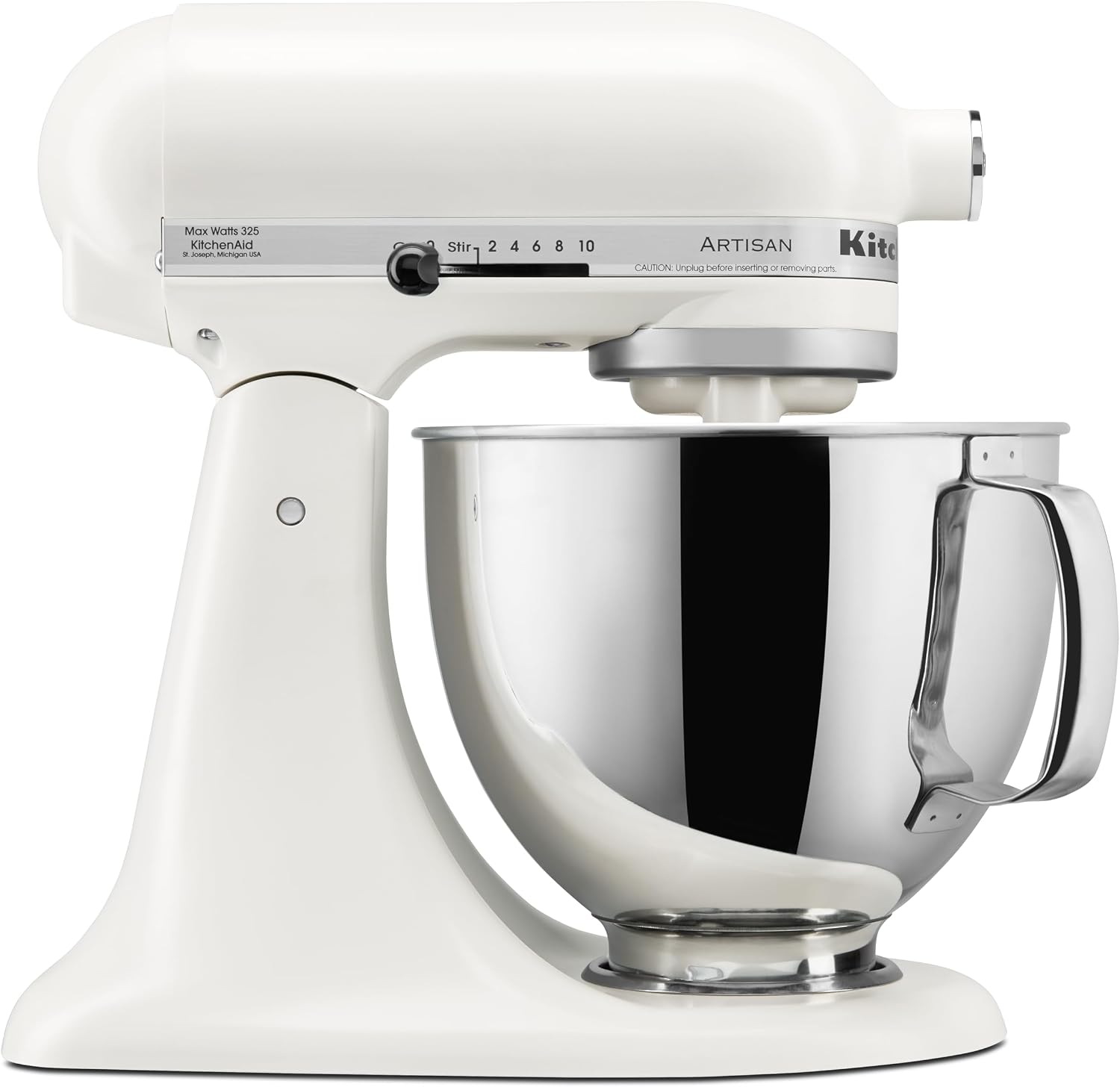
Buy it if you bake most weeks: it topped TechGearLab’s whipping and kneading tests.
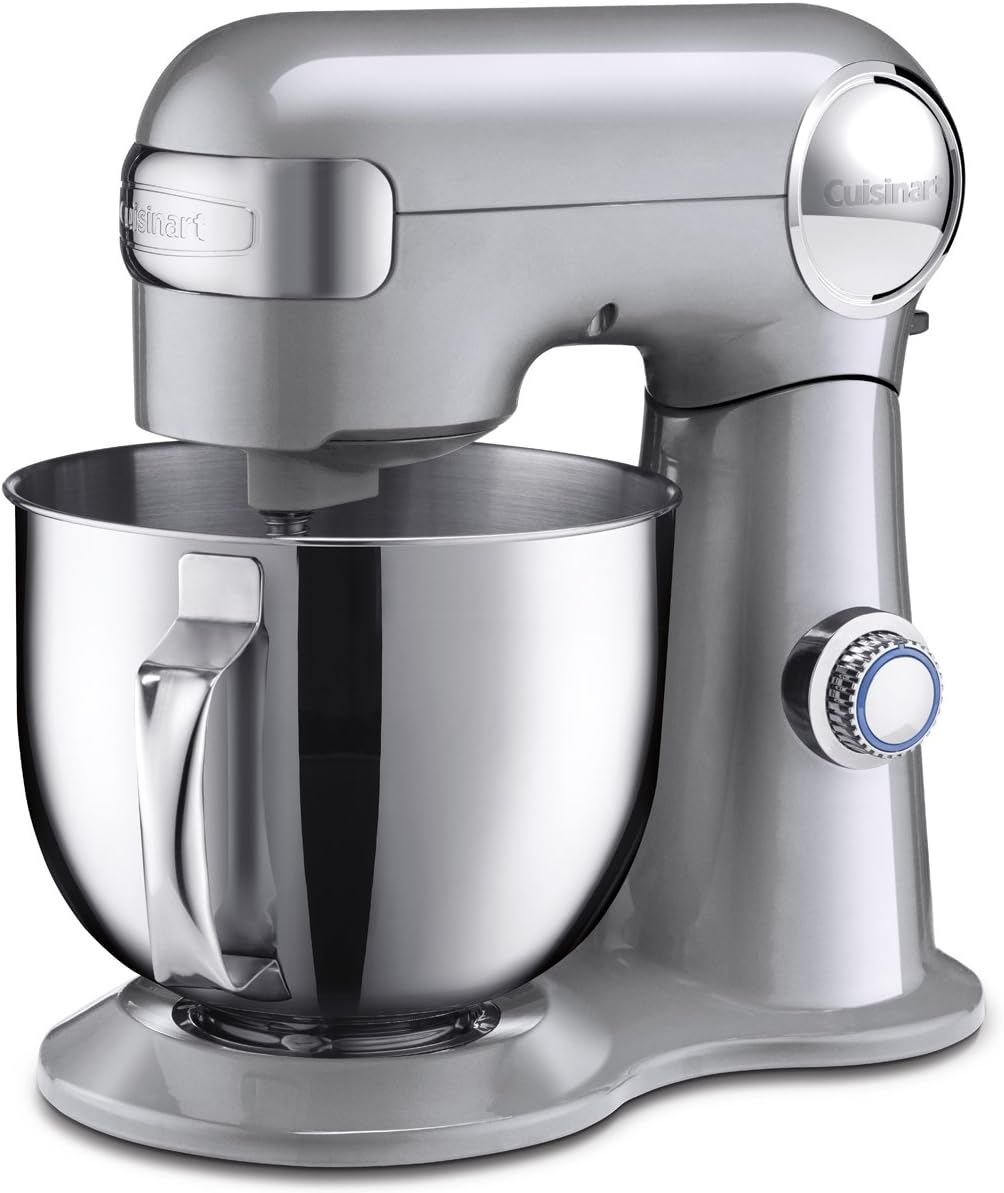
Buy it if you want the biggest bowl here and a hub for attachments at a mid-range price.
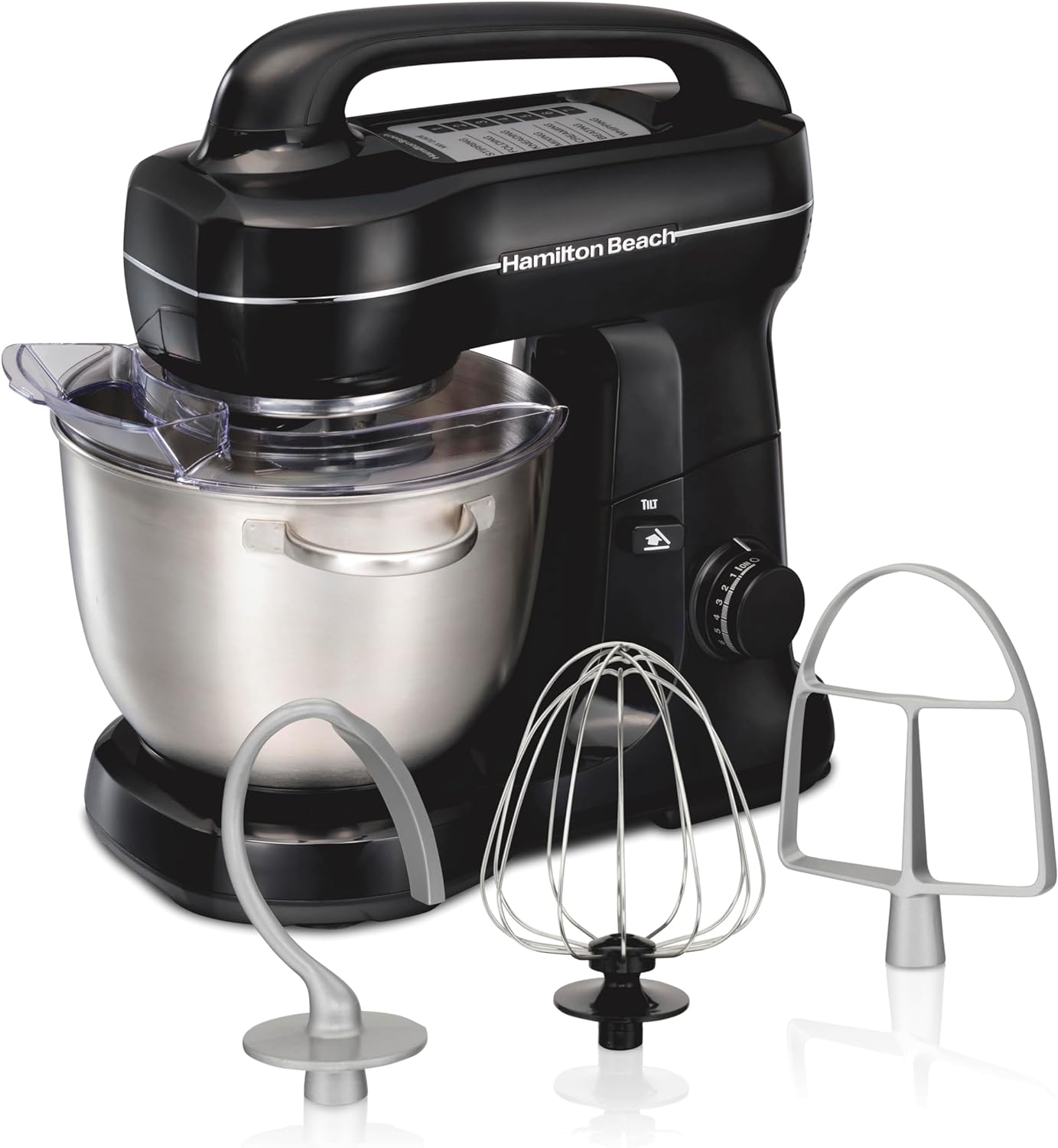
Buy it if you bake a few times a month and want a mixer light enough to put away.
KitchenAid Artisan Stand Mixer: Best for Bakers Who Mix Every Week
If you whip cream, cream butter for layer cakes and knead a loaf most weeks, this 5-quart tilt-head (model KSM150PS) is the one to buy. It is the top pick at Wirecutter, which has used and recommended it since 2013, and the best overall at both TechGearLab and Tom’s Guide. In TechGearLab’s side-by-side tests it scored 10 out of 10 for both whipping and kneading, ahead of our other two picks, and it kneaded TechGearLab’s stiff sandwich-bread dough in 7 minutes.
The front power hub is the other reason to choose it. All three of our picks come with a whisk, a flat beater and a dough hook, but KitchenAid’s range of hub attachments is the widest: Wirecutter counts 37 of them, from a meat grinder to a pasta roller.
The trade-offs against the Cuisinart below are price, weight and a short warranty. It costs the most of the three, KitchenAid lists a net weight of 27.5 lb, and KitchenAid covers it for only one year, which Wirecutter calls fine but not great for a machine this expensive. Wirecutter also found its first speed one of the fastest it has tested, so a bowl of dry flour can puff up when you start; the Cuisinart’s slow first setting avoids that.
Cuisinart Precision Master Stand Mixer: Best for Bigger Batches at a Mid-Range Price
The Precision Master gives you a bigger bowl than the Artisan for a good deal less money. Its 5.5-quart bowl is the largest of our three picks, it has 12 speeds on a dial with a genuinely slow first setting, and a covered hub on the front takes Cuisinart’s optional pasta roller and cutters, pasta extruder, ice cream maker, meat grinder and spiralizer. Tom’s Guide makes it the budget pick in its stand mixer guide, and in its head-to-head with the KitchenAid the tester recommended the Cuisinart for what it provides for the price. It is also the easier of the two to lift: the same tester found it lighter than the KitchenAid while still feeling solid, and TechGearLab weighed it at 15.6 lb against the Artisan’s 21.3 lb.
Testers split on how easy it is to use. Reviewed found it easier to use than the KitchenAid, with a smooth-turning dial, and tied it with the Smeg as the quietest it tested; TechGearLab scored its ease of use well below the Artisan’s and found the dial takes more force to turn. Tom’s Guide found the two-piece splash guard awkward to remove and refit mid-mix.
Bread dough is where testers disagree most. Tom’s Guide’s head-to-head found the two mixers performed equally at kneading, and Top Ten Reviews (in a guide last updated in 2023) kneaded two loaves of dough in 10 minutes with no trouble. Tom’s Guide’s stand mixer guide, though, calls its bread kneading a little lacking, puts that down to a flimsier build and saw the machine shake at speed 8. TechGearLab scored its kneading 4 out of 10 against the Artisan’s 10, with 13 minutes to knead its stiff dough against the Artisan’s 7, even though its 500-watt motor is rated higher. Cuisinart covers it with a limited three-year warranty, the longest of the three in the US. Cuisinart’s US site now lists the SM-50 as discontinued; the Amazon.com listing is the SM-50BCC version from a third-party seller, while Amazon.ca sells the SM-50BCC itself and Cuisinart Canada still lists it.
Hamilton Beach 7-Speed Stand Mixer: Best for Occasional Baking
For cakes, cookies and meringues a few times a month, the Hamilton Beach 7-Speed (model 63391) does the job and goes back in the cupboard afterwards. TechGearLab weighed it at 8.3 lb, against 21.3 lb for the Artisan on the same scale, and a handle on top of the head makes it easy to carry. A mixing guide printed on top suggests a speed for each job, which helps if you are new to stand mixers.
Whipping is its strongest skill. Reviewed’s stand mixer guide (last updated June 2024) names it the best value stand mixer, and in Reviewed’s testing it made the loftiest egg whites in the fastest time of every mixer it tried. TechGearLab took a full cup of cream to fluffy peaks in 2 minutes and 10 seconds, against 1 minute 50 seconds to stiff peaks for the Artisan.
The trade-off is heavy work. Its head bobbed a bit when Reviewed kneaded dough for two loaves of bread, the most Hamilton Beach recommends, and TechGearLab needed 10 minutes to knead its stiff whole-wheat dough, against the Artisan’s 7. There is no power hub, so it will never take a pasta roller or grinder. It is the cheapest of the three on Amazon.com, and the bowl, splash guard, whisk, beater and dough hook all go in the dishwasher on the top rack.
How the Picks Compare
| KitchenAid Artisan | Cuisinart Precision Master | Hamilton Beach 7-Speed | |
|---|---|---|---|
| Price (USD)Price (CAD) | Deal $349.99 until Nov 18Deal $349.99 | $289.95$292.60 (Sep 26) | $139.99$211.56 |
| Our score | 4.5/5 | 4.1/5 | 3.9/5 |
| Bowl (maker) | 5 qt stainless steel | 5.5 qt stainless steel | 4 qt stainless steel |
| Motor (maker rating) | 325 W | 500 W | 300 W |
| Speeds | 10 | 12 | 7 |
| Whipping (TechGearLab, out of 10) | 10 | 6 | 7 |
| Kneading (TechGearLab, out of 10) | 10 | 4 | 5 |
| Minutes to knead stiff dough (TechGearLab) | 7 | 13 | 10 |
| Beating cookie dough (TechGearLab, out of 10) | 7 | 5 | 3 |
| Weight (TechGearLab measured) | 21.3 lb | 15.6 lb | 8.3 lb |
| Power hub for attachments | Yes, KitchenAid’s full range | Yes, Cuisinart’s five attachments | No |
| Hand-wash only | Wire whip | Wire whisk | Nothing (top rack for all parts) |
| Warranty | 1 year (US) | Limited 3-year (US and Canada) | 1 year (US); 5 years for a Canadian purchase |
| Amazon | View on AmazonView on Amazon | View on AmazonView on Amazon | View on AmazonView on Amazon |
Tilt-Head or Bowl-Lift: Which Design Do You Need?
Heavy bread bakers should settle the design question first. Bowl-lift mixers, which raise the bowl up to a fixed head, are generally the stronger machines and come with bigger bowls, and they are heavy: Wirecutter’s favourite bowl-lift weighs about 32 pounds. Every pick here is a tilt-head instead, the easier kind to live with day to day, since scraping the sides, adding flour and swapping beaters all happen with the head tipped back out of the way. A tilt-head has its own catch, the headroom it needs. In Tom’s Guide’s kitchen the Artisan sits under a wall cupboard and has to be pulled out before the head can be raised.
When it matters: if you bake big batches of bread several times a week, the extra power of a bowl-lift, or a spiral dough mixer such as the Ooni Halo Pro that Tom’s Guide suggests for heavy bread baking, is worth the bulk.
When it doesn’t: for cakes, cookies, whipped cream and a regular loaf, a tilt-head is easier to live with. Of our picks, the Artisan did best in TechGearLab’s kneading tests.
Do Watts and Bowl Size Tell You How a Mixer Will Perform?
Not on their own. Reviewed advises not to be wowed by watts or bowl size, because the overall design decides how well a mixer works; it suggests checking how much flour, or how many cookies or loaves, a mixer can handle at once. Our picks show why: the Cuisinart’s motor is rated at 500 watts against the Artisan’s 325, yet TechGearLab scored its kneading well below the Artisan’s. The Artisan’s maker rates it for 9 cups of flour, Cuisinart’s manual caps yeast dough at 6 cups of white flour, and Reviewed reports that Hamilton Beach recommends no more than two loaves’ worth of dough.
For bowl size, Wirecutter considers 5 to 6 quarts the sweet spot for most home bakers: a 5-quart bowl fits most standard recipes, and a slightly bigger one adds room without hurting smaller tasks.
When it matters: double recipes, holiday cookie runs and big loaves. The Cuisinart’s 5.5-quart bowl gives you the most room here, and the Artisan’s 5 quarts covers most recipes.
When it doesn’t: single cakes and ordinary cookie batches, which fit the Hamilton Beach’s 4-quart bowl.
Will It Live on the Counter or in a Cupboard?
Weight matters most when the mixer comes out of a cupboard for every bake. Tom’s Guide’s reviewer warns that if you keep the Artisan in a cupboard, “you won’t want to drop it on your toes”, and TechGearLab says the Artisan’s weight isn’t made to be moved around a lot and suits a permanent spot on the counter.
When it matters: small kitchens and anyone who stores the mixer between bakes. The Hamilton Beach is by far the lightest of the three, and the Cuisinart is lighter than the Artisan.
When it doesn’t: if the mixer has a permanent spot on the counter, weight stops mattering, and the heavier Artisan stays put while it kneads.
How We Chose
We started from the stand mixers that four independent test sites recommend in their guides (updated between 2024 and 2026), Wirecutter, TechGearLab, Tom’s Guide and Reviewed, which between them name or test more than 15 models, and weighed them on what splits buyers: whipping and kneading results, bowl size, the attachment hub, weight and warranty. Each pick is a mixer we review in full, built from independent lab and editorial tests and the makers’ specifications, and each claim here matches that review. Picks are ranked by our review scores.
Which Stand Mixer Should You Buy?
If you bake most weeks, the KitchenAid Artisan is the one to own: it topped TechGearLab’s whipping, kneading and beating tests against the other two, and its hub opens the widest choice of attachments. If you want a big bowl, a slow first speed and a hub for less money, the Cuisinart Precision Master is the one to buy for cakes, cookies and the occasional loaf. And if you bake a few times a month and want the mixer out of sight in between, the Hamilton Beach 7-Speed whips egg whites and cream quickly at a fraction of the weight.
Our picks
For weekly baking, bread included.
For big batches of cakes and cookies.
For a few bakes a month and easy storage.
Browse all Kitchen & Cooking reviews →Kitchen & Cooking reviews →
Frequently Asked Questions
Is the KitchenAid Artisan Plus worth paying more for than the Artisan?
Can a stand mixer whip a small amount, like one egg white?
Which stand mixer parts can go in the dishwasher?
Is the 5-year Hamilton Beach warranty valid on an Amazon.ca order?
How long does a KitchenAid stand mixer last?
Sources
- Wirecutter – The 5 Best Stand Mixers and Attachments of 2026
- TechGearLab – The Best Stand Mixers
- TechGearLab – KitchenAid Artisan Stand Mixer Review
- Tom’s Guide – The best stand mixers
- Tom’s Guide – KitchenAid vs Cuisinart: Which stand mixer is best?
- Tom’s Guide – KitchenAid Artisan Stand Mixer review
- Tom’s Guide – Cuisinart Precision Master Stand Mixer review
- Tom’s Guide – KitchenAid Artisan Plus mixer review
- Top Ten Reviews – Best stand mixers
- Reviewed – The Best Stand Mixers
- Reviewed – The Best Alternatives to the KitchenAid Stand Mixer
- KitchenAid – Artisan Series 5 Quart Tilt-Head Stand Mixer (KSM150PS)
- Cuisinart – Precision Master 5.5-Quart Stand Mixer (SM-50)
- Cuisinart – Precision Master Stand Mixer SM-50 Series Instruction Booklet
- Cuisinart Canada – Precision Master 5.5-QT (5.2L) Stand Mixer (SM-50BCC)
- Hamilton Beach – 7 Speed Stand Mixer, 4 Quart Capacity (63391)
- Hamilton Beach – Stand Mixer Use and Care Guide (models 63391-63395)
Reader Poll
What do you mostly make with a stand mixer?
Help Our Editors Know What Matters to You
Explore on Amazon →