Oura Ring 4 vs Garmin Forerunner 165: Sleep vs GPS Training
One is a ring that monitors your sleep like a lab. The other is a GPS watch that coaches your training. Here’s how to know which one belongs on your body.

How We Researched
AI-assisted secondary research across manufacturer spec sheets, Oura’s published clinical validation studies on sleep staging accuracy, Garmin’s FirstBeat Analytics documentation, and aggregated owner feedback. No paid placement — badges and scores reflect editorial judgment only.
* As an Amazon Associate I earn from qualifying purchases. Disclosure
What You’ll Learn
- Why these two devices aren’t competing for the same buyer
- Which tracks sleep more accurately — and what the data means
- How GPS accuracy on the Forerunner 165 compares to premium models
- Whether the Oura Ring subscription is worth the ongoing cost
- How total cost of ownership differs between the two
- Who should buy the ring, who should buy the watch — and who needs both
The Two Fitness Trackers Compared
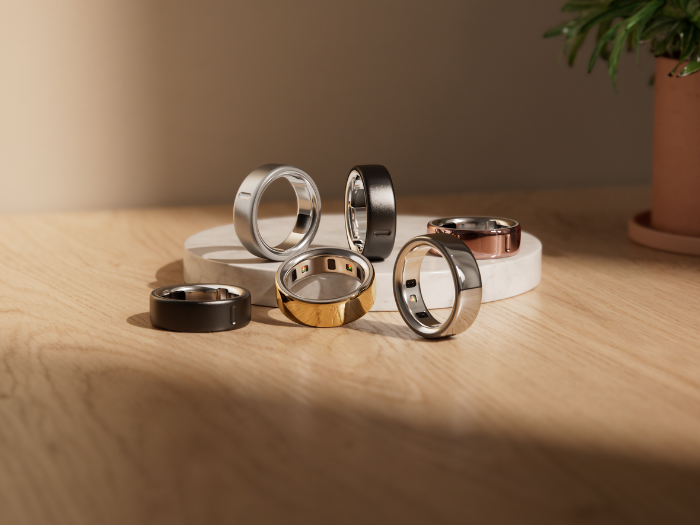 Best Sleep Tracker
Bottom line: The gold standard for passive health monitoring — clinically validated sleep staging, best-in-class HRV tracking, and a titanium body that disappears on your finger.
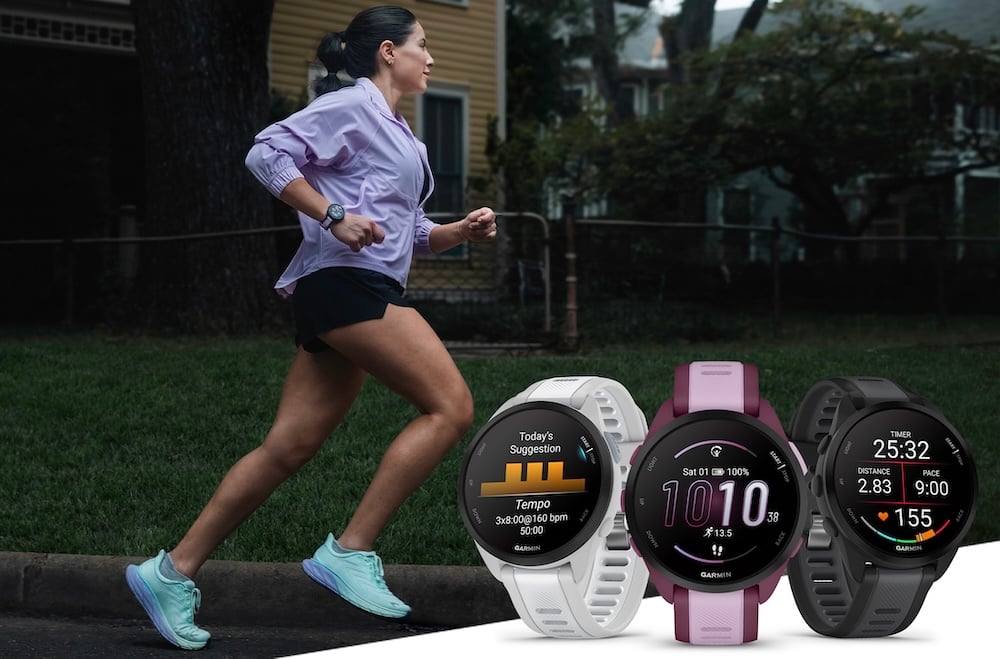 Best GPS Running Watch
Bottom line: The most complete GPS running watch under $250 — AMOLED screen, HRV tracking, adaptive Garmin Coach plans, and no subscription required.
These two products get compared constantly, and the confusion is understandable — both track heart rate and HRV, both claim to help you train smarter, and both sit in the premium fitness device category. But framing this as a direct competition misses the point. The Oura Ring 4 is a passive biometric monitor built around sleep quality, recovery depth, and long-term health trends. The Garmin Forerunner 165 is an active GPS training watch built around running performance and structured coaching. Knowing which job you’re actually hiring a wearable to do will resolve the oura ring 4 vs garmin forerunner 165 question faster than any spec comparison — and that’s exactly what this guide delivers.
| Spec | Oura Ring 4 | Garmin Forerunner 165 |
|---|---|---|
| Price (USD) | $349 | $199.99 |
| Price (CAD) | $469.99 | $294.45 |
| Form factor | Ring (titanium) | Watch (polycarbonate) |
| Display | None | AMOLED 800 nits, 1.2″ |
| Built-in GPS | No (phone GPS) | Yes — multi-GNSS |
| GPS battery | N/A | 19 hours |
| Smartwatch battery | 8 days | 11 days |
| Heart rate sensor | 18-path PPG (red + green + IR) | Elevate V4 optical HR |
| Sleep staging | Advanced — clinically validated | Basic |
| HRV tracking | Overnight + long-term trends | HRV Status (nightly) |
| Subscription required | $5.99/mo (features locked without) | None |
| Water resistance | 100m (10 ATM) | 50m (5 ATM) |
| Weight | 3.3–5.2 g | 39g (watch only) |
| Best for | Sleep tracking, recovery monitoring | Running, structured training |
Sleep & Recovery Tracking
Sleep analysis is where the Oura Ring 4 has no equal among consumer wearables. Its 18-path multi-wavelength PPG system — firing red, green, and infrared LEDs simultaneously across 18 distinct measurement points on the ring’s inner surface — captures sleep architecture with a precision that Oura has validated in peer-reviewed research against clinical polysomnography. Every night, it maps your sleep into Light, Deep, and REM stages while cross-referencing HRV, resting heart rate, respiratory rate, and skin temperature deviation to generate a Sleep Score and Readiness Score each morning. The temperature sensor samples every minute overnight, which is what allows Oura Advisor to flag illness onset — sometimes 24 to 48 hours before symptoms appear, according to Oura’s published validation data.
The Garmin Forerunner 165 tracks sleep too. HRV Status, Body Battery, and a Morning Report synthesise overnight data into a readiness snapshot that is genuinely useful for a running watch at this price tier. But the FR165’s sleep staging is less granular — it classifies sleep states without the temperature-derived precision that underpins Oura’s platform. Owners consistently describe the Oura app’s sleep insights as significantly more actionable than those from Garmin or any wrist-worn device they’ve compared it with.
Winner: Oura Ring 4 — by a meaningful margin for anyone who wants the deepest, most clinically grounded passive sleep and recovery data available in a consumer wearable.
GPS & Active Workout Tracking
This comparison is direct. The Garmin Forerunner 165 has built-in multi-GNSS GPS. The Oura Ring 4 does not. For any activity where route tracking, real-time pace, distance, or map data matters — running, cycling, hiking — the FR165 is the only viable option between these two.
The FR165’s Airoha GPS chip with multi-constellation support (GPS, GLONASS, Galileo, BeiDou) produces route accuracy that Garmin’s published technical documentation positions as equivalent to more expensive multi-band units in most real-world conditions. Paired with the Elevate V4 optical HR sensor, adaptive Garmin Coach training plans for 5K through half-marathon distances, and the FirstBeat Analytics engine driving daily suggested workouts, the FR165 functions as a complete coaching partner for structured run training. The Oura Ring estimates workout metrics from accelerometer data if you don’t carry your phone — suitable for step counting and general activity recognition, not GPS-mapped run sessions.
Winner: Garmin Forerunner 165 — unambiguously, for any buyer whose primary goal is GPS-tracked training and on-wrist performance feedback.
Form Factor — Ring vs Watch
The Oura Ring weighs between 3.3 and 5.2 grams depending on size. The Garmin Forerunner 165 weighs 39 grams without the band. Neither is objectively superior — they suit different contexts.
The ring excels at discretion. In a meeting, at a formal event, or during sleep, it’s invisible in a way no watch can match. The absence of a screen eliminates notification distractions entirely — there are no taps, alerts, or buzzes from the ring itself. Most wearers report forgetting it’s there within a day or two. The sizing process requires ordering a free sizing kit first, which adds a few days but ensures sensor accuracy against the skin. For the Garmin, the 1.2-inch AMOLED at 800 nits delivers a meaningful practical advantage during training — pace, HR zone, and interval countdowns are readable in direct summer sun without breaking stride. The 20mm quick-release band system is compatible with a wide range of third-party options for under $15. For buyers who want one device for both training and daily life, the FR165 handles that dual role more completely.
Winner: Oura Ring 4 for all-day passive monitoring where discretion matters; Garmin Forerunner 165 for active training feedback. The two form factors solve different problems — many serious athletes own both.
Subscription Costs
The Oura Ring 4 requires a subscription to deliver its full feature set: $5.99/month (or $69.99/year) in the US; $7.99 CAD/month in Canada. Without a membership, basic historical data remains accessible, but the Readiness Score, Oura Advisor AI coaching, detailed sleep stage breakdowns, cycle tracking, and trend analysis are locked. Over two years, that adds roughly $140 USD to the ring’s $349 hardware cost — pushing total ownership closer to $490.
The Garmin Forerunner 165 has no subscription requirement. HRV Status, Body Battery, Garmin Coach training plans, FirstBeat Analytics insights, and the full Garmin Connect platform are included permanently with the hardware purchase. Garmin’s optional Connect+ tier exists but adds only minor convenience features and is not required for any core health or training functionality. For any buyer weighing long-term cost, the FR165’s no-subscription model compounds meaningfully over time.
Winner: Garmin Forerunner 165 on total cost of ownership — lower hardware price, no ongoing fees, and full feature access from day one.
Display & Real-time Feedback
The Oura Ring 4 has no display. Every data point — sleep scores, readiness, HRV trends, activity summaries — lives in the Oura smartphone app. This is deliberate: eliminating a screen is how Oura achieves the ring’s 8-day battery and minimal form factor. For the ring’s core user — someone tracking sleep and recovery rather than executing structured workouts — this trade-off is entirely appropriate. Checking your heart rate during a run, however, means reaching for your phone.
The Garmin Forerunner 165’s AMOLED changes the equation for active use. At 390×390 pixels and 800 nits, it’s legible in full afternoon sun. The interface combines five physical buttons with touchscreen gestures — precise control even when running gloves or sweat make a pure touchscreen unreliable. Heart rate zone, current pace, time remaining in an interval, and lap data are all present at a glance. For runners managing structured interval sessions where immediate zone feedback drives the session, the on-wrist display is not a preference — it’s a prerequisite.
Winner: Garmin Forerunner 165 for any buyer who needs live data during activity. The Oura Ring’s app-only approach is well-suited to its passive monitoring role, not to active workout feedback.
Our Verdict
The Oura Ring 4 and Garmin Forerunner 165 aren’t truly competing for the same buyer — and the clearest sign of that is how easily the choice resolves once you know what you’re actually trying to accomplish.
If your priority is understanding your body at rest — sleep quality, recovery depth, HRV trends, and long-term health patterns — the Oura Ring 4 is the right tool. No consumer wearable tracks sleep with greater precision, and Oura Advisor’s AI coaching is the most practically useful health insight layer in a passive form factor. The subscription adds real cost, but for buyers committed to acting on what they learn, the value is there.
If your priority is improving your running — GPS-mapped workouts, structured coaching plans, real-time pace and HR feedback, and no ongoing subscription fees — the Garmin Forerunner 165 is the clear answer. At $249.99, it delivers more active training capability than any competing watch at this price tier, with an 11-day battery, a brilliant AMOLED screen, and Garmin’s coaching ecosystem included at no extra charge.
Buy the Oura Ring 4 if sleep tracking and passive recovery monitoring are your primary goal, and the subscription cost fits your budget. Buy the Garmin Forerunner 165 if you’re a runner who wants GPS training data, real-time feedback, and a full smartwatch experience without a recurring fee.
Read Our Oura Ring 4 Review → Read Our Oura Ring 4 Review → Read Our Garmin Forerunner 165 Review → Read Our Garmin Forerunner 165 Review →
Frequently Asked Questions
Which should I buy if I’m primarily a runner?
Which is better for sleep tracking?
Is the Oura Ring subscription required?
Can I use both the Oura Ring and the Garmin watch together?
Which has better battery life?