How to Choose a Slow Cooker in 2026: What to Look For
Capacity, temperature precision, and how many jobs you actually want one appliance to do — the three things that separate a $60 slow cooker from a $180 one.

How We Researched
3 slow cookers reviewed across the budget-to-premium range, AI-assisted secondary research cross-checked against manufacturer specs and Consumer Reports testing data. No paid placement — badges and scores reflect editorial judgment only.
What You’ll Learn
- How to size capacity to your household instead of guessing
- Whether a meat temperature probe is worth paying extra for
- When a sauté-and-steam multi-cooker earns its higher price
- What you give up at the budget end of the price range
3 products in this guide
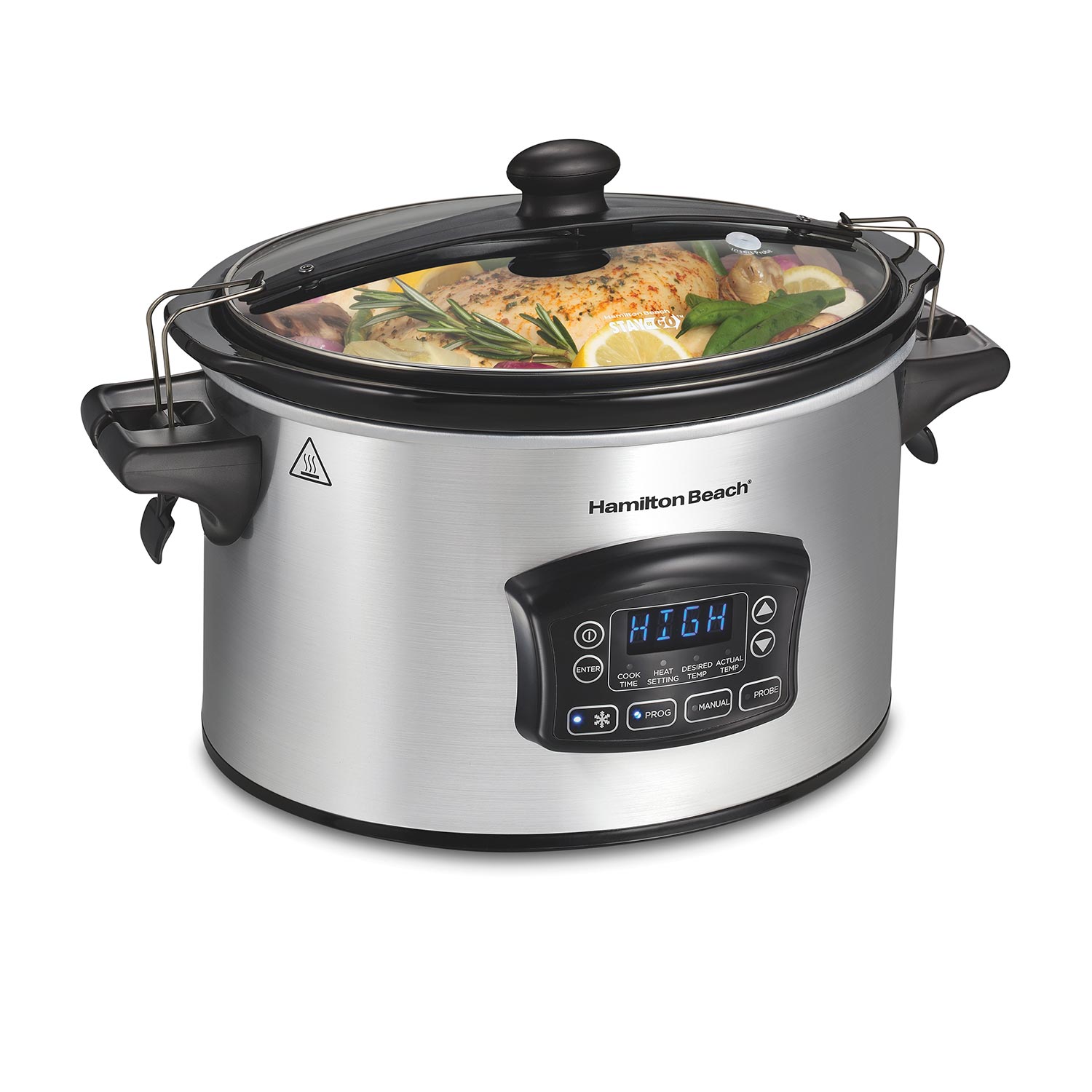
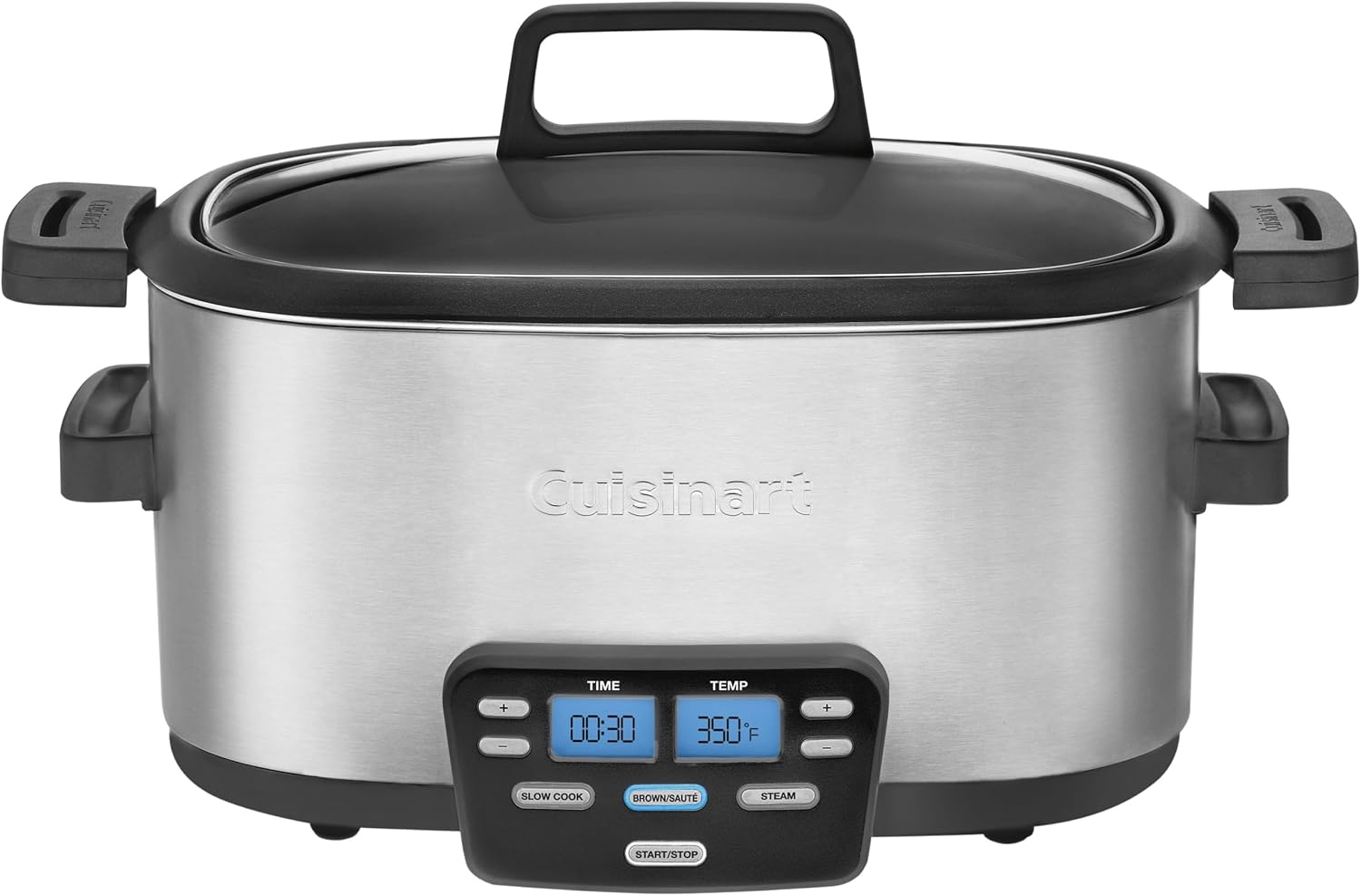
Every slow cooker promises the same basic thing — set it, walk away, come back to dinner. Where they actually differ is capacity, how precisely they hit a target temperature, and whether the same pot can also brown, sauté, or steam. We researched three slow cookers spanning $60 to $184 to work out which of those differences are worth paying for and which ones just add cost.
How Much Capacity Do You Actually Need?
Slow cooker capacity is measured in quarts, and the gap between a 6-quart and a 7-quart pot is bigger in practice than the single-digit difference suggests — an extra quart is often the difference between a roast fitting comfortably with vegetables around it or being wedged in with the lid barely closing.
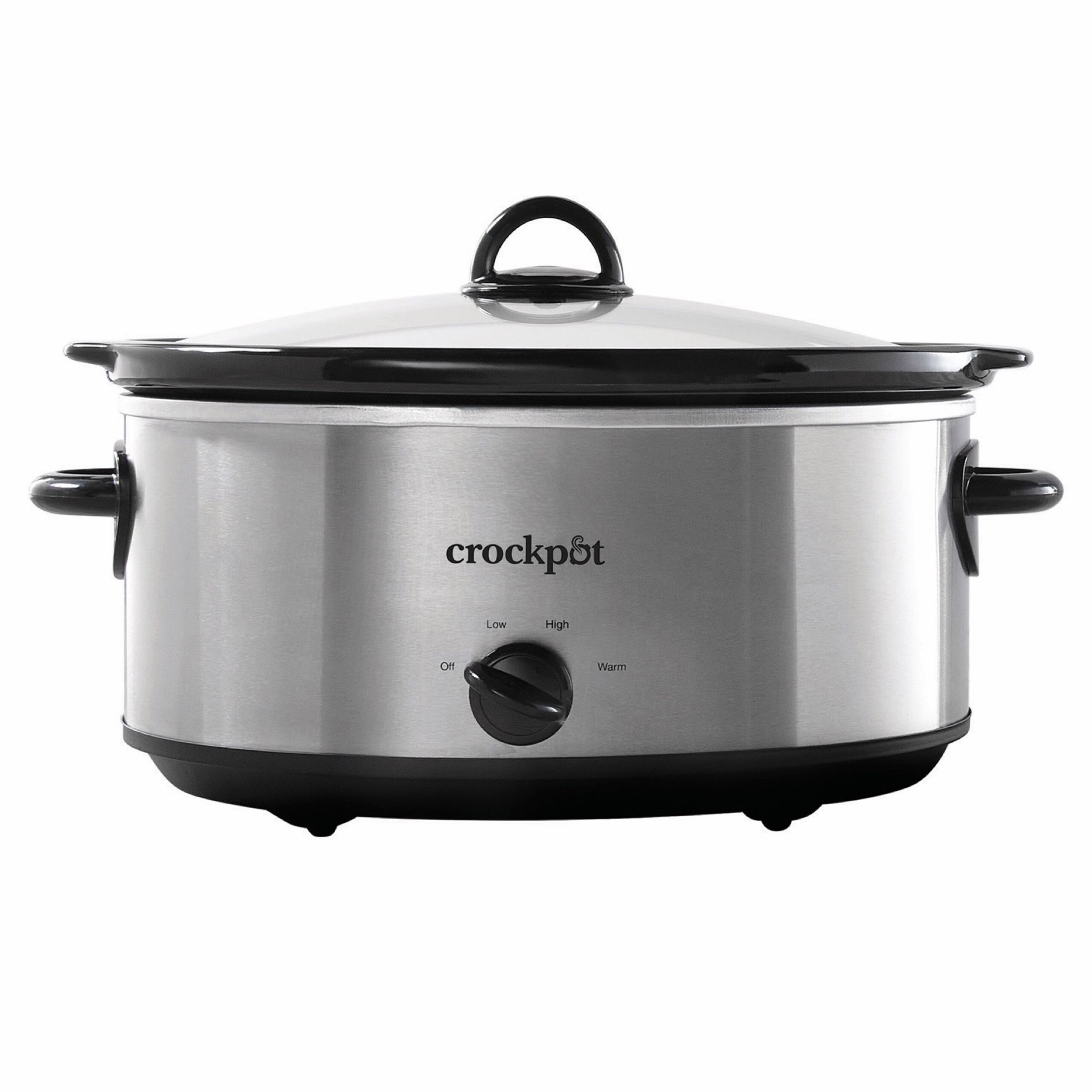
A 6-quart pot, the size of both the Hamilton Beach and Cuisinart models in this guide, comfortably serves 4-6 people or a 4-pound roast. A 7-quart pot like the Crock-Pot Manual pushes that to 8+ people or a 6-pound roast — the difference that matters for a household that regularly hosts, batch-cooks for the freezer, or just cooks larger cuts of meat.
When it matters: Feeding more than 6 people regularly, batch cooking to freeze portions, or cooking whole roasts and large cuts.
When it doesn’t: Cooking for 1-4 people most nights — a 6-quart pot has plenty of headroom and takes up less counter space.
Size up to 7 quarts only if you regularly cook for a crowd or batch-cook — otherwise a 6-quart pot is the better fit for most kitchens.
Meat Temperature Probes: Worth the Upgrade?
A slow cooker’s Low and High settings are really just fixed heat outputs — they don’t know when a roast has actually hit a safe or ideal internal temperature. A probe-equipped model changes that by letting you set a target temperature and cook to it directly, then switch to Warm automatically the moment the meat gets there.
The upgrade shows up most on large cuts — whole chickens, pork shoulders, roasts — where a plain timer forces you to guess how long a specific size and starting temperature (fresh vs. frozen) will take. A probe removes that guesswork entirely, at a modest price premium over a basic manual model.
When it matters: Cooking whole cuts of meat regularly, or wanting a genuine frozen-to-cooked defrost setting instead of thawing on the counter.
When it doesn’t: Mostly cooking soups, chilis, or dips, where “doneness” isn’t measured by a meat thermometer anyway.
A temperature probe is the single biggest accuracy upgrade a slow cooker can offer — but only pays off if you regularly cook whole cuts of meat.
Single-Function vs. Multi-Function: Sauté, Steam & Slow Cook
A plain slow cooker only ever runs low and slow — if a recipe calls for browning meat first, that means a separate stovetop pan. A multi-function model like the Cuisinart 3-in-1 folds a sauté mode (heated up to 400°F) and a steaming function into the same pot, so browning, slow cooking, and steaming a side dish can all happen in one vessel.
That versatility comes at a real cost premium — roughly triple a basic manual slow cooker in this guide — and it’s not a pressure cooker, so it won’t match an Instant Pot’s rapid-cook speed. Consumer Reports, which has evaluated the Cuisinart MSC-600 as part of its multi-cooker testing, notes that its searing-capable sauté mode is what separates it from cheaper slow cookers with a “sear” setting that never really gets hot enough to brown. It’s a genuine upgrade in capability, not a strictly faster way to cook.
When it matters: Recipes that call for browning meat or sautéing aromatics before a long braise, or wanting one appliance instead of a slow cooker plus a separate pan.
When it doesn’t: You never brown ingredients before slow cooking, or you’d rather spend that money elsewhere.
A sauté-and-steam multi-cooker earns its higher price by replacing a second pan — but it’s not a faster cooker, just a more versatile one.
Budget vs. Premium: What Extra Money Actually Buys
The three slow cookers in this guide span a nearly 3x price range, and the differences track cleanly with features rather than build quality. The Crock-Pot Manual’s simple 3-position dial has no digital circuit board to eventually fail, which is part of why it holds up as a reliable, no-frills pick even at the bottom of the price range.
Every dollar above that baseline buys a specific feature — a digital timer and temperature probe on the Hamilton Beach, or sauté and steam functions on the Cuisinart. Neither upgrade makes the food that comes out of a basic manual model any worse; they just add capability a simpler pot doesn’t have.
When it matters: You know exactly which extra feature (probe, sauté, programmability) you’ll actually use.
When it doesn’t: You just want reliable low-and-slow cooking without paying for capability you won’t touch.
A basic manual slow cooker isn’t a lesser product — it’s a different one. Pay more only for a feature you’ll genuinely use.
| Crock-Pot 7-Quart Manual | Hamilton Beach Set & Forget | Cuisinart 3-in-1 Cook Central | |
|---|---|---|---|
| Price (USD) | approx. $59.99 | $69.99 | $183.70 |
| Capacity | 7 qt | 6 qt | 6 qt |
| Meat Temp Probe | No | Yes | No |
| Sauté / Steam | No | No | Yes, up to 400°F |
| Programmable Timer | No — manual dial | Yes, 30 min–24 hrs | Yes, up to 24 hrs |
Our Verdict
Start with capacity and how you actually cook, not the feature list. A 7-quart manual model like the Crock-Pot covers the most households at the lowest price and rarely disappoints for straightforward low-and-slow meals. Step up to a temperature-probe model like the Hamilton Beach Set & Forget specifically for whole cuts of meat, and reach for a multi-function pot like the Cuisinart 3-in-1 only if you genuinely want to sauté or steam in the same vessel.
Buy the Crock-Pot 7-Quart if you want reliable capacity at the lowest price. Buy the Hamilton Beach Set & Forget if you regularly cook roasts and want precise doneness. Buy the Cuisinart 3-in-1 if you want one pot that browns, steams, and slow cooks.
Read Our Crock-Pot 7-Quart Review → Read Our Crock-Pot 7-Quart Review → Read Our Hamilton Beach Review → Read Our Hamilton Beach Review → Read Our Cuisinart 3-in-1 Review → Read Our Cuisinart 3-in-1 Review →
Which One Is Right for You?
Best Value
Bottom line: The biggest pot and the lowest price — a reliable, no-frills choice for feeding a crowd.
Best for Precise Roasts
Bottom line: A meat temperature probe cooks roasts to an exact doneness and switches to Warm automatically.
Most Versatile
Bottom line: Sauté up to 400°F, steam, and slow cook in the same nonstick pot — one appliance instead of several.
Frequently Asked Questions
Is a 6-quart or 7-quart slow cooker better?
Is a meat temperature probe worth paying extra for?
Does a sauté function actually replace a stovetop pan?
Is a basic manual slow cooker good enough for most people?
Can I use a slow cooker to steam vegetables?