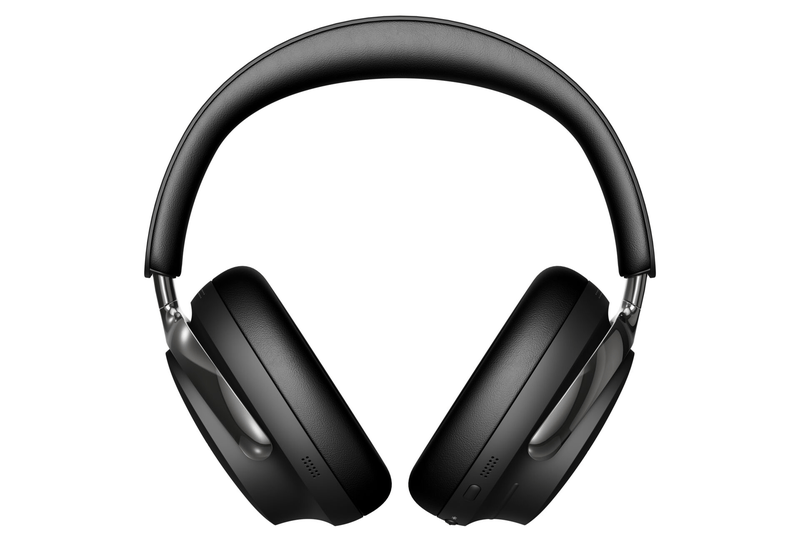
Buy the QuietComfort Ultra Headphones (2nd Gen) if you fly or commute a lot: the noise cancelling ranks among the best available, and they stay light and comfortable through a long flight. This generation adds wired lossless listening over USB-C and a longer rated battery. The trade-off is sound: Sony's WH-1000XM6 sounds better and suits buyers who put music quality first.
Pros
- Noise cancelling among the best available
- Light, comfortable fit for long wear
- Lossless wired audio over USB-C
- 30-hour rated battery and listen-while-charging
- Folds into a compact hard case
Cons
- Sony's XM6 sounds better
- Basic app with a three-band EQ
- No water-resistance rating
- USB-C wired listening needs battery charge
As an Amazon Associate I earn from qualifying purchases. Disclosure
Overview
Bose’s flagship over-ear headphones have one main job: making a plane cabin, a subway car or an open office go quiet. The QuietComfort Ultra Headphones (2nd Gen), on sale since October 2025, still do that job about as well as anything at this level, and they stay light and comfortable enough to wear for a whole flight. They are built for frequent travelers and commuters who put noise cancelling and comfort first.
Little changed on the outside; the upgrades are inside. Wired listening now works over the USB-C port, carrying digital audio at 16-bit and 44.1kHz or 48kHz. The rated battery rises from 24 to 30 hours with noise cancelling on, a new Cinema mode targets films and TV, and noise cancelling can now be switched off entirely. The headphones also wake when you put them on and drop into a low-power standby when you lay them flat. The one visible change is a polished finish on the metal yokes in place of the old matte one.
Key Specifications
| Price (USD) | $359.89 |
| Type | Over-ear (circumaural), folding, active noise cancelling |
| Weight (headphones) | About 264 g (0.583 lb) |
| Rated battery life | Up to 30 hours (23 with Immersive Audio, 45 with noise cancelling off) |
| Charging | USB-C; 3-hour full charge; 15 minutes = 3 hours of play; listen while charging |
| Bluetooth | 5.4 with multipoint (two devices); SBC, AAC, aptX Adaptive |
| Wired listening | USB-C digital audio (16-bit, 44.1kHz or 48kHz); analog cable included |
| Listening modes | Quiet, Aware (with ActiveSense), Immersion, Cinema |
| Water resistance | None (no IP rating) |
| Model number | 890101-0100 (Black) |
Bose QuietComfort Ultra Headphones (2nd Gen) Noise Cancelling
Noise cancelling is the reason to buy these, and it remains among the strongest you can get in wireless headphones. On planes and buses, the deep engine rumble is almost entirely removed along with most of the midrange hubbub around you, so music or a podcast plays against near silence at a modest volume.
Where testers split is the comparison with Sony’s WH-1000XM6. What Hi-Fi gave the Bose a narrow win for outright sound-blocking in its Quiet mode, while PCMag ranked it second only to the Sony among the current models it has tested. That strength isn’t for every ear: the same What Hi-Fi comparison called noise cancelling a draw, noting the Bose’s “rather heavy-handed ‘vacuum’ effect that not everyone finds comfortable”. SoundGuys’ reviewer also felt a sucking pressure on the eardrums for the first time in 15 years of reviewing headphones.
Against the first generation, the gains are harder to find. SoundGuys found no improvement in overall noise attenuation over the original, and T3, which compared the two side by side, found the new pair let some higher-pitched sounds through that the original blocked, such as snack packets rustling on a flight.
What is new is control. You can now set the strength of the cancelling in the Bose app or turn it off completely, and in Aware mode the ActiveSense feature raises the cancelling for sudden loud noises, such as a passing siren, so they don’t drown out your audio.
Sound Quality and Wired Listening
The sound is rich and bass-forward, tuned for energy and punch rather than strict neutrality: SoundGuys measured a bass emphasis of 3 to 6 dB over its house curve. Against the original, the gains are small but real, with a little more clarity and detail; What Hi-Fi also found it more solid and musically tighter, with a layer of excess richness gone.
The main limitation is sound against Sony: in What Hi-Fi’s comparison the WH-1000XM6 sounds more natural and reveals more texture, and TechRadar found that sparse, quiet recordings expose small details the Bose glosses over.
The new wired mode is worth having if you play lossless files from a laptop, tablet or phone with USB-C: it carries CD-quality digital audio, and Bose pitches its low latency for gaming. What Hi-Fi says both wired methods need battery charge to work, though PCMag says the 2.5mm analog port also works unpowered.
Bose’s Immersive Audio spatial mode divides opinion. What Hi-Fi preferred its fixed Still setting to the head-tracking Motion setting and found the new Cinema mode most useful for pulling dialogue forward in films and TV, while SoundGuys wasn’t won over by any of the immersive modes.
Comfort, Battery and Daily Use
Comfort is the other big strength. At about 264 g (0.583 lb), these are light for flagship headphones, the grip is firm without pinching, and the padded ear cushions and headband stay comfortable for hours, which makes a long-haul flight or a full workday realistic. Gizmodo did find the fit a little too snug when the headphones rest around your neck. Long sessions can also get warm: SoundGuys noted heat building up.
The earcups fold inward, so the headphones tuck into a compact hard-shell case, though Gizmodo found them awkward to fit back inside it. Bose gives them no water-resistance rating and advises keeping them out of situations where they may get wet.
Bose rates the battery at up to 30 hours with noise cancelling on, 23 with Immersive Audio and 45 with cancelling off, and SoundGuys’ standardized battery rundown lasted 27 hours and 12 minutes. A 15-minute charge adds about three hours, you can now listen while charging, and laid flat the headphones drop into a standby that Bose says can last for months.
App, Controls and Calls
The controls sit on the right earcup: a power and pairing button, a multi-function button for playback, calls and listening modes, and a touch strip you swipe for volume or hold for a shortcut such as your phone’s voice assistant.
The Bose app covers noise-cancelling levels, custom listening modes and updates, but it does less than some rival apps. PCMag counted four EQ presets plus a three-band bass, mid and treble control, against a labeled seven-band EQ in Sony’s app.
Bluetooth 5.4 multipoint keeps the headphones connected to two devices at once, and Android phones get Google Fast Pair. Bose says aptX Adaptive can switch to lossless and low-latency modes with a Snapdragon Sound-certified source, though What Hi-Fi says lossless audio isn’t possible over the Bose’s aptX Adaptive.
Calls are adequate rather than a highlight. PCMag found its recorded voice compressed and a little thin but fine for calls, and SoundGuys’ sample recordings showed background noise handled fairly well, with the voice occasionally dipping as the noise reduction worked.
How Does It Stack Up Against the Competition?
These are the flagship noise-cancelling headphones testers most often weigh against the Bose: Sony’s WH-1000XM6, Bowers & Wilkins’ Px7 S3 and Apple’s AirPods Max 2.
| Feature | Bose QuietComfort Ultra Headphones (2nd Gen) | Sony WH-1000XM6 | Bowers & Wilkins Px7 S3 | Apple AirPods Max 2 |
|---|---|---|---|---|
| Price (USD) | $359.89 | Deal $378.00 until Nov 8 | $479.00 | $449.99 |
| Rated battery (noise cancelling on) | 30 hours | 30 hours | 30 hours | 20 hours |
| Weight | 264 g | 254 g | 300 g | 386.2 g |
| Bluetooth codecs | SBC, AAC, aptX Adaptive | SBC, AAC, LDAC, LC3 | SBC, AAC, aptX HD, aptX Adaptive, aptX Lossless | SBC, AAC |
| Wired audio over USB-C | Yes | No | Yes | Yes |
| TTP Review | This review ↑ | Read our review → | — | Read our review → |
| Amazon | View on Amazon | View on Amazon | View on Amazon | View on Amazon |
Prices change frequently — always verify current pricing before purchasing.
Bose QuietComfort Ultra Headphones (2nd Gen): Worth It for Long, Noisy Trips
Buy these if most of your listening happens on planes, trains or in a loud office. Few headphones block more noise, few are as easy to wear through a whole flight, and the inward-folding design and 30-hour rating make them simple to travel with. Wired lossless listening over USB-C is a genuine bonus if you play music from a laptop. As of November 2026, it also costs less on Amazon than all three rivals in the table above, which makes it the easier pick for travelers.
Look elsewhere if music quality comes first. Sony’s WH-1000XM6 is the better-sounding choice with a fuller EQ, and What Hi-Fi named it the overall winner in its head-to-head with the Bose. Bowers & Wilkins’ Px7 S3 feels more upmarket, though it doesn’t fold. iPhone owners who want Apple’s Personalized Spatial Audio and Live Translation may prefer the AirPods Max 2, accepting more weight and a shorter rated battery.
Sources
- Bose — QuietComfort Ultra Headphones (2nd Gen) product page and specifications
- Bose QuietComfort Ultra Headphones (2nd Gen) — Amazon Product Listing
- Bose — Bose Unveils the Next Generation of the QuietComfort Ultra Headphones
- TechRadar — Bose QuietComfort Ultra Headphones (2nd Gen) review
- What Hi-Fi? — Bose QuietComfort Ultra Headphones (2nd Gen) review
- What Hi-Fi? — Sony WH-1000XM6 vs Bose QuietComfort Ultra Headphones (2nd Gen)
- PCMag — Bose QuietComfort Ultra Headphones (2nd Gen) review
- SoundGuys — Bose QuietComfort Ultra (2nd Gen) review
- T3 — Bose QuietComfort Ultra Headphones 2 review
- Gizmodo — Bose QuietComfort Ultra Headphones (2nd Gen) review
- Engadget — Bose QuietComfort Ultra Headphones (2nd gen) review
- What Hi-Fi? — Sony WH-1000XM6 review
- What Hi-Fi? — Bowers & Wilkins Px7 S3 review
- TechRadar — Bowers & Wilkins Px7 S3 review
- Apple — AirPods Max 2 Technical Specifications
- SoundGuys — Apple AirPods Max 2 review
Reader Poll
What would make you pick the Bose QuietComfort Ultra (2nd Gen) over its rivals?
Help Our Editors Know What Matters to You
Explore on Amazon →