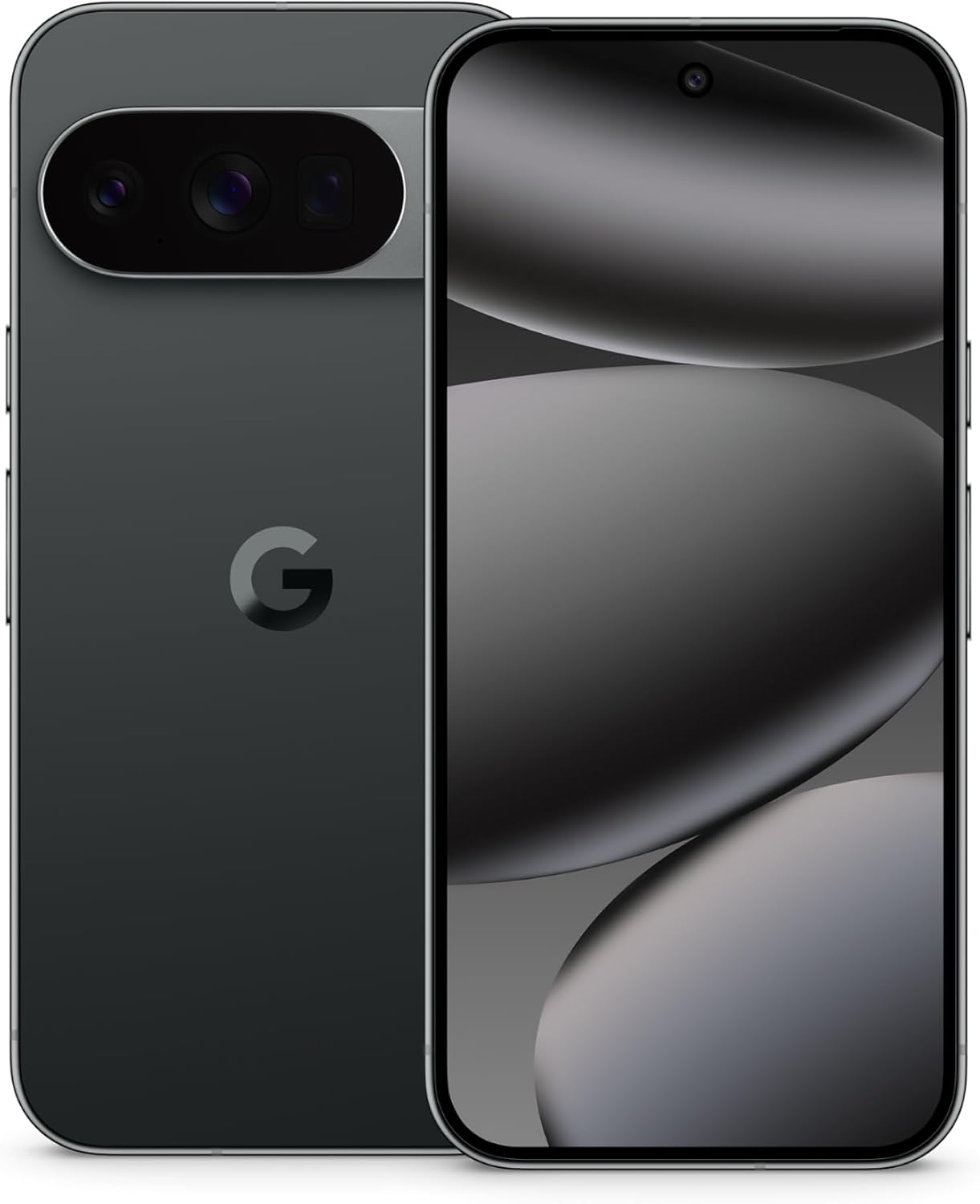
Buy the Pixel 10 Pro if you want Google's excellent cameras, a very bright screen and its AI features in a 6.3-inch phone. Its successor, the Pixel 11 Pro, changes little, so last year's Pro gives up very few features, and Google's updates run to 2032. The trade-off is slow charging and battery life that trails the best rivals, so heavy users may want a midday top-up.
Pros
- Excellent cameras with a 48 MP 5x telephoto
- 100x Pro Res Zoom works better than expected
- Very bright 6.3-inch display
- Seven years of OS and security updates
- Qi2 magnetic wireless charging
Cons
- Slow charging, wired and wireless
- Battery life trails the best rivals
- Tensor G5 trails rivals in benchmarks
- 128GB model uses slower UFS 3.1 storage
As an Amazon Associate I earn from qualifying purchases. Disclosure
Overview
The Google Pixel 10 Pro is for people who want Google’s best cameras and AI features without the bulk of a 6.8-inch phone. It has the same three rear cameras as the larger Pixel 10 Pro XL, including a 48 MP 5x telephoto, on a 6.3-inch screen, and Google promises seven years of OS, security and Pixel Drop updates.
It went on sale in August 2025, and its successor, the Pixel 11 Pro, changes little. The two share a design and similar camera hardware: the newer phone adds a brighter screen, the Tensor G6 chip, a larger telephoto sensor and new camera software, but its base model drops to 12 GB of RAM from the 10 Pro’s 16 GB. On Amazon in October 2026 the Pixel 10 Pro was $699 with 128GB, and the Pixel 11 Pro was $1,069 with 256GB.
Key Specifications
| Price (USD) | $795.00 |
| Display | 6.3-inch Super Actua OLED, 1-120 Hz; up to 2,200 nits HDR and 3,300 nits peak (Google’s rating) |
| Chip | Google Tensor G5 |
| Memory and storage | 16 GB RAM; 128 GB, 256 GB, 512 GB or 1 TB |
| Rear cameras | 50 MP wide, 48 MP ultrawide with Macro Focus, 48 MP 5x telephoto; Pro Zoom up to 100x |
| Front camera | 42 MP with autofocus |
| Battery | Typical 4,870 mAh (minimum 4,707 mAh) |
| Charging | Up to 55% in about 30 minutes with a 30W USB-C PPS charger (sold separately); Qi2 (Pixelsnap) wireless up to 15W |
| Weight | 207 g (7.3 oz) |
| Build | Gorilla Glass Victus 2 front and back, aluminum frame, IP68 dust and water resistance |
| Software support | 7 years of OS, security and Pixel Drop updates |
Google Pixel 10 Pro Camera and Zoom
The camera hardware is carried over from the Pixel 9 Pro: a 50 MP main camera, a 48 MP ultrawide, a 48 MP 5x telephoto and a 42 MP selfie camera. Testers still rate the results highly, and Thurrott goes furthest, calling it his favourite phone camera system because it takes excellent shots in any conditions without needing to be babysat. Against the 9 Pro the results are mixed. Close-ups improve, since the 10 Pro focuses closer and pulls out more detail, though GSMArena still lists limited close-up shooting among its cons and blames the camera app. Tom’s Guide found the 9 Pro’s 10x zoom shot came out better, and its advice is that Pixel 9 Pro owners should skip this one.
The new trick is Pro Res Zoom, which hands the far end of the zoom range, up to 100x, to generative AI. It surprised testers who expected little from it. Tom’s Guide found the results came close to what a real telephoto lens would capture, though not sharp enough to read small text, and 91mobiles found it slow to process and at its best with still subjects.
Not everyone is won over. GSMArena found the cameras dependable but says Pixels are now outspecced, and outperformed, by Chinese makers’ camera hardware, and 91mobiles found the colours on the saturated side.
Software, AI Features and Updates
Software is the main reason to pick a Pixel, and GSMArena’s verdict puts it the same way: smooth, attentive to details other makers overlook, and full of AI features you can’t quite get elsewhere. Google promises seven years of OS, security and Pixel Drop updates, which by our count runs to 2032 from the phone’s August 2025 launch.
The AI tools themselves are uneven. Camera Coach suggests better framing for a posed shot but takes a while to analyse the scene, and Magic Cue, which is meant to surface useful information during chats and calls, rarely appeared when testers expected it. Digital Trends lists “AI features don’t always work” among its cons.
Display, Size and Build
The 6.3-inch OLED screen is one of the brightest on any phone. Google rates it for 3,300 nits at peak. With adaptive brightness on, GSMArena measured 2,351 nits, some 600 nits more than the iPhone 16 Pro. Tom’s Guide’s test reached 1,976 nits, still well ahead of the iPhone 16 Pro and Galaxy S25 Plus it tested alongside. Colour reproduction is weaker: Tom’s Guide’s measurements put it behind the iPhone 16 Pro and the Galaxy S25 Plus.
At 207 g (7.3 oz) it is heavy for its size, something more than one tester noticed in the hand. It is well protected, with Gorilla Glass Victus 2 on both sides, an aluminum frame and an IP68 rating.
Tensor G5 Performance
Google’s Tensor G5 is quicker than last year’s chip but still well behind Samsung’s and Apple’s flagships. In Tom’s Guide’s Geekbench tests it scored 2,335 single-core and 6,375 multicore, against 3,141 and 10,153 for the Galaxy S25 Plus, and its video-export test took 2 minutes 19 seconds where the iPhone 16 Pro needed 21 seconds.
In daily use the gap rarely shows: testers found it smooth and cool, even during photography and AI editing. GSMArena’s verdict is harsher, saying the chip throttles like few others. Thurrott also points out that the 128GB model uses older UFS 3.1 storage, while 256GB and up get faster UFS 4.0.
Battery Life and Charging
Testers split on battery life. Most found it lasts a day, though heavy users may need a top-up. Tom’s Guide called it strong, even though its battery test ran 13 hours 43 minutes, a little short of the iPhone 16 Pro and more than three hours behind the Galaxy S25 Plus. GSMArena calls its endurance uncompetitive. Digital Trends found it improved after the first week, until about six hours of screen time became its floor rather than its best, which it says closes the gap to rivals rather than beating them.
Charging is slow. Google rates it at up to 55% in about 30 minutes with a 30W charger. GSMArena saw a peak just under 23W and, even with Google’s 67W charger, needed almost an hour and a half to reach full. Tom’s Guide measured 55% after half an hour against 70% for the Galaxy S25 Plus. Wireless charging uses Qi2 magnets (Google calls it Pixelsnap) at up to 15W, below the 25W the Pro XL gets.
How Does It Stack Up Against the Competition?
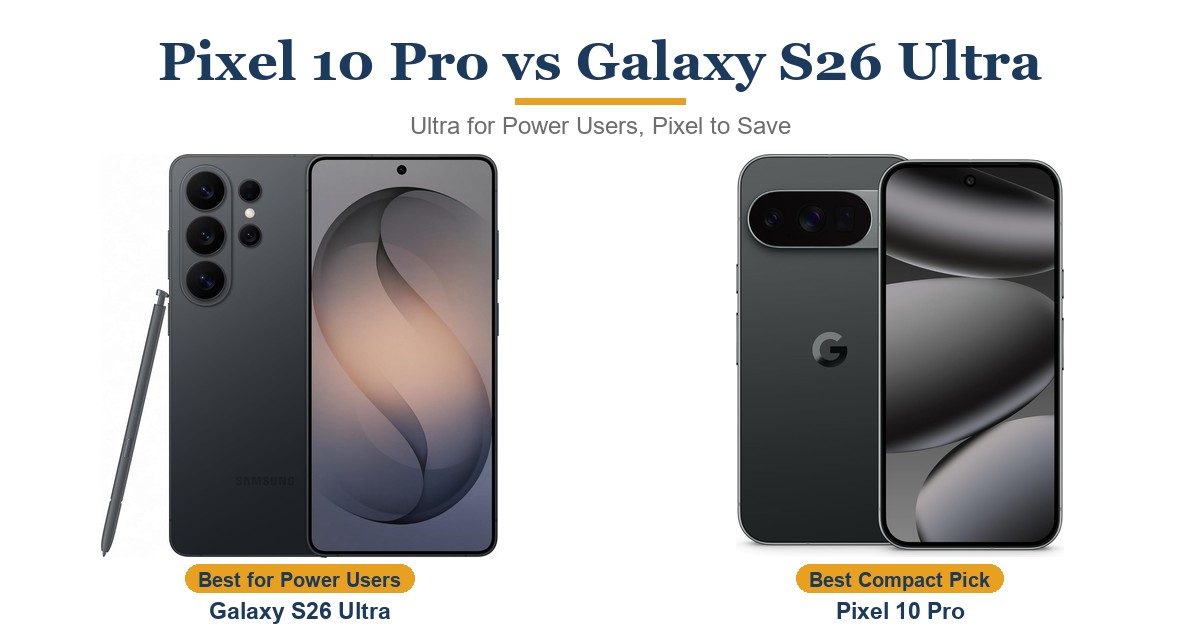
The Pixel 11 Pro is its successor, and the Galaxy S26 Ultra is Samsung’s camera-first flagship in a much bigger body.
| Feature | Google Pixel 10 Pro | Google Pixel 11 Pro | Samsung Galaxy S26 Ultra |
|---|---|---|---|
| Price (USD) | $795.00 (128GB) | $1,034.69 (256GB) | $1,049.99 (256GB) |
| Screen size | 6.3-inch | 6.3-inch | 6.9-inch |
| Weight (maker) | 207 g (7.3 oz) | 204 g (7.2 oz) | 214 g |
| Battery (typical capacity) | 4,870 mAh | 4,850 mAh | 5,000 mAh |
| Longest optical zoom camera | 48 MP, 5x optical | 48 MP, 5x optical | 50 MP, 5x optical |
| Chip | Google Tensor G5 | Google Tensor G6 | Snapdragon 8 Elite Gen 5 for Galaxy |
| RAM (model priced) | 16 GB | 12 GB | 12 GB |
| TTP Review | This review ↑ | — | Read our review → |
| Amazon | View on Amazon | View on Amazon | View on Amazon |
Prices change frequently — always verify current pricing before purchasing.
Google Pixel 10 Pro: Worth It as the Compact Camera Pick
Buy it if you want Google’s cameras and software in a phone that fits a pocket, and you would rather not pay for the newest model. Reviews of its successor back that up: TechRadar found the Pixel 11 Pro nearly matches it on every spec, and in a sales-season piece it still recommended the discounted Pixel 10 Pro. If you take a lot of photos and video, Thurrott’s advice is to get at least 256GB rather than the 128GB model priced here.
Look elsewhere if you want a bigger screen: the Galaxy S26 Ultra pairs a 6.9-inch display with a 200 MP main camera and Qualcomm’s Snapdragon 8 Elite Gen 5 for Galaxy. The Galaxy S26 is the lighter choice at 167 g. And if the newest camera software matters to you, the Pixel 11 Pro adds Magic Capture, which TechRadar called “truly magical”, along with a brighter screen.


Sources
- Google — Pixel 10 Pro and Pixel 10 Pro XL Tech Specs
- Google Pixel 10 Pro — Amazon Product Listing
- Tom’s Guide — Google Pixel 10 Pro Review: A Great Phone, But it Doesn’t Feel Like Much of an Upgrade
- GSMArena — Google Pixel 10 Pro review
- GSMArena — Google Pixel 10 Pro review: Design, build quality, handling
- GSMArena — Google Pixel 10 Pro review: Lab tests, display, battery life and charging speed
- GSMArena — Google Pixel 10 Pro review: Competition, verdict, pros and cons
- 91mobiles — Google Pixel 10 Pro review
- Thurrott — Google Pixel 10 Pro Review
- Digital Trends — Google Pixel 10 Pro review
- TechRadar — Google Pixel 11 Pro review: more of the same, and that’s okay
- TechRadar — The Pixel 11 Pro’s Magic Capture feature is truly magical, but I’d still buy the cheaper Pixel 10 Pro this sales season
- ITdaily — Google Pixel 11 Pro review
- PhoneArena — Pixel 11 Pro vs Pixel 10 Pro: All the differences explained
- HotHardware — Google Pixel 11 Series Review
- Google — Pixel 11 Pro and Pixel 11 Pro XL Tech Specs
- Samsung — Galaxy S26 and S26+
- Samsung — Galaxy S26 Ultra
Reader Poll
What would you give up to pay less for a flagship Pixel?
Help Our Editors Know What Matters to You
Explore on Amazon →