How to Choose a Portable Power Station for Camping (2026)
Capacity, charging speed, and output ratings all sound similar on a spec sheet — here’s what actually separates a power station that keeps up with you from one that leaves you waiting around a wall outlet.

How We Researched
3 portable power stations compared across capacity, charging speed, output, portability, and warranty — drawing on manufacturer specs, published testing from TechRadar and Reviewed.com, and current Amazon listings. No paid placement — badges and scores reflect editorial judgment only.
* As an Amazon Associate I earn from qualifying purchases. Disclosure
What You’ll Learn
- How much capacity you actually need for a weekend trip versus a multi-day outage
- Why charging speed matters more than most buyers assume
- What “continuous” versus “peak” wattage really means for your appliances
- How portability trades off against raw power output
- Why battery warranty length can matter more than the spec sheet
3 products in this guide
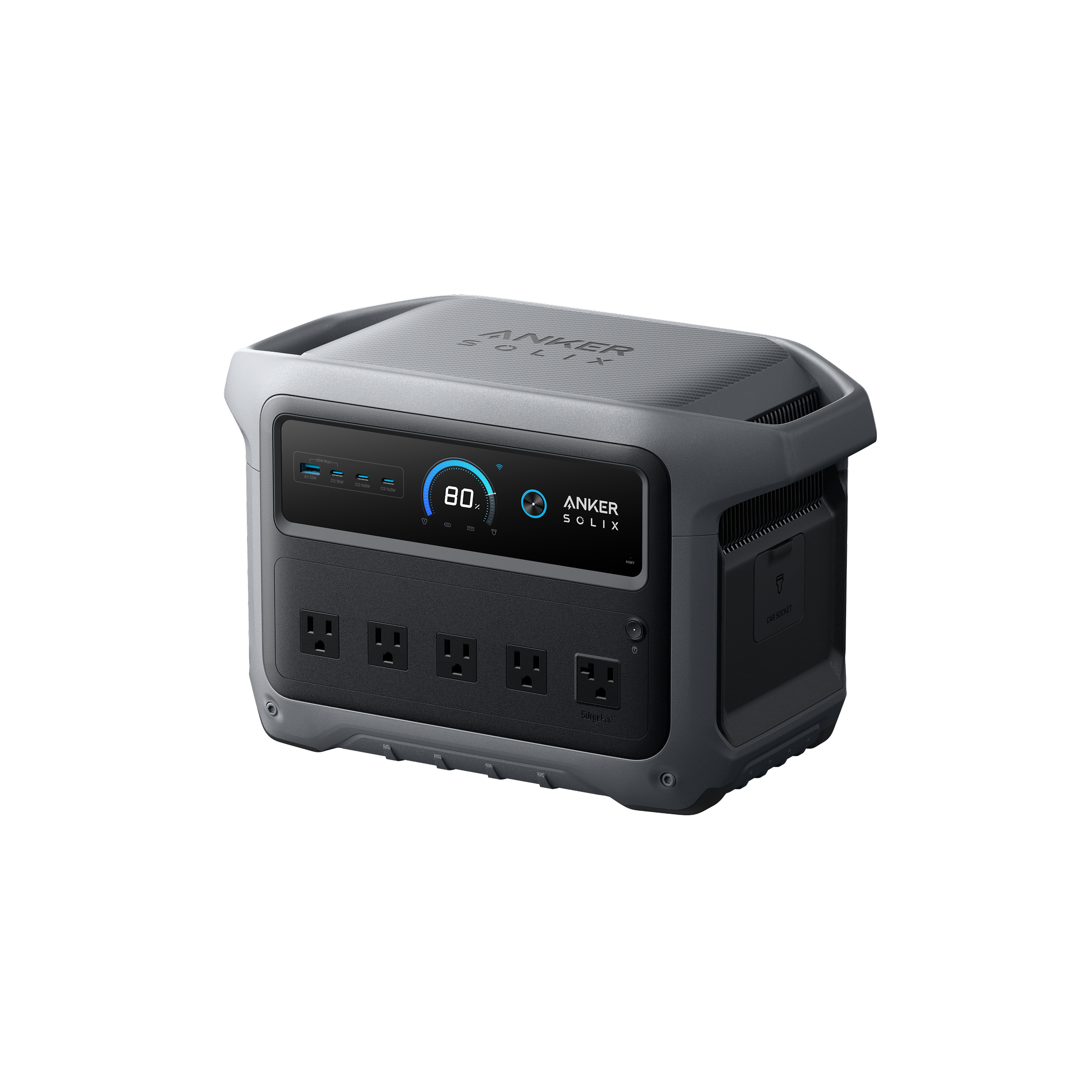
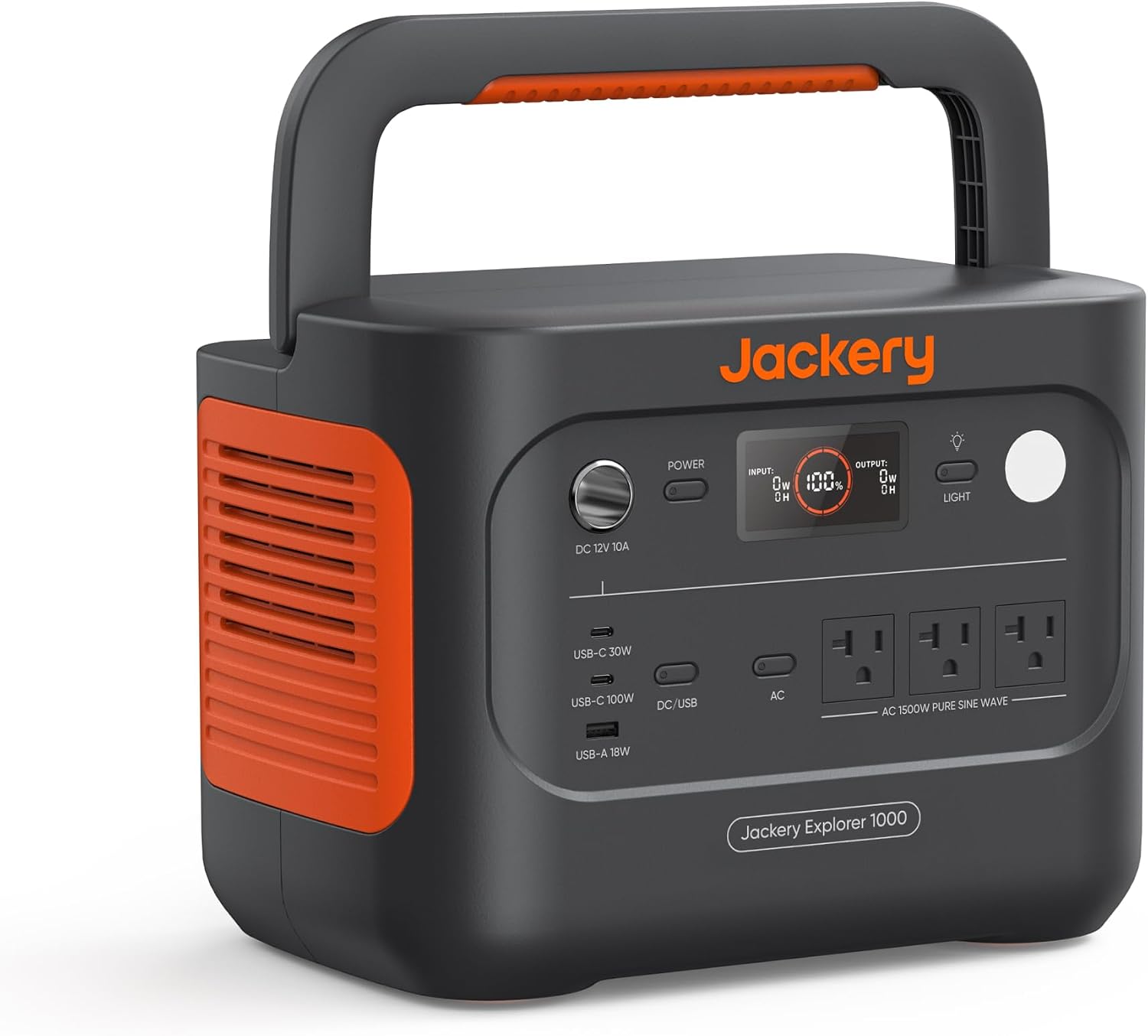
Choosing a portable power station for camping should start with a confession: most people over-buy capacity and under-think charging speed. A 1,000Wh-class unit covers a surprising amount of ground on a camping trip — a weekend of phone charging, a mini fridge through a blackout, a laptop and a few lights — and the real differences between models show up in how fast they recover, how much they can run at once, and how long the battery inside actually lasts. Three products anchor this guide: a fridge-dedicated backup battery, a fast-charging generalist, and a long-warranty all-rounder, each built around a different priority.
Battery Capacity & Runtime
Capacity is measured in watt-hours (Wh) — the total energy a station can store and release before it’s empty. A 1,000Wh-class unit is the sweet spot for most buyers: enough to run a full-size fridge for roughly a day, or keep a laptop, phone, and a few lights going for a multi-day trip without a recharge.
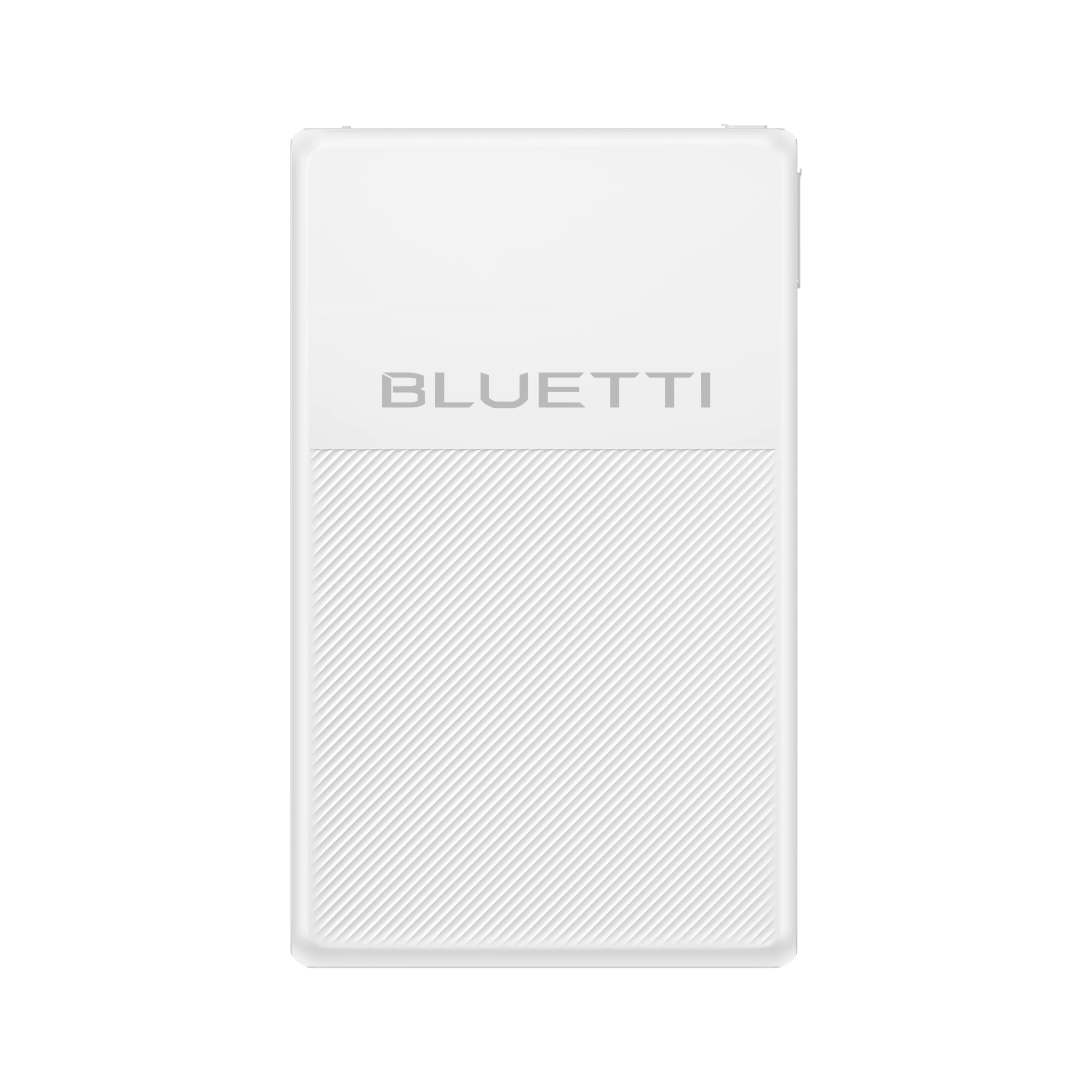
Real-world runtime depends entirely on what’s plugged in. Reviewed.com clocked the BLUETTI FridgePower keeping a full-size refrigerator running for more than 30 hours on its base 2,016Wh pack, while a station running a mix of small electronics can stretch a similar capacity across several days.
When it matters: if you’re planning for a multi-day outage or running a single high-draw appliance like a fridge or sump pump continuously.
When it doesn’t: if your use case is topping off phones, laptops, and small devices — almost any 1,000Wh-class unit covers that with room to spare.
Match capacity to your single biggest continuous load, not your total device count — a fridge or heater will drain a battery long before your phone charger does.
Charging Speed
Recharge time is the spec buyers underrate most. A station that takes an hour to top off can be topped up between camp activities or ahead of an incoming storm; one that takes three or four hours effectively needs an overnight commitment before it’s ready again.
The gap between models is real: the fastest units in this class hit a full charge in under an hour, while others need closer to two. That difference compounds over a multi-day trip where charging windows — a generator running for an hour, a brief return to civilization — are short and unpredictable.
When it matters: multi-day camping trips with limited charging windows, or weather emergencies where you’re racing a forecast.
When it doesn’t: a station that lives plugged in at home as dedicated backup power rarely needs a fast recharge — it’s already topped off and waiting.
If your power station travels with you, prioritize charge time. If it stays plugged in as home backup, capacity and warranty matter more than speed.
AC Output & What It Can Actually Power
Continuous output is the wattage a station can sustain indefinitely; peak or surge output is a short burst for the moment an appliance’s motor kicks on. A compressor-based device — a fridge, a window AC unit, a power tool — draws far more at startup than while running, so a station needs headroom above an appliance’s rated wattage, not just enough to match it.
A 1,500–2,000W continuous rating covers most single-appliance use cases: a coffee maker, a space heater, a full-size fridge. Running two demanding devices simultaneously is where the gap between models shows up — a station with a higher peak rating and features like Anker’s SurgePad handle that scenario more gracefully than one running closer to its ceiling.
When it matters: running compressor-based appliances, power tools, or multiple devices simultaneously during an outage.
When it doesn’t: charging phones, laptops, and other low-draw electronics — virtually any station in this class handles that without strain.
Check an appliance’s startup wattage, not just its running wattage, against a station’s continuous output rating before assuming it’ll handle the load.
Portability & Form Factor
Most 1,000Wh-class power stations weigh between 20 and 25 pounds and stand as a boxy, rolling-cooler-shaped unit — fine for a car trunk, less fine for a hiking pack. A handful of designs break that mold: slim, fixed-install units built to hide behind furniture rather than travel, trading portability for a smaller footprint at home.
The right form factor depends entirely on whether the station moves or stays put. A dedicated home-backup unit benefits from a slim profile that disappears into a utility space; a camping companion needs a comfortable handle and a weight one person can lift without help.
When it matters: tight installation spaces at home, or if you’re the one carrying the unit any real distance.
When it doesn’t: a station that lives in a car trunk or garage shelf rarely needs to be featherweight — a few extra pounds is a non-issue if it’s never carried far.
A slim, install-and-forget design solves a different problem than a portable, grab-and-go one — decide which problem you actually have before comparing weight specs.
Warranty & Battery Lifespan
LiFePO4 cells — standard across every station in this guide — are rated for thousands of charge cycles, typically 3,000 to 4,000 before capacity drops to 80% of new. In practice, that means a decade or more of regular use. Warranty length is where manufacturers signal how much they trust that number: a longer term usually reflects genuine confidence in cell longevity, not just marketing.
Coverage varies more than buyers expect — some manufacturers offer as little as two years standard, while others stack a standard term with an extended-coverage option that can reach five years combined. For a purchase meant to sit untouched for months between uses, that gap matters more than it would for a gadget in daily rotation.
When it matters: any purchase you expect to keep for years, especially one meant for infrequent emergency use rather than daily cycling.
When it doesn’t: if you’re buying primarily for a single trip or short-term need, warranty length is a lower priority than price or capacity.
A longer warranty on the same cell chemistry is a real signal, not just marketing — check the fine print on standard versus extended coverage before comparing years head to head.
Quick Comparison
| BLUETTI FridgePower | Anker SOLIX C1000 Gen 2 | Jackery Explorer 1000 v2 | |
|---|---|---|---|
| Price (USD) | $1,499.00 | $549.99 | $499.00 |
| Capacity | 2,016Wh | 1,024Wh | 1,070Wh |
| Continuous Output | 1,800W | 2,000W | 1,500W |
| Charge Time | N/A (fixed install) | 49 min (full) | 1 hr (to 80%) |
| Warranty | Not published | Not published | 5 years |
| Our Score | 4.1/5 | 4.4/5 | 4.0/5 |
| Amazon | View on AmazonView on Amazon | View on AmazonView on Amazon | View on AmazonView on Amazon |
Our Verdict
There’s no single “best” portable power station here — the right pick depends on whether the battery travels with you or stays plugged in. For dedicated fridge backup in a fixed spot, the BLUETTI FridgePower’s slim install-and-forget design solves a problem the other two don’t even attempt to address. For camping trips with short, unpredictable charging windows, the Anker SOLIX C1000 Gen 2’s 49-minute recharge is the standout spec. For buyers who want the safest long-term bet without chasing the fastest numbers, the Jackery Explorer 1000 v2’s 5-year warranty is hard to match at the same price.
If forced to pick one all-purpose station for a typical camping-and-backup household, the Jackery Explorer 1000 v2’s balance of warranty, weight, and output makes it the easiest to recommend without a caveat.
Browse all Tech & Gadgets reviews → Browse all Tech & Gadgets reviews →
Frequently Asked Questions
How much capacity do I actually need for a weekend camping trip?
Is a fast-charging station worth paying more for?
Can a portable power station run a full-size refrigerator?
Does a longer warranty actually mean a better battery?
What’s the difference between continuous and peak wattage?
Which One Is Right for You?
Best for Fridge Backup
Bottom line: A slim, fixed-install battery built to disappear behind a fridge and switch over automatically during an outage.
Fastest Charging
Bottom line: The fastest-charging station here, ready for another outing again within the hour.
Best Warranty
Bottom line: The best all-around bet, backed by a warranty well beyond what most rivals offer.