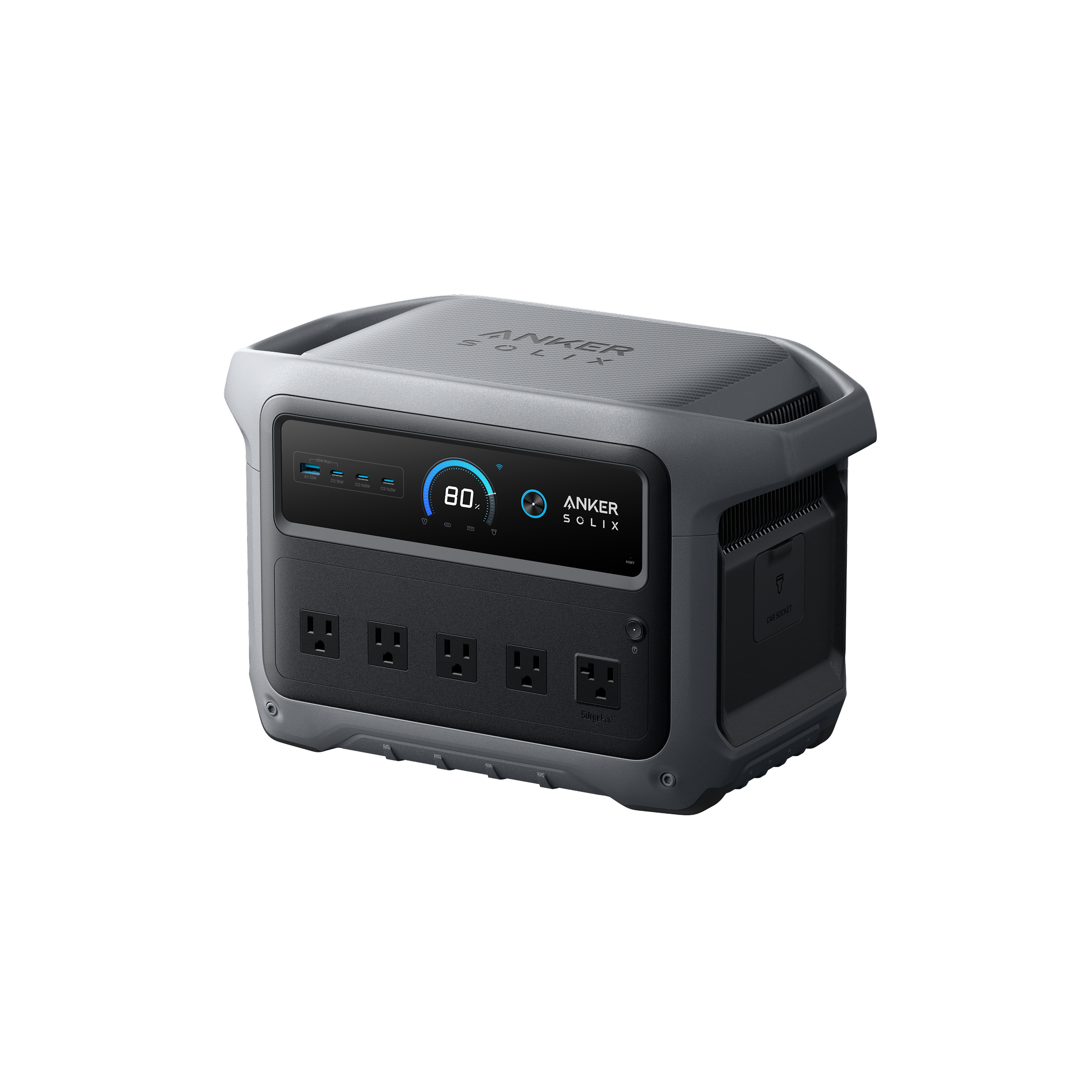
The Anker SOLIX C1000 Gen 2 is built for campers and homeowners who want backup power that recharges fast enough to keep up with a busy weekend or a multi-day outage. Its 49-minute full charge and 3,000W peak output put it ahead of most 1,000Wh-class rivals when something needs power right now, and the companion app adds real scheduling and monitoring convenience. At $799 MSRP, though, it costs meaningfully more than similarly sized options like the EcoFlow DELTA 2 — a premium buyers are paying mostly for speed.
Pros
- 49-minute full charge from empty, among the fastest in its capacity class
- 2,000W continuous output with a 3,000W peak for high-draw devices
- 10ms UPS switchover keeps sensitive electronics running through outages
- Anker app adds scheduling, SurgePad output boost, and remote monitoring
- 9W standby draw, well below the category average
Cons
- Costs more than similar-capacity rivals like the EcoFlow DELTA 2
- At 24.9 lbs, it's too heavy to carry far on foot
- 600W solar input needs an XT60i-compatible panel, not the more common MC4 connector
Overview
A dead phone during a weekend camping trip is an inconvenience. A dead sump pump or medical device during a multi-day grid outage is something else entirely. Anker’s SOLIX C1000 Gen 2 is built to cover both scenarios at once — a 1,024Wh LiFePO4 power station that recharges from empty to full in 49 minutes, fast enough to top off between hikes or catch up after an unplanned power draw at home.
Capacity alone doesn’t set this generation apart — plenty of 1,000Wh-class rivals match it. Recovery speed does: a 2,000W continuous output (3,000W peak via the Anker app’s SurgePad feature) means it can run a coffee maker, a CPAP machine, or a small space heater without tripping, while still being light enough at 24.9 lbs to load into a trunk for a camping trip.
Key Specifications
| Battery Capacity | 1,024Wh LiFePO4 (4,000 cycles to 80% capacity) |
| AC Output | 2,000W continuous / 3,000W peak (SurgePad) |
| Full Charge Time | 49 minutes (1,600W max AC input) |
| Solar Input | Up to 600W (XT60i, 11–60V) |
| Dimensions | 15.12 x 8.19 x 9.61 in (38.4 x 20.8 x 24.4 cm) |
| Weight | 24.9 lbs (11.3 kg) |
| Ports | 5x AC outlets, 2x 140W USB-C, 1x USB-A, 1x 120W car port |
| Standby Draw | 9W (37.5% below the category average, per Anker) |
Anker SOLIX C1000 Gen 2 Charging Speed & Power Output
The 49-minute full charge is the headline number, and it holds up against the rest of the 1,000Wh class: EcoFlow’s DELTA 2 needs roughly 80 minutes to reach 80%, and even BLUETTI’s fast-charging AC180 takes 45 minutes to hit the same 80% mark. Anker gets there by accepting up to 1,600W of AC input, which also means a full battery is realistic between a morning hike and an afternoon one rather than an overnight commitment.
Output is equally aggressive. The base 2,000W continuous rating already covers most kitchen appliances and power tools, and enabling UltraFast Mode and SurgePad in the Anker app unlocks a 3,000W peak for handling startup surges from compressor-based devices like mini fridges or window AC units. The 10ms UPS switchover means a connected router or medical device doesn’t notice the grid dropping out.
Portability & Build Quality
At 24.9 lbs, the C1000 Gen 2 sits in an awkward middle ground — too heavy to comfortably carry any real distance on foot, but light enough for one person to lift into a car trunk or set up at a campsite without help. The Gadgeteer’s hands-on review noted the handle and boxy chassis feel solidly built, with a rubberized base that keeps it from sliding around during transport.
The trade-off for that solid feel is bulk: at roughly 15 x 8 x 10 inches, it takes up meaningfully more trunk or closet space than lighter-duty options built for backpacking rather than car camping or home backup.
App Control & Smart Features
The Anker app is where the C1000 Gen 2 pulls ahead of cheaper rivals on convenience rather than raw specs. Beyond basic monitoring, it handles scheduling (charge overnight on off-peak rates, for example), toggles UltraFast recharge mode, and activates SurgePad to temporarily push past the unit’s native 2,000W ceiling for a single high-draw device.
None of this is unique to Anker in isolation, but the combination — fast native charging plus an app that can push performance further on demand — is a genuine differentiator against power stations that ship with a companion app in name only.
How Does It Stack Up Against the Competition?
The C1000 Gen 2 competes directly against a handful of similarly sized 1,000–1,150Wh power stations aimed at the same camping-and-backup crowd.
| Feature | Anker SOLIX C1000 Gen 2 | EcoFlow DELTA 2 | BLUETTI AC180 | Jackery Explorer 1000 v2 |
|---|---|---|---|---|
| Price (USD) | $799 MSRP | ~$399 | ~$499 | ~$429 |
| Capacity | 1,024Wh | 1,024Wh | 1,152Wh | 1,070Wh |
| AC Output (Continuous) | 2,000W | 1,800W | 1,800W | 1,500W |
| Full Charge Time | 49 min | ~80 min (to 80%) | 45 min (to 80%) | ~1 hr |
| TTP Review | This review ↑ | — | Read our review → | Read our review → |
Prices change frequently — always verify current pricing before purchasing.
Is the Anker SOLIX C1000 Gen 2 Worth It?
The SOLIX C1000 Gen 2 makes the most sense for buyers who value speed over saving every dollar — campers who want a full battery between outings, or homeowners who want backup power that’s ready again within the hour rather than tied up recharging overnight. The 3,000W peak output and 10ms UPS switchover also make it a credible pick for running a mix of sensitive electronics and higher-draw appliances during an outage.
Buyers on a tighter budget who don’t need the fastest possible recharge should look at the EcoFlow DELTA 2, which matches the 1,024Wh capacity for roughly half the price at the cost of a much slower charge cycle. The C1000 Gen 2’s $799 MSRP is a real premium for that speed, even though it frequently sells below list price during Amazon promotions.
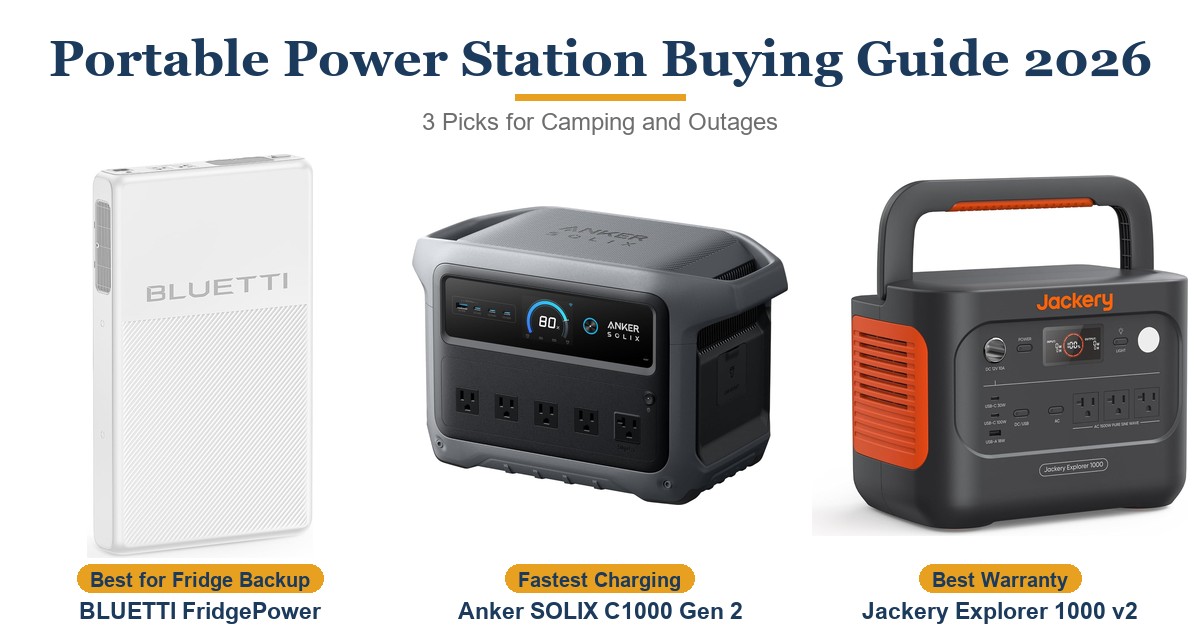
Still comparing power station options? See our How to Choose a Portable Power Station for Camping in 2026 →Still comparing power station options? See our How to Choose a Portable Power Station for Camping in 2026 →
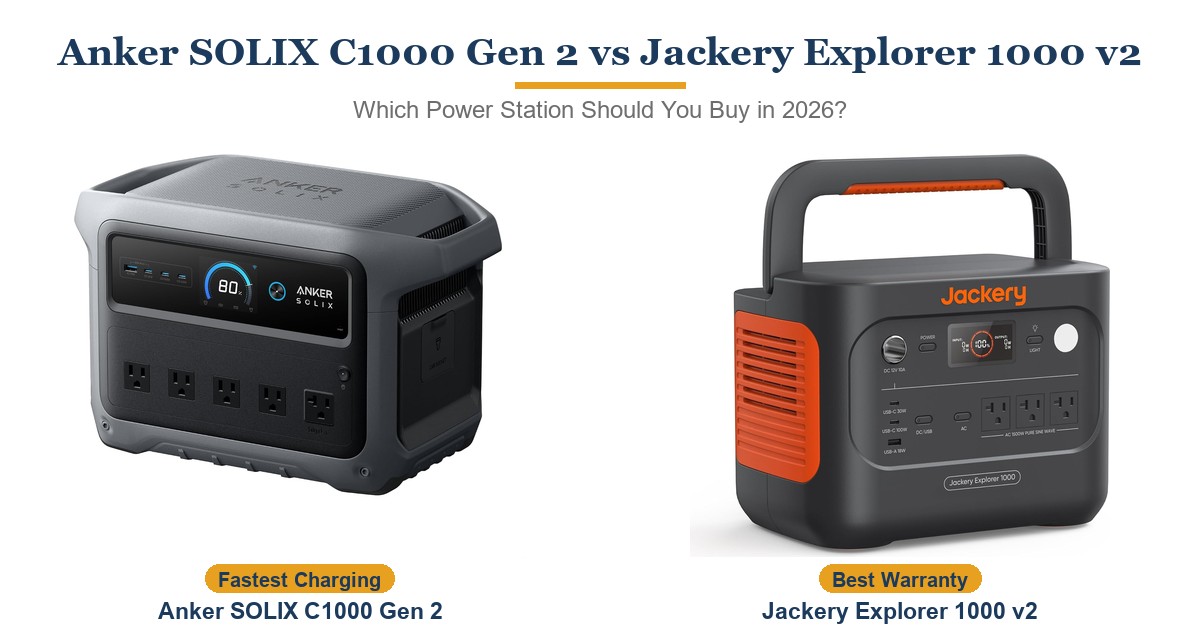
Still comparing portable power station options? See our Anker SOLIX C1000 Gen 2 vs Jackery Explorer 1000 v2 →Still comparing portable power station options? See our Anker SOLIX C1000 Gen 2 vs Jackery Explorer 1000 v2 →
Check the latest price for Anker SOLIX C1000 Gen 2