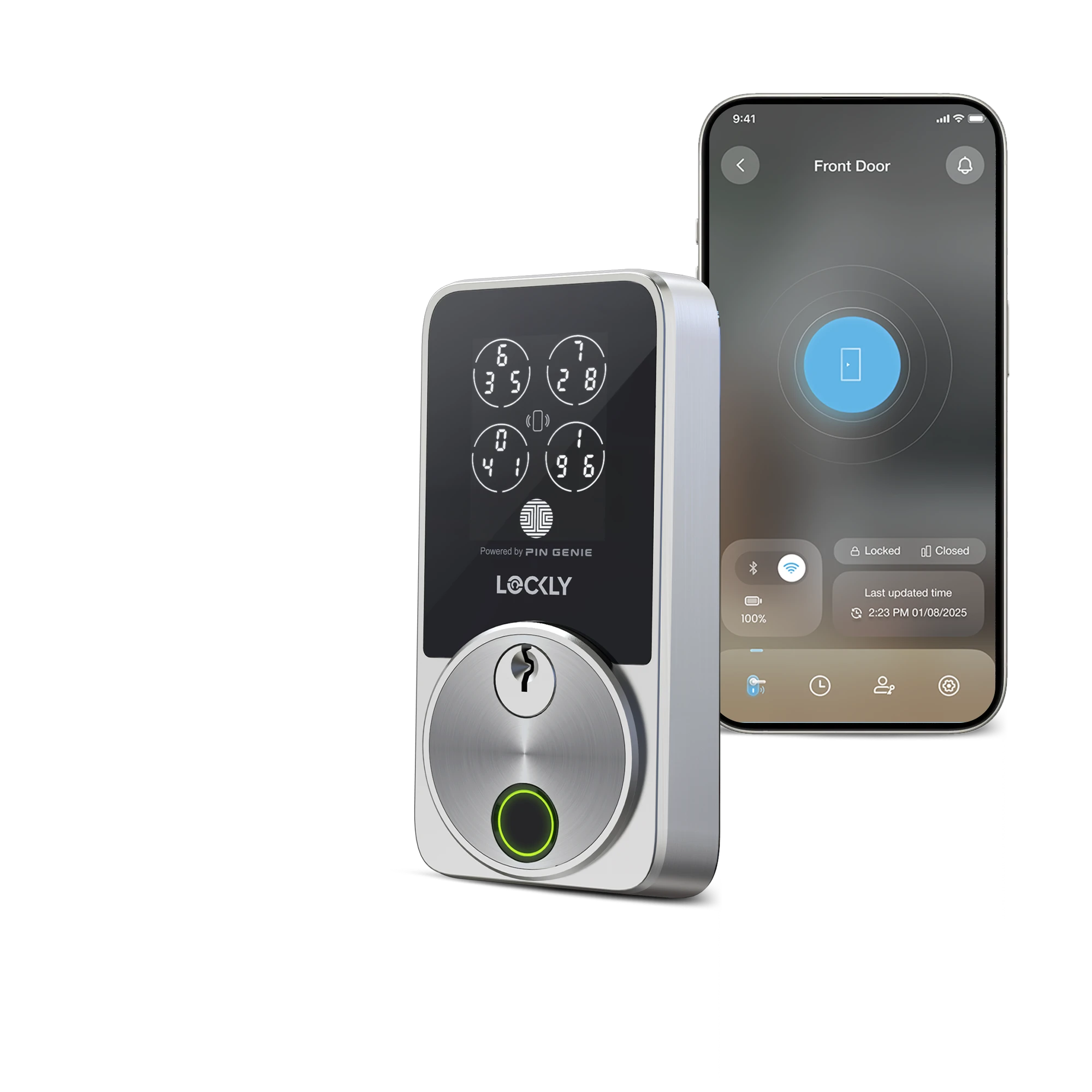
A fingerprint sensor, Apple Home Key, PIN Genie codes, and voice control all work on the Lockly Secure Pro Zeno without adding a separate Wi-Fi hub — a rare combination on one deadbolt. The Gadgeteer's cold-weather testing backs up the fingerprint sensor's reliability, and the USB-C backup port means dead AA batteries never lock anyone out. It's bulkier than slimmer rivals like the Yale Assure Lock 2, and a subset of owners report the Wi-Fi connection needing an occasional re-pair.
Pros
- 3D fingerprint sensor unlocks in about 0.2 seconds and stores up to 99 prints
- Apple Home Key, Siri, Alexa, and Google Assistant all work without a separate hub
- PIN Genie keypad shuffles digits so a passcode can't be shoulder-surfed
- USB-C backup port powers an instant unlock if the AA batteries die
- IP65 weatherproofing and a 5-year mechanical warranty
Cons
- Some owners report the Wi-Fi connection dropping and needing periodic re-pairing
- Bulkier profile than slimmer rivals like the Yale Assure Lock 2
- Costs about $100 more than August's retrofit Wi-Fi lock
Overview
Losing a house key, or handing one to a dog walker who never gives it back, is the exact headache Lockly’s Secure Pro Zeno Series tries to make obsolete. Instead of a single access method, this deadbolt reads a 3D fingerprint scan in about 0.2 seconds, accepts a shuffled PIN Genie code, unlocks with a tap of an iPhone or Apple Watch via Apple Home Key, or responds to Siri, Alexa, or Google Assistant — all through the lock’s own built-in Wi-Fi, with no separate hub to buy or plug in.
That combination puts the Secure Pro Zeno in a narrower field than most Wi-Fi deadbolts, which usually pick one flagship access method and treat the rest as an afterthought. It’s priced at $329.00 on Lockly’s own site and Amazon — closer to Schlage’s Home Key flagship than to retrofit locks like August’s — and Lockly backs the hardware with a 5-year mechanical and finish warranty plus a 2-year warranty on the electronics.
Key Specifications
| Access Methods | 3D fingerprint (99 max), PIN Genie keypad (65 codes), Apple Home Key, app, Siri/Alexa/Google Assistant |
| Fingerprint Recognition Speed | Approx. 0.2 seconds |
| Connectivity | Built-in Wi-Fi — no separate hub required |
| Power | 4x AA alkaline batteries (approx. 5 months), USB-C emergency backup port |
| Weatherproofing | IP65-rated |
| Durability | Pressure tested to 2,200N; rated for 250,000 lock/unlock cycles |
| Door Compatibility | 1 3/8 to 3 1/8 inch standard (extension kit fits up to 4 3/4 inch) |
| Material | Zinc alloy body |
| Price | $329.00 |
Lockly Secure Pro Zeno Fingerprint & Access Methods
The 3D biometric sensor is the headline feature, and it’s a genuine biometric scan rather than the flat 2D fingerprint pads found on cheaper locks — Lockly says the added depth data makes it harder to spoof with a printed or molded copy. It stores up to 99 fingerprints, enough for a large household plus regular visitors, and pairs with a PIN Genie keypad that shuffles which digits appear where each time, so a code can’t be guessed from worn keys or a shoulder-surfed glance. The Gadgeteer’s hands-on review reported the sensor performing “flawlessly” through a New York winter, unlocking on the first try even in freezing temperatures — a real test for biometric sensors, which often struggle with cold, dry skin.
Apple Home Key support means an iPhone or Apple Watch already in a pocket can tap the lock’s face to open it, no app required, and Siri, Alexa, or Google Assistant can each trigger a voice unlock. Having four independent methods — fingerprint, PIN, Home Key, and voice — matters less for the everyday unlock and more as a backstop: a fingerprint that won’t read in wet weather, a dead phone battery, or a keypad a guest hasn’t learned yet each have a fallback built in, rather than leaving the whole household locked out over one failure point.
Smart Home Connectivity & Voice Control
Because the Wi-Fi radio is built into the lock itself, setup skips the separate bridge or hub that several competitors still require for remote access. The Lockly Home app handles eKeys for temporary guest access, a Welcome Mode that unlocks automatically as an owner approaches, Offline Codes for a lockout with no internet, and Air Transfer to move user profiles between other Zeno Series locks on the same property — useful for a garage door and a front door managed as one system.
The trade-off of a lock doing more networking on its own: a subset of buyer reviews on Amazon and Home Depot’s product pages mention the Wi-Fi connection occasionally dropping and needing a manual re-pair, along with the door-position sensor losing sync more often than the lock mechanism itself does. It’s not a majority complaint — the lock carries a 4.3-star average across roughly 1,200 combined reviews — but it’s worth knowing before assuming a set-and-forget connection.
Battery Life & Backup Power
Four AA alkaline batteries are rated for about 5 months of regular use, in the same range as most Wi-Fi deadbolts in this price bracket — none of them meaningfully out-lasts the others once Wi-Fi radio drain is factored in. What sets the power setup apart is the USB-C port hidden on the underside of the interior housing: touching a portable battery pack to it delivers enough charge to unlock the door immediately, even with the AAs fully dead, without needing to remove the housing or carry a 9-volt battery as a jump-start the way many older smart locks require.
That backup port matters more here than on a lock with a single access method, since a dead battery on a fingerprint-and-keypad-only design usually means being locked out entirely until new AAs are found. With Home Key and voice control as additional fallbacks alongside the USB-C port, the Secure Pro Zeno effectively has three ways around a battery failure rather than one.
How Does It Stack Up Against the Competition?
Fingerprint access and Apple Home Key both show up elsewhere, but rarely in the same lock — here’s how the Secure Pro Zeno compares to three of the category’s other leaders.
| Feature | Lockly Secure Pro Zeno | Schlage Encode Plus | Yale Assure Lock 2 | August Wi-Fi Smart Lock (4th Gen) |
|---|---|---|---|---|
| Price (USD) | $329.00 | ~$319 | ~$299 | ~$229 |
| Fingerprint Sensor | Yes — 3D biometric | No | Optional (Touch model) | No |
| Apple Home Key | Yes | Yes | No | No |
| Hub Required for Wi-Fi | No — built in | No — built in | Bridge included on Wi-Fi models | Bridge included |
| Install Type | Replaces existing deadbolt | Replaces existing deadbolt | Replaces existing deadbolt | Retrofits over existing deadbolt, keeps your key cylinder |
Prices change frequently — always verify current pricing before purchasing.
Is the Lockly Secure Pro Zeno Worth It?
For a household that wants a genuine fingerprint reader, Apple Home Key, and voice control on one deadbolt without adding a separate Wi-Fi bridge, the Secure Pro Zeno covers more entry methods than almost anything else at this price. The Gadgeteer’s cold-weather testing and a large, mostly positive review base back up the core promise: the biometric sensor works as advertised, and the USB-C backup port is a genuinely useful safety net most rivals skip.
Anyone who finds it visually bulky, or who would rather keep an existing key cylinder intact, is better served by August’s retrofit design or the slimmer-profile Yale Assure Lock 2. And the recurring Wi-Fi re-pairing complaints from a minority of owners are worth weighing against a router placement that may need to sit closer to the front door than expected.
Check the latest price for Lockly Secure Pro Zeno
Reader Poll
What matters most to you in a smart deadbolt like this?
Help Our Editors Know What Matters to You
Explore on Amazon →