Best AI Voice Recorders 2026: Plaud NotePin S vs Note Pro
Three wearable and desktop AI recorders, one shared transcription engine — here’s which Plaud device actually fits how you record.

How We Researched
3 AI voice recorders considered, all from Plaud’s current lineup — the category leader for wearable and desktop AI transcription. Findings drawn from PCWorld, TechRadar, The Gadgeteer, Layer3Labs, Dapper and Groomed, and CodeInclusive testing, plus verified manufacturer specs. No paid placement — badges and scores reflect editorial judgment only.
* As an Amazon Associate I earn from qualifying purchases. Disclosure
What You’ll Learn
- Which recorder fits all-day wearable use vs. desk/meeting use
- How much a subscription adds on top of the hardware price
- Why a physical button beats a touch surface for reliability
- Whether 20 hours of recording is enough, or you need 50-hour Endurance Mode
- What you give up going with the cheapest model
- When a plain, non-AI recorder still makes sense
The ranking
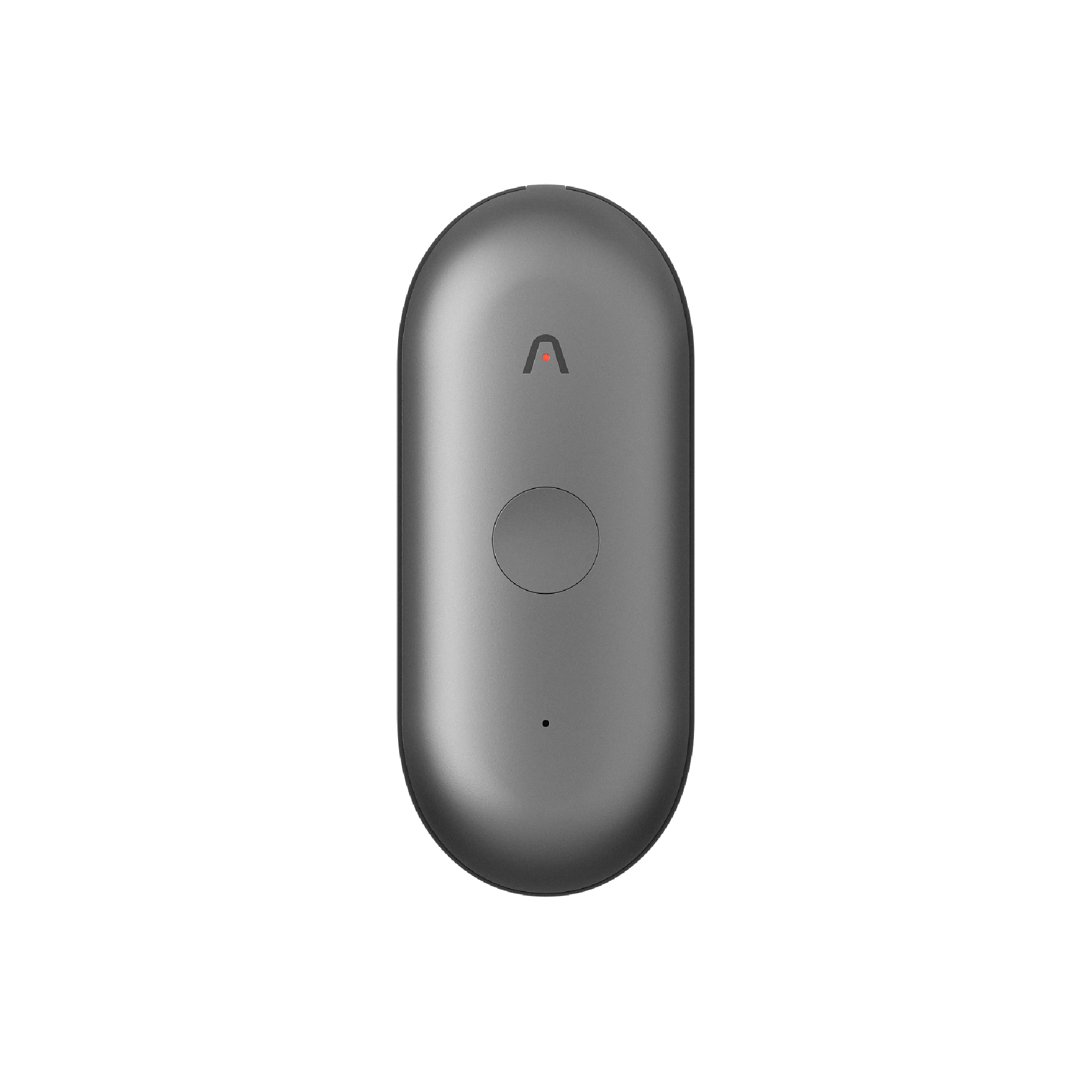
All-day wearable with the physical button fix and a full day of meeting coverage.
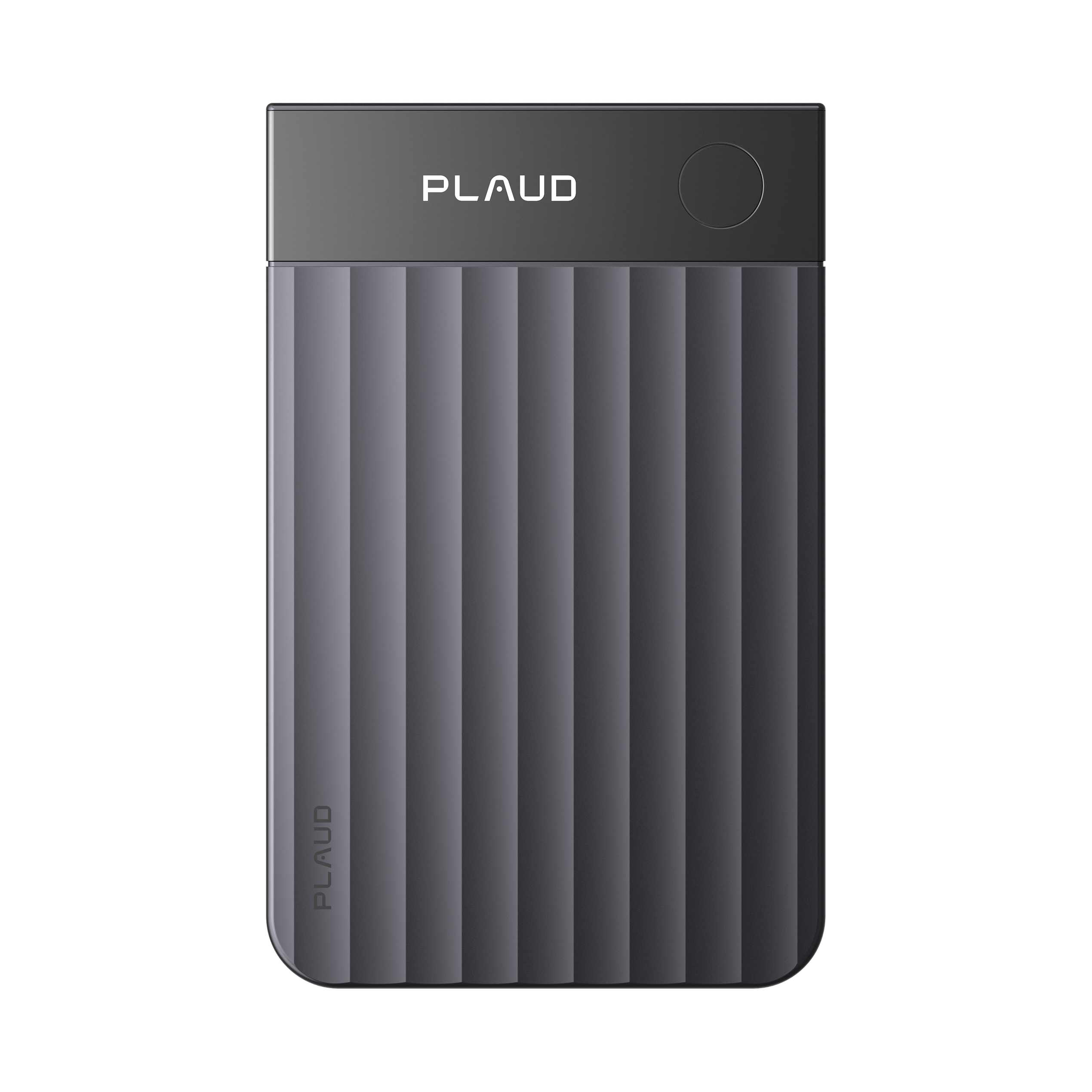
Desk-ready with a 50-hour Endurance Mode and a four-microphone array built for conference rooms.
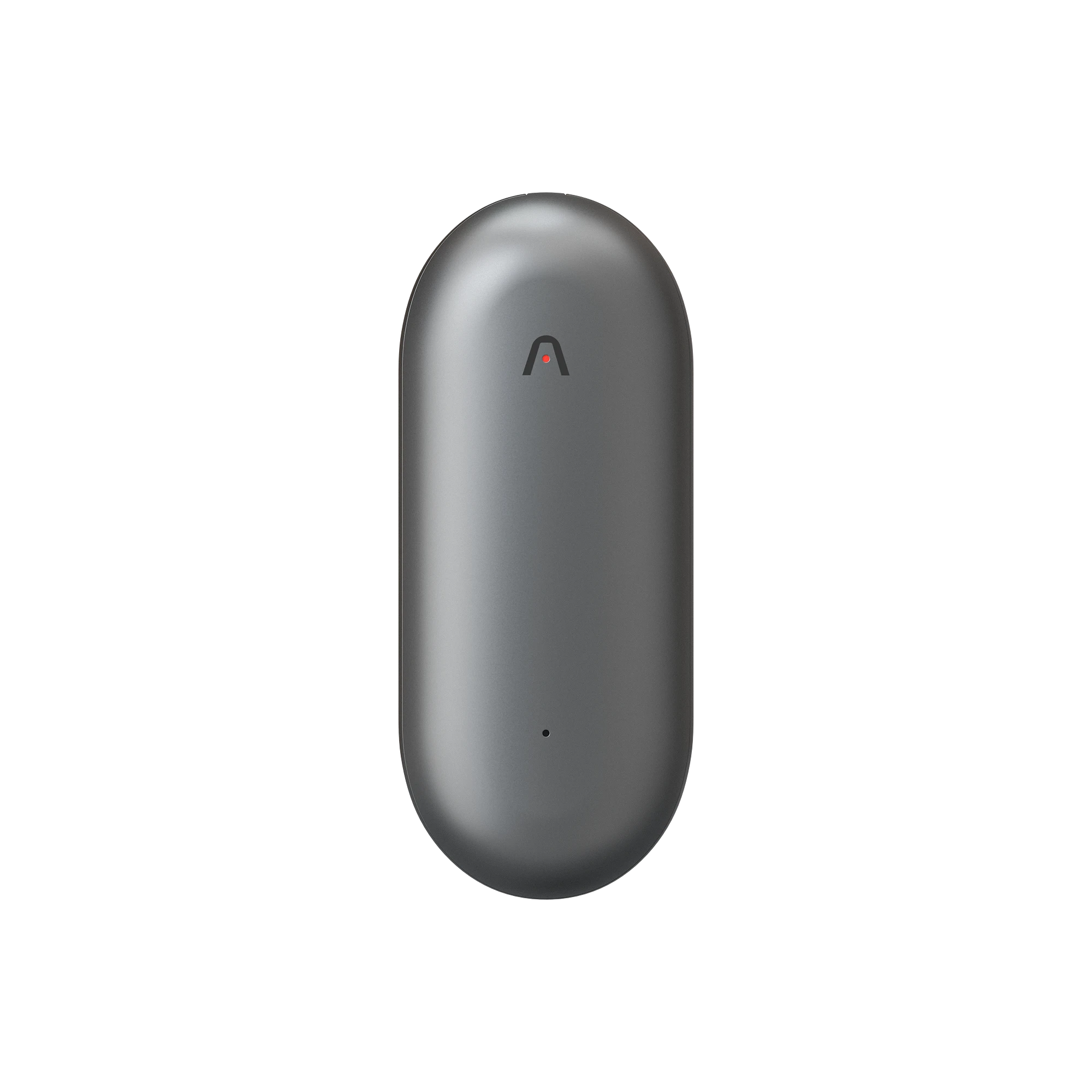
Same 112-language transcription engine for $20 less, with a touch surface instead of a button.
If you’ve searched for the best AI voice recorders 2026 has to offer, chances are you’ve landed on Plaud — the wearable-AI-recorder category leader has three current devices, each built for a different way of recording. We looked at all three: the button-equipped NotePin S, the desk-focused Note Pro, and the original budget NotePin. Same 112-language transcription engine underneath, but real differences in battery life, form factor, and how each one holds up in daily use.
1. Plaud NotePin S — Best Overall
The “S” in NotePin S exists for one reason: a real physical button, fixing the pressure-sensitive touch surface that tripped up early NotePin owners. According to Layer3Labs’ hands-on review, the dual MEMS microphones pick up clear audio from roughly 9.8 feet away, enough to cover a conference-room table without passing the device around, and 112-language transcription with automatic speaker labeling carries over from the rest of the Plaud line.
At 17.3 grams and rated for 20 hours of continuous recording plus 40 days of standby, it’s built to disappear on a lanyard, pin, or wristband through a full day of back-to-back meetings. The button doubling as a visible “recording started” cue is also a real advantage over always-listening wearables, several of which have drawn workplace pushback for recording without a clear signal.
Best for: anyone who wants one recorder for interviews, lectures, and meetings and doesn’t want to think about which mode they’re in.
2. Plaud Note Pro — Best for Meetings
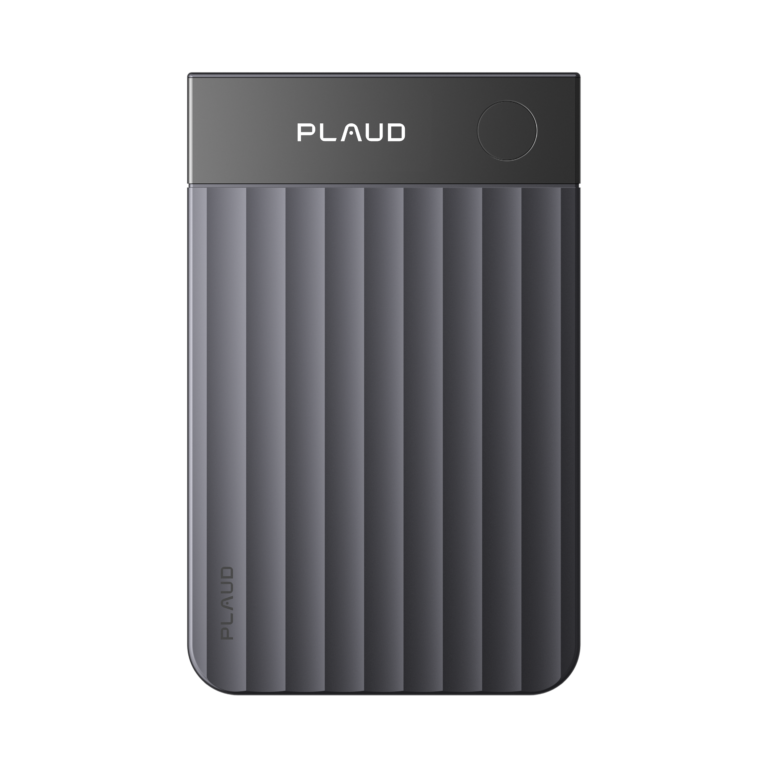
The Note Pro trades wearability for staying power. PCWorld’s review credits its four-microphone array plus a dedicated voice processing unit for isolating speech from background noise, with voice pickup staying clear at up to 16 feet in Enhance Mode — enough for a full conference table without a wearable mic getting passed around. Endurance Mode stretches that same 500mAh cell across 50 hours of continuous recording, close to a full work week between charges.
It’s credit-card-thin and meant to sit flat on a table rather than clip to a jacket, with an InstantView screen that shows recording status without opening the app. That desk-first design is the trade-off: it’s not built to be worn, so anyone who wants a recorder they forget they’re wearing should look at the NotePin S instead.
Best for: people who sit through back-to-back meetings at a desk or conference table and want the longest possible runway between charges.
3. Plaud NotePin (Original) — Best Value
The original NotePin is what started this whole category, and it’s now the budget pick in Plaud’s own lineup. TechRadar’s review found the AI processing carries over faithfully — same transcription engine, same 112-language support — just packed into a smaller, lighter 0.59 oz shell for $20 less than the S model. The Gadgeteer’s longer-term review found the results promising but flagged real limits: accuracy can slip on harder multi-speaker audio, occasionally mixing or misidentifying languages mid-transcript.
The core trade for the lower price is a pressure-sensitive touch surface instead of a physical button — reliable in normal use, but reviewers note it’s easier to trigger by accident under a jacket than a real click would be. Battery life is also a step down, at 20 hours versus the Note Pro’s 50-hour ceiling.
Best for: budget-conscious buyers who want Plaud’s core transcription engine and don’t mind touch controls over a tactile button.
Quick Comparison
| NotePin S | Note Pro | NotePin (Original) | |
|---|---|---|---|
| Price (USD) | $179 | $189 | $159 |
| Price (CAD) | $249.99 | $259.99 | $249 |
| Recording Time | Up to 20 hrs | Up to 50 hrs (Endurance) | Up to 20 hrs |
| Weight | 0.61 oz | 1.06 oz | 0.59 oz |
| Controls | Physical button | Physical button (desk unit) | Touch surface |
| Form Factor | Wearable pin/clip | Flat, desk/pocket | Wearable pin/clip |
| Our Score | 4.1/5 | 4.1/5 | 3.9/5 |
The Final Word
All three run the same transcription engine underneath, so the real decision is about how you record, not raw accuracy. Wear the NotePin S if you want one device you barely notice through a full day of meetings and interviews. Reach for the Note Pro if you’re anchored to a desk or conference table and want the longest possible runway between charges. And if the touch surface doesn’t bother you, the original NotePin gets you the same core experience for $20 less. Anyone who wants raw audio with no subscription at all is still better served by a plain recorder like the Sony ICD-UX570 — the AI layer is genuinely useful, but it isn’t free.
Browse all Office & Productivity reviews →Office & Productivity reviews → for more desk and work-from-home picks.
Frequently Asked Questions
Which Plaud recorder should I buy?
Do I need a subscription to use these?
Is the NotePin’s touch surface reliable, or should I get the S model’s button?
How long does the battery last on each model?
Is there a non-AI alternative if I don’t want cloud transcription?