Recurring meetings, interviews, and lectures are where the NotePin S earns its price back — transcripts and summaries land in the app without any typing after the fact. A real physical button fixes the original NotePin's biggest complaint, and 20 hours of recording plus 40 days of standby mean it rarely needs attention. The catch is cost: the $179 hardware price functions as an entry fee into a subscription, since the free plan's 300 minutes a month runs out fast for anyone recording daily.
Pros
- Real button fixes the original NotePin's squeeze-gesture problem
- 20-hour recording, 40-day standby on a single charge
- 112-language transcription with automatic speaker labels
- Four wearable styles included: pin, clip, lanyard, wristband
- Physical button doubles as a consent check, unlike always-on rivals
Cons
- Full-featured use requires a paid subscription beyond the free 300 minutes
- Occasional Bluetooth sync hiccups reported by reviewers
- Charging depends on the included dock rather than a port on the device
As an Amazon Associate I earn from qualifying purchases. Disclosure
Overview
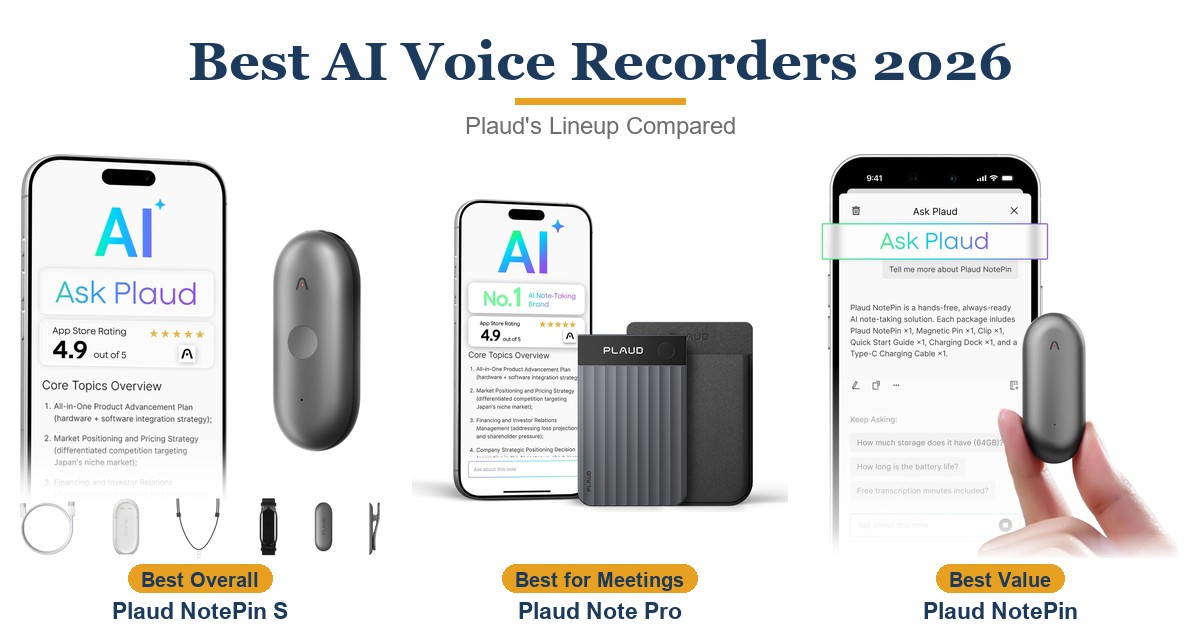
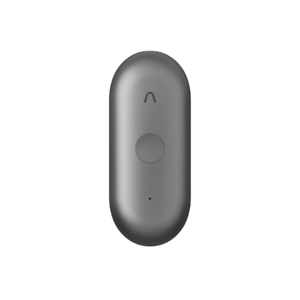
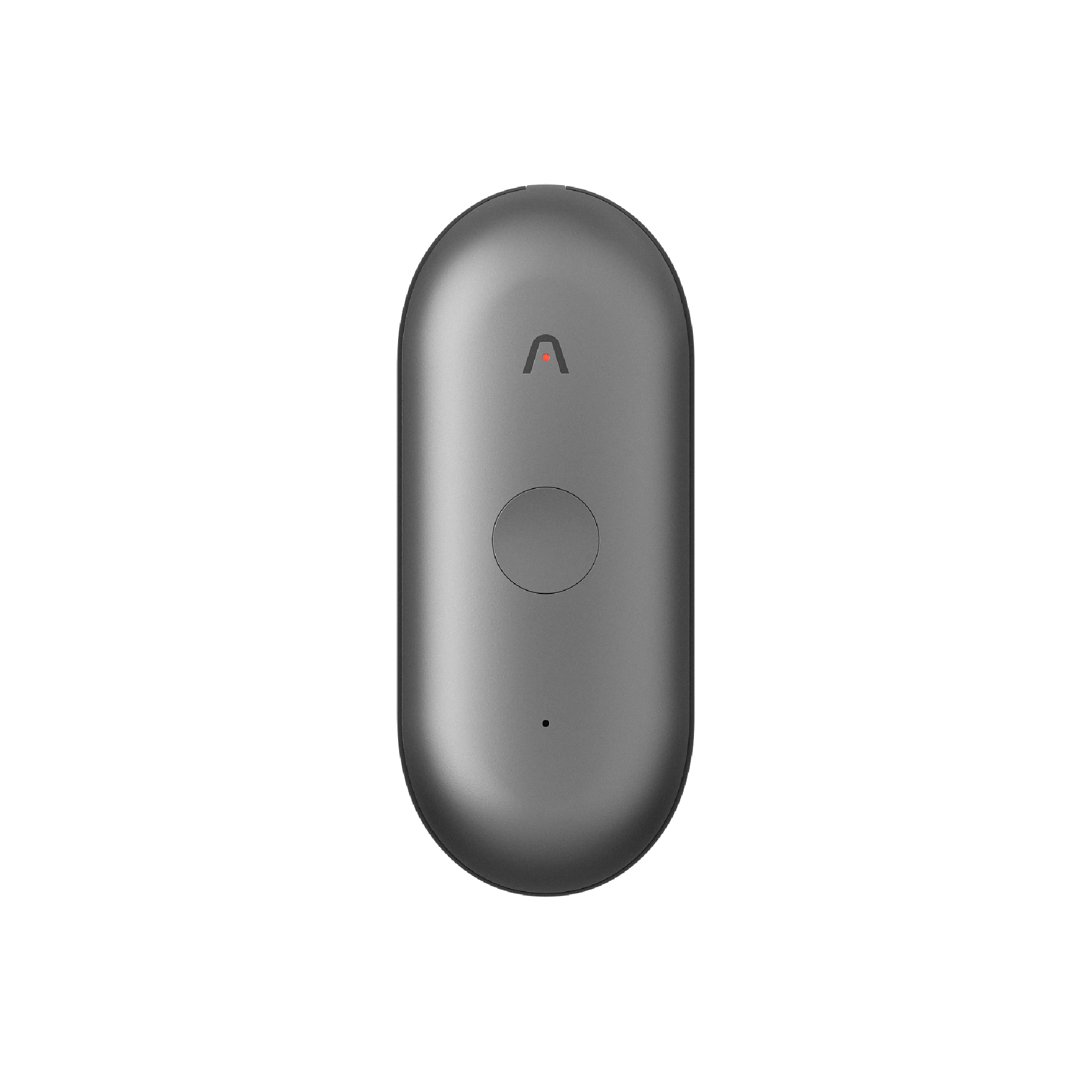
At $179.00, the Plaud NotePin S costs less than a nice pair of wireless earbuds, yet it’s meant to replace a stack of separate tools: a voice recorder, a transcription app, and the time spent typing up meeting notes afterward. Clip it to a jacket, pin it on, or snap it onto the included wristband, and one press of its single button starts recording — audio the companion app later turns into transcripts, speaker-labeled notes, and AI-generated summaries. It’s sold on Amazon.com and Amazon.ca alongside Plaud’s older NotePin and the pricier, credit-card-thin Note Pro.
The “S” in the name marks the biggest usability fix over the original NotePin: a real physical button instead of a finicky squeeze gesture that early reviewers flagged as easy to miss under a jacket or bag strap. Everything else that made the NotePin line stand out carries over: 112-language transcription, 64GB of onboard storage, and a design light enough (17.3 grams) to disappear through a full day of back-to-back meetings.
Key Specifications
| Weight | 17.3 g (0.61 oz) |
| Dimensions | 51 x 21 x 11 mm |
| Battery | 320 mAh — up to 20 hours continuous recording |
| Standby Time | Up to 40 days |
| Storage | 64GB onboard, no microSD slot |
| Microphones | Dual MEMS mics, roughly 9.8 ft pickup range |
| Connectivity | Bluetooth Low Energy 5.2 + Wi-Fi |
| Languages Supported | 112, with automatic speaker labels |
| Included Accessories | Magnetic pin, clip, lanyard, wristband, charging dock |
| Free Plan | 300 transcription minutes per month |
| Price (USD) | $179 |
Plaud NotePin S Recording & Transcription Accuracy
According to Layer3Labs’ hands-on review, the NotePin S’s dual MEMS microphones pick up clear audio from roughly 9.8 feet away — enough to catch a conference-room table without being passed around. Recordings sync automatically to the Plaud app over Wi-Fi or Bluetooth, where transcription runs in 112 languages with automatic speaker labels, which matters most in multi-person meetings where a plain transcript quickly becomes unreadable.
Dapperandgroomed’s review notes the transcription holds up well for clear, in-person speech but gets shakier on crosstalk or heavy accents — a limitation shared by most consumer-grade transcription engines rather than something unique to Plaud. Reviewers at CodeInclusive also flagged occasional Bluetooth sync hiccups that required reopening the app to finish pulling a recording through, a minor but recurring friction point rather than a dealbreaker.
Battery Life & All-Day Wearability
The NotePin S’s 320mAh battery is rated for 20 hours of continuous recording and up to 40 days of standby, which in practice means it only needs docking every few days rather than nightly. At 17.3 grams, it’s light enough that reviewers across multiple outlets describe forgetting it’s clipped on by midday — a real difference from bulkier dictaphones or propping a phone up on a table.
Charging runs through the included magnetic dock and USB-C cable rather than a port on the device itself, which keeps the body sealed against dust and light moisture but means losing the dock leaves no way to charge it. The four included wear styles — pin, clip, lanyard, and wristband — cover most use cases, though the pin and clip are the two styles most reviewers settle on for daily use.
AI Summaries & the Plaud App Experience
Once a recording finishes transcribing, the Plaud app generates a structured summary using one of more than 10,000 role-specific templates — meeting minutes, interview notes, lecture recaps — plus mind maps and action-item lists pulled straight from the conversation. The free Starter plan includes 300 transcription minutes a month, enough for light use but tight for anyone recording daily meetings.
Heavier use requires a subscription: Plaud’s Pro plan runs $99.99 a year for 1,200 minutes a month, and the Unlimited tier costs $224.99 a year. That recurring cost sits on top of the $179 hardware price and is worth factoring in before buying — a detail easy to miss when comparing it only against the sticker price of a standalone voice recorder.
Privacy, Data Handling & Ongoing Costs
Because the NotePin S processes audio through Plaud’s cloud servers to generate transcripts and summaries, recordings leave the device rather than staying local — a trade-off inherent to any AI note-taker, not unique to Plaud. Plaud lists compliance with ISO 27001/27701, GDPR, SOC 2, and HIPAA on its site, which matters for anyone recording client calls or work conversations professionally.
Unlike Limitless’s now-discontinued always-on Pendant, the NotePin S requires a physical button press to start recording — sometimes called the “red dot rule” in wearable-AI coverage — which acts as a built-in check for anyone in the room, since nothing records until the button lights up. That single design choice is arguably the device’s biggest practical advantage over always-listening wearables, several of which have run into workplace and legal pushback.
How Does It Stack Up Against the Competition?
Plaud alone sells three tiers of AI recorder, and a plain digital voice recorder is still on the shelf for anyone who doesn’t need the AI layer at all — here’s how the NotePin S compares.
| Feature | Plaud NotePin S | Plaud Note Pro | Plaud NotePin (Original) | Sony ICD-UX570 |
|---|---|---|---|---|
| Price (USD) | $179 | $189 | $159 | $66.55 |
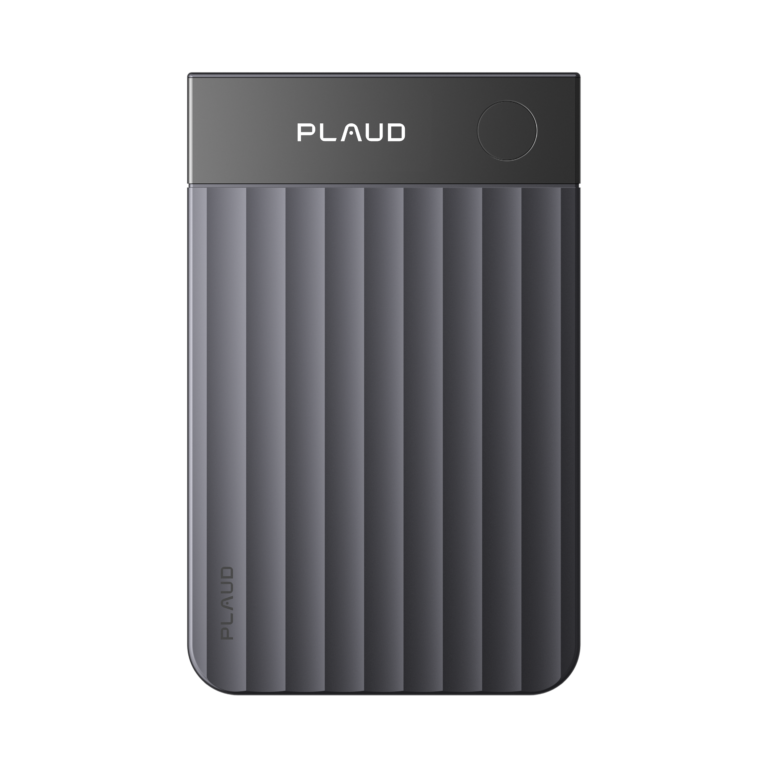
| Form Factor | Wearable pin/clip | Credit-card-thin slab | Wearable pin/clip | Handheld recorder |
| Recording Time | Up to 20 hrs | Up to 50 hrs (Endurance Mode) | Up to 20 hrs | Tens of hours (battery-powered, no AI processing) |
| AI Transcription | Yes, 112 languages | Yes, 112 languages | Yes, 112 languages | No |
| Subscription Needed for Regular Use | Yes, beyond 300 free min/mo | Yes, beyond 300 free min/mo | Yes, beyond 300 free min/mo | No |
| TTP Review | This review ↑ | Read our review → | Read our review → | Read our review → |
Prices change frequently — always verify current pricing before purchasing.
Is the Plaud NotePin S Worth It?
Recurring meetings, interviews, and lectures are where the NotePin S earns its price back — transcripts and summaries land in the app without any typing after the fact. A real physical button fixes the original NotePin’s biggest complaint, and 20 hours of recording plus 40 days of standby mean it rarely needs attention.
It’s a harder sell for anyone who only records occasionally, since the free plan’s 300 minutes a month covers light use but the $99.99-a-year Pro plan is what most regular users end up paying for. Anyone who wants raw audio only, with no AI layer and no ongoing cost, is better served by a plain recorder like the Sony ICD-UX570 at a fraction of the price.