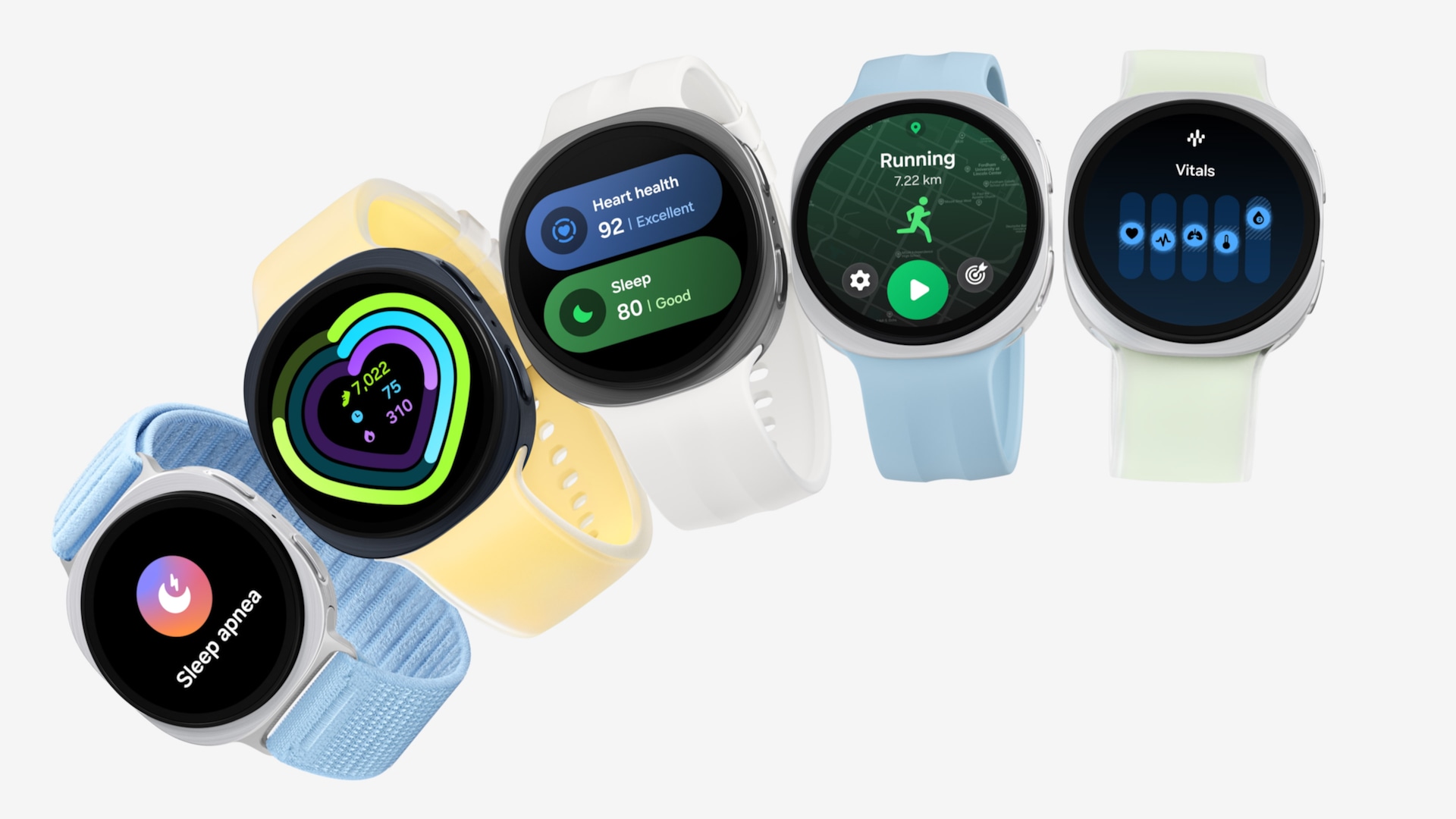
Samsung Galaxy phone owners who want detailed health coaching with no subscription should start here, from Vitals and sleep scores to ECG and blood pressure checks. The thin, light case is comfortable enough to wear to bed, and the bright sapphire-covered screen and quick chip make daily use smooth. The trade-off is short battery life: plan on nightly charging, and the Pixel Watch 5 lasted longer in Tom's Guide's testing.
Pros
- Light, thin case that is comfortable to sleep in
- Detailed health scores and coaching with no subscription
- Bright 3,000-nit screen under sapphire crystal
- Smooth Snapdragon Wear Elite performance with Gemini built in
- Five major Wear OS upgrades promised
Cons
- Short battery life of about a day per charge
- Slow charging: about 90 minutes from empty
- ECG, blood pressure and sleep apnea tools need a Samsung Galaxy phone
- No iPhone support
As an Amazon Associate I earn from qualifying purchases. Disclosure
Overview
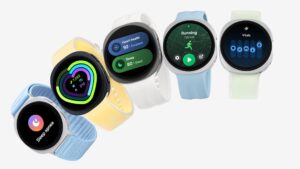
Samsung’s Galaxy Watch9 is the company’s everyday Wear OS smartwatch, and it makes the most sense on the wrist of someone who already carries a Samsung Galaxy phone, because that pairing unlocks its ECG, blood pressure and sleep apnea features. It turns sleep, heart and workout readings into plain scores and coaching, in a thin aluminum case that most testers found easy to wear day and night. It comes in 40 mm and 44 mm sizes, with LTE versions of both; this review covers the 40 mm Bluetooth model.
From the outside, little has changed since last year’s Galaxy Watch8: the same cushion-shaped case around a round screen, the same 3,000-nit peak brightness under sapphire crystal, and the same two buttons. The changes are inside. Qualcomm’s Snapdragon Wear Elite chip replaces Samsung’s own Exynos processor, the 40 mm battery grows to 390 mAh from 325 mAh, and new Samsung Health tools arrive, including Vitals, a Heart Health Score and a Fitness Index. There is no Classic model with a rotating bezel this year.
Key Specifications
| Price (USD) | $379.99 |
| Display | 1.3-inch Super AMOLED, 438 x 438, up to 3,000 nits, sapphire crystal |
| Case | 42.7 x 40.4 x 8.6 mm, aluminum |
| Weight | 31.5 g (body) |
| Processor and memory | Snapdragon Wear Elite, 2 GB RAM, 32 GB storage |
| Battery | 390 mAh; rated up to 40 hours (always-on display off), up to 30 hours (always-on display on) |
| Charging | 10W wireless charging pad (included) |
| Durability | 5 ATM, IP68, MIL-STD-810H |
| Health sensors | Optical heart rate, electrical heart (ECG), bioelectrical impedance, temperature |
| Positioning | GPS, Glonass, Beidou, Galileo, QZSS |
| Connectivity | Bluetooth 6.0, Wi-Fi (2.4 and 5 GHz), NFC |
| Software | Wear OS 7 with One UI 9 Watch |
| Works with | Android 13 or later with at least 1.5 GB of RAM; not iPhone |
Samsung Galaxy Watch9 Health and Sleep Tracking
The health suite is the reason to buy it. Samsung Health boils raw readings down into a few scores you can act on. Vitals compares your overnight heart rate, heart rate variability, respiratory rate, skin temperature and blood oxygen with your own baseline and flags anything unusual, and testers found it the easiest of the new tools to understand. The Heart Health Score weighs sleep time, your blood pressure trend, BMI and vigorous activity, while sleep and Energy scores arrive each morning. Not every score convinced: TechRadar’s tester was told their energy level was excellent on mornings they woke up exhausted, and the sheer number of scores left two testers unsure what to do with them all.
The readings themselves held up in Notebookcheck’s spot checks of the 44 mm model. Blood oxygen averaged 0.7% from a Braun pulse oximeter, and blood pressure estimates, which need calibrating with an arm cuff every four weeks, averaged 1.1% off for systolic and 0.4% off for diastolic readings against its reference monitor. Sleep tracking is good at telling real sleep from lying awake in bed. Wake-ups split testers: Notebookcheck found even brief ones reliably detected, while TechRadar’s unit didn’t always catch them. Tom’s Guide wore it beside the Pixel Watch 5 for a week and found the two recorded surprisingly similar sleep data.
Which phone you own decides how much of this you get. Basic Samsung Health works with any Android 13 phone, but ECG, irregular heart rhythm notifications, blood pressure and the FDA-cleared sleep apnea check need a Samsung Galaxy phone, and the watch doesn’t work with iPhones. Tom’s Guide also points out that Samsung charges no subscription for its wellness and fitness insights, unlike Google and Garmin.
Workout Tracking and Accuracy
For everyday walks, runs and rides, it is a dependable tracker, if not the most precise. Tom’s Guide counted 4,000 steps by hand and found both the Galaxy Watch9 and the Pixel Watch 5 within 20 steps of the real total, with the Pixel a little closer on steps, distance and climb. On a bike ride with the 44 mm model, Notebookcheck measured an average heart rate gap of 4.3 beats per minute (1.5%) against a Polar H10 chest strap, with identical readings at rest, and its route mapped accurately.
Harder efforts are less certain. Wareable’s 44 mm unit dropped out for about eight minutes on one steady run, then held within 0.5 bpm of a Garmin HRM 600 chest strap on a later steady run. It missed most of a four-interval session, and its GPS stayed within 20 meters of a multi-band Garmin Fenix 8 Pro on the steady runs. On a seven-mile hike, Tom’s Guide found it performed pretty well overall but struggled to log the climb accurately.
Two new training scores join the usual stats. The Fitness Index rates you in five areas, from body composition and cardio to strength and flexibility, compared with people your age. Daily Cardio Load estimates the strain you build up, though TechRadar notes it counts only logged workouts, not a long day of walking. Automatic workout detection works well for most testers, and CGMagazine found it spotted walks faster than any other watch it has used; TechRadar was the exception, finding it sometimes ignored long walks around a city. The workout list runs past 100 types, but Tom’s Guide noticed it lacks e-biking and skateboarding modes.
Performance, Gemini and Software Support
The new chip is the clearest upgrade. Scrolling through Tiles and opening apps feel smoother than on older Galaxy Watches, though testers coming from a recent model called the gain modest rather than dramatic. In Notebookcheck’s benchmarks, its 44 mm unit ran up to 65% faster than the Galaxy Watch8.
Google’s Gemini assistant is built in, and Raise to Talk lets you lift the watch toward your mouth and speak without pressing a button. Results varied: Wareable found it reliable enough that it used Gemini about twice as much, while GSMArena found Gemini mostly didn’t respond.
Long-term support is a strength. Samsung promises five major Wear OS upgrades, and the watch runs Google Play apps such as Google Maps, Gmail, Strava and Spotify alongside Samsung’s own.
Comfort, Display and Durability
Comfort is where this watch shines. The 40 mm body is 8.6 mm thick and weighs 31.5 g without the band, and most testers wore it through workouts and to bed without it feeling heavy. One Tom’s Guide tester with small wrists was the exception, finding even the 40 mm model heavy and loose on the supplied M/L strap, and suggests the S/M strap for smaller wrists. Bands swap with a press-to-release catch, but the Dynamic Lug system is proprietary, so standard watch straps won’t fit.
The Super AMOLED screen reaches up to 3,000 nits and stays easy to read in direct sunlight. It sits under sapphire crystal, and the case carries 5 ATM water resistance, IP68 and MIL-STD-810H ratings, so swimming and showers are fine. Android Authority notes there are no raised edges to protect the screen from a direct knock. Notebookcheck measured 60 Hz PWM flicker on its 44 mm unit’s display, which may bother people sensitive to it, though it expects little effect since most people glance at a watch only briefly.
Battery Life and Charging
The bigger cell didn’t move battery life much. Samsung rates the 40 mm model at up to 40 hours with the always-on display off and 30 hours with it on. Tom’s Guide averaged about 32 hours per charge on its 40 mm unit, compared with closer to 48 hours for the Pixel Watch 5. GSMArena’s 40 mm watch lasted a little over 24 hours including a three-hour GPS hike, and less than 24 hours with the always-on display enabled. TechRadar got its 40 mm unit closer to two days by cutting back workouts, raise-to-wake and notifications. That trails the Pixel Watch 5 in Tom’s Guide’s test and falls far short of multi-day watches like the Venu 4.
Most testers timed a full charge on the included 10W wireless pad at about 90 minutes from empty, and two found that a short top-up adds little, though one Tom’s Guide tester found it charges quickly.
How Does It Stack Up Against the Competition?
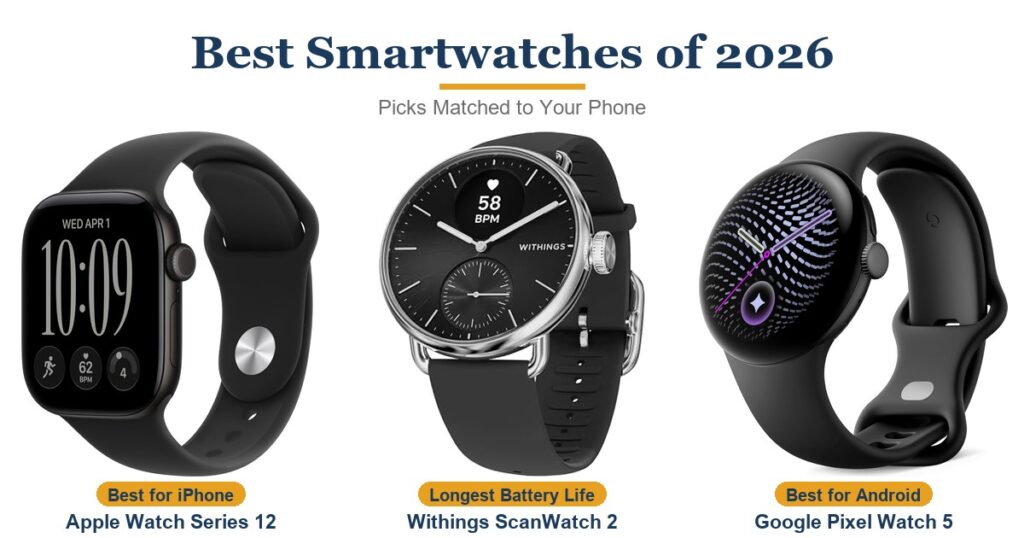
Reviewers weigh it mainly against Google’s Pixel Watch 5, its closest Wear OS rival for Android phones. Apple’s Series 12 is the equivalent for iPhone owners, and Garmin’s Venu 4 is the step up for anyone who wants a week or more per charge.
| Feature | Samsung Galaxy Watch9 | Google Pixel Watch 5 | Apple Watch Series 12 | Garmin Venu 4 |
|---|---|---|---|---|
| Price (USD) | $379.99 | Deal $299.99 until Nov 8 | $389.99 | $549.99 |
| Case size | 40 mm | 41 mm | 42 mm | 41 mm |
| Display | Super AMOLED | AMOLED (LTPO) | OLED (LTPO3) | AMOLED |
| Rated battery life | Up to 30 hours (always-on display on) | Up to 30 hours (always-on display on) | Up to 24 hours | Up to 10 days (smartwatch mode) |
| Water resistance | 50 m (5 ATM), IP68 | 50 m (5 ATM), IP68 | 50 m, IP6X dust | 50 m (5 ATM) |
| Works with | Android 13 or later | Android 12 or later | iPhone 11 or later | iPhone and Android |
| TTP Review | This review ↑ | Read our review → | Read our review → | — |
| Amazon | View on Amazon | View on Amazon | View on Amazon | View on Amazon |
Prices change frequently — always verify current pricing before purchasing.
Samsung Galaxy Watch9: Worth It as a Galaxy Phone’s Health Partner
If you own a Samsung Galaxy phone and want detailed health coaching without a subscription, this is an easy watch to recommend. Every Samsung Health feature works, the case is comfortable enough to forget overnight, and the scores turn your data into next steps. It is also a big step for anyone upgrading from a Galaxy Watch that is three or four years old, where the faster chip, brighter screen and new health tools add up.
Look elsewhere if runtime matters most or you use another brand of Android phone: the Pixel Watch 5 lasted longer and recharged faster in Tom’s Guide’s tests, and it adds Loss of Pulse Detection and Breathing Emergency Detection. iPhone owners should look at the Apple Watch Series 12, which Apple says gets up to 12 hours of normal use from a 15-minute charge. For a week or more between charges, Garmin rates the 41 mm Venu 4 at up to 10 days in smartwatch mode. If you already own a Galaxy Watch8, the Watch9 is a small step. For buyers choosing between the two, Android Authority and Pickr say a Watch8 found on sale may be the better value, while Wareable calls the Watch9 the technically better buy.
Sources
- Samsung — Galaxy Watch9 Official Product Page
- Samsung Canada — Galaxy Watch9 (Bluetooth, 40 mm) Specifications
- Samsung — How to connect your Galaxy Watch9 to your phone
- Samsung Galaxy Watch9 — Amazon Product Listing
- Tom’s Guide — I wore the Samsung Galaxy Watch 9 for a month
- Tom’s Guide — I walked 4,000 steps with the Pixel Watch 5 vs Samsung Galaxy Watch 9
- Tom’s Guide — Pixel Watch 5 vs Samsung Galaxy Watch 9: 5 key differences
- Notebookcheck — Samsung Galaxy Watch 9 review
- Wareable — Samsung Galaxy Watch 9 review
- TechRadar — Samsung Galaxy Watch 9 review
- Android Authority — Samsung Galaxy Watch 9 review
- Android Central — Samsung Galaxy Watch 9 review
- GSMArena — Samsung Galaxy Watch9 review
- GSMArena — Samsung Galaxy Watch9 review: Hardware, battery life, charging
- GSMArena — Samsung Galaxy Watch9 review: Software, health and fitness tracking
- CGMagazine — Samsung Galaxy Watch9 review
- Pickr — Samsung Galaxy Watch 9 review
- Google — Pixel Watch 5 Specifications
- Apple — Apple Watch Series 12 Technical Specifications
- Garmin — Venu 4 Owner’s Manual
- Garmin — Venu 4 announcement
- TechRadar — Garmin Venu 4 review
Reader Poll
Could you live with charging your smartwatch every night?
Help Our Editors Know What Matters to You
Explore on Amazon →