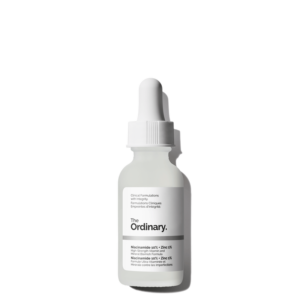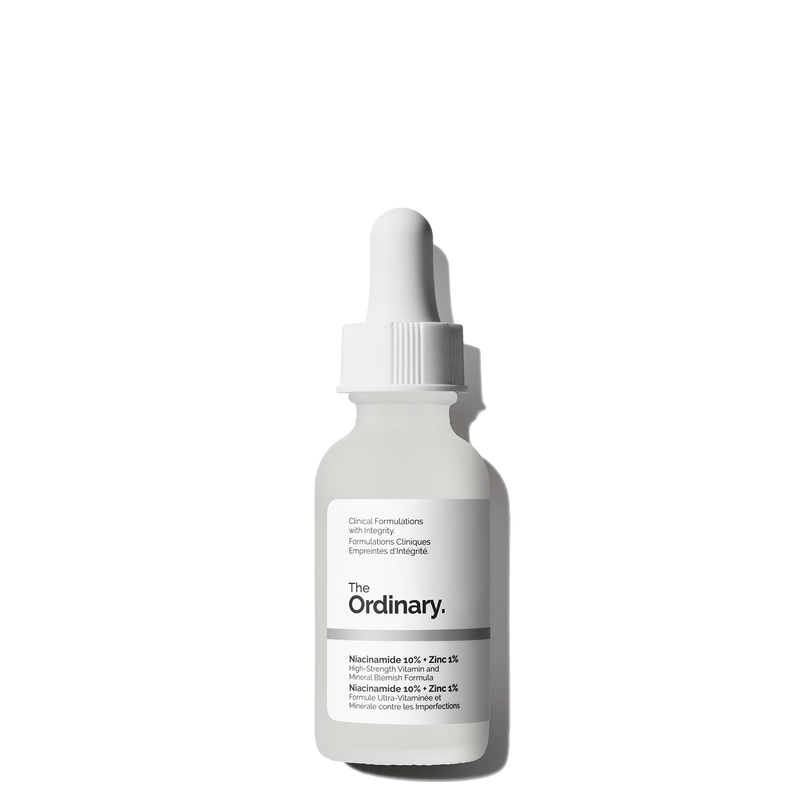
The Ordinary Niacinamide 10% + Zinc 1% is the top-value pore and oil-control serum available on Amazon.ca for Canadian shoppers with oily, combination, or blemish-prone skin. It delivers a clinically tested 10% niacinamide and 1% zinc PCA formula in just 11 ingredients — fragrance-free, silicone-free, and vegan — at approximately $9 CAD. According to The Ordinary's published clinical data, twice-daily use produces measurable pore minimization at four weeks, making it a practical choice through Canada's year-round oil-management challenges. It is not designed for dry or sensitive skin and pairs best with a richer moisturizer, particularly during Canadian winters.
Pros
- 10% niacinamide — clinically effective concentration
- Zinc PCA adds targeted oil regulation
- Only 11 ingredients — fragrance, silicone, and oil free
- Non-comedogenic — clinically confirmed
- Available on Amazon.ca with Prime delivery
- Vegan and cruelty-free
Cons
- Not suited for dry or sensitive skin
- Cannot be layered with Vitamin C in same routine step
- Results require consistent twice-daily use
As an Amazon Associate I earn from qualifying purchases. Disclosure
Overview
Niacinamide — vitamin B3 — has become one of the most well-studied actives in modern skincare, and a 10% concentration is widely considered the clinical threshold where measurable improvements in pore appearance, sebum output, uneven skin tone, and barrier function actually occur. The challenge for most shoppers has historically been that serums hitting this concentration sat behind a $50–$75 CAD price point. The Ordinary Niacinamide 10% + Zinc 1% changed that calculation entirely when DECIEM launched it as part of their evidence-first, no-markup approach to formulation — delivering the full 10% niacinamide dose alongside 1% zinc PCA in a straightforward water-based serum with just 11 ingredients. DECIEM is a Canadian-founded company, and The Ordinary line has maintained strong availability on Amazon.ca since launch.
The result is a product that has sustained its position as one of the best-selling niacinamide serums on Amazon.ca for several years running — not through marketing, but because the formula is replicable, the concentration is honest, and the price at approximately $9 CAD for 30ml makes it accessible as a daily staple rather than a considered purchase. For Canadian shoppers with oily, combination, and blemish-prone skin looking for a pore-minimizing, oil-regulating active serum, it remains the benchmark against which every other niacinamide product is measured — particularly useful through the year-round oil-management challenges that Canadian climate transitions can create.
Key Specifications
| Volume | 30ml (1 fl oz) |
| Niacinamide Concentration | 10% |
| Zinc PCA Concentration | 1% |
| Total Ingredients | 11 |
| Recommended Skin Type | Oily, Combination, Blemish-Prone |
| Finish | Matte / Satin |
| Fragrance | Fragrance-Free |
Formula & Ingredients
The full ingredient list is: Aqua (Water), Niacinamide, Pentylene Glycol, Zinc PCA, Dimethyl Isosorbide, Tamarindus Indica Seed Gum, Xanthan Gum, Isoceteth-20, Ethoxydiglycol, Phenoxyethanol, Chlorphenesin. INCIDecoder’s analysis confirms that the formula is built around a water-and-humectant base, with dimethyl isosorbide serving as a penetration enhancer to improve niacinamide delivery into the skin. The two gums provide a lightweight gel texture without silicones, and phenoxyethanol with chlorphenesin handle preservation — a standard, well-tolerated pairing.
What is deliberately excluded is as significant as what is included. No silicones, no fragrance components, no oils, no comedogenic emollients. This minimalist architecture matters for two practical reasons: it makes the serum suitable for layering under almost any moisturizer without concern for ingredient conflict, and it keeps the potential irritant load extremely low — important when using a high-concentration active twice daily. Canadian users who supplement with a richer moisturizer during winter months will find this serum’s oil-free base integrates without disrupting moisturizer efficacy or causing pilling under thicker formulas.
Key Features
10% Niacinamide (Vitamin B3): At the cellular level, niacinamide functions as a precursor to NAD+ and NADP+, coenzymes involved in energy metabolism and DNA repair. At a topical 10% concentration, it has demonstrated in peer-reviewed literature the ability to suppress melanin transfer between melanocytes and keratinocytes (relevant to post-inflammatory hyperpigmentation and uneven tone), reduce sebum excretion rate over 2–4 weeks of consistent use, and visibly reduce pore diameter by improving the elasticity and firmness of the skin surrounding follicle openings. It also reinforces the ceramide component of the stratum corneum, which contributes to improved barrier function over time. According to The Ordinary’s published clinical data, consistent twice-daily use produces measurable pore reduction at four weeks.
1% Zinc PCA: Zinc PCA (zinc salt of pyrrolidone carboxylic acid) is the sebum-regulation specialist in this formula. It works via a different mechanism than niacinamide — directly inhibiting 5-alpha-reductase activity, the enzyme responsible for converting testosterone to DHT, which is one of the primary drivers of excess sebum production in the follicle. This makes the niacinamide-zinc PCA combination synergistic rather than redundant: niacinamide addresses pore appearance and tone, zinc PCA targets the hormonal sebum trigger at the source. Zinc also carries documented antibacterial properties relevant to Cutibacterium acnes (formerly P. acnes), the bacterium associated with acne formation.
11-Ingredient Fragrance-Free Formula: The skincare industry has a long history of embedding high-value actives inside complex, fragrant formulations that compromise exactly what the active is trying to achieve. Fragrance components — even natural ones — are a leading cause of contact sensitization, and regular use of sensitizing ingredients alongside actives accelerates barrier disruption. A shorter ingredient list also means fewer potential conflict points when layering other actives. Skincare editors at The Quality Edit have noted that The Ordinary’s refusal to add filler ingredients or sensorial agents is a deliberate formulation philosophy, not a cost-cutting shortcut — it reflects DECIEM’s clinical approach to ingredient delivery.
Routine Compatibility: This serum integrates easily into both AM and PM routines. In the AM, it pairs well under SPF and antioxidant serums. In the PM, it layers well with retinoids — niacinamide and retinol are actually a beneficial combination, with niacinamide helping to buffer potential retinol irritation while both address pore appearance from complementary angles. The one firm incompatibility to note is direct co-application with Vitamin C (L-ascorbic acid) in the same routine step. The two can be used in the same routine if separated — for example, Vitamin C in the morning and niacinamide in the evening — but should not be mixed in the palm or layered immediately one atop the other.
Performance
According to The Ordinary’s published clinical data, the 10% niacinamide + 1% zinc PCA combination produces measurable reduction in pore size at four weeks of twice-daily use, with continued improvement through eight weeks. The mechanism is established: consistent niacinamide application normalizes sebum production over time, which reduces the hydraulic pressure that stretches follicle walls and makes pores appear enlarged. INCIDecoder analysis confirms the formula’s ingredient pairing is scientifically rational — each ingredient has a defined role, and there are no conflicting actives or unnecessary fillers that would dilute efficacy.
Realistic expectations matter here. This is not a product that delivers overnight results, and it will not physically reduce pore size in the anatomical sense — no topical can alter pore structure. What it does, consistently applied, is reduce the conditions that make pores appear large: excess sebum stretching follicle walls, and skin laxity around pore openings. The serum also visibly reduces surface shine within the first few days of use, which many oily-skin users notice before the longer-term pore benefits manifest. For blemish-prone skin, the antibacterial contribution from zinc PCA adds an additional preventative layer that reinforces the niacinamide’s barrier and PIH benefits.
How Does It Stack Up Against the Competition?
| Feature | The Ordinary Niacinamide 10% + Zinc 1% | Paula’s Choice 10% Niacinamide Booster | Naturium Niacinamide Serum 12% Plus Zinc 2% | CeraVe Resurfacing Retinol Serum |
|---|---|---|---|---|
| Price (approx.) | $9.00 | $65.00 | $25.99 | $25.98 |
| Niacinamide % | 10% | 10% | 12% | Not primary active |
| Zinc | 1% Zinc PCA | No | 2% Zinc PCA | No |
| Fragrance-Free | Yes | Yes | Yes | Yes |
| Silicone-Free | Yes | No | No | No |
| Size | 30ml | 20ml | 30ml | 30ml |
| TTP Review | This review ↑ | — | — | — |
| Amazon | View on Amazon | View on Amazon | View on Amazon | View on Amazon |
Prices change frequently — always verify current pricing before purchasing.
Is The Ordinary Niacinamide 10% + Zinc 1% Worth It?
For Canadian shoppers with oily, combination, or blemish-prone skin, the answer is unequivocally yes. At approximately $9 CAD for 30ml — available with Prime delivery on Amazon.ca — this serum delivers the clinical niacinamide concentration that competitors charge six to seven times more to provide. The zinc PCA addition makes it a more complete oil-regulation formula than standalone niacinamide serums, and the 11-ingredient construction means it integrates into virtually any routine without layering conflicts. It is the rare product where the budget positioning is not a trade-off against efficacy. Canadian users navigating the transition between humid summers and cold, dry winters will want to pair it with a richer, barrier-focused moisturizer in the colder months — this serum is oil-free and provides no occlusion, so external hydration support is recommended when temperatures drop.
The caveats are real: this is not a serum for dry or very sensitive skin, where niacinamide at 10% can occasionally cause flushing or surface dryness if the barrier is already compromised. It requires consistent twice-daily use — the clinical data on pore minimization is based on that cadence, and sporadic application will not replicate those outcomes. And it should not be layered immediately with direct-acid Vitamin C formulations. For the right skin type, used correctly, it remains the best value proposition in its category available on Amazon.ca by a significant margin.
Frequently Asked Questions
Can you use niacinamide with retinol?
Yes — and the combination is actually considered beneficial. Niacinamide helps reinforce the skin barrier and reduce the surface irritation that some users experience when beginning retinol, making the two a complementary pairing. Both address pore appearance and uneven texture through different mechanisms, so using niacinamide in the AM and retinol in the PM (a common routine structure) delivers complementary benefits with minimal conflict risk. INCIDecoder notes that the niacinamide-retinol pairing is one of the more well-supported active combinations in routine formulation guides.
Why can’t you layer niacinamide with Vitamin C?
The concern is nuanced and worth clarifying. An older claim held that niacinamide and ascorbic acid (Vitamin C) combine to form nicotinic acid, which causes flushing. More recent analysis suggests this reaction requires temperatures and concentrations rarely achieved in a topical routine. The practical concern is less dramatic: niacinamide can raise the pH of a Vitamin C serum formulated at a low pH (as most L-ascorbic acid products are), potentially reducing the Vitamin C’s efficacy. The safe approach is to separate them by routine step — Vitamin C in the AM before SPF, niacinamide in the PM — rather than mixing them in the same application step. This avoids any pH interference without requiring you to eliminate either product.
How long does one 30ml bottle last at twice-daily use?
At twice-daily use — typically two to three drops per application — a 30ml bottle lasts approximately four to six weeks, depending on how liberally the serum is applied. A standard application protocol involves dispensing two to three drops onto fingertips and pressing into clean, damp skin before moisturizer. Some users extend bottle life slightly by applying only to oily zones (T-zone, nose, chin) rather than full-face coverage.