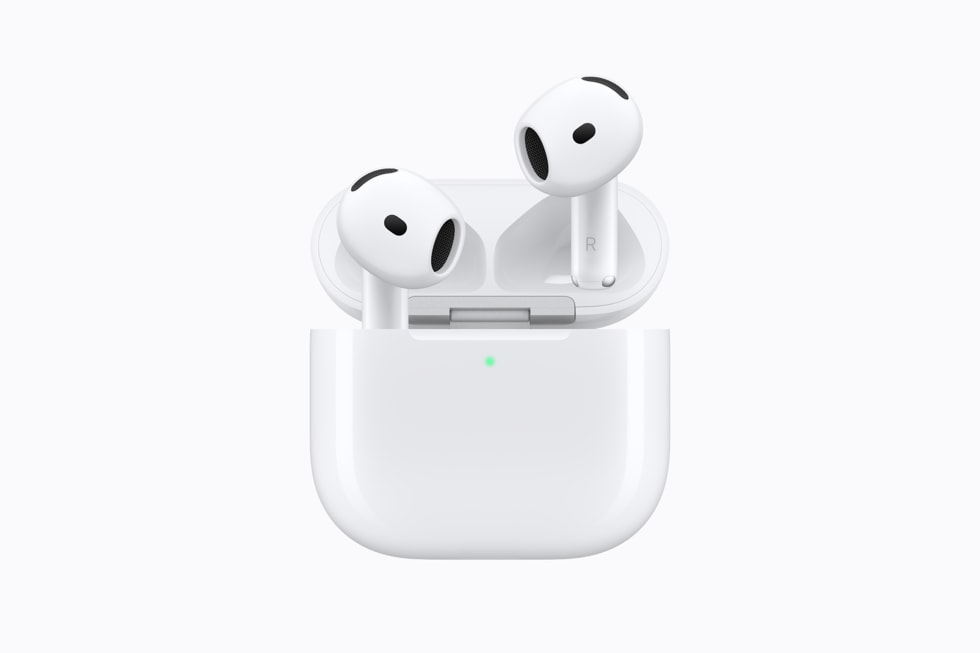
For iPhone owners who want noise cancelling without silicone tips, the AirPods 5 are the pair to get: testers found their cancelling the best yet in open-fit earbuds, and the Transparency mode is so natural the buds almost disappear. They also sound fuller than open earbuds usually do and are now IP57 dust and water resistant. The trade-off is battery life, rated at 4 hours with cancelling on, so they suit commutes and workdays with case breaks better than long flights; if you'd use swipe volume and wireless charging, step up to the Wireless Charging Case version.
Pros
- Best open-fit noise cancelling testers have tried
- Very natural Transparency mode
- Fuller bass than most open earbuds
- No ear tips pressing into the ear canal
- IP57 dust and water resistance
- Live Translation and hands-free Siri on iPhone
Cons
- Rated 4 hours per charge with ANC on
- No volume swipe or wireless charging on this model
- Fit can't be adjusted; not every tester trusted it on runs
- Deep engine rumble can still get through
As an Amazon Associate I earn from qualifying purchases. Disclosure
Overview
The AirPods 5 are Apple’s entry-level earbuds, and for the first time the entry model comes with active noise cancelling. They keep the open, tip-free shape of the AirPods 4: each bud rests in the outer ear instead of sealing the ear canal, which is a big part of their appeal for anyone who finds silicone tips uncomfortable. They’re made for iPhone owners. On Android they still play music over Bluetooth, but most of the extras don’t work. This review covers the standard model with the USB-C charging case, sold on Amazon as the Apple AirPods 5. Its sibling, the AirPods 5 with Wireless Charging Case, has the same noise cancelling and sound and is covered below where it differs.
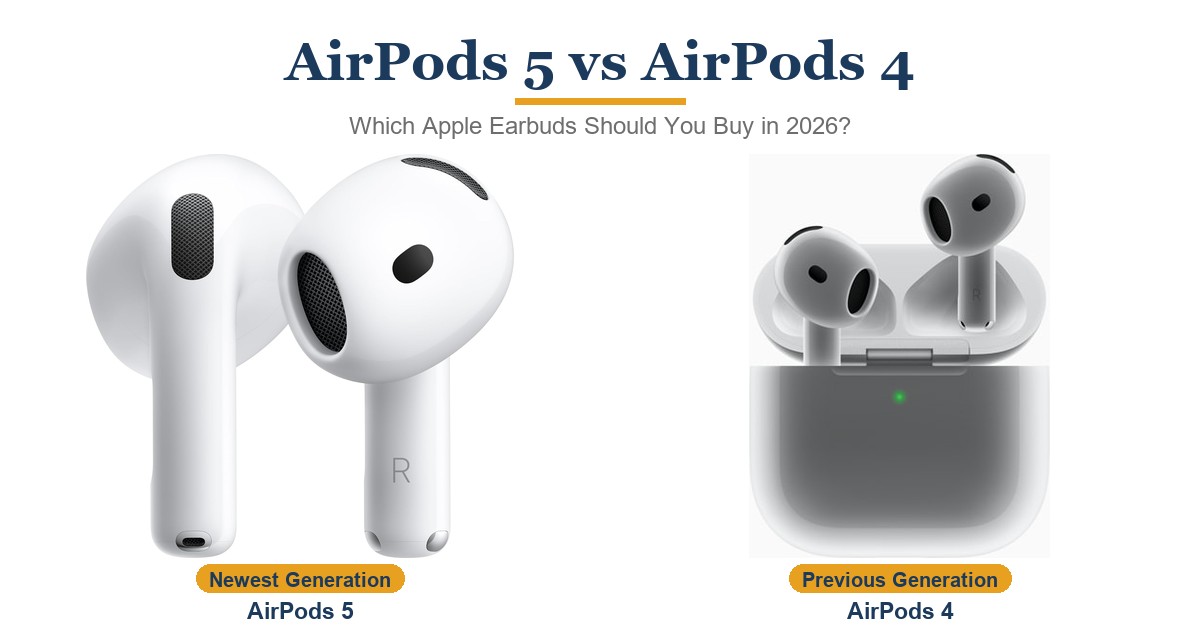
The AirPods 4 came in two versions and only one had noise cancelling; on the AirPods 5 both have it. Apple credits a new multiport acoustic design and updated processing, and claims up to a 50 percent gain in noise removal over the AirPods 4 with ANC. The dust and water rating rises from IP54 to IP57, the same as the AirPods Pro 3. With an Apple Intelligence iPhone you also get Live Translation and hands-free Siri AI (in beta), and iOS 27 added a simple custom EQ. The chip (H2) and Bluetooth version (5.3) carry over.
Key Specifications
| Price (USD) | $129.00 |
| Model | Standard AirPods 5 with USB-C charging case |
| Fit | Open fit, no ear tips |
| Listening modes | Active Noise Cancellation, Transparency, Adaptive Audio, Conversation Awareness |
| Battery life (Apple’s rating) | Up to 4 hours with ANC on, up to 6 hours with noise control off; up to 20 hours with the case (ANC on) |
| Quick charge | 5 minutes in the case for about 1 hour of listening |
| Charging | USB-C (no cable in the box) |
| Controls | Force sensor on the stem (play, skip, calls, listening modes) |
| Dust, sweat and water resistance | IP57 (earbuds and case) |
| Weight | 4.3 g (0.15 oz) per earbud; 32.3 g (1.14 oz) case |
| Chip and connection | Apple H2; Bluetooth 5.3 |
| Smart features | Live Translation, hands-free Siri AI (beta) and head-gesture replies (Apple Intelligence iPhone needed for some), Personalized Spatial Audio |
| Warranty | 1 year (Apple Limited Warranty) |
Apple AirPods 5 Noise Cancelling and Transparency
Cancelling noise without a seal is hard, because nothing physically blocks the sound first. Even so, among open-fit earbuds, no tester we read had heard better cancelling. SoundGuys measured an average 59% drop in how loud outside noise seemed, ahead of its results for the AirPods 4 and Samsung’s unsealed Galaxy Buds 4. The deepest sounds are the gap: its measurements show the cancelling struggles to reduce anything under 500 Hz, the range of engine noise, and is strongest from about 1 kHz to 9 kHz. T3’s tester, by contrast, was impressed by how much general rumble it removed.
Steady background noise, from air conditioning to road noise, gets the biggest reduction, though SoundGuys could still hear the higher-pitched whine of HVAC. Voices get through too: Engadget found them turned down rather than removed, and car horns and train announcements still reached other testers. Testers who flew with them disagreed. Gizmodo’s reviewer slept on a cross-country flight with the engines largely muted, while BGR heard them the whole way and wouldn’t swap its AirPods Pro 3 for these as in-flight earplugs. AppleInsider, switching between the two pairs on several flights, found the AirPods 5 “offered comparable ANC, though AirPods Pro 3 performed better overall”.
By Apple’s own figures, the AirPods Pro 3 cancel up to 3x as much as the AirPods 5.
With cancelling on and nothing playing, Tom’s Guide heard a hiss that it said might annoy anyone using them only to quiet a busy room; music hides it. Transparency mode is the other strength. Voices and outside sounds come through so naturally that testers could barely tell the buds were in, which makes these easy to leave in for a conversation.
Sound Quality and the New EQ
Apple rebuilt the acoustics with lessons from the AirPods Pro 3, and the result sounds full for open earbuds, with more bass weight than this style usually manages. How big a step it is over the AirPods 4 depends on who’s listening: Tom’s Guide found the new pair “miles better than the AirPods 4” and Trusted Reviews heard a clear gain on bass-heavy tracks, while AppleInsider heard no notable difference.
How well they sit in your ear matters for the sound too: in SoundGuys’ words, “bass thins out fast if the fit isn’t right”. BGR was less happy with speech: in podcasts and videos, voices “often sound flat” to it and the top end is dull.
Since iOS 27, H2-chip AirPods, these included, have a custom EQ with three sliders. It’s basic next to the multi-band EQs in other brands’ apps, and Trusted Reviews found it “buried in Settings”. Streaming uses Apple’s AAC codec only, with no aptX or LDAC, so an Android phone can’t stream to them at higher quality than an iPhone.
Battery Life and the Wireless Charging Case Model
Battery life is the weak point. On Apple’s rating, the standard model runs up to 4 hours per charge with noise cancelling (6 with it off), and the case brings the total to 20 hours, matching the AirPods 4 with ANC. A five-minute top-up buys roughly an hour. Of the rivals in the table below, the AirPods Pro 3 are rated for up to 8 hours and the Sony and Bose for 8.5; launch reports put the Ear (3a) at up to 6, though TechRadar’s review lists 4.5 hours and its own listening matched that. That covers a commute or a few calls with case breaks in between, but not a long flight or a full workday of nonstop listening. No review we read has run this model’s battery down yet: every battery result came from the Wireless Charging Case version, and SoundGuys, which covers both models, was still waiting on its lab test.
That version is rated an hour longer per charge, at up to 5 hours with cancelling on and 22 hours with its case. Most testers who ran it down got close to five hours, though Tom’s Guide’s fitness editor heard the low-battery warning after a dog walk and a three-hour run. It also adds three things the standard model lacks: a volume swipe on the stem, a Find My speaker in the case, and charging on Qi pads or an Apple Watch charger as well as USB-C. Of the three, testers valued the volume swipe most; the standard model’s stems have no volume control. Neither version includes a USB-C cable.
Fit, Comfort and Durability
The buds have the same shape and weight as the AirPods 4, 4.3 g each, so how the AirPods 4 felt in your ears is a good guide. Without interchangeable tips, the fit is what it is. For many testers they stay comfortable for hours. Not everyone agrees: SoundGuys’ tester found that after half an hour “the plastic housing started to rub lightly against the insides of my ears”.
The IP57 rating means they’re protected against dust and can handle a brief dunk in water, a step up from the splash-only IP54 of the AirPods 4. Security during exercise is less settled. Some testers didn’t feel they were secure enough for runs; Tom’s Guide’s fitness editor took them on a 22-mile run and came away impressed: they shifted only with a laugh or a quick look over a shoulder, though they still held less firmly than dedicated running earbuds.
The rest is the usual AirPods package for iPhone owners: pairing that carries across your Apple devices, automatic switching between them that mostly works, and clear call quality. Live Translation works but lags a little behind a fast back-and-forth. It, and the new Siri AI (in beta), need an Apple Intelligence iPhone.
How Does It Stack Up Against the Competition?
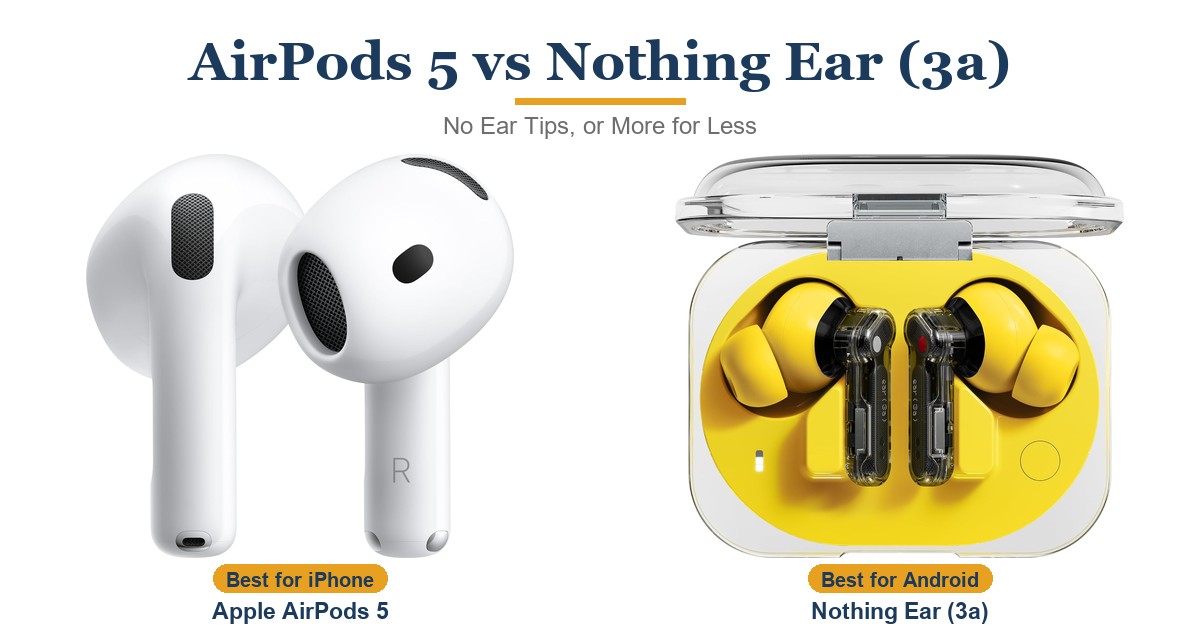
Only the AirPods 5 skip ear tips; the other four seal the ear with silicone tips.
If blocking as much noise as possible matters most, Tom’s Guide’s AirPods 5 reviewer, who could still hear nearby conversations while wearing them, recommends the Bose QuietComfort Earbuds (2024) or the AirPods Pro 3 instead. The Bose also come with a case that charges wirelessly. The Sony WF-C710N, also sealed, ran 9 hours 25 minutes in SoundGuys’ battery test. The Bose cost more on Amazon as of October 2026, and What Hi-Fi found they cancel noise better than the Sony, most of all higher-pitched sounds.
| Feature | Apple AirPods 5 | Apple AirPods Pro 3 | Nothing Ear (3a) | Sony WF-C710N | Bose QuietComfort Earbuds (2024) |
|---|---|---|---|---|---|
| Price (USD) | $129.00 | $199.00 | Deal $79.00 until Nov 2 | $78.99 | $132.99 (Oct 30) |
| Fit | Open, no ear tips | Silicone ear tips (5 sizes) | Silicone ear tips | Silicone ear tips (3 sizes) | Silicone ear tips and stability bands (3 sizes each) |
| Noise cancelling (maker’s claim) | Up to 50% more than AirPods 4 with ANC | Up to 3x more than AirPods 5 | Up to 45 dB (Nothing’s figure, from launch coverage) | No figure given | No figure given |
| Battery, ANC on (maker’s rating) | 4 hours; 20 with case | 8 hours; 24 with case | 4.5 to 6 hours; 18 to 25 with case (from TechRadar and launch reports, which differ; Nothing’s page gives only a 42-hour total) | 8.5 hours; 30 with case | 8.5 hours; 31.5 with case |
| Dust and water rating | IP57 | IP57 | IP54 | IPX4 | IPX4 |
| Volume on the earbud | No | Yes (stem swipe) | Optional: pinch, set in app | Yes (4+ taps) | Yes (tap) |
| Wireless charging | No (USB-C) | MagSafe, Qi, Apple Watch charger | No | No (USB-C) | Yes, wireless charging case |
| Bluetooth | 5.3 | 5.3 | 6.0, with LDAC | 5.3 | 5.3 |
| Extras | Live Translation, hands-free Siri | Heart-rate sensing, hearing test and hearing aid features | On-bud call recording, 8-band EQ | Multipoint, 5-band EQ | Multipoint, 5-band EQ, voice commands |
| TTP Review | This review ↑ | Read our review → | Read our review → | Read our review → | — |
| Amazon | View on Amazon | View on Amazon | View on Amazon | View on Amazon | View on Amazon |
Prices change frequently — always verify current pricing before purchasing.
Apple AirPods 5: Worth It for Tip-Free Noise Cancelling
Pick the standard AirPods 5 if you use an iPhone, can’t get on with silicone tips, and want cancelling that takes the edge off an office, a bus or a busy street. Step up to the Wireless Charging Case version if swiping for volume or charging on a pad appeals to you; it sounds and cancels the same. On Amazon it cost about $20 more than this model in October 2026, a step up most testers thought worth paying for.
Frequent flyers and anyone who wants the room to go quiet should look at the AirPods Pro 3 (see our AirPods Pro 3 review): their tips seal the ear, Apple rates their cancelling at up to three times the AirPods 5’s, and they add heart-rate sensing and hearing health features. If you don’t mind tips and use an Android phone, the Nothing Ear (3a) give you LDAC streaming and an 8-band EQ, which matter more there than Apple’s iPhone extras.
Sources
- Apple Newsroom — Apple introduces AirPods 5 with best-in-class open-ear Active Noise Cancellation
- Apple — AirPods 5 Technical Specifications
- Apple — AirPods Compare Models
- Apple — AirPods Pro 3 Technical Specifications
- Apple — One (1) Year Limited Warranty
- Apple AirPods 5 — Amazon Product Listing
- SoundGuys — Apple AirPods 5 review
- SoundGuys — Apple AirPods 5 with Wireless Charging Case lab data
- Tom’s Guide — Apple AirPods 5 review
- Trusted Reviews — Apple AirPods 5 Review
- BGR — AirPods 5 Review
- Gizmodo — AirPods 5 Review
- AppleInsider — AirPods 5 with wireless charging case review
- Engadget — Apple AirPods 5 review
- T3 — Apple AirPods 5 review
- Nothing — Ear (3a)
- SoundGuys — Nothing Ear (3a) launch and specifications
- TechRadar — Nothing Ear (3a) review
- GSMArena — Nothing Ear (3a) unveiled
- Sony — WF-C710N Help Guide
- What Hi-Fi — Sony WF-C710N review
- SoundGuys — Sony WF-C710N review
- Bose — QuietComfort Earbuds
- Bose — Bose Introduces New QuietComfort Earbuds (2024)
- Engadget — Bose QuietComfort Earbuds (2024) review
- SoundGuys — Bose QuietComfort Earbuds (2024) review
- What Hi-Fi — Bose QuietComfort Earbuds (2024) review
Reader Poll
What would make you pick the AirPods 5 over sealed earbuds?
Help Our Editors Know What Matters to You
Explore on Amazon →