Anker SOLIX C1000 Gen 2 vs Jackery Explorer 1000 v2: Speed vs Warranty
Both recharge fast and cover a weekend of camping or a multi-day outage — here’s which one earns its $799 price tag.

How We Researched
We compared manufacturer specs, The Gadgeteer’s and GP Reviews’ hands-on testing notes, and current Amazon pricing for both power stations. No manufacturer paid for placement — the scores below reflect editorial judgment only.
* As an Amazon Associate I earn from qualifying purchases. Disclosure
What You’ll Learn
- Which recharges faster from empty
- Which handles higher-wattage appliances without tripping
- Which warranty actually protects you longer
- Whether Anker’s speed advantage is worth its extra weight
- Which app gives you more day-to-day control
- Whether the price gap between them is worth paying
The Two Power Stations Compared
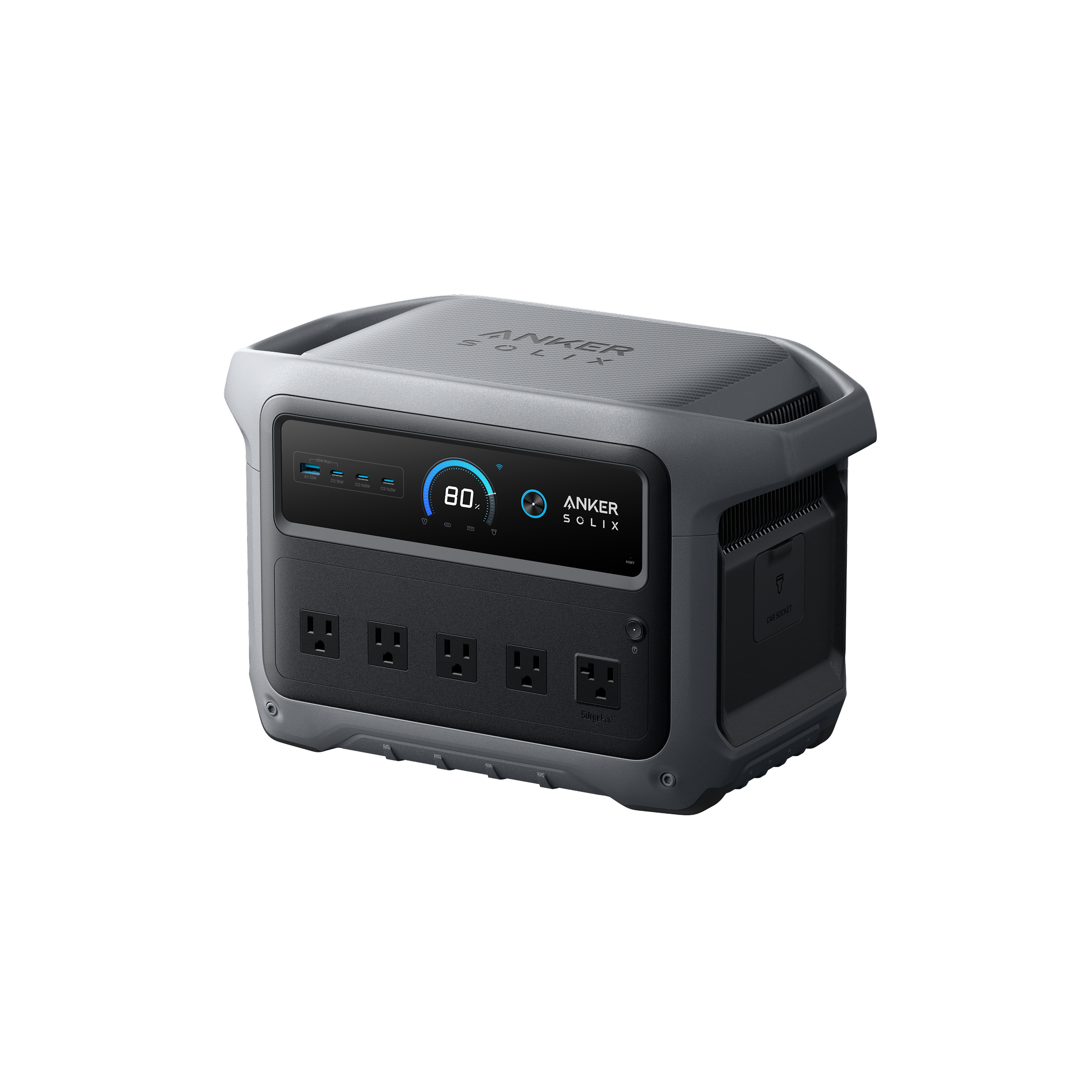 Fastest Charging
Bottom line: The C1000 Gen 2 recharges from empty to full in 49 minutes and pushes a 3,000W peak via SurgePad — built for buyers who want backup power ready again within the hour.
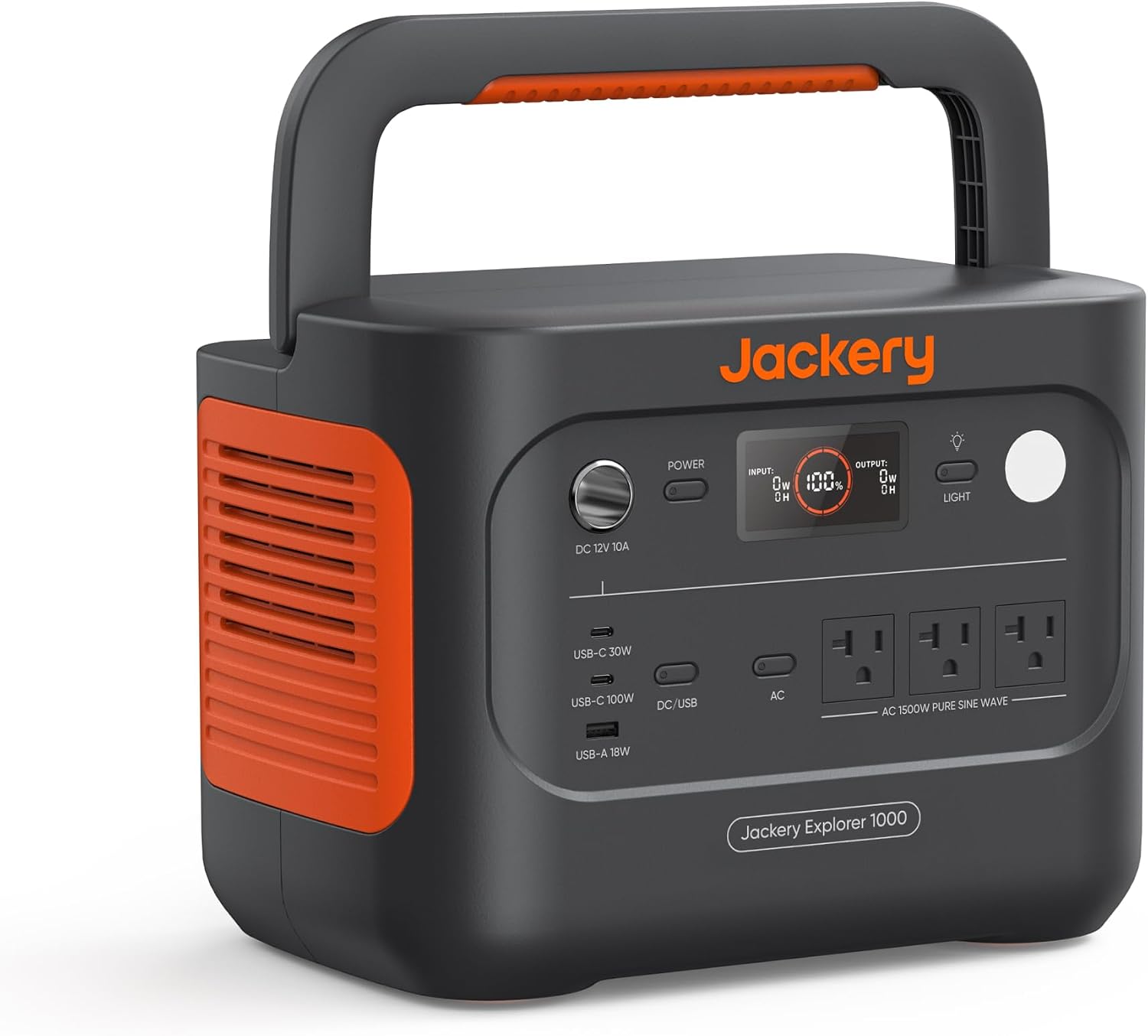 Best Warranty
Bottom line: The Explorer 1000 v2 trades outright charging speed for a class-leading 5-year warranty, a lighter 23.8-lb build, and Jackery’s wide accessory ecosystem.
Anker SOLIX C1000 Gen 2 vs Jackery Explorer 1000 v2 is one of the closer matchups in the 1,000Wh-class power station field — both list at $799, both use LiFePO4 cells rated for roughly 4,000 charge cycles, and both are aimed at the same camping-and-backup buyer. We compared their published specs, hands-on testing notes from The Gadgeteer and GP Reviews, and current Amazon pricing to work out where they actually differ.
| Spec | Anker SOLIX C1000 Gen 2 | Jackery Explorer 1000 v2 |
|---|---|---|
| Price (USD) | $499.99 | $499 |
| Price (CAD) | $649 | $649 |
| Capacity | 1,024Wh | 1,070Wh |
| AC Output (Continuous) | 2,000W | 1,500W |
| Peak Output | 3,000W (SurgePad) | Not published |
| Full Charge Time | 49 min | 1.7 hrs (0–100%) |
| Weight | 24.9 lbs | 23.8 lbs |
| Warranty | Not published | 5 years |
| Solar Input | 600W (XT60i) | 800W (SolarSaga, proprietary) |
Charging Speed
The Anker SOLIX C1000 Gen 2 recharges from empty to full in 49 minutes, accepting up to 1,600W of AC input to get there — a genuine standout in the 1,000Wh class, where most rivals need well over an hour.
The Jackery Explorer 1000 v2 reaches 80% in about an hour and needs 1.7 hours for a full charge on wall power. Its Emergency Super Charge mode, toggled through the app, prioritizes speed over efficiency when a storm is inbound, but it still trails Anker’s pace by a wide margin.
Winner: Anker SOLIX C1000 Gen 2, for anyone who wants backup power ready again within the hour — its full-charge time is roughly a third of the Jackery’s.
Continuous Output & Peak Power
Anker’s 2,000W continuous rating already covers most kitchen appliances and power tools, and enabling SurgePad in the app unlocks a 3,000W peak for compressor-based devices like mini fridges or window AC units.
Jackery’s 1,500W continuous ceiling handles a full-size fridge, a router, and a few lamps comfortably, but the company doesn’t publish a distinct peak-surge rating — buyers running compressor-heavy loads should check startup wattage against that 1,500W limit before assuming headroom.
Winner: Anker SOLIX C1000 Gen 2, for households or campers planning to run higher-draw appliances, or more than one device, at once.
Warranty & Long-Term Reliability
Anker doesn’t publish a specific warranty term for the C1000 Gen 2 beyond its standard coverage window.
Jackery backs the Explorer 1000 v2 with a 5-year warranty — a 3-year standard term plus a 2-year extension — well beyond what most rivals in this capacity class offer, on top of the same roughly 4,000-cycle cell rating.
Winner: Jackery Explorer 1000 v2, for buyers who want documented long-term coverage on a device meant to sit untouched between outages.
Portability & Build
At 24.9 lbs and roughly 15 x 8 x 10 inches, the C1000 Gen 2 sits at the heavier, bulkier end for a 1,000Wh-class unit. The Gadgeteer’s hands-on review noted the handle and boxy chassis feel solidly built, with a rubberized base that resists sliding during transport.
At 23.8 lbs and a more compact 13.5 x 10.3 x 11-inch footprint, the Explorer 1000 v2 is a little easier to lift into a trunk or set on a closet shelf. GP Reviews described its build as solidly assembled, with a top-mounted handle that stays comfortable near the unit’s rated weight.
Winner: Jackery Explorer 1000 v2 — narrowly, on weight and footprint alone. Neither unit is light enough to carry any real distance on foot.
App Control & Smart Features
The Anker app supports scheduling (charging overnight on off-peak rates, for example), toggles UltraFast recharge mode, and activates SurgePad to temporarily push past the native 2,000W ceiling for one high-draw device.
The Jackery app covers the basics well — live battery percentage, input/output wattage, and remote toggling of Emergency Super Charge — but has no scheduling or time-of-use charging built in.
Winner: Anker SOLIX C1000 Gen 2, for buyers who want more granular control over charging and output from their phone.
Price & Value
Both list at $799 MSRP and rarely sell at that price. The Anker has dropped as low as $429 during flash sales, while the Jackery has dipped to $428–$450 during its own promotions; day to day, both typically float somewhere between $450 and $650.
Winner: Close to a wash on price alone — neither consistently undercuts the other, so the real deciding factor is whether you value Anker’s charging speed or Jackery’s warranty more.
Our Verdict
Choose the Anker SOLIX C1000 Gen 2 if speed and output headroom matter most — it recharges in under an hour, pushes more continuous and peak wattage, and gives you finer app control over how it behaves under load. That combination makes it the stronger pick for campers who need a full battery between outings or homeowners running a mix of sensitive electronics and higher-draw appliances during an outage.
Choose the Jackery Explorer 1000 v2 if long-term peace of mind matters more than raw speed — its 5-year warranty is the strongest in this comparison, it’s a pound lighter, and its accessory ecosystem is more mature. For a device that might sit in a closet for months before it’s needed, that warranty carries real weight.
Buy the Anker if you’d rather wait less and pay in weight and app complexity. Buy the Jackery if you’d rather carry less and have a longer warranty backing the cells.
Read Our Anker SOLIX C1000 Gen 2 Review → Read Our Anker SOLIX C1000 Gen 2 Review → Read Our Jackery Explorer 1000 v2 Review → Read Our Jackery Explorer 1000 v2 Review →
Frequently Asked Questions
Which should I buy if I mainly need it for weekend camping trips?
Which should I buy for home power-outage backup?
Is the Anker SOLIX C1000 Gen 2 worth the extra charging speed over the Jackery?
Do both power stations work with solar panels?
Which power station is lighter to carry?