How to Choose the Right Soundbar for Your TV Setup in 2026
Channel counts, detachable rears, and app requirements vary more than most buyers expect — here’s what actually changes the sound in your living room.

How We Researched
3 soundbars compared across price tiers from $199 to $1,199.95, drawing on published lab measurements from What Hi-Fi, RTINGS, Reviewed.com, and TechGearLab, plus each manufacturer’s own spec sheets. No manufacturer paid for placement — badges and scores reflect editorial judgment only.
What You’ll Learn
- Whether Dolby Atmos and a high channel count actually matter for your room
- When detachable rear speakers are worth the extra cost over a single bar
- Why some bars need an app and others work entirely from the remote
- The real difference between HDMI-ARC and optical connections
- Whether a built-in or add-on subwoofer changes your buying decision
- What you’re actually paying for at each price tier
3 products in this guide
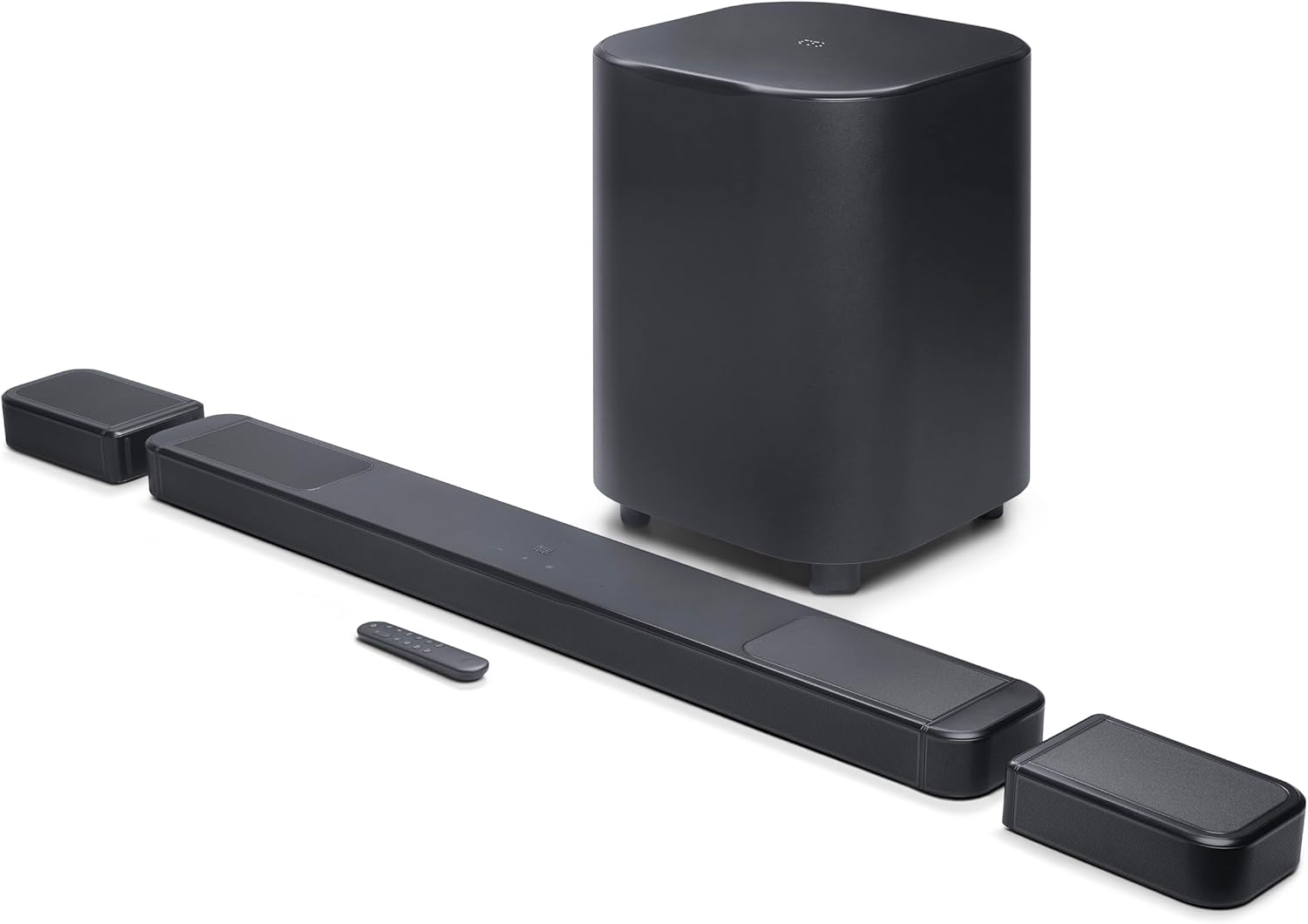

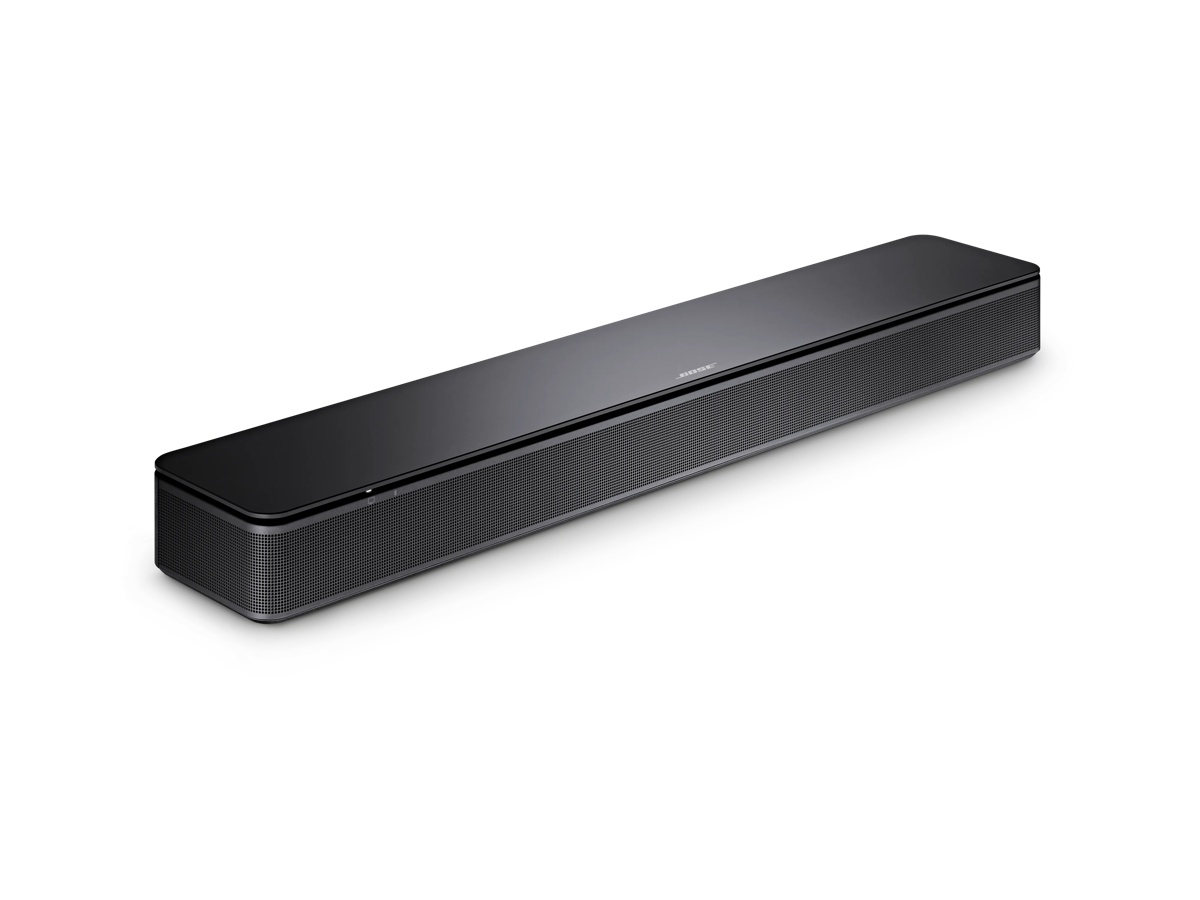
Soundbar spec sheets throw around channel numbers, Atmos badges, and app requirements that mean very different things depending on your room and your patience for setup. This soundbar buying guide breaks down what actually changes the listening experience, using three genuinely different approaches — a flagship with detachable battery-powered rears, a premium single-bar built around a new driver design, and a budget bar that skips surround sound entirely to focus on speech clarity.
Channel Count & Dolby Atmos
A soundbar’s channel number (like 9.1.4 or 11.1.4) describes front/side speakers, subwoofer count, and up-firing height channels in that order. More height channels mean more precise placement of overhead effects in Dolby Atmos content, but only if the source material actually carries Atmos data — a stereo TV broadcast sounds identical on a 5-channel bar and an 11-channel one.
Codec support matters as much as channel count: some bars decode Dolby Atmos but not DTS:X, which shows up as a real gap only when playing specific Blu-rays or streaming sources encoded in the format the bar doesn’t support.
When it matters: regular movie or prestige-TV viewing on a system connected via HDMI-ARC to a 4K set, where Atmos-encoded streams are common on services like Netflix and Apple TV+.
When it doesn’t: most cable news, sports, and older content is delivered in plain stereo or basic 5.1 — a high channel count adds nothing there.
Check what you actually watch before paying for extra height channels — Atmos only helps on Atmos-encoded content.
Detachable Rears vs. Built-In Surround
Real rear-channel sound — audio coming from behind the listener, not just simulated by up-firing drivers — traditionally required running speaker wire across the room. Detachable battery-powered rear speakers solve that by letting the surround channels physically move to the back of the room and recharge on the main bar’s dock between uses.
A single bar without detachable rears relies on its own drivers plus wall and ceiling reflections to simulate a wider soundstage — genuinely effective in the right room, but it’s an approximation rather than actual rear-channel audio, and it depends heavily on room shape and furniture.
When it matters: larger living rooms or dedicated home theater setups where real rear-channel separation is noticeable and worth the extra hardware.
When it doesn’t: smaller rooms or apartments, where a single bar’s simulated width often sounds nearly as immersive without extra speakers to place, charge, and store.
App-Controlled Tuning vs. Remote-Only Simplicity
Most premium bars now route setup through a phone app — automatic room calibration, EQ presets, and firmware updates all live there, which means an account, a Wi-Fi connection, and a few minutes of onboarding before the bar plays anything. In exchange, the app usually delivers noticeably better room-tuned sound than a bar left on factory settings.
A remote-only bar skips all of that: no app, no Wi-Fi radio, no account. What you lose is fine-grained EQ control and multi-room grouping; what you gain is a soundbar that works within minutes of unboxing it, with every available setting reachable from a single small remote.
When it matters: shared or guest-facing rooms, older relatives’ homes, or anyone who specifically wants to avoid another smart-home app on their phone.
When it doesn’t: if you’re already comfortable managing smart-home apps and want the best possible tuned sound for your specific room, the app-based setup is a one-time cost for a real audio benefit.
Connectivity: HDMI-ARC, Optical, and Wireless
HDMI-ARC (or the newer eARC) is the connection that matters most on a modern TV — it carries higher-bandwidth audio formats like Dolby Atmos in true lossless quality and lets a single remote control both the TV and the bar’s volume. Optical is the fallback for older TVs without ARC support, capable of Dolby Digital and basic surround but not full lossless Atmos.
Wireless features vary widely beyond the TV connection itself: Bluetooth for phone audio is close to universal, but Wi-Fi-based features like AirPlay 2, Chromecast, and multi-room grouping only exist on bars with a Wi-Fi radio built in — a remote-only bar has none of these by design.
When it matters: confirm your TV has HDMI-ARC (most sets from the last several years do) before assuming you’ll get full lossless Atmos — an optical-only connection caps what any bar can deliver regardless of its own capabilities.
When it doesn’t: if you mainly stream music via Bluetooth and don’t care about multi-room audio, the Wi-Fi feature set is largely irrelevant to your day-to-day use.
Quick Comparison
| JBL Bar 1300XMK2 | Sonos Arc Ultra | Bose TV Speaker | |
|---|---|---|---|
| Price | $1,199.95 | $1,099.99 | $199 |
| Channels | 11.1.4 | 9.1.4 | 2.0 stereo |
| Dolby Atmos | Yes | Yes | No |
| Detachable rears | Yes, included | No — sold separately | No |
| App required | Optional | Yes, for setup | No — remote only |
| Our Score | 4.3/5 | 4.4/5 | 3.9/5 |
Price Tiers: What You’re Actually Paying For
The gap between a $199 bar and a $1,000-plus flagship isn’t marketing — it’s channel count, driver quality, and whether surround hardware ships in the box versus getting sold separately later. A flagship like the JBL Bar 1300XMK2 bundles a wireless subwoofer and detachable rears into its price; a premium single-bar like the Sonos Arc Ultra treats a subwoofer and rear speakers as optional add-ons that can push the real cost well past the bar’s own price tag.
At the budget end, a bar like the Bose TV Speaker isn’t a stripped-down version of the flagship experience — it’s a different product built around one specific job (dialogue clarity) rather than a smaller version of surround sound. Buyers whose real complaint is muffled speech, not missing bass or height effects, often get more value from that focused approach than from a scaled-down premium bar.
When it matters: paying for the flagship tier makes sense when you actually want the surround hardware — detachable rears, a wireless sub, maximum channel count — bundled in rather than bought separately later.
When it doesn’t: if dialogue clarity is your only real complaint with TV sound, the budget tier solves that specific problem directly without paying for surround hardware you won’t use.
Our Verdict
Start with what you actually watch and how much setup effort you want, not the channel number on the box. Frequent movie viewers in a dedicated room get the most from the JBL Bar 1300XMK2’s included detachable rears; buyers who want strong Atmos sound from a single unit and don’t mind an app should look at the Sonos Arc Ultra; anyone whose real problem is unclear dialogue, not missing surround, gets excellent value from the Bose TV Speaker at a fraction of the price.
Read Our JBL Bar 1300XMK2 Review → Read Our JBL Bar 1300XMK2 Review → Read Our Sonos Arc Ultra Review → Read Our Sonos Arc Ultra Review →
Which One Is Right for You?
Best Overall
Bottom line: the most complete out-of-box surround setup here, with real rear-channel speakers and 1,570W of power.
Best Premium Single-Bar
Bottom line: the strongest single-bar Atmos sound here, with the smoothest app setup of the three — no DTS:X, and rears cost extra.
Best Budget
Bottom line: not a scaled-down flagship — a focused dialogue-clarity speaker that undercuts every Atmos bar here by hundreds of dollars.
Frequently Asked Questions
Do I need Dolby Atmos for a good soundbar experience?
Are detachable rear speakers worth paying extra for?
Can I use a soundbar without a companion app?
What’s the real difference between HDMI-ARC and optical?
Do I need a subwoofer, or is a bar’s built-in bass enough?