Best Dash Cams 2026: 4 Top Picks for Every Driver and Budget
From a pocket-sized 1080p cam to a 4K front-and-rear powerhouse, here are the dash cams worth your money in 2026 — and exactly who each one is for.

How We Researched
We compared more than a dozen current dash cams using published specifications, professional reviews from outlets like Digital Camera World, TechRadar, and Automoblog, and aggregated owner feedback. No paid placement — picks are chosen on merit.
What You’ll Learn
- Garmin Dash Cam X310 — the clearest 4K footage in a matchbox-sized body
- VIOFO A229 Plus — dual 2K front and rear without the premium price
- VIOFO A329S — a 4K + 2K front-and-rear flagship for serious coverage
- Garmin Dash Cam Mini 3 — the most discreet always-on cam you can buy
Picking the best dash cam in 2026 comes down to one question: how much coverage do you actually need? A discreet single-lens cam is plenty for capturing the car ahead, while front-and-rear systems protect you from tailgaters and parking-lot hit-and-runs. We sorted four standout cameras by who they are genuinely best for — from a $150 compact to a 4K dual-channel flagship — so you can match the camera to your driving, not overpay for resolution you’ll never review.
1. Garmin Dash Cam X310 — Best Overall
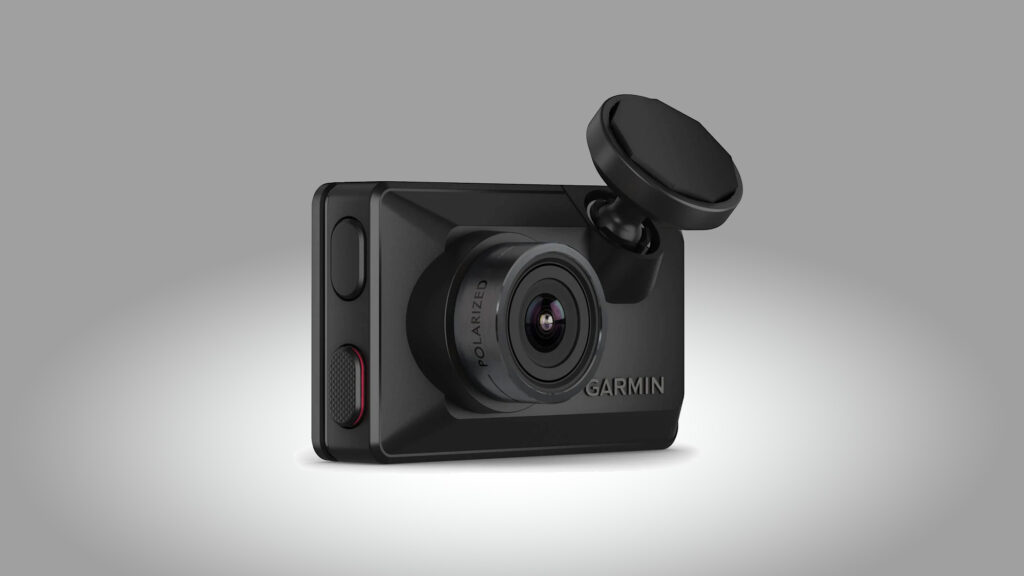
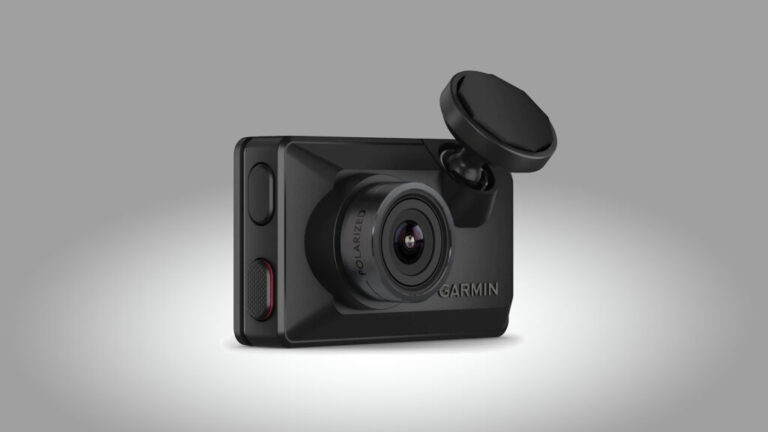
The X310 packs 4K Ultra HD recording, built-in GPS, and a 2.4-inch touchscreen into a 78-gram unit roughly the size of a matchbox. Its standout trick is Garmin’s Clarity Polarizer lens coating, which cuts windshield glare and reflections — the detail that lets you actually read a license plate instead of squinting at a glint. Digital Camera World gave it a perfect 5/5, and TechRadar singled out its image quality as class-leading.
At around $349.99, it costs more than the dual-channel cams below, and that buys you a single front-facing lens rather than rear coverage. But if your priority is the sharpest possible footage of what’s ahead — and a camera that disappears behind the mirror — nothing here beats it. Voice control and a magnetic mount make day-to-day use effortless.
Best for: drivers who want the clearest single-lens 4K footage and don’t need a rear camera.
2. VIOFO A229 Plus — Best Value Dual-Channel
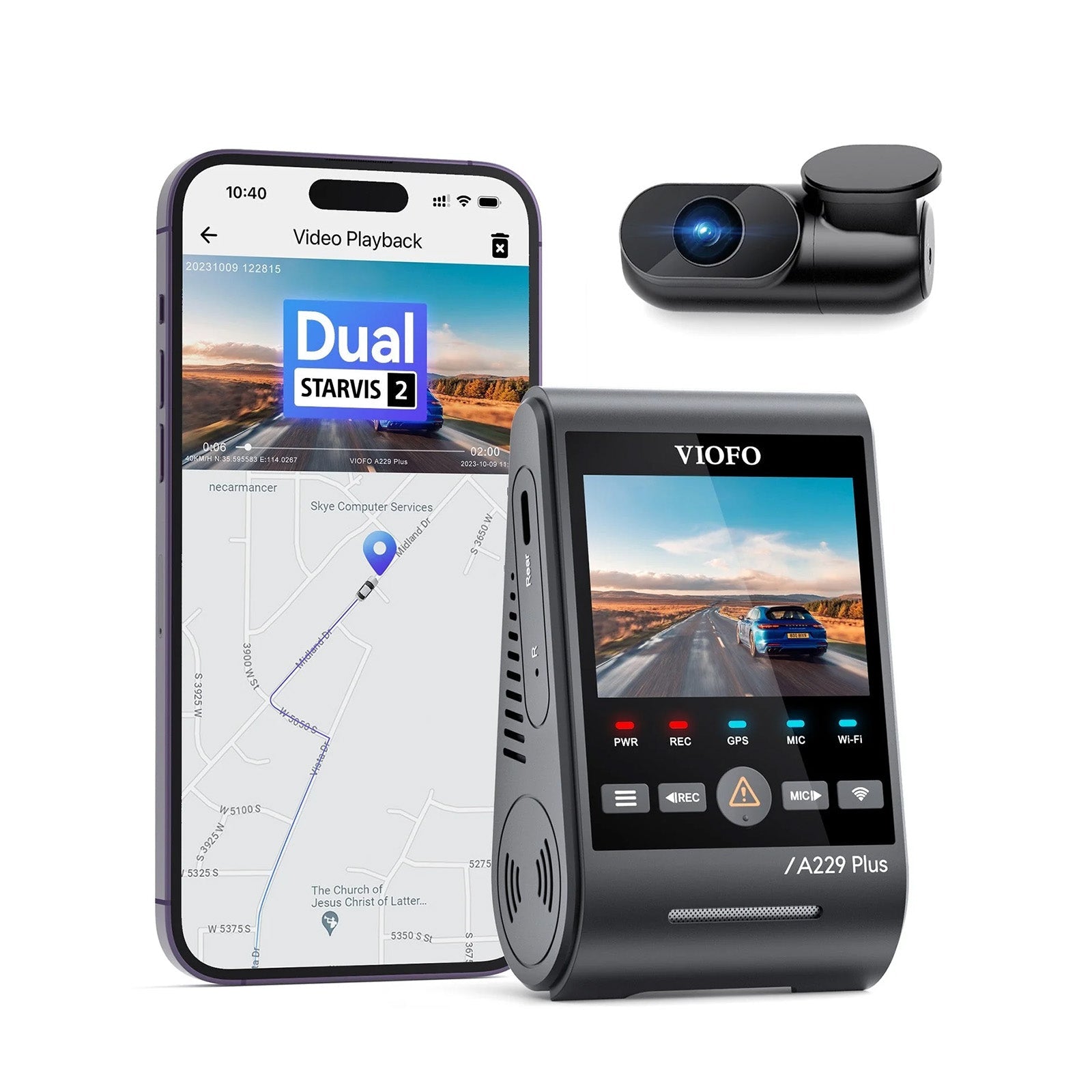
The A229 Plus delivers 2K resolution on both the front and rear cameras — a specification that normally lives well above its roughly $159.99 entry price. Both channels use Sony STARVIS 2 sensors with HDR, so low-light and high-contrast scenes stay readable, and a quad-band GPS logs your speed and location for every clip. Automoblog scored it 8.3/10, praising the front-and-rear value.
For drivers who want complete coverage — tailgaters, rear-end collisions, parking incidents behind the car — without spending flagship money, this is the sweet spot. The trade-off versus the X310 is front resolution: 2K is sharp, but it won’t match the X310’s 4K on the open road. A 2.4-inch screen and 5GHz Wi-Fi round out an easy-to-live-with package.
Best for: drivers who want front-and-rear protection at the best possible price.
3. VIOFO A329S — Best Premium Upgrade
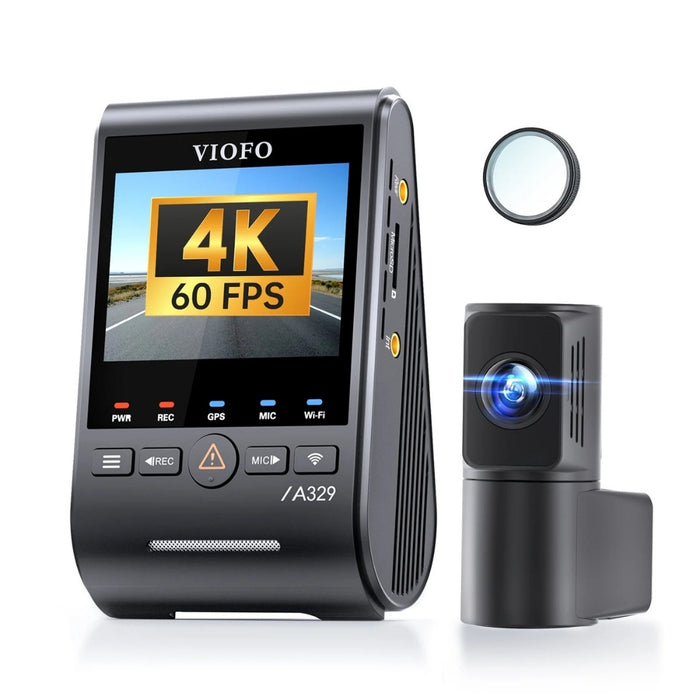
If the A229 Plus is the value champion, the A329S is the step up for drivers who want it all: 4K at 60fps on the front camera plus 2K on the rear, both running dual Sony STARVIS 2 sensors. It adds Wi-Fi 6 for transfers roughly three times faster than older models and supports external SSD storage up to 4TB — enough for weeks of continuous and parking-mode footage. Autoevolution summed it up as “premium features, premium price.”
That price — typically in the high-$300s — is the catch, and it’s why this is the upgrade pick rather than the everyday recommendation. But if you log long highway miles, want the sharpest front and rear footage available, and value fast Wi-Fi offloading, the A329S is the most capable camera on this list. Check Amazon for current pricing, as VIOFO runs frequent configuration bundles.
Best for: enthusiasts who want maximum 4K + 2K front-and-rear coverage and don’t mind paying for it.
4. Garmin Dash Cam Mini 3 — Most Discreet
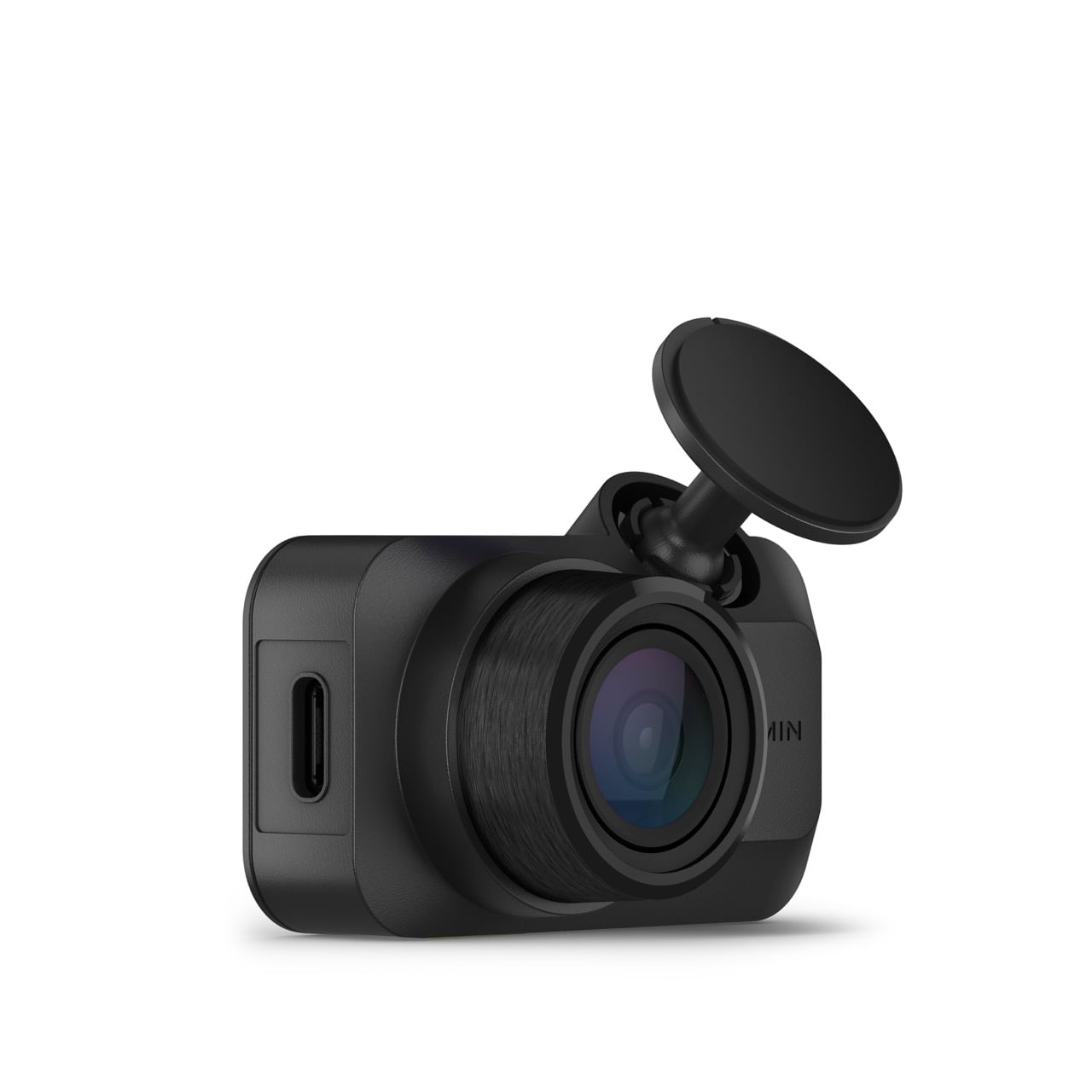
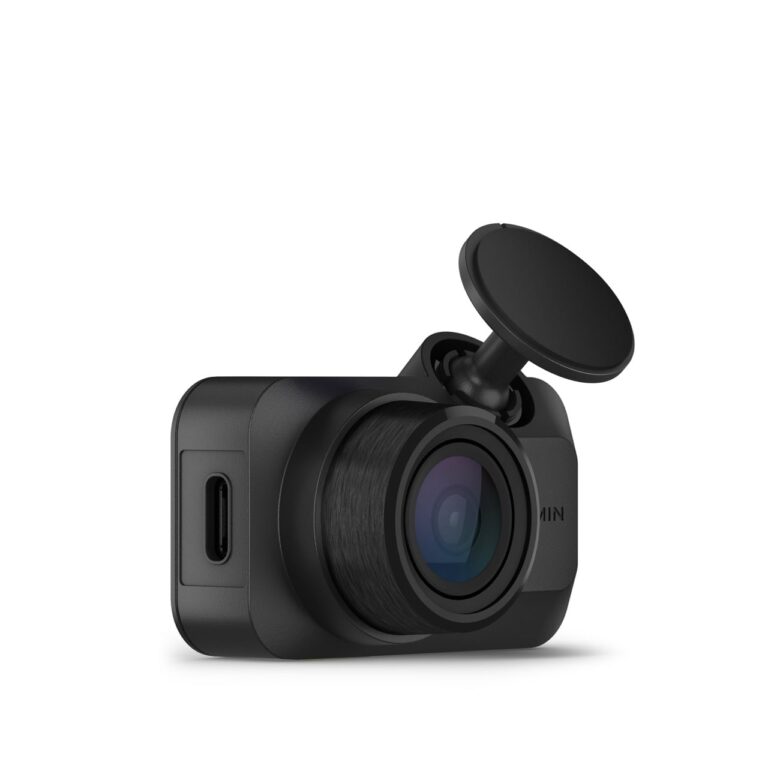
At just 30 grams and roughly the size of a car key fob, the Mini 3 has no screen by design — it tucks behind the rearview mirror and vanishes. It records 1080p footage with Garmin’s Clarity Polarizer coating, captures incidents automatically the moment the ignition turns on, and is managed entirely through the Garmin Drive app. Digital Camera World, TechGearLab, and TechRadar all praised how cleanly it disappears into the cabin.
The compromises are deliberate: 1080p instead of 4K, and no built-in GPS unless you add a subscription. But at around $149.99 it’s the easiest cam here to install and forget, and the one least likely to tempt a smash-and-grab. If you want always-on protection without a gadget cluttering your windshield, this is it.
Best for: drivers who want invisible, set-and-forget recording in the smallest possible package.
Quick Comparison
| Garmin X310 | VIOFO A229 Plus | VIOFO A329S | Garmin Mini 3 | |
|---|---|---|---|---|
| Price | ~$349.99 | ~$159.99 | High $300s | ~$149.99 |
| Resolution | 4K front | 2K front + 2K rear | 4K front + 2K rear | 1080p front |
| Channels | Single | Dual | Dual | Single |
| Built-in GPS | Yes | Yes | Yes | No (subscription) |
| Our Score | 4.4/5 | 4.3/5 | — | 4.2/5 |
The Final Word
For most drivers, the Garmin X310 is the one to beat — it turns 4K and that clever polarizer into footage you’ll actually be glad you have when it matters. Want to watch your back too? The VIOFO A229 Plus gives you front-and-rear coverage for the price of a single-lens cam, while the A329S is the splurge for anyone who refuses to compromise on either lens. And if you’d rather your dash cam stay a secret, the featherweight Mini 3 hides in plain sight and just works.
Browse all automotive reviews →automotive reviews → or see our best car accessories for road trips → for chargers, jump starters, and more.
Frequently Asked Questions
Do I need a front-and-rear dash cam, or is single-lens enough?
What is Garmin’s Clarity Polarizer?
How discreet is the Garmin Dash Cam Mini 3?
Does the Garmin Mini 3 have built-in GPS?
Which is the best value dual-channel dash cam?